There is ample evidence that the pursuit of decarbonization — the reduction of greenhouse gas emissions — necessary to avoid dangerous scenarios of climate change is associated with a variety of social, economic and environmental co-benefits that are not, however, integrated into decision-making processes that remain institutionally bound to techno-economic objectives. Drawing on 58 interviews and field observations of people working on New York City's residential buildings, a sector that has since 2019 been subject to an ambitious set of financial incentives and regulations for decarbonization, we ask when and why professionals reference co-benefits to influence their clients' decision-making. We develop a cultural framework to analyze co-benefits as a category of practice, showing that they serve as a satisficing device professionals deploy as they strive to meet multiple client needs, stack various sources of finance, and comply with a bevy of regulations.
What are the political considerations of who is included or excluded through eligibility thresholds? A long-standing policy debate is whether social policy should be “targeted” only for the neediest or instead be “universalist” by serving a broad-based constituency. As the persistent housing affordability problem deepens, such debates have come up in the emerging discussion of “social housing.” Social housing describes various housing types that reduce the influence of markets and often are of mixed income. Yet the exact mix of incomes eligible for social housing has generated substantial debate among policy advocates, echoing the targeting versus universalism arguments. This article empirically examines income distributions across race and housing tenure and the potential for building a political majority for social housing policies. We synthesize the political advantages of both targeting and universalism through a proposed framework we call “redistributive majoritarianism,” which includes broad eligibility with explicit priorities for the neediest.
How do urban professionals morally orient themselves toward their work to transform the built environment? Contemporary urban planning is a field that is defined by both a strong ethos of equity and social reform and a widely shared realization that the profession itself is relatively powerless. The question of whether justice can be planned, and whether exercises in planning can ever achieve just outcomes has been a perennial question facing progressive planners. A generation ago scholars of a critical bent made the persuasive case for “no.” Yet planning continues, and the profession continues to attract and train equity-minded, reform-oriented individuals. This paper examines how planning theory and theorists reconcile their motivating civic visions and moral stances with constraints on practice that thwart their efforts to achieve a just society. We find that far from being naïve, planners adopt a reflexive, pragmatic morality that allows them to maintain normative commitments even in highly constrained environments. From this case, we argue for more attention to the moral work involved in professionals’ formulation of strategies for environmental change.
Policy and scholarly debates on gentrification have mainly focused on displacement or improvements to neighborhood amenities. Less attention has been paid to actively worsening conditions for residents who don’t leave and for whom poor housing conditions are a perverse consequence of gentrification. Mapping city data on apartment code violations, we find that substandard housing conditions are surprisingly concentrated in gentrifying areas and not just low-income neighborhoods. Drawing on ethnographic observations our research finds that in gentrification while bringing new amenities to neighborhoods, can also give strong incentives to landlords to mistreat tenants in an attempt to drive them out intentionally.
Urban studies scholars have engaged in a lively debate on how to reformat comparative methods in the face of critical scrutiny of the discipline’s purported universalism. We share the enthusiasm for a reformatted urban comparativism and, in this paper, we turn to the thorny and more pragmatic question of how to actually carry it out. While traditional comparisons in urban studies have sought to find variation among similar cases by selecting a priori, in this article we propose to compare the findings of different researchers through a posteriori, that is, after the research has been done. We also argue that urban researchers need to focus on urban processes rather than cities; on repeated instances rather than on controlling for difference; and on mid-level abstraction rather than on grand theory or descriptive empirical cases. We put this strategy to work by comparing empirical research previously carried out by the authors on how two Latin American cities became international urban ‘best practices’: Bogotá as a sustainable transport model and Porto Alegre as a model of local participatory budgeting. The comparison highlights the tension between the simplified policy narratives that were mobilised to circulate Bogotá and Porto Alegre as international ‘best practices’ and the broader multi-scalar institutional reforms that these ‘best practice’ narratives have left behind in their global circulations. In doing so, we show the potential of a posteriori comparisons to analyse contemporary global urban dynamics and provide some explicit methodological tactics on how to do comparisons in a more systematic way.
Paul Starr’s new book, Entrenchment, is a very welcome addition to the admittedly crowded field of diagnoses of the current global moment of political backlash. It’s very nice prose and careful scholarship Bely a simple, but important, argument that the powerful have been able to protect their wealth and power by entrenching them in institutions that are difficult to change. It is not political polarization or partisanship that is the problem of our age and the threat to our democracies, but inequalities entrenched in durable institutions. As we mark the tenth anniversary of Citizens United, the Supreme Court decision that allowed unrestricted corporate spending on electoral campaigns, the book’s message is timely. The book develops a political sociology centered on struggles over institutional arrangements. At times, societal struggles take place within accepted institutional arrangements, and at times, the struggles are over the rules themselves. Entrenchment, “the making of changes that then become hard to undo and that increase the resistance to stress at the foundations of society,” is neither bad nor good. There have been moments of entrenchment of progressive principles—not only in moments of reform like the New Deal, but also at junctures when antidemocratic power was held at check, such as when British inheritance laws were abolished at the founding for the republic.
This book investigates participatory budgeting—a mainstay now of World Bank, UNDP, and USAID development programs—to ask whether its reforms truly make a difference in deepening democracy and empowering civil society.
ment is in documenting how class works in everyday life. Friedman and Laurison show how the misrecognition of class operates, concealing the degree to which signifiers of merit and notions of occupational boldness or risk-taking are merely proxies for class privilege. They use the metaphor of the ‘‘glass slipper’’ to describe an invisible accessory worn by members of the elite, whereby their ways of being in terms of tastes, interactional styles, and language use ‘‘magically’’ fit the prerequisites of the job. Elsewhere, the authors show that the ‘‘Bank of Mum and Dad’’ facilitates the ability of actors from privileged backgrounds to reject subpar acting jobs and work only when the right role comes along. Their class privilege serves as an insurance policy that underwrites their eventual ascent as a respected actor. Motivated by the increased rigidity and lack of mobility within the class structure, it is hard to critique the desire to write a book that addresses one of our most intractable social problems. If pressed, I might identify this work’s ambition as both its signature contribution and its possible shortcoming. A thick but readable volume, The Class Ceiling is uneven at times. As is sometimes the case with mixed-methods sociology, it is hard to integrate quantitative and qualitative analyses. In first laying out the quantitative case, the authors take a while to get going. This is, however, a necessary component of the broader argument. Once Friedman and Laurison introduce their qualitative case studies, the analytic richness of the work emerges. My appreciation grew as I moved through the book and peaked in the chapter on ‘‘self-elimination,’’ which is also where the authors provide the most novel explanations for how class shapes trajectories through elite occupations. In other chapters, the authors’ analysis of the data is adept, but their explanations first echo and then add valuable nuance to arguments initially developed by Rivera and others. The unique contributions of this work, however, including its rich data sources and insight into stratifying processes among elite professions, make it a standout volume. References
Democratizing Urban Development: Community Organizations for Housing Across the United States and Brazil. By Maureen M. Donaghy. Philadelphia: Temple University Press, 2018. 234p. 34.95 paper. - Volume 17 Issue 2
A comment on Philippe Schmitter's Essay "The Vices and Virtues of 'Populisms'" (Sociologica, 13(1), 2019)
Homes for All: the three words have become a national rallying cry. They extend to housing the principle that has already made Medicare for All and free college hallmarks of a rising democratic left—the principle that, especially in a wealthy country like the United States, everyone has a right to shelter, healthcare, and education. This generation of housing activists' questions are beginning to break into national policy debates—questions of collective ownership, decommodified land, and housing under democratic control. What might such housing look like? The co-authors outline four models that have successfully met housing needs by partially, or fully, circumventing the market and putting control in the hands of communities.
 Ernesto Ganuza合作论文数Inst Adv Social Studies, Spanish Natl Res Council IESA CSIC13
 Patrick Heller合作论文数Department of Sociology, Brown University9
 Alissa Cordner合作论文数Sociology Department, Brown University6
 Marcelo Kunrath Silva合作论文数6
 Stephanie Savell合作论文数5
 Elizabeth A. Bennett合作论文数Harvard Kennedy Sch & Lewis Clark Coll, Carr Ctr Human Rights, Cambridge, MA USA5
 Peter Klein合作论文数Fac. of Sci., UPJS;c5
 Diana Graizbord合作论文数University of Georgia4
 Michael Rodríguez-Muñiz合作论文数Sociology Department, University of California, Berkeley4
 Brian T. Connor合作论文数3ana claudia chaves teixeira合作论文数UNICAMP2H. Jacob Carlson合作论文数2Sofia Checa合作论文数2Sonia E. Alvarez合作论文数University of Massachusetts2Sundari Baru合作论文数2Jeffrey W. Rubin合作论文数2Lisa Corrado合作论文数2Shubham Chaudhuri合作论文数2
 Paula Chakravartty合作论文数University of California , San Diego2Heather Gies合作论文数1Josh Lerner合作论文数1
 Einar Braathen合作论文数1Sara Duvisac合作论文数1
 Isaac William Martin合作论文数Urban Studies and Planning, Division of Social Sciences, University of California, San Diego1
 Bianca Howard合作论文数Building Energy Research Group, Loughborough University1Hillary Angelo合作论文数1
 Sergio Montero合作论文数Univ Los Andes1
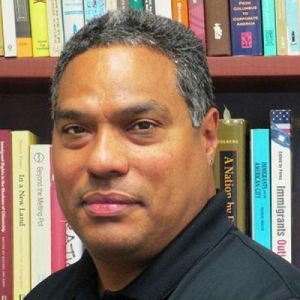 Eduardo Bonilla Silva合作论文数Department of Sociology, Trinity College of Arts & Sciences, Duke University1
 Claudio Benzecry合作论文数Department of Sociology, Weinberg College of Arts and Sciences, Northwestern University;Department of Communication Studies, School of Communication, Northwestern University;Center for Cultural Sociology, Yale University1
 Monica Prasad合作论文数Department of Sociology, Weinberg College of Arts and Sciences, Northwestern University1Stephens John R合作论文数Division of General Medicine and Clinical Epidemiology, University of North Carolina School of Medicine1
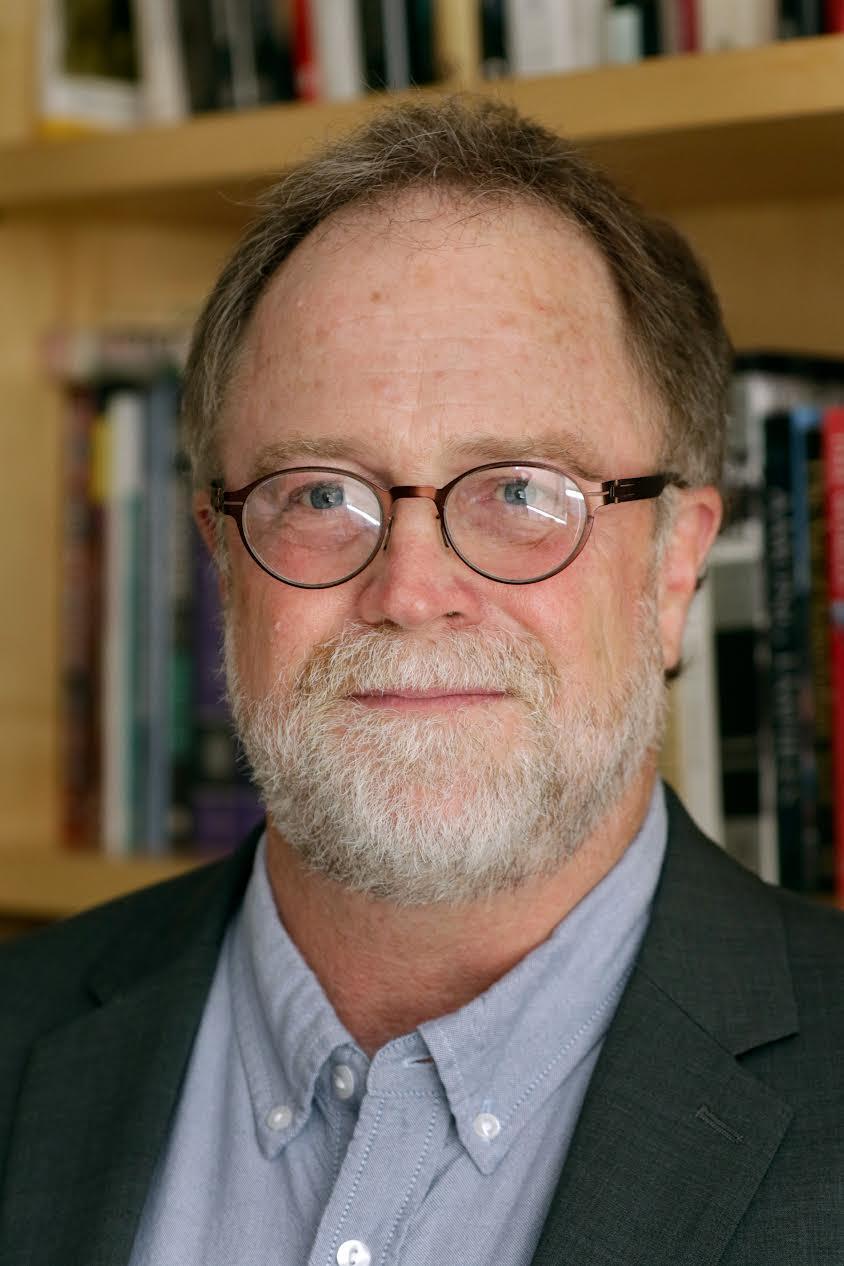 Michael Kennedy合作论文数Department of Sociology, Brown University1Marcus Andre Melo合作论文数1
 Yasemin Nuhoglu Soysal合作论文数1
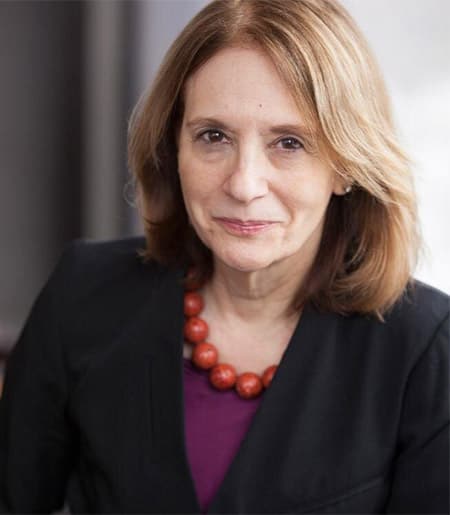 Mabel Berezin合作论文数Sociology, College of Arts and Sciences, Cornell University1
 Larry Isaac合作论文数Florida State University1




