From Muhammad cartoons to debates over “wokeness”, humor frequently sparks controversies and scandals, yet the phenomenon remains under-researched. This study investigates the rise and characteristics of humor scandals in eight European countries – Belgium (Flanders), Estonia, Finland, Hungary, Italy, the Netherlands, Poland, and Spain – between 1990 and 2022. The research aims to map humor scandals, analyze their frequency, and understand their characteristics by integrating insights from humor studies and scandal research. Using a mixed-method approach, the study identifies 216 national-level humor scandals, revealing a substantial increase in their occurrence, particularly from the 2000s onwards. Drawing on media archival research and employing a codebook to track scandals – including elements such as norm violators, trigger events, and targets – the paper identifies two prominent types of humor scandals: professional comedy-based scandals and party-political scandals. The results highlight a near-universal increase in scandals involving humor targeting social groups and those triggered by social media, as well as a rise in scandals sparked by populist right-wing politicians, especially in Finland, Hungary, Italy, and Poland. The study calls for further research on the implications of humor scandals, including their impact on affective polarization, and suggests that such scandals challenge traditional understandings of the positive social roles of both humor and scandal.
This chapter presents a new integrated model to understand when and how “beauty pays”. Following Lamont’s cultural process model, we conceptualize beauty as an open-ended evaluation process that sparks social boundary-drawing. This results in social dis/advantage, which reinforces durable, intersecting inequalities. We reformulate existing approaches as “beauty as aesthetic capital” approaches, assuming agreement on beauty, and “beauty standards as distinction” approaches, assuming that boundaries are drawn along lines of socially variable beauty standards. Both approaches suggest that “returns” to beauty are more open-ended for less privileged groups. We illustrate the usefulness of this model with a Q-sort study in Hong Kong. We find a range of evaluation processes, showing both agreement and disagreement on beauty, drawing boundaries of class, race, gender and ethnicity. Hong Kongers offered negative aesthetic evaluations of the appearance of “mainland” Chinese, showing how social cleavages are expressed in the language of beauty. Seeing beauty as evaluation allows us to bridge existing research traditions, sheds new light on the consequences of beauty particularly for disadvantaged groups, and corrects simplistic, popular insights on beauty as a form of capital.
Right-wing public figures, from comedians to politicians, increasingly use humor strategically to provoke scandal. While scandals are typically understood to damage the reputations of norm transgressors, the rise of successful right-wing scandal makers challenges this assumption. In this article, we introduce the concept of ‘scandal entrepreneur’ to theorize the rise of celebrity figures who deliberately create or amplify scandals for personal or political gain. Integrating insights from political scandal research, sociological work on cultural and moral entrepreneurship, and critical humor studies, we develop an innovative approach to scandal that combines dramaturgical and conjunctural analysis. Drawing on a quantitative mapping of Dutch humor scandals between 1990 and 2024 and an in-depth qualitative analysis of two cases, we trace both the steep rise in humor scandals in the early twenty-first century and the increasing professionalization of scandal entrepreneurship, which has turned scandal-making into a profitable business model. Based on our analysis of the Nekschot cartoon scandal (2008) and the VI-Akwasi scandal (2020), we demonstrate that, within the current cultural conjuncture, right-wing actors are best positioned to capitalize on scandals and successfully dramatize social and cultural divides through humor. Our approach offers valuable analytical tools for humor and scandal scholarship and the field of right-wing studies, providing a critical lens through which to examine wider cultural changes.
In this essay, I analyse how humour drives people apart, in politics and in society at large. Since the early 2000s, many politicians across the world have embraced humour to position themselves politically and chastise and provoke the establishment. This "clown style" in politics is mostly used by politicians on the populist right, occasionally on the left. In this essay, I analyze over 100 cases of political utterances from the years 2015-2020 from the Dutch, English and Italian-speaking world, that are 1. signalled as non-serious by verbal or non-verbal cues; 2. recognized as humorous by amused responses; 3. explicitly mark ‘symbolic boundaries’ (Lamont, 1992; Kuipers, 2009) or we-them divisions. I identify five strategies by which humour fuels polarization: wilful ambiguity, humorous attack, provocation, community-building and the cultivation of negative affect. This new political humour is both a symptom and a catalyst of increasing polarization. In a polarized political arena, joking politicians believe they stand to gain more from stylistic opposition to conventional politics than from adaptation to it. Previously, politicians with an outrageous style were usually encapsulated by the system. Once elected or appointed to office, they adopted a serious persona more compatible with their new station in life. But today, many politicians remain rowdy, funny and inconsistent even in the highest elected office. Through humour they bond with their substantial following in liberating, carnivalesque, sometimes downright hateful humor.
Many memes that emerged during the coronavirus disease-2019 (COVID-19) crisis were concerned with time and temporality. Understanding these memes as collective humorous sense-making of the uncertainty of the pandemic's first wave, we ask: how is temporality constructed in memes about the COVID-19 pandemic? Through a qualitative analysis of 117 memes from Brazil, Italy, the USA, and the UK, we identify four ways of constructing temporality. We call them temporal frames: Time Progression, Before and Now, Predictable Futures, and Future Gaze. Each frame uses humor to reflect on, and shape, meaning and experience in times of crisis, for instance by historical comparison or imagined futures. Given the centrality of memes in today's digital and popular culture, we argue that our findings contribute to discussions about how cultural practices (like humor) contribute to the cultural construction of time and how memetic internet culture structures reality construction (e.g. time construction) across the globe.
In a post-truth context where environmental claims of scientists and politicians are increasingly contested, this article explores how satirical climate fiction facilitates the imagination of and engagement with climate change. Taking Don’t Look Up (2021) as a case study, it presents a thematic analysis of 640 Reddit contributions. The analysis reveals that the movie served as a meaningful text, decoded in various ways, and invited the audience to engage in online public environmental debate. In this ‘participatory culture of climate debate’, the movie became popular cultural capital for the readers to (1) environmentally inform each other, (2) share environmental critiques and (3) mobilize ecopolitical action. We theorize that it was exactly Don’t Look Up’s satirical ambiguity and humor, combined with its immersive fictitious nature, that made the text quintessentially participatory. Thus, we argue that the movie made an impact beyond the individual, fostering collective environmental imagination and awareness.
The Covid-19 pandemic brought about an unprecedented cycle of digitally spread humor. This article analyzes a corpus of 12,337 humor items from 80+ countries, mainly in visual format, and mostly memes, collected during the first half of 2020, to understand the features and intended audiences of this “pandemic humor”. Employing visual machine-learning techniques and additional qualitative analysis, we ask which actors and which templates were most prominent in the pandemic humor, and how these actors and templates vary on the following dimensions: local vs. global, Covid-specific vs. general, and specifically for the actors, political vs. not political. Our analysis shows that most pandemic memes from the first wave are not political. The vast majority of the memes are global: They are based on well-recognized meme templates, and almost all identified actors are part of a cast of set “meme faces”, mostly from the US and the UK but recognized around the world. Most popular templates were found in several countries and languages, including non-European languages. Most memes were based on non-Covid specific templates, but we found new Covid-specific memes, which sheds new light on the process by which memes emerge, spread, and potentially become new meme templates. Our analysis supplements existing studies of (Covid) memes that mostly focus on small national samples, using qualitative methods. This cross-national analysis is enabled by a global dataset with unique data on geographical origin of humor. We show the usefulness of visual machine learning for identifying the emergence, spread and prevalence of transnational (humorous) cultural forms. By combining large-scale computational analysis with in-depth analysis, we bridge a gap in in meme studies between (mostly quantitative) data sciences and (mostly qualitative) communication and media studies.
In this article, which serves as an introduction to a special issue on humor and the public sphere, we argue that humor has become increasingly central to public discourse in the 21st century, and that this necessitates a rethinking of the relationship between humor and the public sphere in contemporary democracies. In the article, we bring together the dispersed academic literature on humor and the public sphere, and show how humor and comedy scholars have engaged with the long-standing academic debate around this contested concept, which was coined by Jürgen Habermas in 1962. We also introduce the eleven contributions to this special issue and situate them within this ongoing debate.
How does television taste function as cultural capital in contemporary China? This study shows how Chinese youth engage with global television fiction to mark their positions in China's changing social and cultural hierarchies. Using multiple correspondence analysis (N = 422) and interviews (N = 48) with college students in Beijing, we identify three taste dimensions: (1) disengaged versus discerning viewers; (2) TV lovers versus TV dislikers; and (3) 'Western' versus 'Eastern' TV taste. Dimensions 1 and 3 are cultural capital dimensions; they differ in criteria and type of cultural knowledge used to make distinctions and in connection with economic capital. Highlighting cosmopolitan capital as a distinct form of cultural capital, we analyse shifting global systems of cultural distinction, from a Chinese vantage point. Our analysis expands theories of culture and inequality by showing that (and how) tastes reflect and reinforce social stratification in the previously unexplored Chinese context, but with distinctive Chinese characteristics.
What happens when politics enters strongly aesthetic cultural fields? This article proposes a novel conceptual framework, which we propose to call ideologization, to understand how political-ideological considerations influence cultural legitimation. We build on theories of legitimation and cultural intermediaries to examine the strategic case of fashion as a cultural production field at the intersection of aesthetics and economics. Combining an analysis of frames in fashion magazines since the 1980s with critical discourse analysis of British Vogue in turning-point year 2020, we theorize ideologization as consisting of three elements: aesthetic agenda-setting; the reimagination of relations between producers, consumers and intermediaries; and the generation of discursive contradictions. This process of ideologization, which we see across cultural fields since the late 2010s, has strong implications for intermediaries who act as framers and brokers of legitimate culture. We conclude by proposing future research to further develop the ideologization framework and detail the long-term impact of political-ideological logics on cultural fields.
This article analyzes the creation of value in (semi-)peripheral fields, using interview (N=94) and ethnographic data of creatives, models and cultural intermediaries in Polish and Dutch fashion. Drawing on field theory and center-periphery theories we show that these peripheral fields have a distinct structure—peripheral worlds—marked by the dependence on foreign centers for goods, standards and consecration, in which actors employ field-specific peripheral strategies for pursuing value and success. Workers in the (semi-)periphery develop peripheral selves, marked by a “double consciousness”, simultaneously seeing themselves from a local perspective and through the eyes of “central” others. We theorize “peripheralness” as a dimension of social inequality, a continuum ranging from “most central” to “most peripheral”, that spring from transnational interdependencies; and offer building blocks for a theory of the periphery that connects structural conditions and personal experiences. This theory explains, among others, why peripheries are not the reverse of centers, why centers also need peripheries (though not as much as peripheries need centers), and why peripheral and semi-peripheral actors don’t leave for cultural hubs to “make it there”.
•Introduces visual Q method as a productive technique to study aesthetic meaning making, showing applications of this method in three studies of human beauty and urban aesthetics.•Using visual Q-methodology allows one to overcome shortcomings of interviews and surveys by simultaneously studying emotional and cognitive, “declarative” and “non-declarative” dimensions of meaning-making.•Visual Q method bridges qualitative and quantitative methods and data, and combines the advantages of visual elicitation techniques (enhancing engagement and validity) with a sorting assignment that offers rich insights in the process by which people produce e/valuations.•Visual Q-method shows how in aesthetic meaning making people take on various “subject positions”, either consciously or less so, that shape their aesthetic experience.•Visual Q advances our understanding of aesthetic meaning-making by highlighting how aesthetic experiences are made in concrete situations, in interaction with other persons but also pictures as non-human “actants”.
In contemporary societies, physical appearance is more important to more people than ever before. This article sketches the expansion of this contemporary beauty regime. Drawing mainly on European data, I argue that since the late 1800s the societal importance of appearance grew, as a result of expanding media and consumer cultures, social democratization, a shift to a service-based economy and the rise of new media. People came to have more developed and diverse tastes in human beauty and more opportunities to cultivate their appearance. It became more important to be beautiful, for men and women, across the course of life, in more domains of life. Drawing on the tradition of process sociology inspired by Weber and Elias, I interpret this gradual raising of cultural standards as the emergence of a beauty regime involving new standards for social control and self-control, standards for moral and aesthetic evaluation and standards for social worth and self-worth. The beauty regime is demanding and constraining for individuals but contributes to the emergence of durable social constellations that people might consider progress. The beauty regime makes appearance more central to many domains of life, and thus more consequential for identities and inequalities, self-worth and social worth.
This article examines a humorous meme that emerged on Chinese TikTok during the COVID-19 pandemic in China. Using #workfromhomewithchildcare, Chinese working mothers shared humorous clips of their experience of working from home with their children who were also at home during the pandemic lockdown. By analysing the themes, protagonists, and humour techniques of a sample of 85 videos, we ask why the mood of these clips is so strongly marked by humour, and what this tells us about contemporary Chinese society, particularly about the position of women and mothers. We show that these memetic clips consist of three distinct genres of mothers working from home: (1) ‘balancing mothers’ who balance between work and childcare, (2) ‘pedagogic mothers’ who give childcare tips, and (3) ‘commercially oriented’ mothers who offer tutorials by means of product placement and advertisement. While these memes express what Mary Douglas called ‘a joke in the social structure’ without offering either relief or critique, they do create an online joking culture that offers temporary relief as well as awareness that others are in the same position. Our analysis tempers enthusiastic claims about both the critical potential of humour and the new ‘liberating’ affordances offered by digital platforms to produce liberating female spaces.
The standard academic publication is often not an effective way to trigger the sociological imagination. This essay discusses an alternative means to invite people to think sociologically: a webcomic. In a collaboration between a sociologist and a team of comic artists, we created a webcomic (www.erccomics.com) to highlight insights from a research project on the social shaping of beauty standards in the transnational modelling industry. In the making of this Beauty comic, three "translations" had to be done: from analytical to narrative, from verbal to visual and from conceptual to concrete. We discuss how these translations were done and what we learned from this, including broader implications of these translations for (social) science communication, the public relevance of sociological research, the usefulness of thinking in different modalities and the fraught relationship between standard academic modes of communication and the sociological imagination.
The rise of video-on-demand streaming services has facilitated more intensive television watching. When novel consumption behaviors emerge, cultural intermediaries may be mobilized to make sense of it and potentially legitimize it. This often takes place by raising moral panic, as it draws attention to new cultural practices and asks tastemakers to take a stance. The current study takes “binge-watching” as a discursive anchor point to investigate this process. We argue that moral panic is not only a strategy that can be employed to condemn cultural practices, but by deflecting moral concerns through mechanisms of social distinction, it can also allow intermediaries to normalize new cultural phenomena. Through inductive and deductive coding of U.S. news articles on binge-watching (n: 681), we discern three pathways through which intensive video-on-demand watching is reframed: first, the shows that are binge-watched are high quality; second, binge-watching can be controlled, at least by the right type of audiences; and third, binge-watching is fun, in that if undertaken in moderation, it can be good for viewers. All three pathways resonate strongly with new middle-class dispositions. This study shows how the legitimization of new cultural boundaries demands an interplay between social distinction and moralization.
 Marc Verboord合作论文数Emory University14
 Susanne Janssen合作论文数14
 Elise Van der Laan合作论文数5
 Thomas Franssen合作论文数Leiden Univ, Ctr Sci & Technol Studies CWTS, NL-2333 AK Leiden, Netherlands4
 Jeroen De Kloet合作论文数Department of Media Studies, University of Amsterdam4Andy Battentier合作论文数3Barbara van der Ent合作论文数3nilyufer hamidturksoy合作论文数3
 Liesbet Zoonen合作论文数Erasmus School of Social and Behavioural Sciences, Erasmus Universiteit Rotterdam3h j bremmer合作论文数2Sein Aa合作论文数2koning j de合作论文数2l m troost合作论文数2Sylvia Holla合作论文数2Luuc Brans合作论文数2Dick Zijp合作论文数2elisa a g arfini合作论文数2
 Estrelle Claire Thunnissen合作论文数1Jonas Nicolaï合作论文数1Aleit Veenstra合作论文数1
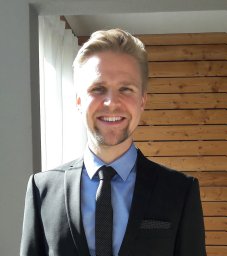 Joonas Koivukoski合作论文数1haak van den m合作论文数1
 Anastasiya Halauniova合作论文数Amsterdam Institute for Social Science Research, University of Amsterdam1Myra Bosman合作论文数1Paul Lewis合作论文数1
 Kobe De Keere合作论文数Univ Amsterdam1Xiao Han合作论文数1
 Juha Herkman合作论文数Faculty of Social Sciences, University of Helsinki1
 Savvas Zannettou合作论文数Faculty of Technology, Policy and Management, Delft University of Technology1
 Martín Sánchez-Jankowski合作论文数Department of Sociology, University of California, Berkeley1
 Sam Friedman合作论文数Department of Sociology, Logic and Scientific Method, London School of Economics and Political Science1
 Yiu Fai Chow合作论文数Department of Humanities and Creative Writing, Faculty of Arts, Hong Kong Baptist University1
 Richard Austin Peterson合作论文数Department of Sociology, Vanderbilt University1
 Daniel Biltereyst合作论文数Department of Communication Science, Ghent University;Centre for Cinema and Media Studies, Faculty of Political and Social Sciences, Ghent University1
 Rachel Spronk合作论文数University of Amsterdam1
 Jennifer C. Lena合作论文数Department of Sociology, Vanderbilt University1Elliott Oring合作论文数1Rineke Van Daalen合作论文数1
 Johan Heilbron合作论文数Department of History of Science and Ideas, Uppsala University;Centre Européen de Sociologie et de Science Politique;Erasmus Center for Economic Sociology, Erasmus Univerity Rotterdam1
 Paul Froese合作论文数Department of Sociology, Baylor University1
 Marcel Wenneker合作论文数Wageningen University & Research Centre;Applied Plant Research;Research Unit;Research Unit, Wageningen University & Research Centre1
 Pierrette Hondagneu Sotelo合作论文数Department of Sociology, University of Southern California1
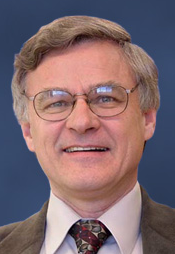 Rod A. Martin合作论文数Department of Psychology, Western University1
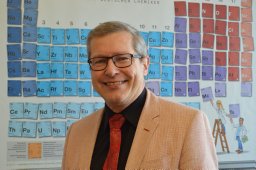 Wolfram Koch合作论文数Institut für Organische Chemie, Technische Universität Berlin1
 Olga Sezneva合作论文数Center for Advanced Studies, International;New York University;International Center for Advanced Studies, New York University1Christie Davies合作论文数1
 Mark Boukes合作论文数1
 J. H. J. Hulskotte合作论文数Built Environment and Geosciences;Health and Safety;Built Environment and Geosciences1




