Background Open Science (OS) and Responsible Research and Innovation (RRI) are increasingly converging under the concept of Open RRI, which integrates openness with inclusivity, responsibility, and societal engagement. Strengthening researcher skills in this area requires a clear understanding of existing training provision. This study presents findings from the Horizon Europe project PATTERN, which mapped and assessed Open RRI training resources across Europe. Methods A mixed-methods approach was applied, combining desk research, surveys, semi-structured interviews, data workshops, and mutual learning events. In total, 571 training resources were identified and analysed across eight skill areas: Open Access; FAIR Data; Citizen Science; Research Integrity; Gender, Non-discrimination, and Inclusion; Dissemination and Exploitation; Science Communication; and Management and Leadership. A subset of resources was further evaluated using defined quality criteria. Results The mapping reveals a fragmented and uneven training landscape, with a strong predominance of introductory-level resources and limited provision for intermediate and advanced learners. Training is often generic and lacks contextualisation, with gaps in inclusivity, multilingual provision, and local adaptation. Quality assessment highlights strengths such as modular design, open licensing, and the use of active learning approaches. However, recurring challenges include limited accessibility, unclear pathways for reuse, and difficulties in implementation and long-term sustainability. Key thematic gaps include intersectionality, policy engagement, supervision ethics, and the integration of indigenous and local knowledge. Conclusions Despite growing availability of training resources, significant gaps remain in scope, depth, and inclusivity. Addressing these challenges requires improved coordination, expansion of advanced and context-sensitive training, enhanced multilingual accessibility, and stronger integration into curricula and institutional practices to support sustainable Open RRI capacity building.
Wetlands provide essential ecosystem services, from carbon sequestration and flood mitigation to biodiversity support, yet over 20% have been lost in recent centuries, prompting global restoration efforts backed by policies like the UN Decade on Ecosystem Restoration. Despite rapid expansion of restoration projects, conventional monitoring remains short-term, expert-driven, and often disconnected from site-specific ecological dynamics, limiting adaptive management and long-term success. Citizen science has revolutionized ecological monitoring in other domains by enabling scalable, participatory data collection, but its application to wetland restoration has been largely overlooked. In this Perspective, we assess 120 restoration project sites worldwide and find that citizen science is currently integrated into fewer than 20% of projects even in high-activity regions like Europe, leaving significant social and geographic potential untapped. We find that recent advances in affordable remote sensing, miniaturized sensors, and mobile platforms—supported by rigorous data-validation frameworks—are now overcoming historical constraints regarding data reliability and spatial continuity. These technological shifts, when coupled with emerging institutional recognition, allow citizen-generated data to serve as a scalable, cost-effective infrastructure for monitoring ecological change over meaningful timescales. Systematically integrating public participation into restoration practice is therefore essential for closing critical monitoring gaps and ensuring the long-term sustainability of global wetland ecosystems.
A strong Community of Practice (CoP) can be powerful in supporting people to share, generate, and disseminate knowledge. This study evaluates the use of the Communities of Practice (CoP) approach for effective knowledge consolidation in the field of citizen science. Our paper offers an analysis of four CoPs that were set up as part of the European-based 3-year WeObserve project, with distinct themes of (1) co-design citizen engagement; (2) impact and value for governance; (3) interoperability and standards; and (4) the United Nations Sustainable Development Goals. Participation across the four CoPs fluctuated during their three-year life-time. Three key outcomes emerged from the CoPs. First, a joint identity and understanding were created within and across CoPs through the creation of an inception report by each CoP and through the creation of Citizen observatory (CO) vocabulary, which also served to differentiate such observatories from citizen science (CS) initiatives. Next, scientific papers and technical reports were cooperatively produced by CoP members that represent a synthesis of CoP members’ knowledge. Essential ingredients to the success of these CoPs also included extensive stakeholder engagement and the CoPs being steered by the underpinning values of the CS community. The impacts of the WeObserve CoPs range from the uptake of jointly produced publications, novel cooperative CS projects, new CoPs, joint grant proposals, and the integration of citizen science data into SDG monitoring. This evaluation highlights the diverse and transformative potential of CoPs for citizen science practice.
Citizen science (CS) initiatives are diverse, leading to a complex landscape of approaches and terminology. To address this complexity and foster a shared understanding, criteria were co-created with CS researchers, practitioners and citizen scientists to guide project inclusion on online CS platforms. At the ECSA2024 conference workshop, participants discussed the utility of these criteria, sharing experiences and reflections. The workshop employed a fishbowl exercise followed by a world cafe setup to delve into key topics such as project evaluation and progression, criteria and terminology application, and potential barriers to inclusion. Participants expressed caution regarding mandatory criteria, emphasizing the need for flexibility, particularly in the social sciences and humanities. While some criteria may enhance project communication and funding prospects, concerns were raised about the eurocentric nature and global applicability of the criteria. Despite limited familiarity and implementation of existing criteria, there is a growing understanding of their potential importance and usefulness within the CS community. Challenges remain regarding implementation processes and project exclusion concerns, but positive examples showcase the potential benefits of embracing criteria in CS networks and platforms.
Many young people struggle with their mental health and the COVID-19 pandemic compounded these challenges. However, young people are rarely involved in research and communication about causes and coping strategies. We used an online game as a conversation starter and co-created a list of coping strategies with young people to apply the dialogue model of science communication and facilitate social conversation about mental health during COVID-19. The young people found the involvement was valuable as it led to self-reflection, social reflection with peers and an experience of recognition and contribution. We discuss challenges and urge researchers to explore ways for open dialogue and co-creation as strategic and contributing parts of the research process.
Where expedition cruises can play a crucial role. Through the collective intelligence of resident communities and visitors, citizen science enables valuable data and information to be generated from local and outside sources of knowledge. This chapter outlines a citizen science pilot program of environmental monitoring by Arctic expedition cruises in Svalbard and Greenland during 2019 conducted to understand the potential this kind of environmental monitoring may have and to identify suitable approaches for enhancing data collection, management, and knowledge sharing. Observations are more likely to be used by decision-makers in the Arctic if records are analyzed and interpreted with a view to informing decision-making processes and if the findings are communicated to decision-makers in appropriate formats. An intermediary organization that can facilitate the dialogue and knowledge transfer between citizen science programs, scientists, and decision-makers is essential to ensuring that data actually enter the decision-making processes.
Artificial Intelligence (AI) can augment and sometimes even replace human cognition. Inspired by efforts to value human agency alongside productivity, we discuss and categorize the potential of solving Citizen Science (CS) tasks with Hybrid Intelligence (HI), a synergetic mixture of human and artificial intelligence. Due to the unique participant-centered set of values and the abundance of tasks drawing upon both human common sense and complex 21st century skills, we believe that the field of CS offers an invaluable testbed for the development of human-centered AI including HI, while also benefiting CS. In order to investigate this potential, we first relate CS to adjacent computational disciplines. Then, we demonstrate that CS projects can be grouped according to their potential for HI-enhancement by examining two key dimensions: the level of digitization and the amount of knowledge or experience required for participation. Finally, we propose a framework for types of human-AI interaction in CS based on established criteria of HI. This “HI lens” provides the CS community with an overview of ways to utilize the combination of AI and human intelligence in their projects. For AI researchers, this work highlights the opportunity CS presents to engage with real-world data sets and explore new AI methods and applications.
Citizen science (CS) is an international field based on widely accepted – although often contested – principles, typologies, and definitions. In comparison, national and local differences get relatively little attention. Our paper offers insights into the CS field in Denmark. We report on results from our 2020 study of CS activities in Denmark. The study included a literature review, a questionnaire distributed by email to members of known CS projects and allowing for access by means of self-enrolment (N=187), and a desk study of projects and actors with relation to the concept of citizen science. We found an increase in the number of CS-related publications from Danish universities from 2014 onwards. Nearly all publications were research publication, and very few directed towards larger audiences. We also found that the Danish CS field included all fields of scientific inquiry, including the social sciences and humanities. Most projects (65%) dealt with nature – biology and ecology – as an object of study. Nearly all projects used citizen science as a research method, and very few as a mode of public engagement or activism. Our survey respondents represented different CS stakeholders: universities, research libraries, museums, public institutions (agencies, public libraries, etc.), NGOs, companies, and private citizens. They were generally interested in and knowledgeable about citizen science. Collectively, they identified the following problems for CS in Denmark: volunteer retention and recruitment, institutional backing, public awareness, ethical approval of projects, acceptance of CS as a research method, and human resources for doing CS. In conclusion, CS is an emerging field at a critical stage. It has attracted interest yet still face challenges such as increasing and maintaining institutional support, consolidating existing organizational structures, creating incentives for researchers and citizens, information and advocacy, capacity-building, and ethical and legal attention.
Artificial Intelligence (AI) can augment and sometimes even replace human cognition. Inspired by efforts to value human agency alongside productivity, we discuss the benefits of solving Citizen Science (CS) tasks with Hybrid Intelligence (HI), a synergetic mixture of human and artificial intelligence. Currently there is no clear framework or methodology on how to create such an effective mixture. Due to the unique participant-centered set of values and the abundance of tasks drawing upon both human common sense and complex 21st century skills, we believe that the field of CS offers an invaluable testbed for the development of HI and human-centered AI of the 21st century, while benefiting CS as well. In order to investigate this potential, we first relate CS to adjacent computational disciplines. Then, we demonstrate that CS projects can be grouped according to their potential for HI-enhancement by examining two key dimensions: the level of digitization and the amount of knowledge or experience required for participation. Finally, we propose a framework for types of human-AI interaction in CS based on established criteria of HI. This "HI lens" provides the CS community with an overview of several ways to utilize the combination of AI and human intelligence in their projects. It also allows the AI community to gain ideas on how developing AI in CS projects can further their own field.
Development of outreach skills is critical for researchers when communicating their work to non-expert audiences. However, due to the lack of formal training, researchers are typically unaware of the benefits of outreach training and often under-prioritize outreach. We present a training programme conducted with an international network of PhD students in quantum physics, which focused on developing outreach skills and an understanding of the associated professional benefits by creating an outreach portfolio consisting of a range of implementable outreach products. We describe our approach, assess the impact, and provide a list of guidelines for designing similar programmes across scientific disciplines in the future.
This report aims to enhance our understanding of stakeholder mapping for co-created citizen science initiatives. It presents and discusses findings from an international two-day stakeholder mapping workshop with researchers, event organizers, communication experts, and artists realizing citizen science activities. Participants identified examples of co-creation in their work and mapped stakeholders for three co-creation initiatives from the “Doing It Together Science” project. For each case, we provide an overview of the stakeholder groups involved and the lessons derived from identifying actual and potential stakeholders in different phases of each activity and using different ways for mapping them. We demonstrate that not only stakeholder mapping can be diverse, but it may take different angles depending on the characteristics and project timescales, nevertheless adding significant value to any project. We argue that a better understanding of stakeholder involvement may contribute to more effective stakeholder communication, more successful implementation, and a greater impact for citizen science initiatives.
Environmental volunteering, such as biodiversity monitoring and practical conservation volunteering, provides a unique opportunity for achieving positive outcomes for both volunteers and conservation. While the social sciences have focussed on motivation, well- being and health benefits for volunteers, the environmental sciences have focussed on conservation outcomes. However, these parallel research agendas must be merged into a multidisciplinary, holistic approach to fully comprehend the complexities of the volunteering process and optimise outcomes. This thesis provides a first step in this direction by drawing together and extending research across psychology, health and conservation with the aim of investigating the relationships between environmental volunteer motivation, volunteer well- being and conservation achievement as perceived and experienced by volunteers and volunteer managers. Data collected from UK onsite and worldwide online surveys of nature- based activity participants, volunteers and volunteer managers are used to investigate these relationships. This thesis uncovers hitherto unknown discrepancies between perception and reality by volunteers and managers of volunteer motivation, well-being and conservation achievement. Environmental volunteers have a hierarchy of motivations, with value-based motives and desire to learn and be outdoors being more important, that was not recognised by volunteer managers. Similarly, volunteer managers underestimated the positive effect volunteering had on volunteers’ well-being. Interestingly, volunteers and managers rated the same conservation achievements differently, highlighting the need to develop and communicate more objective measures. Volunteers and managers both perceived that more motivated volunteers with higher levels of well-being would lead to increased conservation achievement, but this research found no such direct link between volunteer motivation and well-being and conservation achievement. This surprising result may be due to a shift in environmental volunteering towards a more experience-focused pattern of engagement. Volunteers, though interested in conservation, now also expect personal benefits from their volunteering, without which they leave. The implications of this change is that managers need to understand their volunteers’ motivations and well-being better to create fulfilling experiences where not only conservation, but also the volunteering experience itself, is at the centre.
Background: Environmental volunteering can increase well-being, but environmental volunteer well-being has rarely been compared to participant well-being associated with other types of volunteering or nature-based activities. This paper aims to use a multidimensional approach to well-being to explore the immediately experienced and later remembered well-being of environmental volunteers and to compare this to the increased well-being of participants in other types of nature-based activities and volunteering. Furthermore, it aims to compare volunteer managers’ perceptions of their volunteers’ well-being with the self-reported well-being of the volunteers. Methods: Onsite surveys were conducted of practical conservation and biodiversity monitoring volunteers, as well as their control groups (walkers and fieldwork students, respectively), to measure general well-being before their nature-based activity and activity-related well-being immediately after their activity. Online surveys of current, former and potential volunteers and volunteer managers measured remembered volunteering-related well-being and managers’ perceptions of their volunteers’ well-being. Data were analysed based on Seligman’s multidimensional PERMA (‘positive emotion’, ‘engagement’, ‘positive relationship’, ‘meaning’, ‘achievement’) model of well-being. Factor analysis recovered three of the five PERMA elements, ‘engagement’, ‘relationship’ and ‘meaning’, as well as ‘negative emotion’ and ‘health’ as factors. Results: Environmental volunteering significantly improved positive elements and significantly decreased negative elements of participants’ immediate well-being, and it did so more than walking or student fieldwork. Even remembering their volunteering up to six months later, volunteers rated their volunteering-related well-being higher than volunteers rated their well-being generally in life. However, volunteering was not found to have an effect on overall mean well-being generally in life. Volunteer managers did not perceive the significant increase in well-being that volunteers reported. Conclusions: This study showed how environmental volunteering immediately improved participants’ well-being, even more than other nature-based activities. It highlights the benefit of regarding well-being as a multidimensional construct to more systematically understand, support and enhance volunteer well-being.
 Kristian Hvidtfelt Nielsen合作论文数Innovat Knowledge & Econ Dynam IKE, Aalborg Univ5
 Jacob Sherson合作论文数Departments of Management, Physics, and Cognitive Science, Aarhus University;Center for Hybrid Intelligence, Aarhus University5
 Janet Frances Rafner合作论文数Dept Phys & Astron, Aarhus Univ3
 Arthur Hjorth合作论文数Department of Management, Aarhus University3
 Muki Haklay合作论文数Learning Planet Institute;Department of Geography, University College London;Mapping for Change3
 Paula Moura合作论文数2
 Lisbeth Iversen合作论文数2Blanka Palfi合作论文数2
 Michael Poulsen合作论文数Department of Biology, Faculty of Science, University of Copenhagen2Anna Jia Gander合作论文数2
 Claudia Gobel合作论文数2
 Antónia Correia合作论文数University of Minho2
 Ted Cheeseman合作论文数Happywhale, Columbia St, Santa Cruz, CA USA2
 Josh Aaron Miller合作论文数Blizzard Entertainment2
 Dilek Fraisl合作论文数2
 Dominik Dellermann合作论文数Informat Syst, Univ Kassel2
 Avi Segal合作论文数BenGurion University2
 Pedro Principe合作论文数2
 Louise Bezuidenhout合作论文数Centre for Science and Technology Studies, Faculty of Social and Behavioural Sciences, Leiden University2
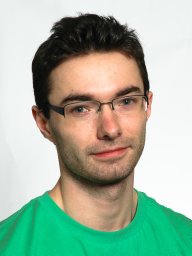 Miroslav Gajdacz合作论文数Institut for Fysik og Astronomi, Aarhus Universitet2
 Susanna Curtin合作论文数2
 Finn Danielsen合作论文数NORDECO (Nordic Agency for Development and Ecology) Skindergade 23 DK-1159 Copenhagen Denmark2
 Kobi Gal合作论文数Al and Data Science Laboratory;School of Informatics, The University of Edinburgh;Centre for Research in Digital Education, Moray House School of Education and Sport, The University of Edinburgh;Department of Information Systems Engineering, Faculty of Engineering Sciences, Ben-Gurion University of the Negev2
 François Grey合作论文数Mikroelektronik Centret, Technical University of Denmark2
 Pietro Michelucci合作论文数2
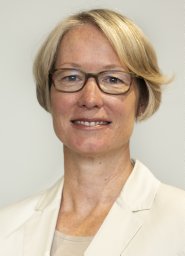 Uta Wehn合作论文数2Helen Clare合作论文数1H. P. Shanahan合作论文数1Ellen Leenarts合作论文数1Jo Havemann合作论文数1Justus Henke合作论文数1Victoria Garnett合作论文数1Aleksandra Berditchevskaia合作论文数1Martine Legris合作论文数1Jörn Knobloch合作论文数1NM Nadkarni合作论文数1Alice Sheppard合作论文数1Rick Stafford合作论文数1Brian Cahill合作论文数1Mordechai Haklay合作论文数1Torben E. Agergaard合作论文数1Aleks Berditchevskaia合作论文数1Marzia Mazzonetto合作论文数1
 Lorenzo Pugliese合作论文数1Valeria Righi合作论文数1
 Nicola Moczek合作论文数1
 David Scheller合作论文数1
 Maria Schrammel合作论文数1Nancy Hoebelheinrich合作论文数1




