In this article, we explore the intersection of migration, membership, and inclusion through Civil Sphere Theory (CST), the most powerful theory currently available for explaining social solidarity in modern, differentiated societies. While CST has amply proven its worth by deepening our understanding of social solidarity and civil repair within established polities, it has insufficiently addressed the boundaries that define inclusion and exclusion in the context of migration. We open the article by reconceptualizing immigration as the crossing of geographical, political, and symbolic boundaries. This perspective shifts the focus from linear processes of inclusion to the dynamic interplay between national membership, citizenship, and the civil sphere. Drawing on CST’s nuanced approach to cultural and social boundaries, the paper makes explicit how in the contemporary world, national and civil memberships are tightly coupled. Concerning migration, the civil sphere must consequently mediate between the formal inclusivity of liberal-democratic ideals and the bounded character of national belonging. We further advance a critique of CST’s limited attention to citizenship, emphasizing how citizenship remains a key conduit for universalizing national membership. To conclude, we identify the engine of potential membership change in the tension between social and symbolic boundaries embedded in differentiated societies. This approach bridges migration studies and cultural sociology, providing some preliminary insights into the mechanisms involved in civil incorporation.
This essay provides a critical overview of the development, transformations, and current configuration of the Italian sociology of culture. It argues that, despite a long history of sociological inquiry into cultural phenomena, Italy lacks a cohesive and durable tradition or field of cultural sociology. The Italian case is marked by fragmentation, both intellectual and institutional, where individual initiatives prevail over stable research networks or theoretical schools. The essay traces this condition back to the peculiar postwar rebirth of Italian sociology, shaped by external models and hindered by longstanding academic resistance and organizational rigidity. It explores the evolution of cultural inquiry within Italian sociology across key historical periods – from early postwar modernization narratives to the ideological polarization of the 1970s, and the subsequent academic normalization of the discipline. Special attention is given to the shifting role of textbooks as a lens into changing self-understandings of the discipline and the ongoing tension between analytical and empirical approaches to culture. The emergence of new subfields, growing internationalization, and the proliferation of teaching materials in recent years suggest that the sociology of culture in Italy is entering a new phase. Yet, the lack of sustained debate, institutional coherence, and theoretical consolidation persists. The essay concludes by proposing that the Italian case exemplifies a model of intellectual production akin to the ‘Third Italy’ economic model: decentralized, artisanal, and occasionally brilliant – yet inherently fragile. This ambivalent legacy may offer both challenges and opportunities for future developments in Italian cultural sociology.
This article studies the association between transnational parenthood, that is, mothers and fathers who have migrated, leaving at least one child in the country of origin, and well-being among first-generation immigrants in Italy. Transnational households have been researched mostly through qualitative interviews and ethnographies. This paper uses nationally representative data for Italy from the Survey on Social Condition and Integration of Foreign Citizens (2011-2012), therefore enabling to generalise findings from the sample to the national population of (regular) migrants. Results show that transnational parents are more likely to have poorer life satisfaction and mental health compared to migrants whose children are in Italy. The association remains significant even after controlling for sociodemographic characteristics, time since migration, and area of origin. The well-being gap further increases if the children abroad are under 12 years old. Migrants with poor contact with their children are particularly at risk for poor mental health and low life satisfaction. The result underlines the relevance of reaffirming parental social presence to contrast the negative implications of physical distance on well-being. Importantly, the negative association between distance parenting and well-being holds not only for women, as found by previous literature, but also for men. This finding challenges the image of fathers as uncaring, supporting recent contributions that emphasise the complexity of the phenomenon of transnational fatherhood.
The sociology of migration used to be a peripheral, often ignored, area of the discipline. In recent decades, migration issues have moved radically and impetuously close to its center. New research networks, specialized journals, graduate programs, book series: the sociology of migration has experienced remarkable growth. When accompanied by high levels of international and multidisciplinary collaboration, rapid growth may bring with it fragmentation and hyper-specialization. The sheer number of new concepts proposed by migration scholars, combined with the wide range of research methodologies deployed in ever-expanding sites of empirical investigation, makes it difficult for those engaged in this collective enterprise to see the forest for the trees. The time is ripe for a critical taking stock, and this Handbook is meant to provide it. It is intended as a research tool for those already immersed in the field and an introduction to it for novices.
Geographical mobility may have a powerful influence on sexual change. The sexual dimension of migration has mostly been studied in reference to its role in shaping aspiration for mobility. It has been documented how the promise of an erotically desirable future plays often an important role in many migration subcultures. Mobility, moreover, has been recognized as one of the ways in which many types of sexual minorities have escaped repression or pursued greater autonomy. In this paper, we argue that the same phenomena may be observed in the migration of older people. For some mature persons, particularly women, migration provides an alternative to de-sexualization and stigmatization. In many of these cases, however, the subjective process of sexual change is triggered indirectly, and sometimes serendipitously, by the experience of geographical dislocation. In fact, the experience of re-sexualization may be utterly independent from any pre-emigration aspiration to change one’s sexual Self. The paper – on the basis of two longitudinal research projects on the women pioneers of the Eastern European migration to Italy – explores the role played in their settlement by the discovery that, in the new environment, their age did not disqualify them from romance. The different reactions to these opportunities have created a strong differentiation among migratory trajectories. For the women pioneers who have decided to explore it, this unexpected lovescape has made possible to draw some crucial social boundaries and to trigger the birth of a distinctive sexual field.
We explore, using a unique Italian survey dataset containing matching parent-child information, the determinants shaping sociability patterns among the children of immigrants. While it is well-known that long-term migration disrupts interpersonal networks, little is known about the consequences of such disruption for the offspring of immigrants. Adopting a multilevel approach that allows for the consideration of different individual and parental characteristics, we investigate such effects. Our findings reveal that the size and diversity of core discussion networks among immigrant parents are strongly associated with those of their children. Contrary to widespread belief, once the actual sociability patterns of parents are taken into account, out-group attitudes, religious affiliation, and religiosity of the parents play no significant role in determining the size and composition of the close relationships of their children. We consequently put forward the hypothesis that parents may lead mostly by example. Consequently, an adequate understanding of the structure of the core discussion networks of the children of immigrants requires paying attention to the actual interpersonal networks that children have been exposed to within their households.
AbstractIn this chapter, we provide an empirical critique of the conceptual frame of debates on convergence and divergence among EU states regarding migration policies. The key assumption underlying such debates is that EU states are essentially independent units, with their own admission and control challenges. We suggest, on the contrary, that migration control policies in Western European states should be considered as an interdependent, yet politically segmented, system.We test this view by analysing two migration policy fields widely different in terms of history and development, i.e., visa and return policy. With regard to visa policies, the systematic configuration emerges clearly. We show that, over time, the original Northern model of visa controls has become the widely accepted normative model across all European states today, formalised in the New Common Visa Code. Existing differences between North and South Europe have to be read in light of this generally homogenous background. On the contrary, policy harmonization and cooperation in return policies and practices have always remained low. We do not observe, however, evidence of a North-South cleavage. Interestingly, a process that we could define as “converge” is at play, since all EU states have shown to be largely ineffective in removing unauthorised TCNs from their territories.
come intervention in the growing literature on how neoliberalism fuels an economic and social precariat connected by shared conditions of insecurity. A study of ‘‘noncitizenship,’’ this collection is divided into three parts: Mobility and Migration; Labor and Precarity; and Belonging and (Non)citizenship. The first part explores fractal forms of citizenship shaped by surveillance technologies, from the deportability of British Windrush citizens (Bridget Anderson) to translocal networkdriven migration (Adrián Félix), dispossession (Felicity Amaya Schaeffer), displacement (Alejandro Grimson), and the ‘‘refugeecitizen’’ (Tsering Wangmo Dhompa). The second part theorizes the politics of precarity through noncitizen vulnerabilities, emphasizing legal status (Rhacel Salazar Parreñas and Krittiya Kantachote) and wage theft (Shannon Gleeson), and illustrating a collective global precariat (Marcel Paret; Claudia Maria López). In the final section of the book, degrees of membership, racial capitalism, and social mobilities are engaged through noncitizenship (Katherine Tonkiss and Tendayi Bloom), denizenship (Nicholas de Genova), migrant demands for regularization, (Susan Bibler Coutin and Véronique Fortin), and forms of imperial citizenship (Emily Mitchell-Eaton). In the Afterword, Tanya Golash-Boza reminds us that global capitalism continues to be constituted by borders, an expanding precariat, and unequal citizenships, from global South to North. The collection offers a hopeful yet critical response to engaging shared and embodied vulnerabilities that inform a new political condition, and a response to the determination of a ‘‘deserving’’ subject. The End of Illusions: Politics, Economy, and Culture in Late Modernity, by Andreas Reckwitz. Translated by Valentine A. Pakis. Medford, MA: Polity, 2021. 244 pp. $69.95 cloth. ISBN: 9781509545698.
This article argues that Jeffrey Alexander's The Civil Sphere constitutes the first sociological theory of civil society, a theory with its own developmental history. That history includes the trajectory of Alexander's career prior to his simultaneous turn to cultural sociology and civil society. The former led him to develop what he calls a 'strong program,' while the use of the term 'civil sphere' serves to distinguish his approach to civil society from other articulations, past and present. This includes viewing the theory as offering a more realistic understanding of the prospects for and impediments to liberal democracy. Conceived at the outset as an ongoing project, rather than the last word on the topic, we review how that project has shifted from the work of one prominent theorist to a global network of scholars.
Background The mechanisms that influence the uptake of risky behaviours among immigrants are influenced by the interrelation between characteristics operating in different phases of their migratory experience. Characterizing their behavioural risk profile is needed to prioritize actions for prevention and health services organization. We therefore analysed health behaviours and their determinants among immigrants in Italy, jointly accounting for sociodemographic factors, migration pathways and integration indicators. Methods Data come from a national survey conducted in 2011-2012 on a sample of about 12000 households with at least one foreigner residing in Italy. The independent impact of a variety of sociodemographic, migratory and integration characteristics on obesity, smoking and daily alcohol consumption was assessed using multivariable Poisson models. Results The survey involved more than 15,000 first generation immigrants. Unhealthy lifestyles are more common among men than among women and vary widely by ethnic group. There is a significant impact of employment status and family composition, while the educational level loses importance. Longer duration of residence and younger age at arrival are associated with an increased behavioural risk. Among women we also observed an independent impact of the integration indicators, less important for men. Conclusions The profile of the main unhealthy lifestyles among migrants is shaped by cultural, socioeconomic and migratory characteristics, which differ by gender. Understanding these factors can help to design tailored preventive messages, necessary to interrupt the deterioration of migrants’ health capital. Low levels of integration have an additional negative impact on health, so inclusion and integration policies should complement health promotion strategies.
Throughout his career, Talcott Parsons had a continuing interest in the study of ethnic phenomena. His professional involvement in several projects and research activities on these issues is well-documented. Parsons' intellectual contribution to the field of ethnic and racial studies, however, is still obscured by biased perceptions, textbook vagueness, and just plain ignorance. This is unfortunate, as issues of ascriptive difference—and their associated inequalities—play a key role in Parsons's analyses of modern society. In fact, Parsons always acknowledged the enduring structural significance and theoretical relevance of ethnic and cultural inequalities in contemporary society, and did so much earlier than many other theorists. This chapter makes the case for taking Parsons's analyses of race and ethnicity critically and seriously.
 Martina Cvajner合作论文数16
 asher colombo合作论文数Fdn Ric Ist Carlo Cattaneo6Claudia Finotelli合作论文数Instituto Universitario Ortega y Gasset6
 Peter Kivisto合作论文数New York University5
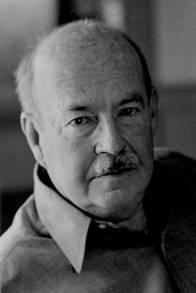 Talcott Parsons合作论文数Harvard University4
 Gabriel Echeverria合作论文数Migrat Scenarios & Social Change, Univ Trento2
 Debora Mantovani合作论文数Dept Polit & Social Sci, Univ Bologna2Ferruccio Pastore合作论文数Centro Studi di Politica Internazionale2
 Jeffrey C. Alexander合作论文数Department of Sociology, Yale University2
 Ron Eyerman合作论文数Yale Univ2
 Paola Monzini合作论文数1Raffaella Rusciani合作论文数1Rj Holton合作论文数1Rocco Molinari合作论文数1Giovanni Minchio合作论文数1Ronald Eyerman合作论文数Women’s, Gender, and Sexuality Studies, Yale University1
 Richard Swedberg合作论文数Department of Sociology, College of Arts & Sciences, Cornell University1Giulietta Stefani合作论文数1Achille Ardigo合作论文数1Maria Paola Paladino合作论文数Department of Cognitive Sciences and Education, University of Trento1Karen Schönwälder合作论文数1
 Dita Vogel合作论文数Interdisciplinary Center for Education and Communication;Carl von Ossietzky Universität Oldenburg;Ammerländer Heerstr;Interdisciplinary Center for Education and Communication, Carl von Ossietzky Universität Oldenburg1
 Marzio Barbagli合作论文数Dipartimento di Scienze dell'Educazione, Alma Mater Studiorum - Università di Bologna1
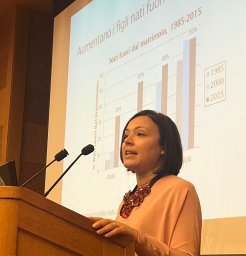 Agnese Vitali合作论文数Università Bocconi Carlo F. Dondena Centre for Research on Social Dynamics1Jeroen Vaes合作论文数Dept Psychol & Cognit Sci, Univ Trento1Teresa Spadea合作论文数Regional Epidemiology Unit, ASL TO3 Piedmont Region1
 Peter A. Kraus合作论文数1
 Giuseppe Costa合作论文数Università di Torino1




