This paper deals with the optimal formation control problem based on model decomposition for multiple unmanned aerial vehicles (UAVs). The main contribution of this paper is to integrate the formation control and the trajectory tracking into one unified feedforward control and feedback control framework in an optimal mode. We first establish the dynamic model of the leader-follower UAV formation system, and the communication network topology which only depends on the position information given by the leader. Second, to reduce the complexity of the model, each follower is decomposed into three isolated subsystems. Third, a step-by-step formation controller design scheme decomposed into feedforward control and optimal control of formation control is proposed. Finally, the proposed scheme has been extensively simulated and the results demonstrate the stability and the optimality.
The service life of floating production platforms can be substantially shortened due to undesirable excessive vibrations caused by dynamic loads. It is thus necessary to develop effective vibration reduction methods for floating production platforms. This article proposes a network-based active control approach for a spar-type floating production platform (SP) against wave exciting loads and deception attacks. First, a novel active tuned heave plate (ATHP) mechanism based on the concept of the active tuned mass damper is developed for the SP. Second, in the context of networked control of the SP-ATHP system, an event-triggering transmission mechanism is introduced to significantly improve communication efficiency. Meanwhile, a Bernoulli distribution and a nonlinear function are employed to character possible deception attacks in shared communication channels. Then, by modelling the network-based closed-loop SP-ATHP system as a time-delay stochastic system, its stability and H∞ performance analysis is derived. Besides, some criteria are obtained to co-design the triggering mechanism and the H∞ controller. Finally, simulation studies demonstrate that compared with some existing heave plate mechanisms, the designed event-triggered H∞ controllers under this ATHP mechanism are more effective to suppress heave motions of the platform and save network resources and control expenditure. Furthermore, even though there are deception attacks, the proposed scheme can still guarantee satisfactory system performance.
This paper investigates the vibration control problem for offshore platform, where the nonlinear characteristics, delayed input and external wave force are considered in time domain. By introducing a delay-free reconstructional vector and applying the maximum principle, the original vibration problem for offshore platform is formulated as a nonlinear two-point-boundary-value (TPBV) problem with delayed items. The major contribution of this paper is that a performance-based near-optimal vibration control strategy is proposed by solving this nonlinear TPBV problem, which includes a feedback item with offshore platform system state, a feedforward item with wave force state, and a compensator for nonlinear and delayed items with infinite supersensitive component. In particular, the designed compensator is calculated from two group series of linear differential equations by introducing a parameter for expending the Maclaurin series of nonlinear and delay items. Meanwhile, an iterative algorithm is designed to make the proposed vibration control scheme computable based on the control performance in each iterative procedure. Finally, experimental results show that the displacement, velocity and performance index of an employed offshore platform achieved small values under the proposed control strategy and designed algorithm.
Vibration damping of jacket platforms is among the significant issues in marine science and engineering, and the design of active vibration control schemes is very important to ensure the stability and safety of the jacket platforms against external loadings. This paper provides three fuzzy output feedback H ∞ controllers of the jacket platforms for irregular wave forces. By considering time-varying masses of jacket platforms, a Takagi-Sugeno (T-S) fuzzy dynamic model of the structure is established. Then fuzzy output feedback H ∞ control schemes are developed via using output signals of the platform with current and/or are delayed. Several existence conditions of fuzzy output feedback H ∞ controllers are derived. Simulation results demonstrate that the fuzzy output feedback H ∞ control strategies are remarkable to suppress the vibration of structure. Moreover, by choosing proper delayed output information of the system, the presented delayed fuzzy output feedback H ∞ control schemes outperform the conventional fuzzy output feedback H ∞ control approach.
In this article, the fault-tolerant control (FTC) problem of vehicle active suspension is concerned in the discrete-time domain, in which the road disturbances and faults in actuator and measurement are considered. The main contribution consists of proposing an active physically realizable fault-tolerant controller based on a reduced-order observer, which makes up an optimal vibration control component and an event-triggered FTC component. More specifically, by discussing a discrete vehicle active suspension subject to road disturbances generated from the output of a designed exosystem, the optimal vibration control component is derived from maximum principle to offset the inevitable vibrations. Meanwhile, based on the real-time system output of vehicle suspension rather than residual error, a reduced-order observer is proposed to cover the physically unrealizable problem for the designed optimal vibration control component. After that, an event-triggered FTC component and an event-triggered restructured system output are designed to compensate the faults in actuator and measurement, respectively. Finally, extensive experiments are conduced to the control performance of vehicle active suspension under the proposed controller, and confirm its effectiveness and superiority over other control schemes.
For steel jacket-type offshore platforms under irregular wave forces, we study the networked predictive vibration controller with inevitable random time delays, packet dropouts, disordering, and disturbance. First, we present a model of networked control system with two buffers, and the model is applied in the vibration control of offshore platforms. The buffers are designed to solve the above problems and located in the sensor-to-controller and controller-to-actuator channels of the networked control systems (NCSs). Second, we design networked predictive feedforward and feedback controller based on the received packets of past time. A new Algorithm is presented to simplify the computation of control law and reduce the storage required. Therefore the designed controller is physically realizable and easy to complete. Third, we made stability analysis of the controller by Lyapunov function. Finally, example of steel jacket-type offshore platform is applied to verify the feasibility and efficiency of controller. The simulation results show that the networked predictive vibration controller can compensate random big delays, large packet dropouts and disordering efficiently. Compared with different controllers, the presented predictive controller can decrease oscillation of offshore platform more significantly and the required control force can be kept in ideal small scale simultaneously.
This paper is concerned with the problem of delayed proportional-integral control of an offshore platform subject to self-excited nonlinear hydrodynamic force. By using current and distributed delayed states, a delayed proportional-integral controller is designed to stabilize the offshore platform. Under such a controller, the closed-loop system of the offshore platform is modeled as a nonlinear system with discrete and distributed delays, which allows us to employ the Lyapnov–Krasovskii functional method to analyze its asymptotic stability. Since an affine Wirtinger-based inequality is exploited to estimate the derivative of the Lyapunov–Krasovskii functional, a new stability criterion for the closed-loop system is derived, based on which, suitable control gains can be designed provided that a set of linear matrix inequalities are feasible. It is found through simulation results that the proposed control scheme can improve the control performance remarkably. Moreover, (i) compared with the existing delay-free controllers, the proposed controller can reduce the required control force and the oscillation amplitudes of the platform significantly; and (ii) compared with several delayed controllers, the proposed controller requires less control cost.
This paper addresses the analysis and synthesis issues of event-triggered offshore steel jacket structures with an active tuned mass damper mechanism. First, to save communication resources, an event-triggered data packet processor (DPP) is proposed such that the transmissions of the sensor data can be regulated over the communication channel. Second, by virtue of the time-delay system approach, a unified closed-loop system model is presented which can well accommodate the simultaneous presence of network-induced delays, nonlinearity and uncertainty in the offshore structure. To further increase resilience, the control law is allowed to possess gain perturbations. Then, via the Lyapunov functional method, criteria for designing a resilient event-based synthesis strategy are derived. Finally, an illustrative example is given to verify that the developed resilient strategy can guarantee the prescribed performance of the offshore structure while alleviating the frequent occupancy of the scarce communication resources.
This paper focuses on the fuzzy guaranteed cost $$H\infty$$ control problem for uncertain nonlinear vehicle active suspension system with random actuator time delay. Its main contribution to the literature is that a fuzzy guaranteed cost $$H\infty$$ controller (FGCHC) is proposed to ensure the resulting closed-loop vehicle active suspension system to be asymptotically stable and guarantee the performance index to be less than a preset upper bound. More specifically, taking the varying masses and the uncertainties caused by random actuator delay into consideration, a discrete-time Takagi-Sugeno fuzzy model for vehicle active suspension is obtained based on an augmented vector, which is without explicit of random actuator delay. By employing the Lyapunov stability theory and the linear matrix inequality (LMI) approach, the existence condition and the design approach for proposed FGCHC are presented. Meanwhile, the computability for proposed FGCHC is guaranteed by solving a corresponding convex optimization problem. By analyzing performance requirements for vehicle active suspension under different simulation scenarios, simulation results demonstrate that the proposed FGCHC can offset the vibration and compensate the varying masses and uncertainties for vehicle active suspension effectively.
In the paper, we study the problem of vibration control for offshore platform in nonideal network environment under wave and current forces based on the modified transformation. We consider the wave and current synchronously and give a dynamical system for the outside loads. The problem of time delay, packet dropouts and disordering due to nonideal network are taken into account. In the networked control model, two buffers output the received packets according to time stamps and upper bound of time delay. Based on a transformation, we reduce the time delay system into an equivalent delay-free system. Taking the nonideal network communication conditions into account, we design a modified transformation based on the past time data, wave and current loads, and received packets through network at current time. The networked controller is presented to depress the vibration of structure in nonideal network communication environment based on the modified transformation. An algorithm is given to simplify the computation of control law by recurrence. The system stability under presented networked controller is analyzed based on Lyapunov functional. Through the simulation results and comparison with other networked controllers, we can see that the presented controller can reduce the oscillation of offshore platform effectively.
研究线性系统在正弦扰动下的扰动抑制问题.对于一类受正弦扰动的n阶线性系统,提出了一种具有二阶动态特性的状态反馈控制算法.设计的动态反馈控制律结构由两部分构成.首先利用内模原理,在控制器中嵌入了正弦扰动的模态矩阵,实现了闭环系统的无静差扰动抑制.然后通过设计控制器中的n+2个参数,使闭环系统的极点实现任意配置,从而保证了闭环系统的指数渐近稳定性.数值仿真算例说明了控制策略的有效性.
The book was inadvertently published with an incorrect Grant number. In Front Matter, 4th line of page number vii, the sentence “of China under Grants Z19F030002,…” has been replaced by “of China under Grants LZ19F030001,…”.
This paper deals with delayed sliding mode H∞ control for an offshore steel jacket platform subject to nonlinear self-excited wave force and external disturbance. By using both current and delayed states, a delayed sliding mode H∞ controller is designed to attenuate vibration of the offshore platform. It is observed through simulation results that the delayed sliding mode H∞ controller is capable of reducing the oscillation amplitudes of the offshore platform significantly. Moreover, compared with the delay-free sliding mode H∞ controller, the oscillation amplitudes of the offshore platform under the controllers are almost the same, while the control force required by the delayed sliding mode H∞ controller is less than that by the delay-free sliding mode H∞ controller.
In this paper, the network-based delayed H ∞ control with uncertainties for jacket-type offshore platform subjected to irregular wave forces is investigated. First, a dynamical model of network-based offshore platform with time delay and parameters uncertainties is established. Then, the sufficient condition of existence of controller for the offshore platform system is derived based on Lyapunov functional, and control scheme is presented to reduce the effect of wave-induced vibration on offshore platform. As shown in simulation, networked-based delayed H ∞ control (NDHC) can reduce the amplitudes of vibration of jacket type offshore platform system.
This paper is concerned with networked state feedback stabilization control problem for an offshore platform. By transforming the networked closed-loop system of the offshore platform into a nonlinear delay system with time-varying delays, a new networked state feedback controller is designed to improve the control performance of the offshore platform. Simulation results demonstrate that the developed networked control scheme is effective to attenuate the oscillation amplitudes of the offshore platform significantly. In addition, in the cases of different lower bounds of network-induced delay, the maximum admissible upper bounds of the delay in the networked offshore platform are investigated.
为了实现具有参数摄动和随机扰动等不确定性欠驱动自主水下航行器的鲁棒控制,基于线性二次型调节器(LQR)方法和滑模控制,设计了一种鲁棒最优积分滑模控制器.首先,给出了AUV的垂直面数学模型;其次针对AUV的标称模型,根据二次型性能指标,设计了基于状态独立黎卡提方程(state dependent Riccati e-quation,SDRE)最优控制器,使标称系统的性能满足提出的最优指标;然后,考虑系统的不确定性,在SDRE标称控制器的基础上设计鲁棒最优积分滑模律,使AUV系统在满足性能指标要求的同时,对不确定性具有鲁棒性.最后,采用RE-MUS AUV系统模型验证了该方法的有效性和鲁棒性.
 Baolin Zhang (张宝琳)合作论文数College of Sciences, China Jiliang University48
 Hao Su (宿浩)合作论文数Faculty of Information Science and Engineering, Ocean University of China36Shiyuan Han (韩士元)合作论文数济南大学信息科学与工程学院17Yang Xi-Xin合作论文数13
 Hui Ma (马慧)合作论文数College of Information Science and Engineering, Ocean University of China13
 Wang Peidong合作论文数Harbin University of Science and Technology13
 Dexin Gao (高德欣)合作论文数College of Automation and Electronic Engineering, Qingdao University of Science and Technology13
 Xianming Zhang (张先明)合作论文数School of Engineering, Swinburne University of Technology;School of Software and Electrical Engineering, Swinburne University of Technology11
 Yandong Zhao合作论文数11Xue Yang (杨雪)合作论文数11Huiying Sun合作论文数11
 Qinglong Han合作论文数Swinburne University of Technology10
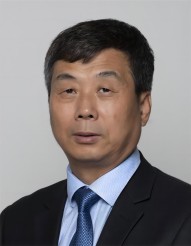 Zhongwen Guo (郭忠文)合作论文数Faculty of Information Science and Engineering, Ocean University of China9
 Yuehui Chen (陈月辉)合作论文数Computational Intelligence Lab, School of Information Science and Engineering, University of Jinan;Artificial Intelligence Institute, University of Jinan9Qing Yang合作论文数8Yi-Min Liu合作论文数8Chao Li (李超)合作论文数7Qilei Xu合作论文数7Yang Li合作论文数6Chun-peng TIAN (田春鹏)合作论文数6Hao Yu合作论文数6Hongwei Gao合作论文数6
 Yong Zhang (张勇)合作论文数College of Control Science and Engineering, China University of Petroleum6Hailin Liu (刘海林)合作论文数6
 Lukun Wang (王鲁昆)合作论文数College of Information Science and Engineering, Ocean University of China, Qingdao, China.6Shumei Zhang合作论文数College of Control Science and Engineering, Zhejiang University, Hangzhou, China5
 Jing Lei合作论文数National University of Defense Technology, National Univ of Defense Technology5
 Naiping Hu (胡乃平)合作论文数青岛科技大学信息科学技术学院5Juan Li (李娟)合作论文数青岛农业大学机电工程学院5
 Hai-Hong Wang合作论文数College of Information Science and Technology, QingDao University of Science and Technology5
 Shou-Wan Gao合作论文数5Xunhong Zhao (赵驯洪)合作论文数4Pan-Pan Du合作论文数4HaiPing Pang (逄海萍)合作论文数4
 Rui Dong (董瑞)合作论文数4Li-Na Tang合作论文数4
 Liang Sun合作论文数Xi'an Jiaotong Univ, Xi'an Jiaotong Univ.4ShaoTing Ge合作论文数4
 Yingjian Liu (刘颖健)合作论文数Faculty of Information Science and Engineering, Ocean University of China4
 Mingqu Fan (樊铭渠)合作论文数4Yanjun Liang (梁燕君)合作论文数Tianjin University of Finance and Economics4Wei Hu合作论文数3Xiao-Fang Zhong合作论文数Shandong Womens Univ, Sch Informat Technol, Jinan 250300, Shandong, Peoples R China3Jian Zhang合作论文数Ocean Univ China, Coll Informat Sci & Engn, Qingdao 266100, Peoples R China3
 Jian Yuan (袁建)合作论文数Dept Vet Diagnost & Prod Anim Med, Iowa State Univ3Yun Zhang合作论文数Pan Asia Microvent Tech Jiangsu Coporat, Changzhou 213100, Peoples R China3
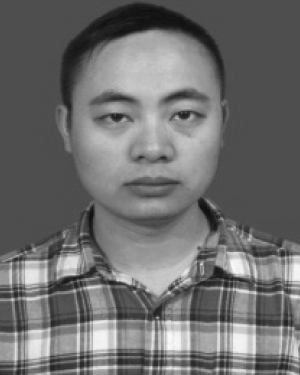 Zhihui Cai合作论文数3




