In this article we review the scientific contributions of Anthony Sclafani, with specific emphasis on his early work on the neural substrate of the ventromedial hypothalamic (VMH) hyperphagia-obesity syndrome, and on the development of diet-induced obesity (DIO). Over a period of 20 years Sclafani systematically investigated the neuroanatomical basis of the VMH hyperphagia-obesity syndrome, and ultimately identified a longitudinal oxytocin-containing neural tract contributing to its expression. This tract has since been implicated in mediating the effects of at least two gastrointestinal satiety factors. Sclafani was one of the first investigators to demonstrate DIO in rats as a result of exposure to multiple palatable food items (the “supermarket diet”), and concluded that diet palatability was the primary factor responsible for DIO. Sclafani went on to investigate the potency of specific carbohydrate and fat stimuli for inducing hyperphagia, and in so doing discovered that post-ingestive nutrient effects contribute to the elevated intake of palatable food items. To further investigate this effect, he devised an intragastric infusion system which allowed the introduction of nutrients into the gut paired with the oral intake of flavored solutions, an apparatus her termed the “electronic esophagus”. Sclafani coined the term “appetition” to describe the effect of intestinal nutrient sensing on post-ingestive appetite stimulation. Sclafani's productivity in the research areas he chose to investigate has been nothing short of extraordinary, and his studies are characterized by inventive hypothesizing and meticulous experimental design. His results and conclusions, to our knowledge, have never been contradicted.
This paper describes Randall Sakai's professional career from graduate school at the University of Pennsylvania, through postdoctoral work at Rockefeller University, and to being an independent investigator at the University of Cincinnati. He was fortunate in having Alan Epstein, Bruce McEwen, and Eliot Stellar as mentors. Early in Sakai's graduate work, Epstein and Stellar introduced him to Curt Richter, the legendary investigator at Johns Hopkins. This early introduction to Richter and his tradition of research was crucial for Sakai's scientific development. We review Sakai's research with the Visible Burrowing System (VBS) at Cincinnati. This was the most original of Sakai's research interests. His experimental proficiency in the investigation of salt appetite, food intake, and obesity led him to focus on the effect of chronic social stress on food intake, body composition, metabolism, and the distribution of fat. He and his colleagues, many of them his students, were able to demonstrate that chronic social stress produced changes in metabolism and fat distribution that were characteristic of an incipient metabolic syndrome that could lead to obesity. This did not solve the problem, but showed the way to further investigation. This opening up of problems to experimental investigation was a hallmark of Richter's research. Thus, Sakai worked in the mainstream of the research tradition of Richter. He did what he revered.
Adolph Meyer influenced Curt Richter from the time Richter became a graduate student in Psychology at Johns Hopkins in 1919 until Meyer retired in 1941. Meyer was on Richter's thesis committee. After Richter received his degree, Meyer selected him to replace J.B. Watson. During the next 20 years, Meyer gave Richter strong support in terms of equipment, laboratory space for animal research, and opportunities to teach medical students, attend clinical rounds, and do clinical research. It is less well known that Meyer also mentored Richter's scientific and professional development. Meyer's mentoring was so successful that Richter adopted the major scientific ideas of Meyer, especially psychobiology, distrust of theory, and respect for experiment. Thus, Meyer's ideas became the framework for Richter's famous research program that produced his major discoveries of behavior exerting homeostatic controls, psychoendocrinology, and biological clocks.
Synergism between the Columbia University Appetitive Behavior Seminar and the research program of Smith and Gibbs on the satiating effect of cholecystokinin during the past 40 years is described. The Seminar was synergistic with the research program in five ways. First, the steady parade of speakers gave us a window on the varied and interesting work going on in the field. Second, the Seminar was the kind of audience for presentations of the work-in-progress on CCK that scientists hope for and rarely find. Criticism by members of the Seminar was relentless and constructive, and ideas for further experiments or new ways to tackle problematic data poured forth. Third, members of the Seminar did experiments that facilitated the experimental success of the research program. Fourth, members of the Seminar tutored us on topics that we wanted to import into the research program on CCK. Fifth, and probably most important, members of the Seminar gave us the encouragement, good humor, and friendship so necessary for coping with the struggles of the scientific life.
There is extensive research regarding the neural mechanisms involved in satiety and meal termination ; in contrast, there is very limited understanding of how meal onset is regulated. On the basis of several converging lines of evidence, we hypothesized that hippocampal neurons form a memory of a meal and inhibit meal onset during the postprandial period. As a first step, we tested whether reversible inactivation of the hippocampus with muscimol infusions after the end of one meal would accelerate the onset of the next meal. To test this, adult male Sprague–Dawley rats ( N = 23) were implanted with a cannula aimed at the right or left dorsal hippocampus and then trained to consume a 32% sucrose solution at a scheduled time daily. On the experimental day, hippocampal neuronal activity was temporarily disrupted during the postprandial period by infusing muscimol (0.5 μg/μl; 1 μl) 5 min after the rats stopped consuming the sucrose solution. Compared to vehicle infusions, muscimol infusions significantly decreased the latency to start the postinfusion meal and increased the size of the postinfusion meal. In addition, muscimol disrupted the relationship between the size of a meal and length of the following postprandial period. These effects of muscimol on meal onset were not due to an effect on the speed of consumption. Collectively, these findings are consistent with the hypothesis that hippocampal neurons suppress meal initiation during the postprandial period. Given that overeating can impair hippocampal function, these findings suggest that impaired hippocampal functioning is a cause and consequence of overeating and obesity. © 2012 Wiley Periodicals, Inc.
Bulimia nervosa (BN) is a psychiatric illness characterized by repeated binge eating and purging episodes that can be associated with significant psychosocial impairment and chronicity. Mechanisms maintaining this maladaptive set of behaviors remain poorly understood, but several lines of evidence support the presence of enhanced responsiveness to orosensory cues in people with BN. Sham feeding (SF) in the rat is an animal model of binge eating and purging that has been used extensively for the investigation of the orosensory excitatory controls of eating. We translated SF in the rat into modified sham feeding (MSF) in humans to investigate the orosensory excitatory control of eating in patients with BN and purging. BN women sham fed significantly more sweet and unsweetened solutions than control subjects or women with anorexia nervosa. This result validates the utility of the SF rat as an animal model of BN and purging and establishes MSF as a heuristic technique for the analysis of the orosensory controls of ingestion in women with BN and purging.
This paper is an introduction to the papers by Hervey and Harris that describe their experimental use of parabiosis in rats and mice to search for circulating lipostatic signals. Beginning in 1959 with Hervey's foundational paper, they detected three parabiotic signals: the Hervey signal decreases food intake and fat mass in rats; the antilipogenic factor (ALF) decreased fat mass, but not food intake in rats; and the leptin-dependent signal in lean partners of ob/ob mice decreased fat mass, but not food intake. The known lipostatic signals, leptin and insulin, have been candidates for the Hervey and ALF signals, but insulin has been excluded and the evidence for leptin is inconclusive. The site of production of the three parabiotic signals and their molecular structure are not known and specific mechanisms of their lipostatic control are incompletely understood. Given their potential importance for understanding the physiology of lipostatic controls and for developing new therapies for obesity, Hervey and Harris make a strong argument for further research on the three parabiotic signals.
To investigate the early scientific development of Steve Woods, I reviewed his research during the first decade after he received his doctoral degree in 1970. The main parts of his research program were conditioned insulin secretion and hypoglycemia, Pavlovian conditioning of insulin secretion before a scheduled access to food, and basal insulin as a negative-feedback signal from fat mass to the brain. These topics were pursued with experimental ingenuity; the resulting publications were interesting, clear, and rhetorically effective. Although the theoretical framework for his experiments with insulin was homeostatic, by the end of the decade he suggested that classic negative-feedback homeostasis needed to be revised to include learning acquired by lifestyle. Thus, Woods functioned as a mature scientist from the beginning of his research-he was very precocious. This precocity also characterized his teaching and mentoring as recalled by two of his students during that time, Joseph Vasselli and Paul Kulkosky. The most unusual and exemplary aspect of his precocity is that the outstanding performance of his first decade was maintained during the subsequent 30years.
There is extensive pharmacological and microdialysis evidence that central dopamine mechanisms are important for the mediation of the rewarding and reinforcing functions of sweet taste. One aspect of the pharmacological evidence for dopaminergic mediation of sweet reward is unclear. That is the positive interactive effect of ingestive experience and DA antagonist treatment reported by Wise and his colleagues in 1978 [1]. They showed that the inhibitory potency of pimozide increased over repetitive tests of saccharin (0.1%) ingestion. When pimozide was given before 8 daily, 10-minute tests in rats licking [2] or lever pressing [3] for 32% sucrose, however, the inhibitory effect of pimozide did not increase across tests. To reinvestigate the problem, we used a computer-assisted, repetitive, brief-access technique [4, 5] in which 10 male, non-deprived, Sprague Dawley rats licked 0.5M sucrose for 60s in four trials with a 30-second intertrial interval. Thirty minutes before the first trial, each rat received an ip injection of the D1 antagonist SCH 23390, the D2/3 antagonist raclopride, or vehicle. SCH 23390 and raclopride decreased licking significantly, their inhibitory effects increased significantly within and across the 4 trials, and the temporal pattern of their inhibitory effects on latencies, and on cumulative and total licks was different. Thus we confirm an increase of the inhibitory potency of DA antagonists across ingestive tests and show for the first time that the interaction differs between D1 and D2/3 antagonists.
Davis, J.D. and G.P. Smith. The Conditioned Satiating Effects of Orosensory Stimuli. PHYSIOL BEHAV 000-000, 2009. Prior to the introduction of sham feeding as a method for studying the controls of meal size, the dominant view was that gustatory stimulation activated the ingestion of palatable diets and postingestional stimulation inhibited it. Early sham feeding studies with rats challenged this view because they showed that, contrary to expectation, rats did not eat continuously the first time they were given a sham feeding test. They ate a larger meal than when tested under normal conditions but stopped eating and showed all the signs of satiety soon after. Only after two or more sham feeding tests did they eat continuously. Subsequent research, reviewed here, established that experience ingesting a diet under real feeding conditions leads to the development of a classically conditioned form of satiation based on an association between gustatory stimulation and some consequence of gastrointestinal stimulation by the ingested food. This conditioned orosensory satiating effect extinguishes when sham feeding occurs repeatedly without intervening real feeding tests. Thus gustatory stimulation both stimulates and inhibits meal size. An experimental implication of this finding is that intake during sham feeding must be shown to be maximal before sham feeding can be used to measure only the orosensory stimulation of the diet. Another implication is that the analysis of a change in meal size produced by some treatment should now include measurement of the potency of the conditioned orosensory satiating effect as well as the potencies of orosensory stimulation and postingestive negative feedback.
Cannon's theory of homeostasis is the first, major, American contribution to physiological thought. Although it is clear that Cannon's account of homeostasis is personal and based primarily on the work of his laboratory, Cannon made it easy for readers to mistake his 1929 paper and 1932 book for a comprehensive review of the literature relevant to homeostasis. This is unfortunate because Cannon never acknowledged the important contributions of two of his contemporaries, Ivan Pavlov and Joseph Barcroft. Since he did not mention them, their contributions are rarely discussed. This paper attempts to correct this historical problem in two ways. First, I describe the unacknowledged contributions of Pavlov and Barcroft. Then I consider the possible reasons why Cannon ignored them.
 J Gibbs合作论文数53James Gibbs合作论文数NEW YORK HOSP,WHITE PLAINS,NY 1060517Nori Geary合作论文数16Christine Jerome合作论文数12
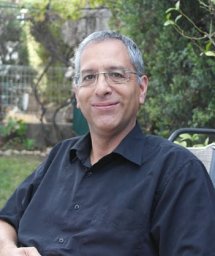 Aron Weller合作论文数Department of Psychology, Faculty of Social Sciences, Bar Ilan University;The Dangoor Centre for Personalized Medicine, Bar Ilan University;Gonda Brain Research Center, Bar-Ilan University11Danielle Greenberg合作论文数10
 Thomas Houpt合作论文数Department of Biological Science, Florida State University9
 Scott Kraly合作论文数8KJ SIMANSKY合作论文数8Lh Schneider合作论文数7Kirkham Tim C合作论文数7Audrey R Tyrka合作论文数7John D. Davis合作论文数6Tong H. Joh合作论文数6Eric S. Corp合作论文数6Timothy J. Kowalski合作论文数6
 Alan J. Strohmayer合作论文数The Rockefeller University6I H Gispan合作论文数5P E Stokes合作论文数4robert c young合作论文数4Js Fink合作论文数4Sh Ackerman合作论文数4
 Thomas R. Stratford合作论文数4Allen W Root合作论文数4S. Eisen合作论文数4Mark J. Russ合作论文数4Gregory N. Ervin合作论文数4Jennifer M Philopena合作论文数4Joseph Antin合作论文数4Rd Shindledecker合作论文数3Rebecca L. Corwin合作论文数Department of Nutritional Sciences, College of Health and Human Development, Pennsylvania State University3Judith Green合作论文数3William J. Carty合作论文数3
 Randall Murphy合作论文数Department of Chemistry, New York University3Andrea M. Ster合作论文数3Daniel P Mccann合作论文数3Robert C Ritter合作论文数3Theodora M. Kung合作论文数3Charles P. Pollak合作论文数3
 Harry Kissileff合作论文数Rockefeller U3PJ KULKOSKY合作论文数3John D. Falasco合作论文数3A-M Torregrossa合作论文数2B Poeschla合作论文数2J Stephen Fink合作论文数2Laura D. Melville合作论文数2Robert C Young合作论文数2




