Classical electronic voting is increasingly being adopted for Internet-based elections, requiring system designs that ensure fairness, legitimacy, verifiability, and voter anonymity-thereby preserving ballot confidentiality, uniqueness, and integrity. Quantum voting can provide information-theoretic security against repudiation and forgery in such systems. However, compared to classical voting protocols, current quantum voting protocols often suffer from limited efficiency, high cost, and implementation complexity. Here, we introduce a streamlined and efficient quantum voting architecture that simplifies the process by eliminating the privacy amplification step in the voting phase while incorporating authority-assisted anonymity, while maintaining full voter authentication, voting, and tallying capabilities. In an experimental demonstration of a quantum voting network, two voters achieved authentication rates of 336 and 406 times per second over 50 km of single-mode fiber, and signed voting files of 25.02 kbit and 56.29 kbit at a quantum signing rate of 966 times per second, resulting in total voting rates of 244 and 279 times per second, respectively. This work represents the first experimental implementation of a continuous-variable (CV)-based quantum anonymous voting prototype. The architecture is designed to be compatible with existing coherent optical communication networks and provides a practical quantum-enhanced building block toward future voting systems.
Recently, Rydberg atom has emerged as an attractive choice to realize quantum sensing of low-frequency electric field. The progress so far has mostly utilized the intensity and phase changes in probe laser and the corresponding detection mechanism still remains classical. Nevertheless, external field acting on the Rydberg state can induce the polarization variation of probe laser in the Rydberg electromagnetically induced transparency (EIT) system embedded in realistic multi-state atoms. We experimentally observe this phenomenon and realize signal extraction by appropriately utilizing the polarization degrees of freedom. Based on such a mechanism, we further design and implement a quantum weak measurement scheme, which clearly suppresses the technical noise and leads to considerable improvement of performance. Evaluation of the sensitivities across different post-selection angles demonstrates that the weak measurement results agree well with the theoretical model predictions. The advantages of our method are analyzed from multiple aspects, including characterizing the responses over different frequencies and comparing the responses of the weak measurement scheme and the traditional transmission-based method. After accounting for the screening effect of a measured ratio 17% where the ^87Rb atoms experience a substantially reduced field inside the glass cell, the performance reaches 33 μV cm^-1 Hz^-1/2 in sensitivity and 1.0 μV/cm in minimal detectable field for an integration time of 1000 s, as perceived by the atoms.
Continuous-variable quantum key distribution (CVQKD) enables remote users to share high-rate and unconditionally secure secret keys while maintaining compatibility with classical optical communication networks and effective resistance against background noise. However, CVQKD experiments have been demonstrated only indoors or over short outdoor distances. Here, by developing channel-fluctuation-independent high-precision manipulation of continuous-variable quantum states, high-accuracy quantum signal acquisition and processing, and high-efficiency free-space acquisition, tracking, and pointing technology, we overcome the excess noise due to atmospheric effects especially in daylight without extra wavelength conversion and narrow-linewidth spectral filtering and demonstrate for the first time long-distance free-space quantum key distribution under the asymptotic condition over 7-km inland and 9.6-km maritime atmospheric channels with Gaussian-modulated coherent states. Given that the CVQKD system is naturally compatible with existing ground fiber telecommunication networks, it marks an essential step for realizing integrated air-ground quantum access networks with cross-domain applications.
Optical whispering gallery mode (WGM) microcavity acoustic sensors have emerged with significant potential in high-sensitivity acoustic signal detection, but the narrow dynamic range limits the application prospects. To address the challenge, we propose and experimentally demonstrate a high-sensitivity acoustic sensor in an optical WGM microcavity. The proposed sensor integrates an extended polarization Mach-Zehnder interferometer with postselection, extending the dynamic range to the free spectral range. The sensing regions can be categorized into phase-drastic and phase-enhanced regions, both of which yield an optimal acoustic response that surpasses traditional transmission methods. Experimental results in the phase-enhanced region demonstrate improvements of 57.87 dB in detection sensitivity and 26 times in minimal detectable acoustic pressure over the transmission method. Moreover, the application of coherent state and heterodyne detection can enhance response amplitude, further improving the detection sensitivity. Given the wide application range for acoustic dispersion and dissipation response, as well as the performance advantages of high sensitivity and wide dynamic range, the proposed WGM sensor offers a promising solution for acoustic sensing.
Realizing scalable Quantum-to-the-Home (QTTH) faces a bottleneck: link asymmetry in broadcast continuous-variable quantum access networks (CV-QANs) hinders the selection of a globally optimal modulation variance. We demonstrate a downstream broadcast CV-QAN connecting a Quantum Line Terminal (QLT) to multiple Quantum Network Units (QNUs) over commercial fiber. Operating within a trusted local network domain, we establish a multi-user utility model to select the optimal shared variance, balancing network efficiency and user fairness. Supported by robust digital signal processing, our 1:16 field trial achieves Mbit/s-level asymptotic secure key rates, bridging theoretical protocols with Fiber-to-the-Home reality and guiding future scalable access architectures.
Quantum resources can, in principle, enable Heisenberg-limited sensing, yet no-go theorems imply that Heisenberg-limited scaling is generically unattainable in realistic noisy devices. While quantum error correction (QEC) can suppress noise, its use in quantum sensing is constrained by stringent requirements, including prior noise characterization, restrictive signal-noise compatibility conditions, and measurement-based syndrome extraction with global control. Here we introduce a QEC protocol based on indefinite causal order (ICO), providing the first application of ICO to QEC. By coherently placing auxiliary controls and noisy evolution in an indefinite causal order, the resulting noncommutative interference enables an auxiliary system to herald and correct errors in real time, avoiding the entanglement encoding and entanglement readout required by traditional QEC. Furthermore, within the time-reversal regime of the Hamiltonian, our protocol extends correctability to parallel noises where traditional protocols may fail. We rigorously establish the protocol for single-noise and multinoise scenarios and demonstrate its performance in single-qubit, many-body, and continuous-variable platforms. We further identify regimes in which error correction can be implemented entirely by unitary control, without measurements. Our results reveal ICO as a powerful resource for metrological QEC and provide a broadly applicable framework for noise-resilient quantum information processing.
Spatial photonic Ising machines (SPIMs) based on spatial light modulators (SLMs) have emerged as highly effective solvers for many tasks, including combinatorial optimization problems and spin-glass simulations. However, traditional SPIMs relying solely on the simulated annealing algorithm require a large number of measurement-feedback iterations to find a relatively optimal solution in complex energy landscapes, suffering from slow convergence and high time cost. Here, we propose an optical genetic-simulated annealing hybrid algorithm to accelerate the ground-state search of SPIMs. GA conducts a global coarse-grained search in the early iteration stage, while SA performs fine-grained local refinement in the late stage. Numerical simulations show that our method enables a higher solution quality of full-rank Max-Cut problems than pure GA or SA at different scales. We also experimentally demonstrate its superiority over conventional algorithms on a gauge-transformation time-division multiplexing SPIM for high-rank optimization problems under the same iteration budget. Our approach can be further developed with other advanced metaheuristic algorithms toward intelligent optical Ising computing systems.
Continuous-variable quantum key distribution (CVQKD) serves as a vital tool for safeguarding information security. Currently, CVQKD is primarily implemented using a local oscillator. This scheme requires transmitting a high-energy pilot signal as a reference to correct phase drift. However, the pilot signal introduces crosstalk into the quantum signal and complicates digital signal processing. Here we show a pilot-reference-free CVQKD protocol with a local oscillator, where the secret key is encoded on the amplitude of coherent states. The protocol does not require a pilot signal, eliminating pilot-induced crosstalk. We conduct security analysis under collective attacks and simulate its secret key rate. Finally, we perform a proof-of-principle experiment under an optical fiber channel and a free-space channel containing biaxially oriented polypropylene, where the phase of the signal is fully randomized. The protocol remains operable under randomized phase and simplifies physical implementation and digital signal processing, while adapting to optical path fluctuations in complex channels. Continuous variable quantum key distribution with local oscillators typically requires pilot signals to track phase drift. Here, the authors show how to extract keys from signal amplitudes, enabling pilot free operation and proof of principle key generation even when the optical phase is randomised.
Quantum Key Distribution (QKD) provides secure keys for classical communications through one-time-pad (OTP) encryption with physical-law security. Advanced PON-based Classical Access Networks (CANs) support up to 256 users with a total rate of 10 Gbps (10-Gbps @ 256-users). The equivalent rate demand of OTP encryption requires QKD Access Networks (QANs) to reach comparable performance, yet state-of-the-art PON-based QANs remain far from this standard. To address this gap, we propose a passive Thermal-State QAN (TS-QAN) distributing polychromatic quantum randomness from a single thermal source and supporting 304 users with an aggregate secret key rate (SKR) of 13 Gbps (13-Gbps @ 304-users). This performance is enabled by three features. First, broadband thermal states with Bose-Einstein statistics can be represented, through the Glauber-Sudarshan representation, as high-bandwidth Gaussian coherent-state ensembles across frequency modes, eliminating many active modulators and quantum random number generators (QRNGs). Second, Electro-Optic (EO) comb beacons provide time-varying polychromatic phase tracking, so each frequency-mode thermal signal can be coherently measured with a Local Local Oscillator (LLO) aided by its beacon, without large-scale phase-locking networks. Third, state broadcasting allows each user to obtain independent final keys via reverse reconciliation after accounting for residual broadcast-induced correlations, expanding network capacity with small SKR losses. Experimentally, we verify a 13-Gbps @ 304-users TS-QAN using Continuous-Variable QKD (CV-QKD) under covariance-matrix-based network security analysis including multimode Holevo leakage and broadcast correlations. This work meets the SKR and capacity demands from CAN to QAN: 13-Gbps @ 304-users satisfies the 10-Gbps @ 256-users benchmark and provides a scalable solution for modern telecommunication systems.
Continuous-variable quantum key distribution (CVQKD) has attracted extensive attention due to its compatibility and low costs. However, bandwidth mismatch exists to varying degrees between the transmitter and receiver. This may prevent frequency components carrying modulation information from being fully perceived by the legitimate party. In this paper, we identify a practical security loophole caused by bandwidth mismatch and propose a corresponding spectral attack scheme. Different from previous approaches that exploit security loopholes to conceal the excess noise introduced by intercept-resend attacks, this scheme can directly obtain raw-key information without introducing additional disturbances. A proof-of-principle attack on a CVQKD system with filtering operation is constructed to verify the feasibility. Experimental results indicate that Eve can obtain enough information to render the system insecure if this practical security loophole is ignored. Based on the identified security loophole, corresponding defense strategies are proposed. This work helps bridge the gap between theoretical models and practical implementations, providing a reference for defense design in practical quantum communication systems.
The quantum noise stream cipher (QNSC) scheme, grounded in Heisenberg’s uncertainty principle, can facilitate secure communication by employing noise to obfuscate multi-base encrypted signals. The current research primarily focuses on point-to-point performance, while studies on point-to-multipoint schemes remain limited due to compatibility issues with multiple access technologies. This study presents a QNSC scheme for passive optical networks based on code-division multiple access (CDMA). In our scheme, different user datasets are combined into one dataset via CDMA and then encrypted using the QNSC protocol. Each user can recover their corresponding dataset from the encrypted signal by employing the same security keys along with a distinct pseudo-noise code (PN code). Through simulation studies, we found that under the condition of being able to decode correctly, as the number of users increases, the optical signal-to-noise ratio (OSNR) at the receiver decreases, which leads to a gradual rise in the eavesdropper’s detection failure probability (DFP). Furthermore, the network capacity is correlated with the number of modulation bits, as the increase in modulation bits directly translates to an enhancement in the data’s carrying capability. We have conducted verification experiments, and the results confirmed that four users can acquire 64 QAM/QNSC plaintext data with an average transmission rate of 600 Mbit/s over a transmission distance of 20 km. These data were encrypted in the constellation with $64\times 64$ symbols, achieving a DFP of up to 99.3%, and each user successfully decoded them via CDMA. We have successfully extended the fundamental point-to-point QNSC scheme to accommodate point-to-multipoint passive optical networks, establishing the foundational framework for the future large-scale deployment of quantum networks.
High-sensitivity optical microcavity sensing faces the challenge of limited dynamic range for detecting time-varying signals. To address the challenge, an enhanced optical microcavity sensing approach is proposed by integrating an extended polarization interferometer with postselection. The approach exploits both transmission and phase characteristics of the microcavity simultaneously. By adjusting coupling strength and postselection angle, the approach creates distinct phase response regions, thereby achieving significantly improved response compared to the standard transmission method. The dynamic range extends from at most twice the full width at half maximum to the free spectral range. The gain factor depends on material properties, cavity size, resonant wavelength, and quality factor, potentially reaching three to four orders of magnitude for cavities with a quality factor of 108. Furthermore, the approach is compatible with quantum resources, enabling the potential for precision beyond the standard quantum limit. By exploiting the differences between dual-polarized cavity modes, the feasibility is verified by combining the approach with a polarization Sagnac interferometer. Experimental results demonstrate over 34.24 dB improvement in detection sensitivity, and an additional 12.29 dB enhancement is achieved using coherent states and heterodyne detection. The approach offers a promising solution for optical microcavity sensing across various scenarios.
Wireless quantum networking can provide flexible, rapidly deployable, and secure connectivity for mobile and infrastructure-limited scenarios. However, existing free-space continuous-variable quantum key distribution (CV-QKD) systems are still limited to point-to-point links, while dynamic multi-user access is hindered by bulky and slow mechanical beam steering. In this paper, we propose a free-space multi-user CV-QKD scheme based on an optical phased array. Based on a full-link model accounting for device imperfections and channel effects, numerical results demonstrate the feasibility of the proposed scheme under different atmospheric conditions and suggest its robustness and scalability. This work provides a promising route to rapidly reconfigurable free-space quantum access networks for highly dynamic near-range scenarios such as unmanned aerial vehicle swarms and emergency communications, and may inform future extensions toward satellite-based quantum networking.
Quantum key distribution (QKD) guarantees information-theoretic security by the laws of physics, but deployment at scale requires compact, manufacturable photonic terminals. Continuous-variable QKD (CV-QKD) is well suited for this transition through telecom-compatible, room-temperature coherent detection. However, unifying full on-chip core terminal integration, room-temperature operation, high loss tolerance, and composable end-to-end security in long-distance QKD remains a key bottleneck. Here we report a fully integrated CV-QKD platform in which two hybrid III–V/Si_3N_4 integrated lasers, a silicon transmitter, and a silicon coherent receiver implement the core terminal functions, operating with a local local oscillator (LLO) over fibre links of 25–150 km. A Bayesian machine-learning algorithm maintains robust phase lock throughout the long records required for composable security, consistently outperforming the conventional unscented Kalman filter, while rate-matched multidimensional reconciliation approaches the Shannon limit. The system certifies a composable finite-size secret-key rate of 29.3 kbps at 100 km from a 140-billion-symbol block, with 12.9 kbps at 125 km under finite-size analysis and 9.17 kbps at 150 km under asymptotic analysis. By establishing the longest finite-size and asymptotic reaches and the highest secret-key rate per symbol reported for integrated CV-QKD, this work advances the development of practical chip-based quantum networks.
Ghost imaging leverages a single-pixel detector with no spatial resolution to acquire object echo intensity signals, which are correlated with illumination patterns to reconstruct an image. This architecture inherently mitigates scattering interference between the object and the detector but is sensitive to scattering between the light source and the object. To address this challenge, we propose an optical diffraction neural network (ODNN) assisted ghost imaging method for imaging through dynamic scattering media. In our scheme, a set of fixed ODNNs, trained on simulated datasets, is incorporated into the experimental optical path to actively correct random distortions induced by dynamic scattering media. Experimental validation using rotating single-layer and double-layer ground glass confirms the feasibility and effectiveness of our approach. Furthermore, our scheme can also be combined with physics-prior-based reconstruction algorithms, enabling high-quality imaging under under-sampled conditions. This work demonstrates, to our knowledge, a novel strategy for imaging through dynamic scattering media, which can be extended to other imaging systems.
Sensing networks underpin applications ranging from fundamental physics to real-world engineering. Distributed quantum sensing (DQS) can improve measurement performance, but existing protocols typically require multipartite entanglement, which poses substantial challenges for scalable implementation. Here, we introduce a DQS protocol based on bidirectional causal routing in a cyclic network, where a single probe sequentially interrogates M independent sensors along two opposite causal routes. By exploiting the noncommutativity between inter-sensor propagation and local sensing operations, the protocol turns propagation from a passive transport process into a source of sensing information, yielding an asymptotic 1/M^2 scaling of the estimation precision without multipartite entanglement. We experimentally demonstrate the protocol for distributed beam-tilt sensing in a free-space quantum optical network comprising up to 9 sensors, achieving picoradian-level precision in estimating the average tilt angle. These results identify propagation dynamics and routing geometry as active metrological resources for scalable distributed quantum sensing.
Accurate control of quantum states is crucial for quantum computing and other quantum technologies. In the basic scenario, the task is to steer a quantum system towards a target state through a sequence of control operations. Determining the appropriate operations, however, generally requires information about the initial state of the system. When the initial state is not {\em a priori} known, gathering this information is generally challenging for quantum systems of increasing size. To address this problem, we develop a machine-learning algorithm that uses a small amount of measurement data to construct a representation of the system's state. The algorithm compares this data-driven representation with the representation of the target state, and uses reinforcement learning to output the appropriate control operations.We illustrate the effectiveness of the algorithm showing that it achieves accurate control of unknown many-body quantum states and non-Gaussian continuous-variable states using data from a limited set of quantum measurements.
In the field of quantum communication, investigating the practical security of systems is conducive to their deployments in real-world scenarios. In this paper, we identify and experimentally demonstrate a side-channel vulnerability within continuous-variable quantum key distribution (CV-QKD) arising from the zero-order hold (ZOH) effect in digital-to-analog conversion. As digital-to-analog converters (DACs) are indispensable for modulation in CV-QKD transmitters, this leakage constitutes an intrinsic and widespread risk. We show that the ZOH-induced spectral side lobes allow an eavesdropper to extract secret information without disturbing the main signal band. Experimental validation on a CV-QKD platform reveals a leakage of 2.68 Mbit/s against a generated secret key rate of 4.73 Mbit/s. Crucially, we propose a defense strategy that completely eliminates this vulnerability, effectively restoring the system’s implementation security. By resolving this fundamental hardware limitation, our work bridges the gap between theoretical models and practical engineering, paving the way for robust, standardized quantum communication networks.
 Peng Huang (黄鹏)合作论文数Institute for Quantum Sensing and Information Processing, School of Sensing Science and Engineering, School of Electronic Information and Electrical Engineering, Shanghai Jlao Tong University152
 Tao Wang (王涛)合作论文数School of Automation and Intelligent Sensing, Shanghai Jiao Tong University;Institute for Quantum Sensing and Information Processing, Shanghai Jiao Tong University67
 Jingzheng Huang (黄靖正)合作论文数School of Automation and Intelligent Sensing, Shanghai Jiao Tong University;Institute for Quantum Sensing and Information Processing, Shanghai Jiao Tong University59
 Jianhong Shi (石剑虹)合作论文数School of Automation and Intelligent Sensing, Shanghai Jiao Tong University47
 Hongjing Li (李洪婧)合作论文数School of Automation and Intelligent Sensing, Shanghai Jiao Tong University;Institute for Quantum Sensing and Information Processing, Shanghai Jiao Tong University40
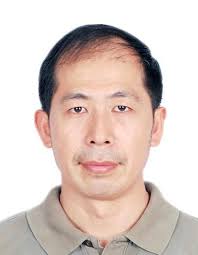 Ying Guo (郭迎)合作论文数School of Computer Science, Beijing University of Posts and Telecommunications38
 Guangqiang He (何广强)合作论文数School of Integrated Circuits, Shanghai Jiao Tong University35
 Tailong Xiao (肖太龙)合作论文数School of Automation and Intelligent Sensing, Shanghai Jiao Tong University31
 Duan Huang (黄端)合作论文数School of Electronic Information, Central South University30
 Jinye Peng (彭进业)合作论文数School of Electronic Information, Northwest University26
 Lang Li合作论文数25
 Jianping Fan (范建平)合作论文数Lenovo22
 Zhizhan Xu (徐至展)合作论文数Shanghai Institute of Optics and Fine Mechanics, Chinese Academy of Sciences21
 Xue-Qin Jiang (蒋学芹)合作论文数College of Information Science and Technology, Donghua University19
 Nanrun Zhou (周南润)合作论文数School of Electronic and Electrical Engineering, Shanghai University of Engineering Science19Yingming Zhou合作论文数17Shiyu Wang合作论文数16
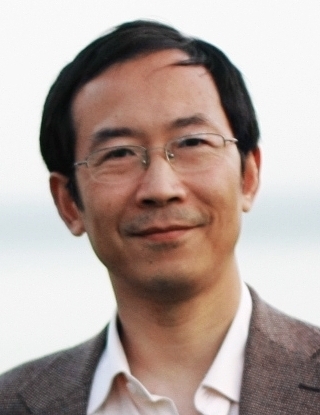 Baifei Shen (沈百飞)合作论文数Shanghai Institute of Optics and Fine Mechanics, Chinese Academy of Sciences16
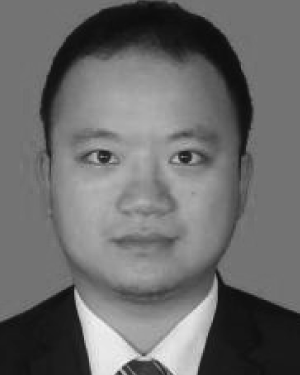 Xiaoyan Wu合作论文数15Tao Wang合作论文数Shanghai Jiao Tong University15
 Weiqi Liu (刘维琪)合作论文数School of Information Science and Technology, Northwest University15
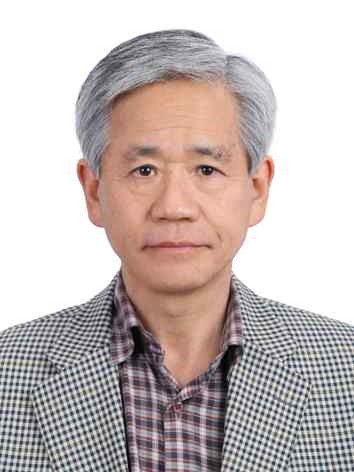 Moon Ho Lee合作论文数Department of Electronics Engineering, Chonbuk National University15Chen Fang合作论文数14Hu Li合作论文数14Yuan Lu合作论文数13Yuehan Xu合作论文数12Binke Xia (夏彬珂)合作论文数School of Sensing Science and Engineering, Shanghai Jiao Tong University12Dakai Lin合作论文数12ZHU Jun (朱俊)合作论文数11Qi Song合作论文数10
 Chao Wang合作论文数9210Qing-shan LUO (罗青山)合作论文数10
 Jun Zhu (朱军)合作论文数Koguan School of Law, Shanghai Jiao Tong University10Jin Xiong合作论文数10
 Xialin Liu合作论文数9
 Zhengwen Cao (曹正文)合作论文数School of Software, Northwest University9Wei Yu合作论文数Chinese Academy of Sciences8Yiwei Sun合作论文数8Hongxin Ma合作论文数8
 Yuan Li (李元)合作论文数Capital Normal University College of Political Science and Law8Huanxi Zhao合作论文数7
 Fang Jian合作论文数7Zhipeng Chen合作论文数7Xiaodong Kong (孔晓东)合作论文数7Huisong Wang合作论文数7Fu-Chen Zhu合作论文数7Junfang Xiao (肖俊芳)合作论文数7Xinliang Zhai合作论文数6Dongyun Bai合作论文数6




