The quantum Hall effect and topological insulators have sparked significant interest in the investigation of topological photonics, mechanics, and acoustics with the objective of realizing robust topological one-way states. However, diffusion, such as heat transport, neither responds to magnetic fields nor possesses intrinsic spin, and is therefore devoid of propagation characteristics typical of wave dynamic fields. Accordingly, the identification of Chern or topological insulators within a diffusive context has long been considered challenging, if not impossible. Here, we propose a thermal analog of the Haldane model that supports one-way transport of heat. We endow the temperature field with a degree of freedom corresponding to the wave function's phase, and demonstrate that complex couplings can be effectively synthesized by tailoring intralayer and interlayer hopping. Furthermore, we have fabricated the thermal Haldane lattice by incorporating actively controlled, programmable thermal sources, and experimentally observed the evidence of thermal chiral edge states. This Letter may offer insights into the flexible and robust manipulation of heat and mass transfer.
Landau quantization of two-dimensional free electrons and massless Dirac fermions plays a key role underlying many quantum phenomena in condensed matter physics. It usually requires the magnetic field, which arranges the charge carriers associated with the harmonic oscillation on a ladder of discrete Landau levels with a dissipationless edge state. Nevertheless, the presence of intrinsic dissipation and absence of a pseudomagnetic field in thermal diffusion precludes the observation of Landau quantization. Here, we report a recipe of creating a synthetic gauge serving as a pseudomagnetic field and achieve Landau quantization on real- and imaginary-valued spectra, on both of which complex pseudo-Landau levels are identified as isometric ladders. We experimentally observe the macroscopic quantum thermal Hall-like effect induced by dissipation, which is distinguished by a plateaulike effective thermal resistance. Our findings open up a unique paradigm for manipulating heat transfer and create an insightful platform for exploring dissipative non-Hermitian physics.
Nonreciprocal thermophotonics, by breaking Lorentz reciprocity, exceeds current theoretical efficiency limits, unlocking opportunities to energy devices and thermal management. However, energy transfer in current systems is highly defect-sensitive. This sensitivity is further amplified at deep subwavelength scales by inevitable multi-source interactions, interface wrinkles, and manufacturing tolerances, making precise control of thermal photons increasingly challenging. Here, we demonstrate a topological one-way heat transport in a deep-subwavelength thermophotonic lattice. This one-way heat flow, driven by global resonances, is strongly localized at the geometric boundaries and exhibits exceptional robustness against imperfections and disorder, achieving nearly five orders of radiative enhancement. Our findings offer a blueprint for developing robust thermal systems capable of withstanding strong perturbations.
Non-Hermitian photonics revolutionizes the understanding and manipulation of wave propagation in open systems. However, due to the interplay of non-Hermitian light-matter interactions and complex long-range couplings, miniaturizing topological features into deep-subwavelength regimes remains a significant challenge, and state-of-the-art explorations have thus far remained on the reciprocal topological photonic states. Here, we introduce nonreciprocal surface waves into deep-subwavelength dimerized lattices to theoretically demonstrate an efficient thermophotonic funnel. The system comprises an array of silicon carbide nanoparticles coupled with a graphene substrate. Under electrical bias, the graphene substrate enables the breaking of time-reversal symmetry in a magnetic-free and compact configuration, while also providing additional channels for photonic-based heat flow. The synergy between nonreciprocal surface waves and collective thermophotonic interactions drives all eigenstates to collapse toward the truncation of the lattice, exhibiting up to a 278-fold enhancement in one-way radiative field intensity. The topological fingerprints of this funneling effect are characterized by point-gap topology and complex-eigenspectrum braiding. Our findings bridge non-Hermitian physics and nonreciprocal thermophotonics, unlocking new possibilities for topological applications.
Moiré superlattices created by twistronics generate flat bands for enabling localization in topological and quantum system. Most prior realizations rely on nonlinear interactions among electrons, photons, or other particles to achieve moiré-driven localization. However, the intrinsically diffusive and momentum-free nature of thermal conduction poses a fundamental challenge to implementing moiré physics in a linear regime. In contrast to exploiting nonlinearity, we demonstrate moiré-induced thermal localization in a linearly coupled bilayer conductive system with spatially engineered diffusivity. By tuning the twist angles, we create both commensurate and incommensurate moiré patterns, each governed by two distinct modulated wavevectors controlling global periodicity and local unit-cell structure. Aperiodic thermal localization emerges in incommensurate quasicrystals with the transition threshold linked to the emergent lattice constant. Our results establish a paradigm for implementing moiré physics in a static, linear, and momentum-free diffusive system, offering a route to geometrically programmable non-equilibrium control in heat and mass transport. By twisting bilayer conductive layers with engineered diffusivity, the authors realize moiré-driven thermal localization without nonlinearity, enabling commensurate and quasi-crystalline thermal patterns for programmable transport control.
Moiré quasicrystals, formed by stacking periodic structures with a relative twist between them, exhibit many exotic phenomena. Their quasiperiodicity leads to effects such as light localization-delocalization transitions, superconductivity, topological states, and quasiband dispersion. However, weak interlayer interactions, the scalar nature of acoustic fields, and longer wavelengths severely limit the demonstration of these phenomena in acoustics. Here, we report an acoustic moiré quasicrystal that not only achieves a localization-delocalization transition, but also enables wave propagation shifting from diffusion to canalization or localization as a function of the quasicrystal geometry. Unlike conventional two-dimensional materials, the designed sublattice provides tailorable anisotropy and spatial broken symmetry, allowing quasicrystal structures to exhibit reconfigurable nontrivial dispersion. Furthermore, by introducing a uniform tilt angle in the unit cells breaks the spatial symmetry of the moiré quasicrystal, resulting in partial attenuation and disappearance of the wave within the localization pattern. Our findings pave a new avenue for controlling the properties of acoustic wave patterns, and benefit potential applications in energy transfer, subwavelength wave propagation, and highly sensitive sensors. Moiré quasicrystals exhibit many exotic phenomena. Here, the authors report an acoustic moiré quasicrystal that not only achieves a localization-delocalization transition, but also enables wave propagation shifting from diffusion to canalization or localization.
The synergistic control of light's frequency and orbital angular momentum (OAM) via integrated nonlinear ring microresonators is crucial for creating spatiotemporal optical waveforms and advancing optical metrology. A direct analog of this capability in acoustics is challenging due to the nonlinearity-based mechanisms' dependence on external driving and limited frequency conversion efficiency. Here, we present an acoustic synthesized comb structure derived from spatiotemporal metasurfaces, concurrently controlling frequency and OAM characteristics with high conversion efficiency and removing the constraints of critical driving frequency and power level in nonlinear mechanisms. By optimizing comb structures, energy distributions among OAM modes are adjusted to different frequency lines. We finally propose spatiotemporal metalens devices based on vortex-frequency combs, enabling synchronously multiple-order spatial differential operations for parallel data processing. This Letter is groundbreaking in integrating spectral- and spatial-domain acoustic waves, promising multifunctional imaging and advantages in spatiotemporal beams.
Converting the pervasive low-grade environmental waste heat of approximately 200 EJ globally per year (equivalent to 27 Gt of CO2 emission) into electricity promises energy sustainability and would contribute to carbon neutrality. Heat harvesting technologies capture this waste heat through thermodynamic heat engines across various working media. Conventional heat harvesting approaches have primarily focused on limited incremental improvements in thermophysical output. However, advances in thermal nonlinearity and material anisotropy offer substantial gains but are often overlooked. In this Perspective, we delve into the role of intrinsic thermal nonlinearity with multiscale physical understanding to transform heat or thermal energy harvesting technologies from linear to nonlinear processes. This Perspective surveys the role of thermal nonlinearity in figures of merit through a multiscale physical understanding to advance heat harvesting technologies beyond linear processes, focusing on ‘nonlinear heat harvesting’, which potentially contributes to sustainable energy transition and decarbonization goals.
Higher-order topological phases in non-Hermitian photonics revolutionize the understanding of wave propagation and modulation, which lead to hierarchical states in open systems. However, intrinsic insulating properties endorsed by the lattice symmetry of photonic crystals fundamentally confine the robust transport only at explicit system boundaries, letting alone the flexible reconfiguration in hierarchical states at arbitrary positions. Here, we report a dynamic topological platform for creating the reconfigurable hierarchical bound states in heat transport systems and observe the robust and nonlocalized higher-order states in both the real- and imaginary-valued bands. Our experiments showcase that the hierarchical features of zero-dimension corner and nontrivial edge modes occur at tailored positions within the system bulk states instead of the explicit system boundaries. Our findings uncover the mechanism of non-localized hierarchical non-trivial topological states and offer distinct paradigms for diffusive transport field management.
Extensive investigations on the moiré magic angle in twisted bilayer graphene have unlocked the emerging field—twistronics. Recently, its optics analogue, namely opto-twistronics, further expands the potential universal applicability of twistronics. However, since heat diffusion neither possesses the dispersion like photons nor carries the band structure as electrons, the real magic angle in electrons or photons is ill-defined for heat diffusion, making it elusive to understand or design any thermal analogue of magic angle. Here, we introduce and experimentally validate the twisted thermotics in a twisted diffusion system by judiciously tailoring thermal coupling, in which twisting an analog thermal magic angle would result in the function switching from cloaking to concentration. Our work provides insights for the tunable heat diffusion control, and opens up an unexpected branch for twistronics -- twisted thermotics, paving the way towards field manipulation in twisted configurations including but not limited to fluids.
The tight-binding model, foundational in depicting electronic behaviors in solid-state physics, has recently contributed to the understanding of non-Hermitian skin effects in optics, acoustics, and mechanics. However, tight-binding model is primarily built upon scalar nearest couplings, which in turn does not fit to describe the vectorial long-range interactions inherently in thermophotonics. Here, we report a strategy involving many-body radiative interactions in a two-dimensional thermophotonic lattice, and further reveal two types of orthogonal non-Hermitian skin modes in a reciprocal system. For in-plane modes, a pronounced geometry-dependent skin effect manifests at the edges, while for out-of-plane modes, skin effects induced by many-body interactions emerge at the corners instead. Our work provides a pioneering approach for understanding many-body-driven skin effect and unveils a mechanism for unexpected manipulation in thermophotonics.
The topological physics has sparked intensive investigations into topological lattices in photonic, acoustic, and mechanical systems, powering counterintuitive effects otherwise inaccessible with usual settings. Following the success of these endeavors in classical wave dynamics, there has been a growing interest in establishing their topological counterparts in diffusion. Here, we propose an additional real-space dimension in diffusion, and the system eigenvalues are transformed from "imaginary" to "real." By judiciously tailoring the effective Hamiltonian with coupling networks, localized and delocalized topological modes are realized in heat transfer. Simulations and experiments in active thermal lattices validate the effectiveness of the proposed theoretical strategy. This approach can be applied to establish various topological lattices in diffusion systems, offering insights into engineering topologically protected edge states in dynamic diffusive scenarios.
Compared with conventional topological insulator that carries topological state at its boundaries, the higher-order topological insulator exhibits lower-dimensional gapless boundary states at its corners and hinges. Leveraging the form similarity between Schrodinger equation and diffusion equation, researches on higher-order topological insulators have been extended from condensed matter physics to thermal diffusion. Unfortunately, all the corner states of thermal higher-order topological insulator reside within the band gap. Another kind of corner state, which is embedded in the bulk states, has not been realized in pure diffusion systems so far. Here, we construct higher-dimensional Su-Schrieffer-Heeger models based on sphere-rod structure to elucidate these corner states, which we term ``in-bulk corner states". Due to the anti-Hermitian properties of diffusive Hamiltonian, we investigate the thermal behaviour of these corner states through theoretical calculation, simulation, and experiment. Furthermore, we study the different thermal behaviours of in-bulk corner state and in-gap corner state. Our results would open a different gate for diffusive topological states and provide a distinct application for efficient heat dissipation.
The structural periodicity in photonic crystals guarantees the crystal's effective energy band structure, which is the fundamental cornerstone of topological and moiré physics. However, the shear modulus in most fluids is close to zero, which makes it challenging for fluids to maintain spatial periodicity akin to photonic crystals. We realized periodic vortices in hydrodynamic metamaterials and created a bilayer moiré superlattice by stacking and twisting two such vortex fluids. We observed energy delocalization and localization when the twist angles, respectively, result in the Pythagorean and non-Pythagorean triples in the fluidic moiré superlattice. Anomalous localization was found even in commensurate moiré fluids with large lattice constants that satisfy Pythagorean triples. Our work reports the moiré phenomena in fluids and opens an unexpected door to controlling the energy transfer, mass transport, and particle navigation through the elaborate dynamics of vortices in fluidic moiré superlattices.
Topological Anderson phases (TAPs) offer intriguing transitions from ordered to disordered systems in photonics and acoustics. However, achieving these transitions often involves cumbersome structural modifications to introduce disorders in parameters, leading to limitations in flexible tuning of topological properties and real-space control of TAPs. Here, we exploit disordered convective perturbations in a fixed heat transport system. Continuously tunable disorder-topology interactions are enabled in thermal dissipation through irregular convective lattices. In the presence of a weak convective disorder, the trivial diffusive system undergos TAP transition, characterized by the emergence of topologically protected corner modes. Further increasing the strength of convective perturbations, a second phase transition occurs converting from TAP to Anderson phase. Our work elucidates the pivotal role of disorders in topological heat transport and provides a novel recipe for manipulating thermal behaviors in diverse topological platforms.
Transformation theory, active control and inverse design have been mainstream in creating free-form metamaterials. However, existing frameworks cannot simultaneously satisfy the requirements of isotropic, passive and forward design. Here we propose a forward conformality-assisted tracing method to address the geometric and single-physical-field constraints of conformal transformation. Using a conformal mesh composed of orthogonal streamlines and isotherms (or isothermal surfaces), this method quasi-analytically produces free-form metamaterials using only isotropic media. The geometric nature of this approach allows for universal regulation of both dissipative thermal fields and non-dissipative electromagnetic fields. We experimentally demonstrate free-form thermal cloaking in both two and three dimensions. Additionally, the multi-physical functionalities of our method, including optical cloaking, bending and thermo-electric transparency, confirm its broad applicability. Our method features improvements in efficiency, accuracy and adaptability over previous approaches. This study provides an effective method for designing complex metamaterials with arbitrary shapes across various physical domains. Here a conformality-assisted tracing method is proposed to devise free-form and three-dimensional conformal metamaterials, featuring accuracy and efficiency in handling complex geometry and adaptability to various diffusion and wave fields.
Exceptional point (EP) has been captivated as a concept of interpreting eigenvalue degeneracy and eigenstate exchange in non-Hermitian physics. The chirality in the vicinity of EP is intrinsically preserved and usually immune to external bias or perturbation, resulting in the robustness of asymmetric backscattering and directional emission in classical wave fields. Despite recent progress in non-Hermitian thermal diffusion, all state-of-the-art approaches fail to exhibit chiral states or directional robustness in heat transport. Here we report the first discovery of chiral heat transport, which is manifested only in the vicinity of EP but suppressed at the EP of a thermal system. The chiral heat transport demonstrates significant robustness against drastically varying advections and thermal perturbations imposed. Our results reveal the chirality in heat transport process and provide a novel strategy for manipulating mass, charge, and diffusive light.
The conventional ZSVM3 (quasi-Z-source space vector modulation) has been used for quasi-Z-source rectifier because it achieves zero voltage switching (ZVS) and zero current switching (ZCS) operation with wide range of output power and without any auxiliary circuits. However, this method cannot realize ZVS or ZCS at fully switching period, especially at the sector boundary, leading to low efficiency. To address this problem, in this article, a modified modulation based on ZSVM3 is proposed. The sequence of active vectors and zero vectors has been modified. Therefore, the ZVS and ZCS operation occurs at any time in one switching cycle, and the conduction losses decrease. Besides, the distribution of Mode 3 duration time is optimized, which increases the range of soft switching conditions. The operating principle of the proposed modified space vector modulation (SVM) is explained in detail. Then, the parameters design is developed. An experimental prototype is constructed to verify the effectiveness of the proposed modulation. Experimental results show that the grid-side total harmonic distortion (THD) and conduction losses reduce, all switches and free-wheeling diodes realize ZVS and ZCS operation at full range without any auxiliary circuit, and the highest efficiency is up to 96.87%.
Non-Hermiticity, usually represented in the context of gain and loss, gives rise to many exotic topological phenomena and offers more opportunities to steering topological functions. In modern acoustics, it has been widely perceived that the topological mode will be altered if topological phase changes. Our work shows otherwise in non-Hermitian acoustic crystals. We experimentally demonstrate an acoustic quadrupole topological insulator, whose topological corner, edge, and bulk modes could be arbitrarily engineered at any desired positions with its topological phase maintained. These non-Hermiticity-controlled topological modes bestow a bulk structure with unique features beyond the classical bulky state, offering a reconfigurable and versatile approach to manipulating topological phenomena. This non-Hermitian scheme can be readily generalized to other topological systems in various dimensions, such as the three-dimensional photonic/phononic lattices, which offer advanced and externally controllable recipes for manipulating topological phenomena.
 Chengwei Qiu (仇成伟)合作论文数Department of Electrical and Computer Engineering, College of Design and Engineering, National University of Singapore36
 Hao-Chun Zhang (张昊春)合作论文数School of Energy Science and Engineering, Harbin Institute of Technology16
 Ying Li (李鹰)合作论文数College of Information Science and Electronic Engineering, Zhejiang University12
 Jiaxin Li合作论文数9
 Xujun Liu (刘旭军)合作论文数Department of Macromolecular Science, Fudan University9Yan Jin合作论文数Univ Bremen, Ctr Appl Space Technol & Micrograv ZARM9
 Jiping Huang (黄吉平)合作论文数Department of Physics, Fudan University9
 Shui-Hua Yang合作论文数Key Laboratory of Aerospace Thermophysics, Ministry of Industry and Information Technology8Xue Zhou (周雪)合作论文数College of Information Science and Engineering, Northeastern University7Kai-peng LIU (刘凯鹏)合作论文数6Huagen Li合作论文数6
 Jing Wu (吴靖)合作论文数School of Electronic Science and Engineering, Southeast University5
 Zhipeng Li (李志鹏)合作论文数School of Integrated Circuits, University of Science and Technology of China4
 Qianfan Zhang (张千帆)合作论文数School of Electrical Engineering & Automation, Harbin Institute of Technology4
 Guangming Tao (陶光明)合作论文数Wuhan National Laboratory for Optoelectronics, Huazhong University of Science and Technology;School of Materials Science and Engineering, Huazhong University of Science and Technology4Jinrong Liu合作论文数3
 Pei-Chao Cao (曹培超)合作论文数Hangzhou International Innovation Institute of Beihang University3
 Henri Josephson Raherimihaja合作论文数3Xianghong Kong合作论文数3Dong Wang合作论文数3Weijin Chen合作论文数Sch Opt & Elect Informat, Huazhong Univ Sci & Technol3
 Run Hu (胡润)合作论文数School of Energy and Power Engineering, Huazhong University of Science and Technology;School of Integrated Circuits, Huazhong University of Science and Technology3
 Li Tian (田丽)合作论文数哈尔滨工业大学MEMS中心3
 Ghim Wei Ho合作论文数Department of Electrical & Computer Engineering, College of Design and Engineering, National University of Singapore3Jun Guo合作论文数2
 Ze Xiong (熊泽)合作论文数School of Biomedical Engineering, ShanghaiTech University2Chengshuai Su合作论文数2
 Wei Li (李炜)合作论文数Changchun Institute of Optics, Fine Mechanics and Physics, Chinese Academy of Sciences;University of Chinese Academy of Sciences2
 Tan Zhang合作论文数2
 Lizhou Dai (代礼周)合作论文数School of Mechatronics Engineering, Harbin Institute of Technology2Di Tian合作论文数2
 S. Y. John合作论文数Department of Electrical and Computer Engineering, National University of Singapore;Department of Biomedical Engineering, National University of Singapore;Department of Materials Science and Engineering, National University of Singapore2
 Guangwei Hu (胡光维)合作论文数School of Electrical & Electronic Engineering, Nanyang Technological University2Chenhui Li合作论文数2
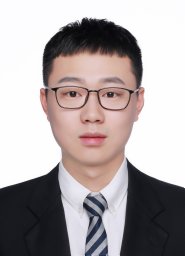 Peng Jin合作论文数2Quan Zou合作论文数2
 Chenglong Zhou (周承隆)合作论文数Institute of Aerospace Thermal Physics, School of Energy Science and Engineering, Harbin Institute of Technology2He Gao合作论文数Hong Kong Polytech Univ, Dept Mech Engn, Hung Hom, Kowloon, Hong Kong, Peoples R China2Liang Jin合作论文数2
 Hongsheng Chen (陈红胜)合作论文数College of Information Science and Electronic Engineering, Zhejiang University2
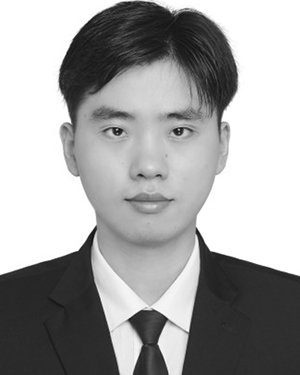 Xi Zhang合作论文数2
 Yanghua Lu合作论文数2
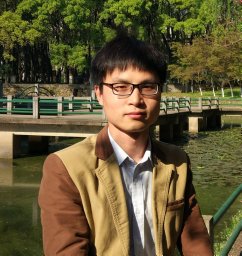 Tianpeng Ding合作论文数2
 Yi Zhou (周毅)合作论文数School of Civil and Resources Engineering, University of Science and Technology Beijing2
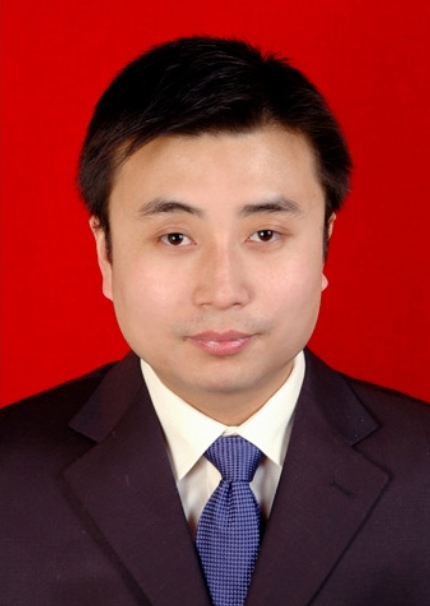 Zhiguo Qu (屈治国)合作论文数School of Energy and Power Engineering, Xi'an Jiaotong University2
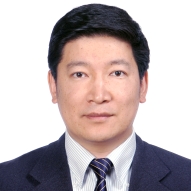 Yao Li (李垚)合作论文数School of Astronautics, Harbin Institute of Technology2
 Ming Xie (谢鸣)合作论文数School of Energy Science and Engineering, Harbin Institute of Technology2
 Shisheng Lin (林时胜)合作论文数College of Information Science & Electronic Engineering, Zhejiang University2




