Interim Editor-in-Chief Guy Simoneau opens 2018 with an introduction to the returning and new members of the editorial board, and a preview of the January issue of JOSPT. J Orthop Sports Phys Ther 2018;48(1):1-2. doi:10.2519/jospt.2018.0101.
During the American Physical Therapy Association's Combined Sections Meeting in New Orleans, LA in February 2018, JOSPT recognized the authors of the most outstanding research and clinical practice manuscripts published in JOSPT during 2017. The 2017 George J. Davies-James A. Gould Excellence in Clinical Inquiry Award was presented to Noa Ben-Ami, PT, PhD; Gabriel Chodick, MHA, PhD; Yigal Mirovsky, MD; Tamar Pincus, MPhil, MSc, PhD; and Yair Shapiro, MD, PhD, for their February 2017 article “Increasing Recreational Physical Activity in Patients With Chronic Low Back Pain: A Pragmatic Controlled Clinical Trial.” The 2017 JOSPT Excellence in Research Award was presented to Sanneke Don, PT, MPT; Margot de Kooning, PT, PhD; Lennard Voogt, PT, MT, PhD; Kelly Ickmans, PT, PhD; Liesbeth Daenen, PT, PhD; and Jo Nijs, PT, MT, PhD, for their March 2017 article “The Effect of Visual Feedback of the Neck During Movement in People With Chronic Whiplash-Associated Disorders: An Experimental Study.” J Orthop Sports Phys Ther 2018;48(5):348. doi:10.2519/jospt.2018.0104
As the door closes on 2018, Interim Editor-in-Chief Dr. Guy Simoneau expresses his gratitude and recognizes the many colleagues who contributed to the editorial process of JOSPT over the past 12 months. It is through their commitment, talent, and knowledge that JOSPT can continue to publish high-quality content that leads to more effective clinical practice and improved patient outcomes. J Orthop Sports Phys Ther 2018;48(12):908–910. doi:10.2519/jospt.2018.0108
During the American Physical Therapy Association's Combined Sections Meeting in Anaheim, California in February 2016, JOSPT recognized the authors of the most outstanding research and clinical practice manuscripts published in JOSPT during the 2015 calendar year. The 2015 JOSPT Excellence in Research Award was presented to Björn Aasa, Lars Berglund, Peter Michaelson, and Ulrika Aasa for their paper titled “Individualized Low-Load Motor Control Exercises and Education Versus a High-Load Lifting Exercise and Education to Improve Activity, Pain Intensity, and Physical Performance in Patients With Low Back Pain: A Randomized Controlled Trial.” The 2015 George J. Davies-James A. Gould Excellence in Clinical Inquiry Award was presented to Anne Benjaminse, Alli Gokeler, Bert Otten, Ariel V. Dowling, Avery Faigenbaum, Kevin R. Ford, Timothy E. Hewett, James A. Onate, and Gregory D. Myer for their work titled “Optimization of the Anterior Cruciate Ligament Injury Prevention Paradigm: Novel Feedback Techniques to Enhance Motor Learning and Reduce Injury Risk.” J Orthop Sports Phys Ther 2016;46(4):230–231. doi:10.2519/jospt.2016.0106
During the American Physical Therapy Association's Combined Sections Meeting in Indianapolis, Indiana in February 2015, JOSPT recognized the authors of the most outstanding research and clinical practice manuscripts published in JOSPT during the 2014 calendar year. The 2014 JOSPT Excellence in Research Award was presented to Rocio Llamas-Ramos, Daniel Pecos-Martín, Tomás Gallego-Izquierdo, Inés Llamas-Ramos, Gustavo Plaza-Manzano, Ricardo Ortega-Santiago, César Fernández-de-las-Peñas, and Joshua A. Cleland for their paper entitled “Comparison of the Short-Term Outcomes Between Trigger Point Dry Needling and Trigger Point Manual Therapy for the Management of Chronic Mechanical Neck Pain: A Randomized Clinical Trial.” The 2014 George J. Davies-James A. Gould Excellence in Clinical Inquiry Award was presented to Peter K. Edwards, Jay R. Ebert, and Timothy Ackland for their work titled “Clinical Rehabilitation Guidelines for Matrix-Induced Autologous Chondrocyte Implantation on the Tibiofemoral Joint.” J Orthop Sports Phys Ther 2015;45(3):151–152. doi:10.2519/jospt.2015.0104
To ensure that our authors' high-quality work reaches the widest possible audience, JOSPT has partnered with Kudos, a new service that provides tools for authors to maximize the visibility and reach of their published work. Using Kudos, authors can explain and share their work with wider audiences and measure the impact of this sharing on downloads, citations, and other performance measures, such as article-level metrics. For complete information on how to get the most out of your published work using Kudos, please visit the Kudos for JOSPT Authors page on JOSPT's website at http://www.jospt.org/page/authors/kudosforJOSPTauthors. J Orthop Sports Phys Ther 2015;45(7):501–502. doi:10.2519/jospt.2015.0107
Editor-in-Chief Dr Guy G. Simoneau recognizes the authors, associate editors, International Editorial Review Board members, and manuscript and musculoskeletal imaging reviewers who contributed to the various aspects of the Journal over the past 12 months.
JOSPT enters its 36th year of publishing guided by a new 3-year strategic plan, its third since 2008. This plan, created last September with the generous participation of JOSPT's many stakeholders, could be said to have as its motto “plus ultra,” Latin for “further beyond.” JOSPT's vision is to go further beyond where it is today to become the pre-eminent source of scientific evidence to optimize movement and health for the global community. Its mission, grounded in the past but driving toward the future, is to disseminate scientifically rigorous, clinically relevant content for physical therapists and others in the health care community to advance musculoskeletal and sports-related rehabilitation and movement. J Orthop Sports Phys Ther 2015;45(1):1–3. doi:10.2519/jospt.2015.0101
Advancements in fastener technology have been complemented by the development of new types of screwdriver bits. While designs may vary, so may the force application requirements placed on the tool user. The primary objective of this experiment was to analyze the relationship between user applied torque and screwdriver bit design. A further objective was to utilize the results to develop an effort metric by which bits of different designs can be compared. Three types of screwdriver bit designs (straight, Phillips, and combination of straight/Phillips (ECX TM )) were tested to determine how the design affects the amount and type of force applied by the user when performing a fastening task. The designs were tested to simulate fastener tightening and loosening operations. Sixteen participants were tested in this study. The data suggest there is no difference in user torque exertion between the ECX TM bit, Phillips, and the straight bit designs in either direction, 2.61-2.97 Nm for pronation and 2.63 -2.85 for supination. Mean axial force was significantly less for the Phillips (67 N) than the other 2 bits (72 and 80N). Although there was no significant effect of bit head design on maximal torque and axial force, the data suggest that the Phillips bit design may allow subjects to exert less axial force, which would result in a higher biomechanical effort ratio. A greater effort ratio would produce greater torque for the same axial force or the same torque for a lower axial force. Mean effort ratio for the Phillips bit was 3.6 N/N (Sup) and 4 N/N (Pro) and approximately 3.0 for the other two combinations of bits and directions. Subjective assessment indicated that users overwhelmingly preferred the Phillips bit design
In this month's issue of JOSPT, we are publishing a joint editorial on mandatory use of reporting guidelines. The content of the editorial has been endorsed by the editors of 28 rehabilitation journals, with the goal to improve reporting of disability and rehabilitation research. J Orthop Sports Phys Ther 2014;44(4):227. doi:10.2519/jospt.2014.0106
The year 2014 marks the 35th anniversary of the Journal of Orthopaedic & Sports Physical Therapy. Begun on a kitchen table in 1979, JOSPT is now the top-ranked physical therapy journal in the categories of rehabilitation, orthopaedics, and sports sciences. JOSPT has grown into its tagline: “The Global Resource for Musculoskeletal Health, Injury, and Rehabilitation.” We will work to continue to be this resource in the year ahead—certainly for the physical therapy profession, but also for the broader health care community. J Orthop Sports Phys Ther 2014;44(1):3–5. doi:10.2519/jospt.2014.0102
During the American Physical Therapy Association's Combined Sections Meeting in Las Vegas, Nevada in February 2014, JOSPT recognized the authors of the most outstanding research and clinical practice manuscripts published in JOSPT during the 2013 calendar year. The 2013 JOSPT Excellence in Research Award was presented to Mark D. Bishop, Joel E. Bialosky, Paul Mintken, PT, DPT, and Joshua A. Cleland, PT, PhD for their paper titled “Patient Expectations of Benefit From Interventions for Neck Pain and Resulting Influence on Outcomes.” The 2013 George J. Davies—James A. Gould Excellence in Clinical Inquiry Award was presented to Stephanie Di Stasi, Gregory D. Myer, and Timothy E. Hewett for their work titled “Neuromuscular Training to Target Deficits Associated With Second Anterior Cruciate Ligament Injury.” J Orthop Sports Phys Ther 2014;44(3):138–139. doi:10.2519/jospt.2014.0104
With this issue, JOSPT announces changes to its Board of Directors and publishes a special report titled “It Takes a Team: The 2013 Boston Marathon: Preparing for and Recovering From a Mass-Casualty Event.” J Orthop Sports Phys Ther 2014;44(3):140. doi:10.2519/jospt.2014.0105
We are pleased to welcome readers to JOSPT's revamped website at www.jospt.org. In addition to a fresh, up-to-date design focused on the user, JOSPT's site offers several new features that you have requested, including full-text articles, mobile delivery, and improved search. J Orthop Sports Phys Ther 2013;43(10):682–684. doi:10.2519/jospt.2013.0107
Published jointly by JOSPT and The Journal of Bone & Joint Surgery (JBJS), “It Takes a Team: Working Together Works for Patients” is a first-of-its-kind publication that describes how collaboration among orthopaedic surgeons, physical therapists, and other healthcare clinicians working in a variety of clinical settings has improved patient outcomes. This Special Report is available as a free download from JOSPT's website. J Orthop Sports Phys Ther 2013;43(3):117. doi:10.2519/jospt.2013.0103
For the last several years, the Journal of Orthopaedic & Sports Physical Therapy has made a concerted effort to provide information that fosters evidence-based practice not only in the United States, JOSPT's home base, but also around the world. We have sought to reach new audiences through partnerships with professional organizations in other countries and to deliver greater value to all our readers through the Journal's website. In 2013, we will continue to pursue these goals and describe a few of our initiatives briefly in this editor's note. J Orthop Sports Phys Ther 2013;43(1):1–2. doi:10.2519/jospt.2013.0101
During the American Physical Therapy Association's Combined Sections Meeting in San Diego in January 2013, JOSPT recognized the authors of the most outstanding research and clinical practice manuscripts published in JOSPT during the 2012 calendar year. The 2012 JOSPT Excellence in Research Award was presented to Ivan Mulligan, Mark Boland, and Justin Payette for their paper titled “Prevalence of Neurocognitive and Balance Deficits in Collegiate Football Players Without Clinically Diagnosed Concussion.” The 2012 George J. Davies-James A. Gould Excellence in Clinical Inquiry Award was presented to Richard B. Souza, Thomas Baum, Samuel Wu, Brian T. Feeley, Nancy Kadel, Xiaojuan Li, Thomas M. Link, and Sharmila Majumdar for their work titled “Effects of Unloading on Knee Articular Cartilage T1rho and T2 Magnetic Resonance Imaging Relaxation Times: A Case Series.” J Orthop Sports Phys Ther 2013;43(3):115–116. doi: 10.2519/jospt.2013.0102
Hébert-Losier, K, Schneiders, AG, Garcı́a, JA, Sullivan, SJ, and Simoneau, GG. Influence of knee flexion angle and age on triceps surae muscle fatigue during heel raises. J Strength Cond Res 26(11): 3134–3147, 2012—The triceps surae (TS) muscle-tendon unit is 1 of the most commonly injured in elite and recreational athletes, with a high prevalence in middle-aged adults. The performance of maximal numbers of unilateral heel raises is used to assess, train, and rehabilitate TS endurance and conventionally prescribed in 0 knee flexion (KF) for the gastrocnemius and 45 for the soleus (SOL). However, the extent of muscle selectivity conferred through the change in the knee angle is lacking for heel raises performed to volitional fatigue. This study investigated the influence of knee angle on TS muscle fatigue during heel raises and determined whether fatigue differed between middle-aged and younger-aged adults. Forty-eight healthy individuals aged 18–25 and 35–45 years performed maximal numbers of unilateral heel raises in 0 and 45 KF. Median frequencies and linear regression slopes were calculated from the SOL, gastrocnemius medialis (GM), and gastrocnemius lateralis (GL) surface electromyographic signals. Stepwise mixed-effect regressions were used for analysis. The subjects completed an average of 45 and 48 heel raises in 0 and 45 KF, respectively. The results indicated that the 3 muscles fatigued during testing as all median frequencies decreased, and regression slopes were negative. Consistent with muscle physiology and fiber typing, fatigue was greater in the GM and GL than in the SOL (p , 0.001). However, knee angle did not influence TS muscle fatigue parameters (p = 0.814), with similar SOL, GM, and GL fatigue in 0 and 45 KF. These findings are in contrast with the traditionally described clinical use of heel raises in select knee angles for the gastrocnemius and the SOL. Furthermore, no difference in TS fatigue between the 2 age groups was able to be determined, despite the reported higher prevalence of injury in middle-aged
 Holmes Edith合作论文数8Richard W. Marklin合作论文数6S John Sullivan合作论文数3
 Kim Hébert-Losier合作论文数Te Huataki Waiora Sch Hlth, Univ Waikato3
 Anthony G. Schneiders合作论文数Sch Physiotherapy, Univ Otago3Kevin E. Wilk合作论文数3
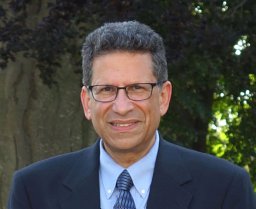 Mark L. Nagurka合作论文数Department of Mechanical and Industrial Engineering;Marquette University;Department of Mechanical and Industrial Engineering, Marquette University2peter mills合作论文数1Gg Simoneau合作论文数1Kyle A. Saginus合作论文数1d cahaya合作论文数1mark d hickok合作论文数1
 Richard J Newsham-West合作论文数1
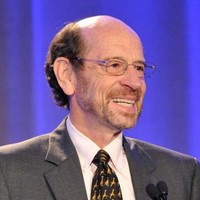 Peter R. Cavanagh合作论文数Department of Orthopaedics and Sports Medicine, University of Washington Medicine;Tissue and Regenerative Engineering Lab, University of Washington Medicine;JointMetrix Medical LLC1Bufton Marcia J合作论文数1
 Stephen C Allison合作论文数Flinders University1Patricia Seeley合作论文数1
 Gerald Harris合作论文数Joint Department of Biomedical Engineering, Opus College of Engineering, Marquette University;Orthopaedic & Rehabilitation Engineering Center, Marquette University;Department of Orthopaedic Surgery, Medical College of Wisconsin1John F. Monroe合作论文数1
 Rod Barrett合作论文数School of Physiotherapy and Exercise Science, Griffith University1Stephen H. Freier合作论文数1
 Jacqueline J Wertsch合作论文数Milwaukee1Jan S Ulbrecht合作论文数1David E. Krebs合作论文数1Rebecca A. Bachschmidt合作论文数1




