Trimethoprim (TMP) is a synthetic broad-spectrum antimicrobial agent. The powders of TMP-PRO and TMP-PRO-H2O, two multi-component crystals of trimethoprim (TMP) and the probenecid (PRO), were prepared by slurry suspension. In this study, solid state characterization and analysis of the obtained crystal powders have been carried out. Relevant computational analyses were also performed, such as Hirshfeld surface (HS) analysis to elucidate the types of interactions between TMP-PRO and TMP-PRO-H2O, and molecular electrostatic potential surface (MEPs) analysis to analyze the formation of multi-component crystals. Atoms in molecules (AIM) and independent gradient model based on Hirshfeld partition (IGMH) were used to analyze the intermolecular and intramolecular interactions within two multi-component crystals, and it was found that hydrogen bond plays an important role in the formation and stability of the multi-component crystals. In addition, the solubility of the prepared crystals was tested in pH 6.8 buffer, pure water and pH 1.2 buffer. It was found that the solubility decreased compared to the raw TMP. In the pH 6.8 buffer, the release rates of salts and hydrates were reduced to 0.69 and 0.61 times that of TMP, respectively. From this, the good slow-release performance was found. The kinetic models were used to evaluate the release data, and it was demonstrated that the release of TMP and multi-component crystals is mainly through a non-Fickian diffusion mechanism. The successful preparation of TMP-PRO and TMP-PRO-H2O can broaden the clinical application of TMP to a certain extent.
Sunitinib, a widely used multi-target tyrosine kinase inhibitor in clinical practice, is limited by low bioavailability attributable to its poor solubility and permeability. To mitigate these limitations, the Conductor-like Screening Model for Real Solvents (COSMO-RS) model was utilized to identify suitable counter acids for salt formation with sunitinib. A novel sunitinib salt, sunitinib-hydrogen glutarate was successfully virtual screened and experimental synthesized. The salt was comprehensively characterized, and its crystal structure was determined. Subsequent evaluations included solubility and dissolution testing, permeability assessment, theoretical calculations, in vivo pharmacokinetic studies, and in vitro cytotoxicity assays. Compared to sunitinib, the salt exhibited a 57.95-fold increase in solubility in pH 6.8 buffer, a markedly accelerated dissolution rate, and significantly enhanced membrane permeability, with a 1557.9 % rise in cumulative drug permeation over 480 min. Quantum chemical calculations revealed multiple non-covalent interactions within the salt at the molecular level and indicated that the strong solvation effect of water on the salt species is key to its improved aqueous solubility. Analysis of salt passive diffusion across lipid bilayers by the Cosmoperm model demonstrated that ion pairs permeate much more efficiently than dissociated ions. In vivo pharmacokinetic studies in rats demonstrated that the sunitinib-hydrogen glutarate achieved faster absorption and significantly higher relative bioavailability, suggesting potentially superior antitumor efficacy. This work not only provides a practical strategy to enhance the bioavailability of poorly soluble drugs like sunitinib, but also establishes a theoretical and technical foundation for the development of novel drug delivery systems and the improvement of therapeutic outcomes, thereby supporting further innovation in the formulation of sparingly soluble active pharmaceutical ingredients.
In this study, the humidity stability of ethyl gallate (EG) was improved by a co-crystallization method. Through a combination of COSMO-RS virtual screening and liquid-assisted grinding assay (LAG) screening, 14 new solid phases out of 25 candidate coformers were identified and a single crystal of the ethyl gallate (EG)-2-methylimidazole (2MIE) 1 : 1 cocrystal, EG-2MIE, was obtained. The cocrystal was characterized by single crystal X-ray diffraction, powder X-ray diffraction, differential scanning calorimetry and Fourier-transform infrared spectroscopy. The ternary phase diagram (TPD) of EG-2MIE in ethanol was constructed at 298.15 K, 303.15 K and 308.15 K. The dissolution behavior of EG-2MIE in ethanol was also investigated and the thermodynamic parameters of cocrystal formation were also estimated. The results showed that EG and 2MIE were congruently dissolved, which can provide a theoretical guide for the large-scale preparation of the EG-2MIE cocrystal. The accelerated stability tests showed that EG-2MIE exhibited better stability than the original EG at 40 degrees C and 75% relative humidity. The dissolution behavior and humidity stability were explained by comparing the strength of intermolecular interactions by calculating the Hirshfeld surface (HS), molecular electrostatic potential surface (MEPs), atoms in molecules (AIM) analysis, and lattice energy analysis.
The poor water solubility of nevirapine (NVP) significantly restricts its bioavailability. To address this challenge, this work proposes an efficient method for screening NVP multicomponent crystals using the full interaction map (FIM) and the Conductor-like screening model for real solvents (COSMO-RS) model. Two NVP salts and two NVP cocrystals with enhanced solubility were prepared using liquid-assisted grinding method and solvent evaporation method, namely nevirapine-5-sulfosalicylate (NVP-5SA), nevirapine-2,6-dihydroxybenzoate (NVP-2,6DBA), nevirapine-2,3-dihydroxybenzoic acid cocrystal (NVP-2,3DBA) and nevirapine-2,5-dihydroxyterephthalic acid cocrystal (NVP-2,5DTA). Systematic characterization, structural analysis, solubility measurement, dissolution evaluation and theoretical calculations were conducted on these multicomponent crystals. Notably, the solubility of NVP-5SA and NVP-2,6DBA increased to 5.32 and 3.90-fold respectively compared with NVP in phosphate buffer (pH = 6.8). The structures of four multicomponent crystals were characterized using single crystal X-ray diffraction. Quantum chemical calculations, including Hirshfeld surface analysis, atoms in molecules theory, independent gradient model based on Hirshfeld partitioning, and molecular electrostatic potentials surface, were employed to study molecular interactions at the microscopic level. The lattice energy (EL) and hydration-free energy (EHF) of NVP and its four multicomponent crystals were calculated, and the relationships between these parameters and the changes of melting point and dissolution behavior were analyzed. So, the variations and origins of these physicochemical properties were rationalized and explained on the atomic scale. Meanwhile, the efficiency of the novel combined coformers screening method was verified.
1,3-Enynes with conjugated alkene and alkyne moieties are attractive building blocks in synthetic chemistry. However, neither 4,1-hydrophosphination nor dihydrophosphination of 1,3-enynes has been reported. In this paper, the divalent ytterbium and calcium amide complexes supported by silaimine-functionalized cyclopentadienyl ligands (C5Me4-Si(L)=NR) were developed, which successfully catalyzed the efficient single and double hydrophosphination of 1,3-enynes with diarylphosphines. The hydrophosphination reactions selectively produced homoallenyl phosphines and (E)-propenylene diphosphines, respectively. This work demonstrated the potential of hemilabile silaimine-Cp ligands in the supporting the efficient and selective rare- and alkaline-earth catalysts.
Due to their intrinsic high reactivity, isolation of tin(0) complexes remains challenging. Herein, we report the synthesis of a silylene-stabilized ditin(0) complex ( 2 ) by reduction of a silylene-supported dibromostannylene ( 1 ) with 1 equivalent of magnesium (I) dimer in toluene. The structure of 2 was established by single crystal X-ray diffraction analysis. Density Functional Theory calculations revealed that complex 2 bears a Sn=Sn double bond and one lone pair of electrons on each of the Sn(0) atoms. Remarkably, complex 2 is readily methylated to give a mixed-valent methylditin cation ( 4 ), which undergoes topomerization in solution though a reversible 1,2-Me migration along a Sn=Sn bond. Computational studies showed that the three-coordinate Sn atom in 4 is the dominant electrophilic center, and allows for facile reaction with KHBBu s 3 furnishing an unprecedented N-heterocyclic silylenes-stabilized distannavinylidene ( 5 ). The synthesis of 2 , 4 and 5 demonstrates the exceptional ability of N-heterocyclic silylenes to stabilize low valent tin complexes.
Abstract Monovalent group 15 cations L2Pn + (L = σ-donor ligands, Pn = N, P, As, Sb, Bi) have attracted significant experimental and theoretical interest because of their unusual electronic structures and growing synthetic potential. Herein, we describe the synthesis of a family of antimony(I) and bismuth(I) cations supported by a bis(silylene) ligand [(TBDSi2)Pn][BArF 4] (TBD = 1, 8, 10, 9-triazaboradecalin; ArF = 3,5-CF3-C6H3; Pn = Sb, (2); Bi, (3)). The structures of 2 and 3 have been unambiguously characterized spectroscopically and by X-ray diffraction analysis and DFT calculations. They feature bis-coordinated Sb and Bi atoms which exhibit two lone pairs of electrons. The reactions of 2 and 3 with methyl trifluoromethane sulfonate provide a approach for the preparation of dicationic antimony(III) and bismuth(III) methyl complexes. Compounds 2 and 3 serve as 2e donors to group 6 metals (Cr, Mo), giving rise to ionic antimony and bismuth metal carbonyl complexes 6–9.
In contrast to the well-developed metal acetylides, the heavier analogues of the type REEM (E=Si, Ge, Sn, Pb; M=metals) have not been reported to date. Herein, we describe the synthesis of a silylene-stabilized germanium analogue of alkynylaluminum ( 4 ) by the reaction of a silylene-stabilized digermavinylidene ( 3 ) with 0.25 equiv of (AlCp*) 4 in THF at 80 °C. The structure of 4 has been unambiguously characterized by spectroscopic analysis, X-ray diffraction analyses and DFT calculations, and features a linear AlGeGe skeleton with a Ge=Ge double bond and a polarized Ge−Al bond. Complex 4 shows excellent reactivity towards small molecules such as H 2 , CS 2 and TolNCO, and this allows for the construction of the structurally intriguing germylenyl aluminum complex ( 5 ) and the germacycles ( 6 , 7 ).
Synthesis and reactivity of disilicon(0) complexes are of fundamental and application importance. Herein, we report the development of an N-heterocyclic imino-substituted silylene (1), which has strong sigma-donating ability and is significantly sterically hindered. The one-pot reaction of this silylene with [IPr -> SiCl2] (IPr =1,3-bis(2,6-diisopropylphenyl)-imidazol-2-ylidene) and KC8 (2 equiv) in THF at -30 degrees C leads to a silyleneligated disilicon(0) complex (2), isolated as red crystals in 60% yield. Characterization data and DFT calculations show that the trans-bent Si, skeleton in 2 features a Si-0=Si-0 double bond with significant pi-pi bonding and one lone pair of electrons on each of these two Si-0 atoms. Complex 2 reacts readily with phenylacetylene, producing a structurally intriguing silatricyclic complex 6,8-diaza-1,2,5-trisilatricyclo-[3.2.1.0(2,7)]-oct-3-ene (3), and revealing new aspects of low-valent silicon chemistry.
An entry from the Cambridge Structural Database, the world’s repository for small molecule crystal structures. The entry contains experimental data from a crystal diffraction study. The deposited dataset for this entry is freely available from the CCDC and typically includes 3D coordinates, cell parameters, space group, experimental conditions and quality measures.
A series of novel aromatic amide compounds with N-pyridylpyrazole and 1,3,4-oxadiazole heterocyclic motifs were successfully synthesized with N-pyridylpyrazole carboxylic acid and 2-amino-3-methvlbenzoic acid as the starting materials, via multi-step reactions of nucleophilic addition, cyclization, acvlation, etc. The preliminary bioassay tests indicated that most of these compounds have apparent insecticidal activities, among which compounds N-(2-(5-(3-bromo-1-(3-chloro-pyridin-2-yl)-1H-pyrazol-5-yl)-1,3,4-oxadiazol-2-yl)-4-chloro-6-methylphenyl)acetamide (8a) and N-(2-(5-(3-bromo-1-(3-chloro-pyridin-2-yl)-1H-pyrazol-5-yl)-1,3,4-oxadiazol-2-yl)-4-chloro-6-methylphenyl)-3-chloro-2,2-dimethylpropanamide (8e) possessed a mortality rate of 70% towards Mythimna separata Walker at the concentration of 200 mg.L-1. Some of the compounds exhibited good fungicidal activities at 50 mg.L-1 against Sclerotinia sclerotiorum with the growth inhibitoly rates of 54.5%similar to 63.6%, which is more effective than the controls of triadimefon and chlorantraniliprole. Several compounds such as N-(2-(5-(3-bromo-1-(3-chloropyridin-2-yl)-1H-pyrazol-5-yl)-1,3,4-oxadiazol-2-yl)-4-chloro-6-methylpheny Opivalamide (8f) and N-(2-(5-(3-bromo-1-(3-chloropyridin-2-yl)-1H-pyrazol-5-yl)-1,3,4-oxadiazol-2-yl)-4-chloro-6-methylphenyl)-4-fluorobenzamide (8h) showed moderate fungicidal activity against Physalospora piricola. It is worth noting that compound 8e, which has favorable insecticidal and fungicidal activities towards Alythimna separata Walker and Scierotinia scierotiorum respectively, could be used as novel reference structure for new agrochemical hmovations.
Herein, we report a protocol for visible-light-induced dearomative oxamination reactions of indole derivatives to afford functionalized spirocyclic products. These step-economical reactions, which involve C-N and C-O bond formation, feature mild conditions, a broad substrate scope, high yields, exclusive diastereoselectivity and step-economy. In addition, a similar protocol could be used to synthesize spirolactams by dearomative amidation of phenol derivatives.
Hydrosilylation of alkynes generally yield vinylsilanes, which are inert to the further hydrosilylation because of the steric effects. Reported here is the first successful dihydrosilylation of aryl- and silyl-substituted internal alkynes enabled by a rare-earth ate complex to yield geminal bis- and tris(silanes), respectively. The lanthanum bis(amido) ate complex supported by an ene-diamido ligand proved to be the ideal catalyst for this unprecedented transformation, while the same series of yttrium and samarium alkyl and samarium bis(amido) ate complexes exhibited poor activity and selectivity, indicating significant effects of the ionic size and ate structure of the rare-earth catalysts.
An atom-economical method for synthesizing N-heterocyclic indoles from readily available o-alkynylphenyl isothiocyanates and propargylamine derivatives is reported. This method involves a copper-catalyzed cascade bicyclization process consisting of an intramolecular 5-exo-dig hydrothiolation reaction and an intramolecular hydroamination reaction and, depending on whether or not molecular oxygen is present, selectively affords Z-isomers of 2-(1H-indol-1-yl)-4,5-dihydrothiazoles or 2-(1H-indol-1-yl)thiazol-5-yl aryl ketones in satisfactory yields. Mechanistic studies indicate that molecular oxygen acts as the oxygen source for the ketone moiety in the products.
BACKGROUNDN-Pyridylpyrazole derivatives have received continuous attention in agrochemical research during the last decade owing to their remarkable insecticidal or fungicidal potentials. To look for novel heterocyclic agrochemicals for increasing production of agriculture, a series of novel alpha -aminophosphonate derivatives containing N-pyridylpyrazole moiety were synthesized. RESULTSThe structures of the title compounds were confirmed via melting point, IR, H-1 NMR, C-13 NMR, P-31 NMR, HRMS and elemental analysis. The single crystal structure of diethyl (3-bromo-1-(3-chloropyridin-2-yl)-1H-pyrazol-5-yl)(2,6-dimethylphenylamino)methylphosphonate (compound 12b) was first reported. Moreover, the bioassays displayed that the title compounds exhibited modest or weak insecticidal activities against oriental armyworm at 200 mu gmL(-1). The first investigation on the fungicidal potential of chlorantraniliprole showed no significant activities towards the six tested fungi found in this study, however, most of the title compounds displayed apparent in vitro fungicidal activity against some plant fungi, in particular excellent activities towards Physalospora piricola. Compounds 11a and 11b had EC50 values of 18.8 and 17.4 mu gmL(-1), respectively, which were comparable with that of fungicide control triadimefon (EC50 = 24.7 mu gmL(-1)) against Physalospora piricola. In addition, some compounds exhibited modest in vivo control efficacy at 0.5 mgmL(-1) towards Sclerotinia sclerotiorum (11b: 30.1(1.8)%), Rhizoctonia cerealis (11a: 20.4(+/- 2.1)%; 11b: 30.2(+/- 2.2)%), and Erysiphe graminis (11a: 30.3(+/- 1.8)%; 12d: 40.2(+/- 0.9)%). CONCLUSIONCompounds 11a, 11b and 12d could be promising new lead structures for the development and discovery of novel fungicides towards Physalospora piricola and Erysiphe graminis. The structure-activity relationship (SAR) analysis provided useful guidance and new understanding for the design of novel pyridylpyrazole-containing agrochemicals. (c) 2019 Society of Chemical Industry
A series of novel 1,2,4-oxadiazole-containing N-pyridylpyrazole derivatives 12a-h were efficiently synthesized with pivaldehyde, pyridylpyrazole carboxylic acid and arylamine as raw materials via 1,3-dipolar cycloaddition. Their structures were identified by melting points, 1H NMR, 13C NMR and elemental analysis or HRMS. The exploration on the single-crystal structures of 12c and 12g revealed the stereochemical and substituent oriental characteristics, and the relevance of the structure and the reaction activity of this type of compounds. The preliminary bioassays indicated that several compounds had good insecticidal activities, among which 12c showed a lethality rate of 80% towards Mythimna separata Walker at 200μg/mL;some of the compounds exhibited favorable fungicidal activities at 50μg/mL against Physalospora piricola, Rhizoctonia cereal, Sclerotinia sclerotiorum, etc. Among which, 12a, 12b, 12c and 12h could be considered as new fungicidal leading compounds for further structural optimization. These discoveries along with the structure-activity relationship analysis in this paper will provide useful guidance for the innovative studies on new pyridylpyrazole derivatives and their applications in agrochemical area.
Herein we describe an one-pot protocol for visible light-induced synthesis of functionalized spirocyclic indolines under mild conditions by means of a process involving sequential difluoromethylative dearomatization, hydroxylation, and substitution reactions of indole derivatives. The transformation proceeds via a hydroxylated "acetal pool" intermediate that can react with various nucleophiles. Several of the phosphine-oxide and indole-substituted products showed good fungicidal activity, suggesting that this protocol might be useful in the agrochemical field.
The cyclometalated rhodium, iridium, and ruthenium complexes of N-methoxy-4-nitrobenzamide were synthesized by treatment of N-methoxy-4-nitrobenzamide with [Cp*MCl2](2)] = Rh and Ir) or [(p-cymene)RuCl2](2) via C-H bond activation. The molecular structures of all these complexes were determined by single-crystal X-ray diffraction analysis. When the cyclometalated rhodium and ruthenium complexes were used as catalysts in the C-H bond functionalization reactions reported before, the desired products were obtained in high yields, proving that these cyclometalated complexes were probably the key catalytic intermediates of the C-H bond functionalization reactions of N-methoxybenzamide derivatives. The stoichiometric reactions of the cyclometalated rhodium, iridium, and ruthenium complexes with diphenylacetylene afforded the corresponding seven-membered metallacycles with insertion of two molecules of diphenylacetylene in 24, 6, and 20% yields, respectively, through the tandem reaction. However, the cyclometalated iridium complex could not catalyze the reaction of N-methoxy-4-nitrobenzamide with diphenylacetylene. This work provides a further understanding for the mechanisms of rhodium- and ruthenium-catalyzed C-H bond functionalization reactions of N-methoxybenzamide derivatives.
A convenient and practicable method for the synthesis of the novel 2-(trifluoromethyl)-6-arylimidazo[2,1-b][1,3,4]-thiadiazole (bis-)Mannich base derivatives containing various substitutedpiperazine motif has been developed based on the fused-heterocycle intermediate. The new structures were identified through melting points, H-1 NMR, C-13 NMR, F-19 NMR, elemental analysis (or HRMS) and X-ray single-crystal diffraction. The pesticidal bioassays showed that some of compounds exhibited good fungicidal activities against Cercospora arachidicola, Physalospora piricola and Rhizoctonia cereali at 50mg/L; some of them displayed favourable insecticidal activities against oriental armyworm (Mythimna separata Walker) at 200mg/L, particularly, Vk and Vm with mortality rate of 75% and 80% respectively, could be considered as new insecticidal lead compounds for further structural optimization.
 Baiquan Wang (王佰全)合作论文数Department of Chemistry, College of Chemistry, Nankai University82
 Shansheng Xu (徐善生)合作论文数南开大学75
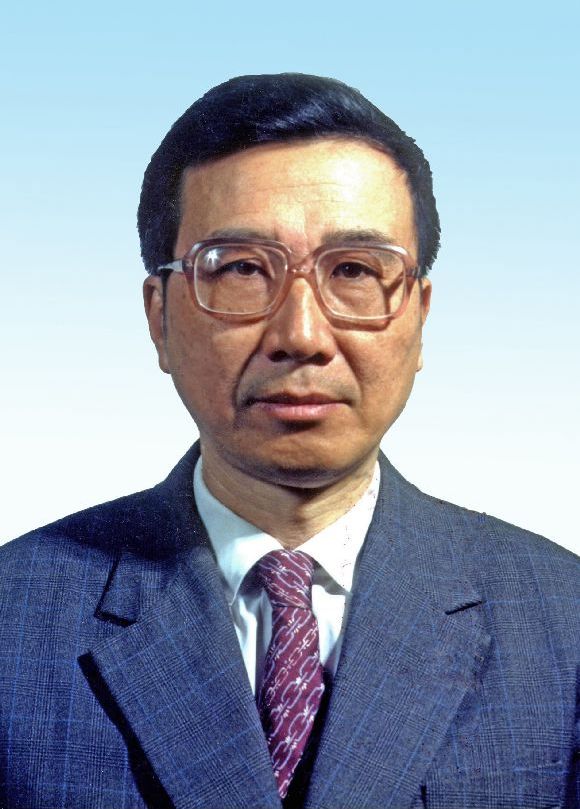 Zhengming Li (李正名)合作论文数College of Chemistry, Nankai University64
 Bin Li (李滨)合作论文数College of Chemistry, Nankai University53
 Liangfu Tang (唐良富)合作论文数College of Chemistry, Nankai University48Zheng-Zhi Zhang合作论文数44
 Fengbo Xu (徐凤波)合作论文数College of Chemistry, Nankai University38
 Qingshan Li (李庆山)合作论文数College of Chemistry, Nankai University38
 Guofu Zi (自国甫)合作论文数College of Chemistry, Beijing Normal University35
 Zhi-Jin Fan (范志金)合作论文数College of Chemistry, Nankai University;State Key Laboratory of Elemento-organic Chemistry, Nankai University35
 Qingmin Wang (汪清民)合作论文数College of Chemistry, Nankai University30
 Baolei Wang (王宝雷)合作论文数College of Chemistry, Nankai University27
 Daizheng Liao (廖代正)合作论文数Nankai University27
 Zhenghong Zhou (周正洪)合作论文数Institute of Elemento-Organic Chemistry, College of Chemistry, Nankai University25
 Peng Cheng (程鹏)合作论文数College of Chemistry, Nankai University25HZ Yang合作论文数24Youming Wang (王有名)合作论文数College of Chemistry, Nankai University24
 Chunming Cui (崔春明)合作论文数Institute of Elemento-organic Chemistry, College of Chemistry, Nankai University;State Key Laboratory of Elemento-organic Chemistry, Nankai University23Chuchi Tang合作论文数23
 Youquan Zhu (朱有全)合作论文数College of Chemistry, Nankai University21
 Qing-Xiang Liu合作论文数20
 Licheng Song (宋礼成)合作论文数College of Chemistry, Nankai University19Shi-Ping Yan (阎世平)合作论文数Nankai University18
 Honggen Wang (王洪根)合作论文数School of Pharmaceutical Sciences, Sun Yat-sen University17
 Yuxiu Liu (刘玉秀)合作论文数College of Chemistry, Nankai University17
 Xiaomao Zou (邹小毛)合作论文数Institute of Elemento-Organic Chemistry, College of Chemistry, Nankai University;State Key Laboratory of Element-organic Chemistry, Nankai University16
 Wei Shi (师唯)合作论文数Department of Chemistry, College of Chemistry, Nankai University15
 Fangzhong Hu (胡方中)合作论文数College of Chemistry, Nankai University15
 Zhengjie He (贺峥杰)合作论文数南开大学化学学院15
 Jianguo Wang (王建国)合作论文数College of Chemistry, Nankai University14
 Yonghong LI (李永红)合作论文数深圳职业技术学院,应用化学与生物技术学院13
 Xiaoyan Zhang (张晓燕)合作论文数School of Resources and Materials, Northeastern University at Qinhuangdao13Jian Shang合作论文数13
 Xue-Wen Hua合作论文数12Guiping Wu合作论文数12
 Bin Zhao (赵斌)合作论文数College of Chemistry, Nankai University12
 Vasiliy A. Bakulev合作论文数Urals State Technical University12
 Aidang Lu (卢爱党)合作论文数School of Chemical Engineering and Technology, Hebei University of Technology11Qiuwen Wang合作论文数11Zong-Hui JIANG (姜宗慧)合作论文数10Wang Nuancheng合作论文数10Congying Zhang合作论文数10Changsheng Yao合作论文数9Zhang Furen合作论文数9
 Jin Lin (林进)合作论文数College of Chemistry and Materials Science, Hebei Normal University9
 Thomas Chung Wai Mak (麥松威)合作论文数Department of Chemistry, Faculty of Science, The Chinese University of Hong Kong9Hua Rong合作论文数8Li Fengyun合作论文数8
 Guangning Zong合作论文数State Key Laboratory of Elemento Organic Chemistry, Nankai University8




