The APA Awards for Distinguished Scientific Contributions are presented to persons who, in the opinion of the Committee on Scientific Awards, have made distinguished theoretical or empirical contributions to basic research in psychology. The 2015 recipients of the APA Scientific Contribution Awards were recognized by the 2014 Board of Scientific Affairs and selected by the 2014 Committee on Scientific Awards. The winners for 1956 through 2015 are listed here. The 2015 award winners are Stanislas Dehaene, Edna B. Foa, and Michael Tomasello. (PsycINFO Database Record
Fear is not foreign to. any social organism. Although long recognized by behavioral scientists, psychoanalysts, novelists, theologians, politicians, and philosophers as a major factor in the activity of most higher species, it has always remained a rather nebulously defined concept. Some investigators view fear as an emotional state, others focus upon it as a motivational force, while still others use its perception as a stimulus. The term is widely and diversely employed in our everyday language, both as a noun and a verb form-witness Roosevelt’s “we have nothing to fear but fear itself’—and as a modifier, it can serve both adjectival and adverbial functions. In short, across a variety of feelings, phenomena, and functions, “fear” seems to be intuitively understood by almost everyone. Yet it seems likely that it is misunderstood by virtually all as well.
Many species in long-term captivity have tried to kill time by playing friendly games with their warders. In the end, only rhesus monkeys (Macaca mulatta) could tolerate the tedious hide-and-seek games that their human jailers prefer to play. In this article, written many years before the Stockholm syndrome was first described, the author relates how it was eventually discovered which species is most willing to contribute to the development of a genuinely scientific human psychology.
Much as been written about Harry Harlow’s controversial use of rhesus macaques as experimental subjects in his research on mother-infant bonds. On August 31, 1958, Harlow presented the results of his work in his presidential address at the Sixty-sixth Annual Convention of the American Psychological Association in Washington, D. C. This talk was later published as a paper in the American Psychologist. This chapter is an excerpt from that paper and presents a fascinating perspective into Harlow’s views on human-macaque relations, animal sentience and ‘the nature of love’.
The maturation of the emotions of love, fear, and anger among socially reared primates, both human and nonhuman, customarily follows the same sequence. Three of the love systems—maternal love, infant love for the mother, and peer love—have every chance to become firmly established before the strong emotions of fear appear, and these, in turn, precede aggression with intent to harm. Social rearing requires exposure and experience with a biological mother or an adequate surrogate as well as agemate love accompanied by appropriate play. All of these contexts offer innumerable opportunities for the alleviation of both fear and aggression. The interlocking backgrounds of undesirable fears and violent aggression create a situation that allows the amelioration of these fears to aid in prevention of aggression. Should these early loves be prevented through the many avenues of deprivation or denial that are no respecters of economic levels, fear and aggression frequently fill the vacuum. Once established, the rehabilitation of the individual becomes very difficult; prevention of these extreme states is far more economical than is its treatment.
Journal of Child Psychology and PsychiatryVolume 17, Issue 2 p. 101-112 EFFECTS OF MATERNAL AND PEER SEPARATIONS ON YOUNG MONKEYS Stephen J. Suomi, Corresponding Author Stephen J. Suomi Primate Laboratory, University of WisconsinReprint requests should be sent to: Dr. Stephen J. Suomi, Primate Laboratory, University of Wisconsin, 22 North Charter Street, Madison, Wisconsin 53706. Mr. Ruppenthal is currently at the University of Washington Regional Primate Research Center, Seattle.Search for more papers by this authorMary L. Collins, Mary L. Collins Primate Laboratory, University of WisconsinSearch for more papers by this authorHarry F. Harlow, Harry F. Harlow Primate Laboratory, University of WisconsinSearch for more papers by this authorGerald C. Ruppenthal, Gerald C. Ruppenthal Primate Laboratory, University of WisconsinSearch for more papers by this author Stephen J. Suomi, Corresponding Author Stephen J. Suomi Primate Laboratory, University of WisconsinReprint requests should be sent to: Dr. Stephen J. Suomi, Primate Laboratory, University of Wisconsin, 22 North Charter Street, Madison, Wisconsin 53706. Mr. Ruppenthal is currently at the University of Washington Regional Primate Research Center, Seattle.Search for more papers by this authorMary L. Collins, Mary L. Collins Primate Laboratory, University of WisconsinSearch for more papers by this authorHarry F. Harlow, Harry F. Harlow Primate Laboratory, University of WisconsinSearch for more papers by this authorGerald C. Ruppenthal, Gerald C. Ruppenthal Primate Laboratory, University of WisconsinSearch for more papers by this author First published: April 1976 https://doi.org/10.1111/j.1469-7610.1976.tb00382.xCitations: 94AboutPDF ToolsRequest permissionExport citationAdd to favoritesTrack citation ShareShare Give accessShare full text accessShare full-text accessPlease review our Terms and Conditions of Use and check box below to share full-text version of article.I have read and accept the Wiley Online Library Terms and Conditions of UseShareable LinkUse the link below to share a full-text version of this article with your friends and colleagues. Learn more.Copy URL Share a linkShare onEmailFacebookTwitterLinkedInRedditWechat References. Abrams, P. S. (1970) Age and effects of separation on mother and infant rhesus monkeys (Macaca mulatto). Unpublished doctoral dissertation, University of California, Davis, California. Bowden, D. M. and McKinney, W. T. (1972) Behavioral effects of peer separation, isolation, and reunion on adolescent male rhesus monkeys. Dev. Psychobiol. 5, 353–362. Hansen, E. W. (1966) The development of maternal and infant behavior in the rhesus monkey. Behaviour 27, 107–149. Harlow, H. F. and Harlow, M. K. (1965) The affectional systems. In Behavior of Nonhuman Primates (Edited by A. Schrier, H. F. Harlow and F. Stollnitz), Vol. 2. Academic Press, New York . Harlow, H. F. and Suomi, S. J. (1974) Induced depression in monkeys. Behav. Biol. 12, 273–296. Harlow, H. F., Suomi, S. J. and McKinney, W. T. (1970) Experimental production of depression in monkeys. Mainly Monkeys 1, 6–12. Hinde, R. A. and Davies, L. (1972) Removing infant rhesus from mother for 13 days compared with removing mother from infant. J. Child Psychol. Psychiat. 13, 227–237. Hinde, R. A. and Spencer-Booth, Y. (1971) Effects of brief separation from mother on rhesus monkeys. Science 173, 111–118. Hinde, R. A., Spencer-Booth, Y. and Bruce, M. (1966) Effects of 6-day maternal deprivation on rhesus monkey infants. Nature, Land. 210, 1021–1033. Kaufman, I. C. and Rosenblum, L. A. (1967) The reaction to separation in infant monkeys: Anaclitic depression and conservation-withdrawal. Psychosom. Med. 29, 648–675. Kaufman, I. C. and Rosenblum, L. A. (1969) The waning of the mother-infant bond in two species of macaque. In Determinants of Infant Behavior (Edited by Foss, B. M.), Vol. 4. Methuen, London . Lawick-Goodall, J. van (1973) Cultural elements in a chimpanzee community. In Symposia of the Fourth International Congress of Primatology (Edited by Menzel, E. W.), Vol. 1. S. Karger, Basel . McKinney, W. T. and Bunney, W. E. (1969) Animal model of depression. Arch. Gen. Psychiat. 21, 240–248. McKinney, W. T., Suomi, S. J. and Harlow, H. F. (1972) Repetitive peer separations of juvenile-age rhesus monkeys. Arch, Gen. Pychiat 27, 200–204. McKinney, W. T., Jr., Suomi, S. J. and Harlow, H. F. (in press) Experimental psychopathology in nonhuman primates. In American Handbook of Psychiatry: Frontiers of Psychiatry (Edited by Hamburg, D. A.). Basic Books, New York . Mitchell, G. D., Harlow, H. F., Griffin, G. A. and Møller, G. W. (1967) Repeated maternal separation in the monkey. Psychonom. Sci. 8, 197–198. Novak, M. A. (1973) Fear-attachment relationships in infant and juvenile rhesus monkeys. Unpublished Ph.D. Dissertation, University of Wisconsin. Preston, D. G., Baker, R. P. and Seay, B. (1970) Mother-infant separation in the patas monkey. Dev. Psychol. 3, 298–306. Schlottmann, R. S. and Seay, B. (1972) Mother-infant separation in the Java monkey (Macaca irus). J. Comp. Physiol. Psychol. 79, 334–340. Seay, B., Hansen, E. W. and Harlow, H. F. (1962) Mother-infant separation in monkeys. J. Child Psychol. Psychiat. 3, 123–132. Seay, B., and Harlow, H. F. (1965) Maternal separation in the rhesus monkey. J. New. Ment. Dis. 140, 434–441. Spencer-Booth, Y. and Hinde, R. A. (1971) Effects of 6 days separation from mother on 18- to 32-week-old rhesus monkeys. Anim. Behav. 19, 174–191. Suomi, S. J. (in press) Factors affecting responses to social separation in rhesus monkeys. In Proceedings of the Second Kittay Scientific Foundation International Symposium. New York. Suomi, S. J., Collins, M. L. and Harlow, H. F. (1973) Effects of permanent separation from mother on infant monkeys. Dev. Psychol, 9, 376–384. Suomi, S. J., Harlow, H. F. and Domek, C. J. (1970) Effect of repetitive infant-infant separation of young monkeys. J. Abnorm. Psychol. 76, 161–172. Young, L. D., McKinney, W. T. and Lewis, J. K. (in press) Response to maternal separation: A reconsideration. Am. J. Psychiat.. Young, L. D., Suomi, S. J., Harlow, H. F. and McKinney, W. T. (1973) Early stress and later response to separation. Am. J. Psychiat. 130, 400–405. Citing Literature Volume17, Issue2April 1976Pages 101-112 ReferencesRelatedInformation
Three factor analyses were performed on social interaction data from 168 juvenile macaques. Animals were tested in stable quadrad peer groups; in newly-formed dyads with infant, juvenile, and adult stimulus monkeys; and in similar triads with the stimulus animal plus a familiar cage-mate. Factors emerged, most strongly in the most stable condition, which were interpreted as affiliative, hostile and fearful. These factors were almost entirely independent and resembled the extraversion, psychoticism, and emotionality factors frequently found in humans.
A description is given of the design and construction of a three-stimulus display to be used in conjunction with a standard Wisconsin General Test Apparatus (WGTA), The display employs planometric stimuli that are presented by rear illumination of transparent images on closed loops of 70-mm photographic film. These stimuli can be set in motion to provide a stimulus dimension distinct from color, shape, pattern, size, and number. The results of a pilot experiment indicate that movement of test stimuli can be a potent stimulus cue in primate learning tasks.
 Stephen J. Suomi合作论文数Comparative Behavior Genetics Section, Eunice Kennedy Shriver National Institute of Child Health and Human Development, National Institutes of Health21
 Arnold S Chamove合作论文数6Charles E. Osgood合作论文数5Curt P. Richter合作论文数4donald b lindsley合作论文数4
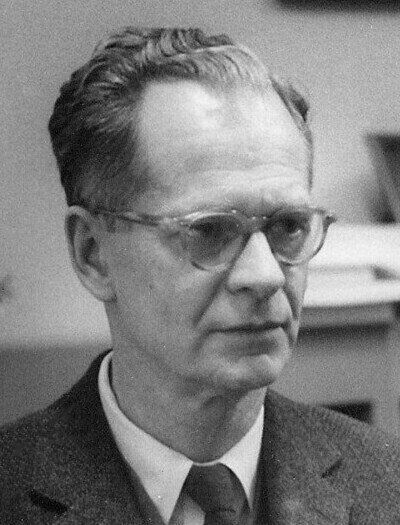 B. F. Skinner合作论文数Harvard University4Neal E. Miller合作论文数4
 George A. Miller合作论文数Department of Psychology, Princeton University4Allyn C. Deets合作论文数4Roger G. Barker合作论文数4K.A. Schiltz合作论文数4
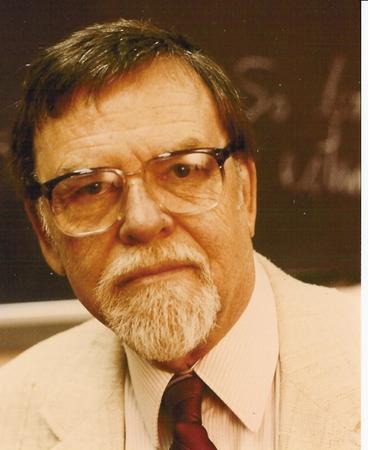 Paul Meehl合作论文数University of Minnesota4
 William Kaye Estes合作论文数Indiana University Bloomington4Paul Settlage合作论文数4Frank A. Beach合作论文数3John C. Eberhart合作论文数3dorothy c adkins合作论文数3KW Spence合作论文数3Mk Harlow合作论文数3john w gardner合作论文数3Carl R. Rogers合作论文数3C.I. Thompson合作论文数3Quinn Mcnemar合作论文数3
 James Jerome Gibson合作论文数Smith College, Cornell University3Robert A. Butler合作论文数3Leon Festinger合作论文数3John G. Darley合作论文数3Bill Seay合作论文数3Dael Wolfle合作论文数3
 John Gluck合作论文数3
 Jerome Bruner合作论文数School of Law, New York University3Carl I. Hovland合作论文数3Allan M. Schrier合作论文数3AJ BLOMQUIST合作论文数3Wendell R. Garner合作论文数2MARY D. SALTER AINSWORTH合作论文数2james olds合作论文数2richard l solomon合作论文数2paul thomas young合作论文数2fritz heider合作论文数2henry a murray合作论文数2j p guilford合作论文数2s s stevens合作论文数2harold g seashore合作论文数2carl pfaffmann合作论文数2harry helson合作论文数2clarence h graham合作论文数2Ha Cross合作论文数2




