Two recently published studies have provided new insights into the long-term effects of COVID-19 on the nervous system.
Nature Reviews Neurology is interviewing individuals who are driving efforts to address disparities in neurology through a broad spectrum of diversity, equity and inclusion initiatives. We spoke with Victor Rivera from Baylor College of Medicine about his work to address disparities in multiple sclerosis care in Latin American and other populations.
The oral orexin receptor 2-selective agonist oveporexton ameliorates the symptoms of narcolepsy type 1, according to a phase II trial.
New research indicates that in a mouse model of Parkinson disease, α-synuclein is trafficked from the brain to the gut by CD11c-expressing macrophages.
In a plenary lecture at the XXVI World Congress of Neurology, Anthony Lang presented a new biological classification model for Parkinson disease.
Two new studies have provided important mechanistic insights into TDP-43 pathology, a hallmark of neurodegenerative conditions such as amyotrophic lateral sclerosis and frontotemporal lobar degeneration.
n α-synuclein seed amplification assay can reliably identify people with Parkinson disease, even at the prodromal stage, new research indicates.
Loss of myelin integrity, which occurs during ageing, promotes deposition of amyloid-β in the brain, according to new research.
A genetic variant of the WNT receptor LRP6 exacerbates synapse degeneration in mouse models of ageing and Alzheimer’s disease, according to new research.
A recent paper published in Nature reports on an ambitious project to construct standardized charts to aid recognition of typical and atypical development of the human brain.
 Vasso Episkopou合作论文数MRC Clinical Sciences Centre, Imperial College6
 Gillian Morriss-Kay合作论文数3
 G Morriss-Kay合作论文数2
 Stavros Malas合作论文数2
 Robin Lovell-Badge合作论文数Laboratory of Stem Cell Biology and Developmental Genetics, The Francis Crick Institute2Antigoni Ekonomou合作论文数2Ldk Buttery合作论文数1a constanti合作论文数1E Ruberte合作论文数1T Enver合作论文数1S Bourne合作论文数1
 Lyn E Healy合作论文数Francis Crick Inst, London NW1 1AT, England1Ward S J合作论文数1
 Francis Hughes合作论文数Faculty of Dentistry, Oral & Craniofacial Sciences, King’s College London1Polak J M合作论文数1S Nishiguchi合作论文数1Andrew Constanti合作论文数1M. Postlethwaite合作论文数1Hisato Kondoh合作论文数1
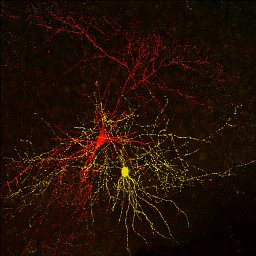 Myrto Denaxa合作论文数MRC, National Institute for Medicine Research1
 Ilias Kazanis合作论文数MRC Clinical Sciences Centre, Imperial College1Michael Postlethwaite合作论文数1
 Benjamin J Whalley合作论文数School of Psychology, University of Plymouth1
 Pavlos Alifragis合作论文数Royal Holloway University of London1
 Domna Karagogeos合作论文数Dept Basic Sci, Univ Crete1SPF HUGHES合作论文数1




