Accurate characterization of algorithm-dependent jamming effects enables optimized synthetic aperture radar (SAR) system design with inherent anti-jamming capabilities, particularly through imaging mechanism selection. Traditional jamming approaches fail to account for the specific characteristics of SAR imaging and typically validate jamming effectiveness using single look complex (SLC) data. This methodology inadequately addresses the practical demands of anti-jamming, as the migration compensation mechanisms embedded in the SAR imaging processing chain may change the characteristics of jamming signals, where both the spectrum support and focusing performance critically affect the jamming effects. To the best of our knowledge, it is the first time that a theoretical mechanism between active jamming and SAR imaging is established. Based on the polar format mechanism (PFM) and wavenumber domain mechanism (WDM), rigorous mathematical derivations are conducted to characterize the imaging processing chain of representative barrage and deception jamming techniques. Furthermore, residual range cell migration (RCM) and high-order phase error characteristics under PFM and WDM are analyzed. Experimental results indicate that WDM retains larger RCM with small high-order phase errors, whereas PFM mitigates RCM but induces azimuth defocusing due to uncorrected high-order phase errors. Through theoretical analysis and experimental verification using five representative jamming types, we characterize the algorithm-dependent jamming manifestations in SAR imaging chains, providing quantitative support for jamming recognition and the evaluation of SAR anti-jamming performance.
The integration of Global Navigation Satellite System (GNSS) and Inertial Measurement Unit (IMU) data has been extensively employed in various navigation and positioning systems. The dominant approach for GNSS/IMU integration remains the Bayesian filtering framework, particularly the extended Kalman filter (EKF). However, the performance of the EKF is highly sensitive to the accuracy of its dynamic and noise models, which are often difficult to specify precisely in real-world environments. To address the challenges of model mismatch and unknown noise statistics, this article proposes a completely split-KalmanNet (CS-KalmanNet), a completely decoupled hybrid model-based and data-driven architecture. Unlike existing split-KalmanNet, which learns the one-step state prediction error covariance and the innovation covariance, the proposed CS-KalmanNet achieves complete structural decoupling by independently learning the one-step state prediction covariance and the measurement noise covariance. This design avoids redundant representation learning and enhances robustness and estimation accuracy. Furthermore, a variational Bayesian adaptive Kalman filter is incorporated to facilitate faster convergence and improve the stability of network training. By combining the physical interpretability of the Kalman filter with the adaptive learning capability of deep networks, the proposed CS-KalmanNet achieves substantially enhanced state estimation accuracy. Its effectiveness is validated through extensive numerical simulations, public dataset evaluations, and real-world experiments conducted on a quadruped robot platform.
Accurate and reliable localization is essential for the safe deployment of intelligent vehicles (IVs). GNSS/IMU fusion based on Bayesian filtering remains the most practical solution due to its low cost and broad applicability. However, classical filtering approaches are highly vulnerable to modeling inaccuracies and non-stationary disturbances, as motion models derived from low-grade IMUs are inevitably imperfect and measurement noise statistics vary significantly across driving conditions. This paper presents a Variational Bayesian Adaptive KalmanNet (VBA-KalmanNet), an online model-correction learning framework for GNSS/IMU localization under simultaneous motion-model variation and time-varying GNSS noise. In the prediction stage, a recurrent neural network (RNN) learns corrections to the prior state estimate and its covariance, alleviating the effects of structural motion model mismatch. In the update stage, a variational Bayesian mechanism is employed to online infer the time-varying measurement noise covariance. Instead of learning a fixed gain or covariance mapping from training data, VBA-KalmanNet learns to correct the nominal IMU-driven prior online; the VB module then jointly infers the posterior state and the time-varying measurement noise covariance conditioned on this corrected prior. This unified design enables the proposed filter to adapt to complex vehicle dynamics and evolving noise characteristics without retraining. Experimental results on real-world datasets and field tests demonstrate that VBA-KalmanNet achieves superior localization accuracy and robustness under challenging and dynamic environments.
The deployment of Federated Learning (FL) in multi-center clinical networks faces the challenge of "knowledge dominance," where high-volume hubs naturally overwhelm minority community nodes, implicitly treating the distinct clinical patterns of smaller cohorts as outliers. Existing geometric defenses provide a security baseline but leave this efficiency-fairness dilemma unresolved. To bridge this gap, we propose Fed-Equilibrium, a framework that advances the paradigm from simple defense to topological equilibrium. Unlike traditional aggregators, Fed-Equilibrium implements a sequential architectural synergy. It utilizes a two-stage gradient control cascade: Stage I (geometric quality assurance) enforces directional consistency via a cosine similarity funnel to filter malicious noise, creating a stabilized manifold; Stage II (topological Pareto control) then actively modulates verified contributions by identifying the optimal Pareto knee point. We validated this framework on a bi-national simulation integrating Canadian (CNODES) and U.S. (SyntheticMass) registries. Experimental results demonstrate that the system simultaneously secures the network against adversarial divergence while accommodating underrepresented signals. Notably, the minority U.S. spoke (representing less than 3% of data volume) achieved deep convergence comparable to the data-rich Canadian hub. This confirms that Fed-Equilibrium effectively counters "knowledge dominance," establishing a true "knowledge commons" where global generalizability does not come at the cost of local clinical representation.
This article addresses the kidnapped robot problem (KRP), a core localization challenge of relocalizing a robot in a known map without a prior pose estimate upon localization loss or at simultaneous localization and mapping (SLAM) initialization. For this purpose, a passive 2-D global relocalization framework is proposed. It estimates the global pose efficiently and reliably from a single LiDAR scan and an occupancy grid map while the robot remains stationary, thereby enhancing the long-term autonomy of mobile robots. The proposed framework casts global relocalization as a nonconvex problem and solves it using a multihypothesis scheme with batched multistage inference and early termination, balancing completeness and efficiency. The traversability-constrained rapidly exploring random tree (RRT) asymptotically covers the reachable space and restricts the search space to traversable regions in the occupancy grid, generating sparse and uniformly distributed feasible positional hypotheses. The hypotheses are preliminarily ordered by the proposed scan mean absolute difference (SMAD), a coarse beam-error-level metric that enables efficient early termination by prioritizing high-likelihood candidates and is optimized for limited scan measurements. The translation-affinity scan-to-map alignment metric (TAM) is introduced for reliable orientation selection and accurate final pose evaluation, mitigating the degradation of conventional likelihood-field-based metrics under translational uncertainty, nonpanoramic LiDAR scans, and environmental changes. Real-world experiments on a resource-constrained mobile robot with nonpanoramic LiDAR scans in two representative indoor scenarios show that the proposed framework improves the mean relocalization success rate (SR) by about 26.9% points over the strongest baseline while reducing runtime from several seconds or even tens of seconds to the subsecond to 1.6-s range in most comparable cases. These results demonstrate that the proposed method achieves higher SRs with substantially lower runtime under the same time constraint, validating its effectiveness as a practical relocalization module for laser SLAM.
For extended target tracking (ETT), factor graph-based algorithms have demonstrated significant advantages over traditional clustering-based approaches. However, one limitation of these methods is that they lack analytical solutions and resort to particle-based implementations. Thus, their performance depends on the number of particles and the proposal distributions. This article proposes two unified message passing algorithms for ETT that provide closed-form solutions within the factor graph framework. These algorithms exploit different formulations of data association and distinct factor graph representations of the ETT problem. The first utilizes the merged belief propagation (BP) and mean field (MF) approach, while the second combines tree-reweighted BP and MF approach. Both partition the factor graphs into MF and BP regions, where the MF region approximates the kinematic state and extent densities, and the BP region resolves data association. In the first algorithm, the BP region is tree-structured, enabling exact computation of association marginals. In contrast, the BP region in the second algorithm comprises numerous loops due to a more detailed data association model, for which tree-reweighted BP is employed to improve message and belief convergences. Due to their analytical implementations, the proposed algorithms are more computationally efficient than particle-based methods. Simulation results demonstrate that the proposed approaches achieve improved tracking performance compared to state-of-the-art algorithms.
Estimating downhole torque on bit (TOB) from surface measurements has been explored in literature as a promising way to potentially provide real-time insight into torsional vibration without costly wired telemetry. However, many data-driven estimators in literature ignore temporal dependencies, even though drilling dynamics suggests that nonlinear bit-rock interaction makes TOB intrinsically history-dependent, so estimators that encode temporal context should better capture the underlying physics. We investigate temporal encoding via feature-based and model-based approaches for soft-sensing TOB, using 1 Hz surface data (282,601 records) paired with 50 Hz downhole TOB (14,130,001 records). We benchmark non-temporal baselines (MLP, SVM, RF, GBDT), feature-based temporal encoding (lagged features), and model-based temporal encoding (LSTM stacks, encoder-decoder LSTM with/without cross-attention, and Transformers). Model-based temporal encoding consistently outperforms alternatives: A unidirectional LSTM stack achieves the best median mean absolute error (MAE) of 475.8 lbf & sdot;ft for model-based temporal encoding, versus 550.7 lbf & sdot;ft for feature-based (MLP with lagged features) and 643.8 lbf & sdot;ft without temporal encoding (MLP); R2 shows matching gains. We further present a connection scheme for the encoder-decoder used in exogenous autoregression that lowers median MAE from 584.0 to 520.9. We show that the most informative input history is short (approximate to 3-12 s), which is in line with history dependence expected for regenerative effects of bit-rock interaction and the transmission latency due to speed of mechanical energy.
Visible light and thermal infrared tracking combines the characteristics of visible light and thermal infrared modalities to achieve robust target tracking in all-weather and all-day scenarios. However, most existing visible light and thermal infrared tracking methods rely on either full fine-tuning or attention mechanisms, which introduce a large number of parameters and are predominantly influenced by the visible modality. This results in challenges such as high computational complexity, slower processing speeds, and limited exploitation of multimodal information. To address these issues, this paper proposes a lightweight multimodal tracking model based on feature fusion and enhancement. The model consists of a feature fusion adapter and a joint enhancement adapter, designed to integrate and refine information across modalities. It employs a dual-stream transformer encoder with shared parameters across modality branches, utilizing a frozen pre-trained foundation model to independently extract features from visible light and thermal infrared inputs. The lightweight fusion adapter combines modality-specific information, while the joint enhancement adapter refines unimodal features, introducing only 0.23M trainable parameters. Experimental results on the LasHeR benchmark demonstrate that the proposed method outperforms prompt learning and other adapter-based methods, achieving a 4.4% improvement in PR and a 3.3% increase in SR while maintaining computational efficiency. With a real-time inference speed of 28.60 FPS, the proposed method balances accuracy and efficiency effectively. The source code will be available at https://github.com/huxue/MFJA.
Reliable signal extraction in mud pulse telemetry (MPT) is critical for accurate pressure-based downhole sensing and safe drilling operations. To enhance sensing reliability and suppress severe noise in harsh drilling environments, this article presents an enhanced approach to mud pulse signal processing using an Adaptive Trend Variational Mode Decomposition (ATVMD) algorithm. Traditional signal decomposition methods, such as Variational Mode Decomposition (VMD), face notable limitations in practical MPT scenarios due to their sensitivity to the predefined number of modes and their inability to handle strong global signal trends induced by poorly synchronized mud pumps. Moreover, spectral overlaps between non-harmonic pump noise and the useful signal, especially in the presence of strong low-frequency noise affecting the signal’s trend, leads to severe mode mixing, which in turn lowers decoding accuracy and sensor system reliability. However, the proposed ATVMD framework dynamically determines the number of modes (k) and explicitly extracts dominant signal trends. An Otsu-based thresholding strategy applied to Power Spectral Density of signals is employed to identify and suppress the strongest noise components. Additionally, an adaptive filtering technique is used to extract the strong signal’s trends that enhance VMD’s ability to accurately decompose the remaining signal into its true modes. The approach is validated through both synthetic datasets and real-field measurements collected from drilling operations in diverse geological environments. Experimental results demonstrate a significant improvement in mud pulse signal recovery under harsh noise conditions, achieving a pulse detection accuracy of 97.65% with a 95% confidence interval of [97.01%, 98.28%] across 31 detected pulses.
To address the challenge of catastrophic forgetting in synthetic aperture radar (SAR) image recognition caused by viewpoint-sensitive, high-interference samples encountered in dynamic environments, we propose a lightweight and efficient online class-incremental learning (OCI) framework named interference-aware replay with dynamic review for SAR target recognition (IAR-DR). Based on the experience replay (ER) mechanism, a maximally interfered retrieval (MIR) strategy is designed to prioritize the replay of high-interference samples by measuring loss changes before and after model updates, thereby preserving decision boundaries under viewpoint variation. A review trick (RT) mechanism is further introduced to periodically revisit all buffered samples with a low learning rate, which complements MIR by reinforcing global feature retention and enhancing long-term memory stability. The combination of MIR and RT achieves a synergistic balance between local discrimination and global generalization, mitigating the forgetting effect while maintaining efficiency. Extensive experiments conducted on the MSTAR and Bistatic MiniSAR datasets demonstrate that the proposed IAR-DR framework maintains high recognition accuracy while achieving a forgetting rate as low as 6.92% in ablation studies, and improving retention by 4.7% over recent SAR class-incremental methods.
The application of optical remote sensing in Earth observation missions is often hindered by cloud and shadow contamination. Leveraging the cloud-penetrating capabilities of Synthetic Aperture Radar (SAR) images, many SAR-optical image fusion approaches have been proposed and have demonstrated remarkable effectiveness in cloud removal. However, two main challenges remain in these methods: (i) Shared features, which are shared information from both modalities, and private features, which are unique to each modality, have not been fully exploited in the fusion process due to the obvious gap between multimodal images; (ii) The feature extraction processes tend to be implicit and lack interpretability. In response to these challenges and bridge this gap, we propose a novel dual attention blocks-based disentangled iterative Generative Adversarial Network (GAN) for cloud and shadow removal, named as DADIGAN. Two specialized modules are designed for the generator of DADIGAN to enhance cloud removal performance: the deep disentangled iterative network (DDIN) and the progressive dual attention fusion module (PDAFM). First, we develop an observation model based on convolutional sparse coding that explicitly models both the SAR and cloudy images as compositions of shared and private features. The Proximal Gradient Descent Algorithm (PGDA) is utilized to optimize our proposed model, implemented through successive iteration steps. These iterative steps are unfolded into the DDIN to extract the shared and private features. Second, the PDAFM employs cross-attention blocks (CABs) to fuse shared and private features using a progressive fusion strategy. Additionally, a multi-head self-attention block (MSAB) is introduced to PDAFM to capture more global information and learn contextual dependencies, thereby recovering more detailed information in regions covered by thick clouds. Comprehensive experiments have demonstrated that our proposed method delivers superior visual results and quantitative assessments under different land cover types and various levels of cloud and shadow coverage. The code for this article will be accessed at https://github.com/NUAA-RS/DADIGAN.
This article addresses the issue of online state estimation when the covariances of the process and measurement noise (PMN) are unknown. In practical scenarios, inaccurate PMN covariances lead to unreliable or diverging state estimation. To tackle this challenge, a variational Bayesian (VB) two-phase adaptive prior Kalman filter (VBTAPKF) is developed. In the proposed VBTAPKF method, a two-phase adaptive updating strategy for prior parameters of noise covariances is developed. It assigns proper prior parameters of noise covariances from some candidate parameters. The state, prior parameters, and PMN covariances are jointly estimated using the VB technique. Through numerous experiments, it is demonstrated that the proposed VBTAPKF method offers superior robustness and accuracy in state estimation.
Synthetic Aperture Radar (SAR) has become an indispensable tool in Earth observation due to its capability for all-weather and day-and-night data acquisition. However, unlike optical sensors, the inherent coherent imaging mechanism of SAR results in single-channel grayscale images lacking intuitive spectral information, which poses significant challenges for efficient land cover discrimination and visual interpretation. To bridge the gap between SAR physical mechanisms and human visual perception, this paper proposes a Physics-Informed Dual-Branch GAN (PhDGAN) for the simultaneous colorization of dual-polarization (VV/VH) SAR images. Unlike existing methods that treat colorization as a generic image-to-image translation task, our approach explicitly incorporates physical scattering properties. Central to the architecture is the Gamma-Prior Embedding Module (GPEM), which utilizes the Gamma distribution to model backscattering statistics. By extracting scale and shape parameters representing terrain physical attributes, GPEM guides the generator to synthesize physically plausible color features. Furthermore, we design a dual-branch generator constrained by a Coupled Supervision Loss, which enforces consistency between polarization channels by leveraging target image differences. Addressing the scarcity of ground truth data, we introduce a Spectral Correction Module (SCM) based label generation method and construct a large-scale Dual-Polarization SAR Colorization Dataset (DPSCD). Extensive experiments demonstrate that PhDGAN outperforms state-of-the-art techniques, offering a robust solution for enhancing SAR image interpretability. The datasets and codes are available at https://github.com/NUAA-RS/PhDGAN.
Unmanned Aerial Vehicles (UAVs) have garnered increasing attention for applications such as disaster response, surveillance, and smart city monitoring, necessitating effective collision avoidance systems (CAS) to ensure safe navigation in complex environments. Traditional CAS often relies on multiple sensors, which bring cost, weight, and computational concerns, posing challenges for lightweight civilian UAVs with limited payload capacity. This paper proposes a novel, cost-effective obstacle avoidance system that utilizes only a monocular camera, integrating traditional image processing technique, background subtraction, with deep learning method for robust obstacle sensing. Enhanced by a depth predictor for distance estimation, the system is paired with a new path planning algorithm, Circle RRT*, which improves upon the RRT* algorithm by focusing computational efforts on targeted sectors, thereby enhancing efficiency and enabling real-time navigation. Experimental evaluations in both 2D and 3D environments demonstrate the system’s high accuracy in obstacle sensing and its ability to generate optimized, collision-free paths with reduced computational overhead. This lightweight, single-camera solution offers a practical and efficient approach for autonomous UAV operations, addressing the limitations of multi-sensor systems while maintaining reliability and performance in dynamic environments.
Selective seam-weld corrosion (SSWC) is a critical integrity threat in aging oil and gas pipelines, characterized by localized metal loss along the longitudinal seam weld. Its weak magnetic expression, rapid progression, and the scarcity of verified samples make accurate detection from circumferential MFL (MFL-C) data particularly challenging. Noise-induced distortions and severe class imbalance further degrade the reliability and calibration of conventional classifiers. This article introduces UAM-BoostNet, a novel hybrid deep ensemble learning architecture designed for automated SSWC classification under these constraints. The framework is built upon a sequence of custom-designed convolutional neural network (CNN) learners, each incorporating dual local response normalization (LRN) layers and parametric rectified linear unit (PReLU) activations to enhance sensitivity to subtle magnetic variations in MFL-C signals. The CNNs are trained sequentially using internal transfer learning and sigmoid focal loss, enabling progressive refinement of minority-class representations without requiring additional labeled data. To robustly fuse the individual learners, we introduce a modified AdaBoost-SAMME.R algorithm in which both sample reweighting and log-probability updates are reformulated to account for predictive uncertainty and class imbalance. This uncertainty-aware design reduces overconfident errors by suppressing unreliable high-variance predictions and directing the ensemble toward samples that are difficult yet reliable to classify. Experimental evaluations on industrial MFL-C sensor data show that UAM-BoostNet achieves substantial improvements in accuracy, precision, recall, and F1-score compared with state-of-the-art methods. These results demonstrate that the proposed framework provides a robust, scalable, and uncertainty-aware solution for real-world SSWC detection and pipeline integrity assessment.
Multi-view synthetic aperture radar (SAR) target recognition holds significant research potential and importance. Current challenges in SAR multi-view target recognition include instability in feature fusion, and difficulties in fully interacting information between views. Toaddress these issues, the paper proposes a high-precision multi-view target recognition algorithm based on a view relationship combination cross-attention mechanism and view-correlation regularizers. Firstly, we propose the viewcorrelation regularizers (VCR), which captures comprehensive cross-view feature information on multi-view data combined with view-correlation. The proposed regularizer enables physically constrained feature fusion, effectively addressing the instability inherent in deep learning-based feature integration while mitigating the risk of network overfitting. Secondly, the cross-view attention (CVA) integrates multi-view information through cross attention within window-based view combination, significantly enhancing information exchange across views. Thirdly, we designed a view-contribution pooling layer to enhance the network's utilization efficiency of multi-view information. We evaluated the effectiveness of the proposed method on the FAST-Vehicle dataset and validated its robustness on the MSTAR dataset. Experimental results demonstrate that our approach outperforms other representative methods in multi-view SAR target recognition. Moreover, the network design exhibits lightweight characteristics, providing a theoretical foundation for future algorithm deployment.
Multiview synthetic aperture radar (SAR) target recognition by mining consensus scattering features from multiple views holds significant research value. However, existing research faces two major challenges: 1) how to mitigate the degradation of private features caused by enforcing multiview feature consistency and 2) how to efficiently and stably fuse the shared features across multiple views. To address these challenges, we propose the view-guided feature disentanglement network (VFDNet) for multiview SAR target recognition. First, the shared feature alignment module (SFA) integrates both primary and associated views, employing feature alignment to bridge shared- and private-view representations. Second, the private feature adaptive global disentanglement module (PAD) incorporates the global feature-constraint module (GFCM) based on Pearson correlation, which systematically regulates feature fusion across both shared- and private-view representations. Meanwhile, to further reduce the influence of low-quality views, the feature contribution allocation module (FCAM) is used to project high-dimensional features into the reproducing kernel Hilbert space (RKHS), thereby assigning weights to each view. Extensive experiments were conducted on the FAST-Vehicle to assess the method’s efficacy, with additional validation performed on benchmark datasets, including moving and stationary target acquisition and recognition (MSTAR), SRSDD, and FAIR-CSAR, to verify its robustness and generalization capability. The code of our method and dataset will be available at https://github.com/ZpSARIP/VFDNet
Resolution is a fundamental performance metric in radar imaging. In radar coincidence imaging (RCI), resolution is determined by the correlation between the reference radiation field and the target echo signal, leading to a coupling between range and azimuth resolutions. Additionally, noise significantly impacts the resolution. This paper develops a joint range-azimuth resolution limit (JRL) for RCI based on spatial information theory, providing a comprehensive resolution analysis under noisy conditions. Based on the imaging model of RCI, we derive the scattering information (SI) of two adjacent scatterers and decompose it into in-phase and quadrature components through Singular Value Decomposition (SVD). The JRL is defined as a critical state at which the quadrature component of SI reaches 1 bit. We derived the closed-form expression of the JRL using a second-order Taylor series expansion. Furthermore, the range resolution limit (RRL) and azimuth resolution limit (ARL) are derived from the closed-form JRL, which quantifies the relationship between the JRL and key factors, including the transmitting signal bandwidth, array aperture, number of transceiver antennas, and signal-to-noise ratio (SNR). Monte Carlo simulations validate the proposed JRL by comparing it with the resolution limits of conventional imaging methods in RCI.
The conventional direction-of-arrival (DoA) estimation approaches only be effective when the line-of-sight (LoS) link exists, while in the case of the non-line-of-sight (NLoS) situation, the spatial angle can not be captured and thus the DoA estimation performance would be significantly degraded. To address this challenge, a novel reconfigurable intelligent surface (RIS)- enabled gridless DoA estimation approach is proposed, where the RIS can establish the virtual LoS link between the base station (BS) and the targets. For extracting the statistics of the signal, the RIS-enabled signal model in the covariance domain is proposed. Then we estimate the noise variance by constraining the Frobenius norm of the measurement error matrix to obtain the RIS-enabled covariance matrix free of noise nuisance. Additionally, we reconstruct the Hermitian Toeplitz matrix by addressing the atom norm minimization (ANM) problem. To ease the calculation burden, an efficient iterative approach finally is designed to solve the ANM problem via the alternating direction method of multipliers (ADMM). Numerical experiments validate the robustness of the proposed method against the benchmark in terms of computational efficiency and multi-source DoA estimation precision.
This article introduces a novel anomaly detector for intelligent monitoring systems, leveraging multiple assessment baselines, including conventional, frame-based, and scenario-based approaches, to enhance anomaly detection. The integration of these baselines improves detection accuracy and contextual understanding of anomalies. A key feature of the proposed methodology is the incorporation of the Semi-Siam technique, a semi-supervised few-shot learning approach, which significantly boosts performance in scenarios with limited training data. Extensive simulations on multiple datasets demonstrate the proposed system’s effectiveness and substantial improvements over existing techniques. The results indicate that this methodology offers a robust and efficient solution for real-world video anomaly detection applications, such as the City of Calgary dataset, providing significant advancements in detection accuracy and adaptability.
 Francis Y.L. Chin合作论文数Department of Computer Science, The University of Hong Kong;DeepTranslate Limited46
 Gong Zhang (张弓)合作论文数南京航空航天大学电子信息工程学院45
 Zhongliang Jing (敬忠良)合作论文数Department of Aerospace Information and Control, School of Aeronautics and Astronautics, Shanghai Jiao Tong University43
 S. M. Yiu (姚兆明)合作论文数Department of Computer Science, Faculty of Engineering, The University of Hong Kong36
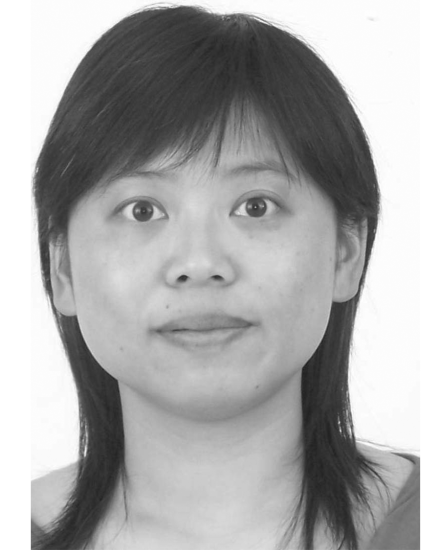 Siyue Chen (陈思悦)合作论文数29
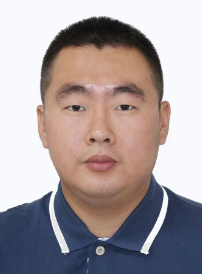 Peng Wang (王鹏)合作论文数College of Electronic and Information Engineering, Nanjing University of Aeronautics and Astronautics25
 Zhiwen Zhu (朱治文)合作论文数24
 Peng Dong (董鹏)合作论文数School of Aeronautics and Astronautics, Shanghai Jiao Tong University18
 Yuhao Wang (王玉皞)合作论文数南昌大学人工智能工业研究院17
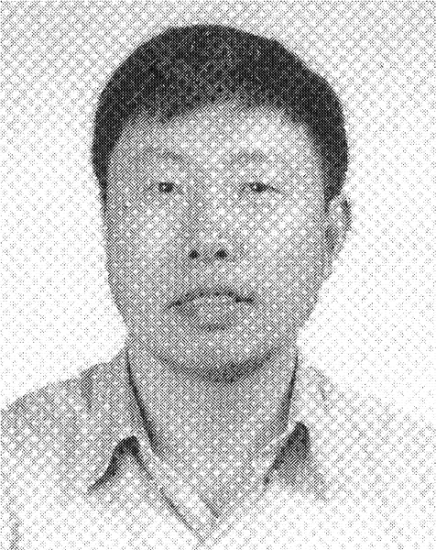 Xinping Huang合作论文数16
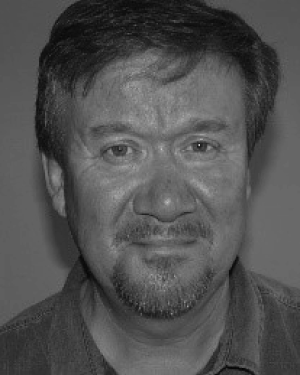 Éloi Bossé合作论文数Decis Support Syst Sect C2, Def R&D Canada Valcartier16
 Yingying Kong (孔莹莹)合作论文数College of Electronic and Information Engineering, Nanjing University of Aeronautics and Astronautics14
 Hao Zhu (朱浩)合作论文数College of Architecture & Environment, Sichuan University14
 King Ma合作论文数Dept Elect & Comp Engn, 2500 Univ Dr NW, Calgary, AB, Canada13Xianyi Zhang合作论文数13
 Wei Wang (王伟)合作论文数School of Control Science and Engineering, Dalian University of Technology13
 Dongliang Huang合作论文数13
 Zhihui Lai (赖志辉)合作论文数College of Computer Science and Software Engineering, Shenzhen University13
 Kai Shen合作论文数Yunnan University, Yunnan University12
 Jun Zhao (赵珺)合作论文数School of Control Science and Engineering, Dalian University of Technology12
 Yifeng Zhou合作论文数Radar Electronic Surveillance Section, Defence R&D Canada-Ottawa;Lam Research12
 Daiyin Zhu (朱岱寅)合作论文数College of Electronic and Information Engineering, Nanjing University of Aeronautics and Astronautics11
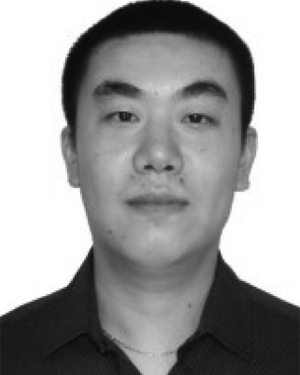 Xiaoxiang Liu (刘晓湘)合作论文数11
 Vinay Varadan合作论文数Columbia University11
 Yingxu Wang合作论文数Faculty of Graduate Studies, University of Calgary11
 Hamid Esmaeili Najafabadi合作论文数Univ Calgary, Dept Elect & Comp Engn, Calgary, AB T2N 1N4, Canada10
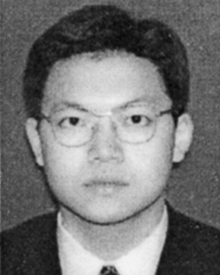 Nan Xie合作论文数10
 Vijayaraghavan Venkatasubramanian合作论文数10Sandeep Chandana合作论文数University of Regina10
 Chi-Tsun Cheng合作论文数Department of Electronic and Information Engineering,The Hong Kong Polytechnic University10
 Ying Zhang (张颖)合作论文数College of General Aviation and Flight, Nanjing University of Aeronautics and Astronautics;College of Civil Aviation, Nanjing University of Aeronautics and Astronautics9
 Guanrong (Ron) Chen (陈关荣)合作论文数Department of Electrical Engineering, City University of Hong Kong9
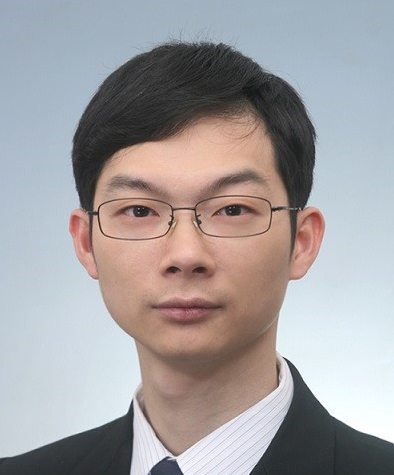 Han Pan (潘汉)合作论文数School of Aeronautics and Astronautics, Shanghai Jiao Tong University9
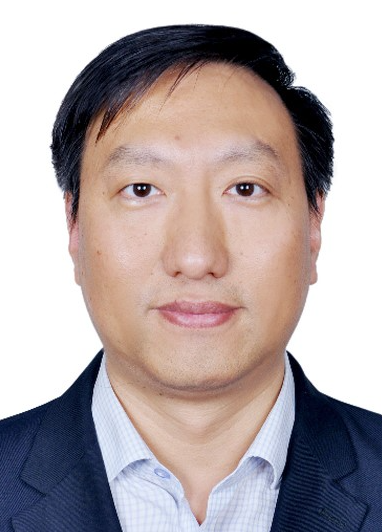 Jinhu Lu (吕金虎)合作论文数School of Artificial Intelligence, Beihang University9
 Chatura Seneviratne合作论文数Department of Electrical and Information Engineering, University of Ruhuna8
 Steve Drew合作论文数University of Calgary8
 Jianxin Yi (易建新)合作论文数Electronic Information School, Wuhan University8
 Ming Hou (侯明)合作论文数Defence Research and Development Canada8
 Konstantinos N. Plataniotis合作论文数Multimedia Laboratory, Edward S. Rogers Sr. Department of Electrical and Computer Engineering, Faculty of Applied Science and Engineering, University of Toronto8
 Liguo Wang (王立国)合作论文数College of Information and Communication Engineering, Harbin Engineering University8
 Kia Fallahi合作论文数University of Calgary (Canada)8Martin Blanchette合作论文数8
 Ajeesh P. Kurian合作论文数Department of Electrical and Computer Engineering, National University of Singapore8Winston Li合作论文数7
 Sam Tak Wu Kwong (鄺得互)合作论文数School of Graduate Studies, Lingnan University;Division of Artificial Intelligence, Lingnan University7
 Yongfu Li (李永福)合作论文数School of Automation, Chongqing University of Posts and Telecommunications7
 Boyuan Li合作论文数7
 Wei Yuan (袁巍)合作论文数School of Electronic Information and Communications, Huazhong University of Science and Technology7
 li Jianxun (李建勋)合作论文数7




