This article looks back on the story of the Ambulatory Sentinel Practice Network (ASPN) and its successor, the National Research Network (NRN), through the eyes of its leaders during the first 40 years. Facilitated conversations over 2 years iteratively coalesced key facts and patterns in this collective account of what they had observed. Time-durable patterns observed are distilled for interpretation and application by contemporary practice-based research network (PBRN) leaders as they move forward. Looking back is done via developmental eras. The ASPN was proposed in 1978 as a set of change strategies for primary care research, ASPN gathered momentum through efforts of individuals, institutions, and small grants that mobilized enthusiasm and commitment in the face of headwinds. The network expanded into the research mainstream from 1988, addressing large socially important questions with greater acceptance and volume of PBRN research. The ASPN is now in an era of scaling up and adapting to huge technological, organizational, and business shifts and a growing emphasis on patient and community engagement, safety, and disparities. Archetypal dilemmas and balances that emerged and reemerged across these eras are distilled, along with ways they were addressed at the time. The authors then project their 40-year experience to future vistas they believe the PBRN value proposition can be adapted and extended; what they regard as promising directions future leaders to take.
The dilemma is that your patient with a wearable exercise monitoring device will know she has a potentially dangerous condition, but there is no evidence that treating it will result in more benefit than harm.
Email: jfp.eic@gmail.com New—and surprising—ways to approach migraine pain Migraine headaches pose a challenge for many patients and their physicians, so new, effective approaches are always welcome. Sometimes new treatments come as total surprises. For example, who would have guessed that timolol eyedrops could be effective for acute migraine? Granted, the results (discussed in this issue's PURLs on page 222) are from a single randomized trial, but they look very promising. This is not the only new and innovative treatment for migraine. Everyone knows about the heavily marketed calcium gene-related peptide antagonists, which include monoclonal antibodies and the so-called “gepants.” The monoclonal antibodies and atogepant are approved for migraine prevention, and they do a decent job (although at a high price). In randomized trials, these agents reduced migraine days per month by an average of about 1.5 to 2.5 days compared to placebo. Ubrogepant and rimegepant are approved for acute migraine treatment. In clinical trials, about 20% of patients taking ubrogepant or rimegepant were pain free at 2 hours post dose, compared to 12% to 14% taking placebo. Unfortunately, that means 80% of patients still have some pain at 2 hours. By comparison, zolmitriptan performs a bit better, with 34% of patients pain free at 2 hours. However, for those who can’t tolerate zolmitriptan, these newer options provide an alternative. We also now have nonpharmacologic options. The caloric vestibular stimulation device is essentially a headset with ear probes that change temperature, alternating warm and cold. In a randomized controlled trial, it reduced monthly migraine days by 1.1 compared to placebo, from a baseline of 7.7 to 3.9 days. It can also be used to treat acute migraine. There is also a vagus nerve–stimulating device that reduced migraine headache severity by 20% on average in 32.2% of patients in 30 minutes. Sham treatment was as effective for 18.5% of patients, giving a number needed to treat of 6 compared to sham. And finally, there are complementary and alternative medicine options. Two recent randomized trials demonstrated that ≥ 2000 IU/d of vitamin D reduced monthly migraine days an average of 2 days, which is comparable to the effectiveness of the calcium gene-related peptide antagonists at a fraction of the cost. In another randomized trial, intranasal 1.5% peppermint oil was as effective as topical 4% lidocaine in providing substantial pain relief for acute migraine; about 42% of patients achieved significant relief with either treatment. While we may not have a perfect treatment for our patients with migraine headache, we certainly have many options to choose from. JFP
Use of cheap street fentanyl, rather than prescription drugs, accounts for nearly all of the increase in opioid overdose deaths.
Today there is a renewed call to action for family medicine to both confront systemic racism and eliminate health disparities.
The year 2020 has been marked by historic protests across the United States and the globe sparked by the deaths of George Floyd, Ahmaud Arbery, Breonna Taylor, and so many other Black people. The protests heightened awareness of racism as a public health crisis and triggered an anti-racism movement
The article offers information on the challenges faced by the coronavirus pandemic, along with discusses the role of facial masks in controlling the spread of Covid-19 pandemic It mentions the recommendations of the U S Centers for Disease Control and Prevention (CDC) for using masks, in addition to social distancing, in public settings
 Nancy C. Elder合作论文数10Deborah Graham合作论文数9Phillips Robert L合作论文数8Galliher James M合作论文数7Gail Patrick合作论文数6
 Mark H. Ebell合作论文数Department of Epidemiology and Biostatistics, College of Public Health, University of Georgia6
 Bernard Ewigman合作论文数School of Medicine, University of Missouri-Columbia6
 Henry Barry合作论文数Department of Family Practice, Michigan State University6Sarah-Anne Schumann合作论文数5
 Amy Sue Nowacki合作论文数5
 Wilson Pace合作论文数5NE Kreher合作论文数4Pamela J Thompson合作论文数4E Brandt合作论文数4Taylor Julie R合作论文数4
 Susan M Dovey合作论文数the Robert Graham Center for Policy Studies in Family Practice and Primary Care4
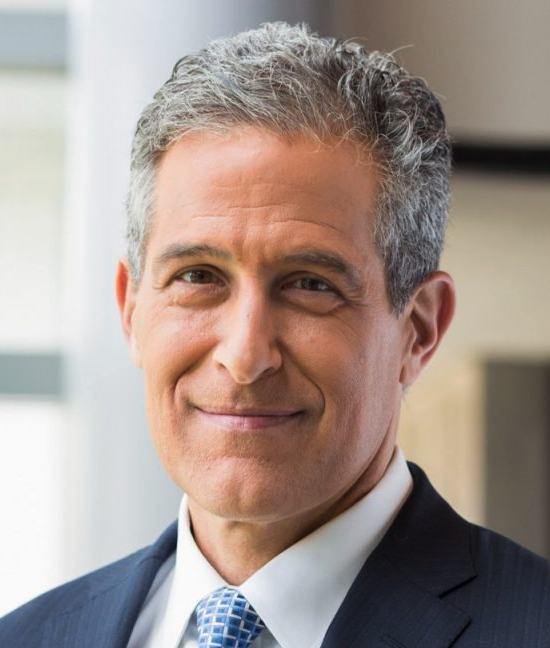 Richard E. Besser合作论文数Robert Wood Johnson Foundation4
 Michael D Mendoza合作论文数3Rowland Kate合作论文数3Shailendra Prasad合作论文数3
 Larry A. Green合作论文数Department of Family Medicine,University of Colorado School of Medicine3
 Bill Tierney合作论文数Department of Community and Global Health, Richard M. Fairbanks School of Public Health, Indiana University Indianapolis;Department of Population Health, Dell Medical School, University of Texas at Austin3Mindy Smith合作论文数3R. Delarochelliere合作论文数2J. P. DeYoung合作论文数2BM Sahay合作论文数2M Amidi合作论文数2A Chiaramida合作论文数2N Habib合作论文数2A Rashkow合作论文数2G Kuruvilla合作论文数2K Danisa合作论文数2J Dufton合作论文数2J Heinsimer合作论文数2C Fye合作论文数2G Bouchard合作论文数2F Ganjavi合作论文数2M Lemay合作论文数2M Goeres合作论文数2M Laforest合作论文数2R Gorlin合作论文数2V Beckham合作论文数2M Mercier合作论文数2D Folkins合作论文数2E Brown合作论文数2P Denes合作论文数2T Baitz合作论文数2R Brossoit合作论文数2S Smith合作论文数2




