This article introduces the effect of the probe temperature existing in a curling probe, which enables one to measure the electron density in plasma and the thickness of deposited film on the probe surface. We have recognized the effect appearing on the resonant frequency in previous reports, but we made measurement conditions where no temperature affected the frequency shift. The practical use of curling probes does not always allow one to have such an ideal condition, so it is necessary to have a good understanding of the probe temperature effect. Toward the understanding, we firstly measured the resonant frequency shift for five different operating powers with a curling probe having a heater and thermocouple attached to the probe surface. The frequency shift measurement showed consistent trends with plasma off and on. With some careful analyses, we found that the correction factor, which is necessary to compensate for the electron density measurement due to geometry reasons, etc for curling probe, had a regularity as a function of probe temperature; the inversed square of the correction factor was proportional to the degree of resonant frequency shift. Furthermore, the proportionality depended on the probe temperature with the regularity, so we finally were able to include the probe temperature effect on the correction factor, which realized the correction of the electron density even when the probe has a temperature variation. The electron density measurement with this correction technique worked well and followed the density measured with the Langmuir probe well. In particular, this research revealed that the correct technique is effective when probing temperature increases.
This journal article shows our recent research about the validity of the double-curling method while a film deposition occurs. Curling probe is one of the microwave resonators mainly utilized to measure the electron density in plasma. The double-curling probe method is an application of the probe that allows us to make in-situ measurements of both electron density and deposited film thickness on the probe using the two different-sized curling probes. In this journal article, we firstly researched the validity of the method in a simulated condition where the probes were in argon plasma and where the probe surface is covered with a polyimide film (12.5–50 μm thickness). This first research showed that the electron density and the film thickness derived with the method were decently close to the values measured with the Langmuir probe and micrometer, respectively. We then researched the validity of the double-curling probe method in the situation where the hydrogenated-amorphous-carbon film deposition occurs on the probe surface. This second measurement demonstrated that the double-curling probe method can derive a constant electron density and a growing film while the film was depositing. These overall results verified the decent validity of the double-curling probe method for making an in-situ measurement of both electron density and depositing film thickness.
We have developed a technique for measuring the thickness of a deposited film and electron density simultaneously during plasma processing with two different-sized curling probes. The technique requires only two things; the measurement of resonant-frequency shifts occurring on the two probes before and after the processing, and the substitution of the frequencies into a set of two quadratic equations. The solutions of the equations lead to a simulated measurement of electron density and the thickness of films deposited on the probe surface. We placed a piece of polyimide tape on the probe surface to simulate the deposited film, and then exposed the probes to an argon plasma. In this report, we derived the thickness and pre-calibrated electron density simultaneously from the frequency shifts due to the film thickness and the plasma density. Our measurement showed the film thickness with 9% accuracy and the electron density in the order of 10(9)cm(-3). This result revealed that the proposed technique is principally available for plasma processing.
Conventional Langmuir probe cannot be used in most reactive plasmas for materials processing, owing to the insulating layers that are deposited on the probe surface. To address this issue, a novel variety of microwave probes has been recently developed for the purpose of monitoring local electron density, which is a key parameter for plasma control. The probe diagnostic must be stable, compact, easy, exhibiting negligible disturbance to a plasma and materials processing. This article presents a review of the diagnostic principle, characteristics and applications of representative probes such as the plasma oscillation probe, surface wave probe (plasma absorption probe), multi-pole resonance probe, hairpin probe and curling probe. The merits and demerits of each probe are presented from a reactive plasma diagnostic point of view. Innovations in the applications of microwave probes to optical emission spectrometry and the monitoring of wall deposits are also presented.
A microwave resonator probe called a curling probe (CP) was applied to in situ monitoring of a dielectric layer deposited on a chamber wall during plasma processing. The resonance frequency of the CP was analytically found to shift in proportion to the dielectric layer thickness; the proportionality constant was determined from a comparison with the finite-difference time-domain (FDTD) simulation result. Amorphous carbon layers deposited in acetylene inductively coupled plasma (ICP) discharge were monitored using the CP. The measured resonance frequency shift dictated the carbon layer thickness, which agreed with the results from the surface profiler and ellipsometry.
A digitally controlled solid-state microwave generator allowing variable frequency operation and precise phase control is adopted for plasma generation. In this study, a resonant cylindrical cavity is used as a microwave applicator in place of conventional waveguides. In order to improve the plasma uniformity, the TE111 mode is agitated by injecting microwaves into the cavity from two spatially orthogonal directions, with a temporal phase difference ϕ. Theoretical analyses and finite-difference time-domain simulations derive the following effects of the phase control. In the case of ϕ = ±π/2, fast rotation of the cavity field takes place with a rotational frequency of ω/2π (= 2.4–2.5 GHz), where ω denotes the microwave angular frequency. On the other hand, when ϕ is linearly modulated in time with a low frequency of Ω/2π (= 0.1–1000 Hz), slow pulsation takes place, in which the cavity field alternately excites a circular rotation and a standing oscillation at the modulation frequency. These effects are experimentally confirmed in microwave discharges in argon at 0.1–20 Torr with total injection powers from 50 to 800 W. Two-dimensional images of the optical emission from the generated plasma show that both the fast rotation and slow pulsation improve azimuthal plasma uniformity.
Electron behaviors in a pulsed dual radio frequency (RF) capacitively coupled plasma of a mixture of C4F8, O2, and Ar gases, where the DC bias of −300 V in the RF-on period was imposed and synchronously increased to −1000 V in the RF-off period, were investigated. The synchronous DC bias prolongs the electron density (ne) decay and provides emission of Ar at a wavelength of 750.38 nm in early afterglow at 3 µs during the RF-off period of 10 kHz pulse modulation. The rapid ne decay occurred with the electron attachments to the electronegative fluorocarbons, and thus the plasma consisting of positive and negative ions was generated. The DC bias voltage seems to be applied between the electrodes and the positive ions accelerated to the top electrode, and enhanced the secondary electron generation at the top electrode surface in the RF-off period with the ion bombardments, concomitantly with the synchronous emissions.
Slow rotation of microwave plasma at a rotational frequency of Ω/2π = 0.1–1000 Hz is realized to improve plasma uniformity by using a resonant cylindrical cavity and a solid-state microwave generator at a frequency of ω/2π = 2.4–2.5 GHz. The microwave at ω/2π is modulated in amplitude at Ω/2π and injected into the cavity from two orthogonal positions, exciting the TE111 mode. The cavity fields rotate either clockwise or anticlockwise at a frequency of Ω/2π when the phase differences, Δϕ at ω and ΔΦ at Ω, between the input microwaves are properly set as calculated by a theoretical analysis and finite-difference time-domain simulation. Rotating plasmas are experimentally measured in the microwave discharges of argon at 0.1–20 Torr. When the rotational frequency is low (Ω/2π < 30 Hz), a plasma rotation is visible in the optical emission image; the azimuthal rotation of a local ion density is also confirmed by a rotatable Langmuir probe array. Conversely, when Ω/2π > 1000 Hz, the electron density measurement by a curling probe reveals that the plasma rotation disappears in the downstream region. This observation is supported by a simplified analysis based on the diffusion equation, proving a characteristic distance of plasma rotation disappearance to be (Da: ambipolar diffusion coefficient).
A plasma-induced shift in the resonance frequency of a curling probe measured by using a network analyzer (NWA) yields the electron density. This technique was applied here for measuring time-varying electron density in pulsed DC glow discharges. Using the NWA in an on-sweep synchronization mode with the discharge pulse allows measuring at pulse frequencies below 0.5 kHz. For higher pulse frequencies, an on-point mode was introduced which enabled time-resolved measurements of electron density at pulse frequencies reaching 25 kHz, with the minimal time interval of 2 mu s, typically for nitrogen discharge at 10 Pa. In the afterglow regime, the decay time constant of electron density was measured for nitrogen and argon discharges at 40 Pa. In the case of argon, the electron density was observed to decrease in three steps. This characteristic behavior was tentatively attributed to a bi-Maxwellian electron energy distribution and Ramsauer effect, supported by Langmuir probe measurements. (C) 2016 The Japan Society of Applied Physics
To elucidate the pulsed fluorocarbon plasma behavior, a surface-wave probe with high time resolution was used to measure the electron density n e in the afterglow of plasma. In a dual-frequency capacitively coupled plasma of fluorocarbon chemistry, e.g., an O 2 -based C 4 F 6 and Ar mixture, n e vanished rapidly in a short time (∼5 µs), whilst the dc current flowing onto the top electrode biased at −300 V decreased very slowly (decay time ∼70 µs). This observation is clear evidence of ion–ion plasma formation by electron attachment in the afterglow. We point out that the electron attachment rates for fluorocarbon radicals significantly affect the electrons and ion–ion plasma behaviors observed at the afterglow phase.
In this paper we describe a new method for in situ monitoring damage density of GaN substrate surface in inductively coupled plasmas (ICP) containing energetic electrons. Energetic electrons are produced by sheath acceleration of secondary electrons at a negatively biased electrode. A current of a Langmuir probe located in such plasma is used to examine behavior of the energetic electrons. When the plasma contains the high energy electrons, a sample of n-type GaN film exposed to the plasma is observed to emit significant optical fluorescence in the wavelength range of 370-390 nm corresponding to band gap energy of the GaN. The fluorescence intensity of the GaN film increases with the incident electron energy higher than a critical value of similar to 5.8 keV. By the XPS results suggested the NBE intensity probably reflects the accumulation degree of the plasma and DC bias induced damage. These results suggest the cathode luminescence technique will be usable to detect a damage density of GaN substrate surface even in plasma conditions. (C) 2013 Elsevier B.V. All rights reserved.
 Keiji Nakamura合作论文数37Hirotaka Toyoda合作论文数23
 Daisuke Ogawa合作论文数9Ivan Ghanashev合作论文数9
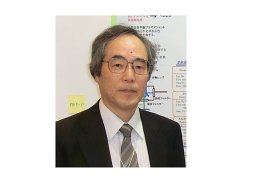 Masaaki Nagatsu合作论文数Department of Electrical Engineering, Nagoya University8Naoki Toyoda合作论文数8
 Tatsuo Ishijima合作论文数Plasma Nanotechnology Research Center;Nagoya University;Plasma Nanotechnology Research Center, Nagoya University7
 Yoshitaka Nakano合作论文数Integrative Bioscience, Waseda University7
 Anil Kumar Pandey合作论文数Department of Physiology, GSL Medical College6toshiaki nagano合作论文数5terutaka takahashi合作论文数5Masaya Hotta合作论文数5Soonam Park合作论文数5Yuichi Hasegawa合作论文数5Takeshi Kato合作论文数5koichi sasaki合作论文数5Satoshi Iwata合作论文数5kimitaka kato合作论文数4yasuyuki kataoka合作论文数4Minoru Ishikura合作论文数4Qi Zhang合作论文数4Makoto Sekine合作论文数4I. Ganachev合作论文数4yasumasa okumura合作论文数3manabu iwata合作论文数3Yoshinobu Ohya合作论文数3Dima Lubomirsky合作论文数3wataru sakakibara合作论文数3seiichi takasuga合作论文数3Rikizo Hatakeyama合作论文数3
 Nafarizal Nayan合作论文数Faculty of Electrical and Electronic Engineering, Universiti Tun Hussein Onn Malaysia3
 Miaogen Chen (陈苗根)合作论文数3Shigeru Tsunashima合作论文数3Hiroaki Kojima合作论文数3
 Ying Guo (郭颖)合作论文数College of Science, Donghua University3Jing Zhang (张菁)合作论文数College of Science, Donghua University3
 Kenji Ishikawa合作论文数3Takayoshi Okuda合作论文数3K. Shibagaki合作论文数3Yohei Sakashita合作论文数3
 Takeshi Yamauchi合作论文数3
 Masaru Hori (堀勝)合作论文数Department of Materials Science and Engineering, National Tsing Hua University;Center for Low-temperature Plasma Sciences, Nagoya University3Gyu Il Shim合作论文数3Yusuke Takagi合作论文数3hideaki katsuta合作论文数2shingo sato合作论文数2Yusuke Fukunaga合作论文数2Yusuke Suzuki合作论文数2Iji Liang合作论文数2




