Treatment of aromatic nitriles with 3-arylpropylmagnesium bromides under warming conditions and then water, followed by the reaction with DIH at room temperature under irradiation with a LED lamp and then with tBuOK gave 2,5-diarylpyrroles in moderate yields. The key step of the present method is the formation of N-iodo-2,5-diaryl-4,5-dihydropyrroles by the reaction of the formed imines with DIH, which proceeds through the 1,5-H shift of iminyl radical, 5-exo-tet cyclization by the imine group, and N-iodination of the formed 2,5-diaryldihydropyrroles. © 2022 Elsevier Science. All rights reserved.
Treatment of N-propargyl-N′-tosylhydrazines with molecular iodine (I2) in the presence of NaHCO3 under warming conditions gave efficiently the corresponding 5-substituted 4-iodo-1-tosylpyrazoles in good to moderate yields. In addition, the same reaction in the presence of acetic acid generated the corresponding 5-aryl-4-iodopyrazoles in moderate yields. The reactions are simple and efficient transition-metal-free methods for the preparation of 5-substituted 4-iodopyrazole unit.
An entry from the Cambridge Structural Database, the world’s repository for small molecule crystal structures. The entry contains experimental data from a crystal diffraction study. The deposited dataset for this entry is freely available from the CCDC and typically includes 3D coordinates, cell parameters, space group, experimental conditions and quality measures.
Treatment of N-tosyl 4-aryl-3-butyn-1-ylamines with I-2 and K2CO3, followed by the reaction with (BuOK)-Bu-t under mild conditions gave 2-aryl-3-iodopyrroles in good yields. The present approach is a one-pot method for the preparation of 2-aryl-3-iodopyrroles from N-tosyl 4-aryl-3-butyn-1-ylamines, which could be easily prepared from aryl iodides, N-(3-butyn-1-yl)phthalimides, and p-toluenesulfonyl chloride.
Treatment of aryl 2-iodophenyl ketones with TMS2NH in the presence of Sc(OTf)(3) at warming conditions, followed by the reaction with styrenes and NIS gave N-(1-aryl-2-iodoethyl) aryl 2-iodophenyl ketimines. Further treatment of N-(1-aryl-2-iodoethyl) aryl 2-iodophenyl ketimines with (BuOK)-Bu-t in the presence of 1,10-phenanthroline at 120 degrees C generated 1,3-diarylisoquinolines in moderate yields through SET from (BuOK)-Bu-t onto the iodophenyl group to form aryl radicals, their 6-endo- trig cyclization onto the vinyl groups, and aromatization of the cyclized intermediates. The present method is a novel approach for the preparation of the isoquinoline core via two steps from aryl 2-iodophenyl ketones. (C) 2020 Elsevier Science. All rights reserved.
Treatment of anti alkyl o-biaryl ketoximes and anti aryl o-biaryl ketoximes with Tf2O at 120 degrees C, followed by quenching with Et3N gave 6-alkylphenanthridines and 6-arylphenanthridines in good yields, respectively. These reactions proceeded through the O-triflation of the ketoximes, the Beckmann rearrangement, and the electrophilic cyclization of the formed nitrilium group onto the aromatic ring. (C) 2021 Elsevier Science. All rights reserved.
Treatment of N-(o-arylethynyl)benzyl p-toluenesulfonamides with molecular iodine in the presence of NaHCO3 at 60 degrees C, followed by the reaction with (BuOK)-Bu-t at room temperature gave 3-aryl-4-iodoisoquinolines in good yields. 4-Iodo-3-phenylisoquinoline, which is one of the obtained 3-aryl-4-iodoisoquinolines, was further transformed into isoquinoline derivatives smoothly. The present approach is a novel one-pot method for the preparation of 3-aryl-4-iodoisoquinolines from N-(o-arylethynyl)benzyl p-toluenesulfonamides under transition-metal-free conditions. (C) 2021 Elsevier Science. All rights reserved.
Correction for ‘Preparation of 2-arylquinolines from β-arylpropionitriles with aryllithiums and NIS through iminyl radical-mediated cyclization’ by Hiroki Naruto, et al., Org. Biomol. Chem., 2019, 17, 5760–5770.
Treatment of electron-rich arenes with Tf2O and DMF, followed by the reaction with NH2OH·HCl and then with Oxone® in the presence of diethyl acetylenedicarboxylate generated diethyl 3-arylisoxazole-4,5-dicarboxylates in good to moderate yields. Other alkynes could be also used for the present one-pot transformation of arenes into 3-arylisoxazole derivatives. Click here and insert your abstract text. © 2020 Elsevier Science. All rights reserved.
Correction for 'Preparation of 2-arylquinolines from β-arylpropionitriles with aryllithiums and NIS through iminyl radical-mediated cyclization' by Hiroki Naruto, et al., Org. Biomol. Chem., 2019, 17, 5760-5770.
The treatment of o-(N-alkyl,N-p-tosyl)aminobenzonitriles with aryllithiums, followed by the reaction with water, NIS under irradiation with a fluorescent lamp, and then tBuOK gave 2-alkyl-4-arylquinazolines or 4-arylquinazolines in good to moderate yields. The present reaction proceeds through the formation of N-iodoimines from imines with NIS, the generation of iminyl radicals, the 1,6-H shift by iminyl radicals, the cyclization via 6-exo-tet mode, and finally the elimination of p-toluenesulfinate to generate 2-alkyl-4-arylquinazolines or 4-arylquinazolines.
Successive treatment of arenes with acyl chlorides and AlCl3, the addition of water and removal of solvent, the reaction with NH2OH center dot HCl and K2CO3, and the reaction with diphenylphosphoryl azide and DBU under warming conditions gave the corresponding 5-alkyl-l-aryltetrazoles efficiently in good to moderate yields. The present method is one-pot transformation of arenes into 5-alkyl-l-aryltetrazoles using the Friedel-Crafts acylation and the Beckmann rearrangement under transition-metal-free conditions.
Treatment of 2-arylbenzoic acids with N-chlorosuccinimide (NCS) and NaI at 70 degrees C under fluorescent lighting condition gave the corresponding 3,4-benzocoumarins in good yields under transition-metal-free condition. It was found that the reactivity of NCS with NaI for the formation of 3,4-benzocoumarins from 2-arylbenzoic acids was as high as that with NIS. Thus, the formation of carboxyl radicals and their cyclization onto an aromatic ring from 2-arylbenzoic acids with much less expensive NCS and NaI, than NIS could be successfully carried out to form 3,4-benzocoumarins.
Treatment of N-(o-arylbenzyl)trifluoromethanesulfonamides with 1,3-diiodo-5,5-dimethylhydantoin in 1,2-dichloroethane under irradiation with a tungsten lamp, followed by the reaction with tBuOK gave the corresponding 6-arylphenanthridines and 6-unsubstituted phenanthridines in good to moderate yields, respectively. The reaction proceeds through an oxidative cyclization onto the aromatic ring by sulfonamidyl radicals formed from the N-iodosulfonamides. The present reaction is a one-pot method for the preparation of both 6-arylphenanthridines and 6-unsubstituted phenanthridines from N-(o-arylbenzyl)trifluoromethanesulfonamides under transition-metal-free conditions. © 2020 Elsevier Science. All rights reserved.
Successive treatment of arenes with β-bromopropionyl chloride and AlCl3, followed by the reactions with hydrazines and Na2CO3, and then with MnO2 gave the corresponding 3-arylpyrazoles in one pot in good to moderate yields. The same successive treatment of arenes with β-bromopropionyl chloride and AlCl3, followed by the reactions with hydroxylamine and KF gave the corresponding 3-arylisoxazolines in one pot in good to moderate yields. © 2020 Elsevier Science. All rights reserved.
Treatment of 2-arylethylmagnesium bromides, prepared from 2-arylethyl bromides and magnesium, with aromatic nitriles, followed by reaction with water and then with N-iodosuccinimide under irradiation with a tungsten lamp, gave the corresponding 2-arylquinolines in good to moderate yields under transition-metal-free conditions. 2-Alkylquinolines could be also obtained in moderate yields by the same procedure with 2-arylethyl bromides, magnesium, aliphatic nitriles bearing a secondary alkyl group, and N-iodosuccinimide.
A novel preparation of hemiaminal derivatives bearing both an amide group and a benzoate group was carried out in good yields by the treatment of BPO in N,N ‐dimethylamides under warming condition at 80 °C or irradiation with a mercury lamp. Further treatment of the obtained hemiaminal derivatives with indoles in 1,1,1,3,3,3‐hexafluoro‐2‐propanol generated the corresponding C–C bonded indoles bearing an amide group in good yields. The formed indoles bearing an amide group were smoothly transformed into the corresponding indoles bearing an aminomethyl group.
Treatment of O ‐(β‐arylethyl) arylimidates with 1,3‐diiodo‐5,5‐dimethylhydantoin (DIH) under irradiation with a tungsten lamp in 1,2‐dichloroethane gave the corresponding 2,4‐diaryl‐5‐iodoxazoles and 2,4‐diaryloxazoles in good to moderate yields, respectively, depending on the aryl group. It was proposed that the reactions proceeded through the formation of N ‐iodoimidates by the reaction of O ‐(β‐arylethyl) arylimidates with DIH, followed by the formation of iminyl radicals via homolytic N–I bond cleavage, the 1,5‐H shift by the iminyl radicals, the C–I bond formation of the formed carbon‐centered radicals with iodine, the nucleophilic cyclization by the imino groups to form 2,4‐diaryloxazolines, the oxidation of the formed 2,4‐diaryloxazolines to 2,4‐diaryloxazoles, and the iodination of the formed 2,4‐diaryloxazoles to 2,4‐diaryl‐5‐iodoxazoles with DIH.
Various primary alcohols were smoothly transformed into 3-aryl- and 3-alkylisoxazoles in good yields in one pot by successive treatment with PhI(OAc)(2)in the presence of TEMPO, NH2OH, and then NCS, followed by reaction with alkynes in the presence of Et3N. Similarly, various primary alcohols were smoothly transformed into 3-aryl- and 3-alkylpyrazoles in good yields in one pot by successive treatment with PhI(OAc)(2)in the presence of TEMPO, PhNHNH2, and then NCS and decyl methyl sulfide, followed by reaction with alkynes in the presence of Et3N. Thus, both 3-aryl- and 3-alkylisoxazoles, and 3-aryl- and 3-alkylpyrazoles could be prepared from readily available primary alcohols in one pot under transition-metal-free conditions.
Heteroaromatic bases, such as lepidine, phenanthridine, isoquinoline, etc., were treated with cycloalkanes, such as cyclopentane, cyclohexane, cycloheptane, cyclooctane, etc., under warming conditions with benzoyl peroxide (BPO) to form heteroaromatic bases bearing cycloalkyl groups in good yields. Here, the inert C(sp(3))-H bond of cycloalkanes could be functionalized to C(sp(3))-heteroaromatic bases via an oxidative radical reaction pathway under transition-metal-free conditions.
 Katsuhiko Moriyama合作论文数96
 Masataka Yokoyama (横山真隆)合作论文数Graduate School of Medicine, Chiba University49Takahito Muraki合作论文数12Shigeru Oae合作论文数11masataka iinuma合作论文数9
 Atsuya Momotake合作论文数University of Tsukuba9Hiroki Naruto合作论文数8Ishida Kazuma合作论文数8Sujino K合作论文数8Samir Z. Zard合作论文数8O. YAMAZAKI合作论文数7Kawagoe Yuhsuke合作论文数7Masahiko Aoki合作论文数7Osamu Kikuchi合作论文数University Tsukuba7Y. HOSHINA合作论文数6Shinpei Iida合作论文数6daisuke tsuchiya合作论文数6Daisuke Sakuma合作论文数6Haruka Baba合作论文数6Masakazu Irie合作论文数6Yoshihide Ishiwata合作论文数6Sousuke Ushijima合作论文数6Masashi Katohgi合作论文数5Eiji Kobayashi合作论文数5Wei He合作论文数5Harigae Ryo合作论文数5Shogo Takahashi合作论文数5Yuhta Kawano合作论文数5Yasuhiro Menjo合作论文数5Toshihiro Ikuma合作论文数5G. NOGAMI合作论文数4masayuki tabata合作论文数4Hiroki Kikui合作论文数4Sou Matsubayashi合作论文数4Sachiko Hirano合作论文数4Kaho Shibasaki合作论文数4Kotaro Miyagi合作论文数4Chihiro Nishinohara合作论文数4Toru Sugiue合作论文数4
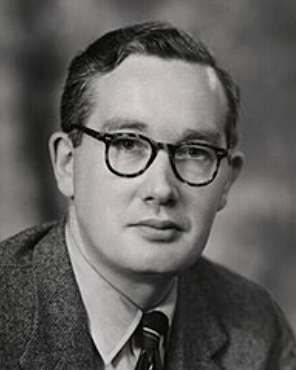 Derek Barton合作论文数Texas A&M University4T. Sasaki合作论文数4genki ishii合作论文数4Yusuke Suzuki合作论文数4Yukiharu Yamamoto合作论文数4Shusuke Furuyama合作论文数4H. Toyoshima合作论文数4Atsushi Moroda合作论文数4




