The Dichotomous Image Segmentation task aims to achieve ultra-high precision binary segmentation for category-agnostic objects, including salient, camouflaged, structurally complex, or feature-similar entities. Traditional methods designed for low-resolution inputs produce blurred segmentation, failing to meet such critical safety and stability requirements. Although existing DIS methods achieve high accuracy, they are often parameter-heavy and slow, neglecting practical application needs. To address these challenges, this paper proposes a light-weight and fast framework, aims at improving processing efficiency while ensuring accuracy in high-resolution natural scenes. The proposed method utilizes a shared-weight ResNet-18 backbone to process inputs of different scales. A Feature Synchronization module is employed to enhance the correlation between encoded features of different resolutions. To reduce the parameter and increase the inference speed, the number of feature channels are decreased; however, this also resulted in information loss. The Star Fusion module is introduced to mitigate this issue. Furthermore, a Decoupling and Integration Decoder is adopted to progressively decode and fuse the body, detail, and mask features of the object, enhancing feature decoding accuracy. The proposed model runs at 26.3 FPS with a 48.7 MB size, reducing parameters by 72.4% and increasing speed by 30.8% compared to baseline method ISNet, while maintaining superior performance. Moreover, it surpasses several existing high-resolution methods in terms of accuracy.
Dichotomous Image Segmentation is a category-agnostic task aims to segment highly accurate objects from natural images. In semantic segmentation tasks, the utilization of high-resolution input, due to its richer contextual information, can effectively enhance the precision of segmentation and the accuracy of the boundaries. However, in DIS tasks, owing to the increased complexity and diversity of the targets, it is challenging to generate complete segmentation results. Directly employing high-resolution images as input may result in missed detection due to insufficient receptive field coverage. Furthermore, the additional potential details introduced by high resolution, which may not directly relate to the targets, can negatively impact the accuracy of the model’s boundary predictions. To address the above problems, a dual-branch network structure is adopted, where the high-resolution input branch learns detailed information, and the low-resolution input branch captures global semantic information. Specifically, we use the Feature Pyramid Transfer module to enlarge the receptive field and enhance the semantic consistency between different Resnet blocks. In the decoder, we propose the Boundary-Aware structure to fuse features from different backbones and use boundary information to generate more accurate segmentation results. The experimental results demonstrate that our method achieves leading performance in four of the six evaluation metrics used in experiments on the complete DIS-TE testset. For instance, the F -measure reaches 0.801, which is 10.3% higher than that of the ISNet, the baseline method for the DIS task.
Image segmentation of polyps can provide an important basis for the diagnosis of colorectal cancer and has a high clinical application value. Segmentation of polyp regions is very challenging due to the high similarity between polyps and background mucosal tissue, many existing methods have failed to produce satisfactory polyp segmentation results. Therefore, scholars have recently used transformer backbone networks to extract features, which captures global information better than CNNs, resulting in more accurate detection results, but their boundary results are still not accurate enough due to the lack of processing for the boundary. In this paper, we propose a multi-scale perceptual polyp segmentation network based on boundary guidance, to obtain higher segmentation accuracy in both regions and boundary. To increase the feature response region, we first propose a multi-scale global perception module to expand the receptive field and aggregate multi-scale contextual information to capture the primary location of polyps at local and global levels. Then, we design a boundary-guided feature enhancement module that utilizes contextual features to mine hidden polyp boundary and employs the boundary to guide region learning to improve segmentation boundary accuracy. Finally, we propose a complementary fusion module that uses higher-level features to filter out the background noise of lower-level features and fuses the features layer by layer. In particular, to refine the extracted features, a detail refinement module is designed to complement the spatial details to improve the segmentation performance. Extensive experiments using seven evaluation metrics on five publicly available polyp datasets have shown that the proposed a multi-scale perceptual polyp segmentation network based on boundary guidance outperforms most state-of-theart models.
在工厂化循环水养殖中,准确识别鱼类摄食强度是实现精准投喂的前提和关键.水质、视觉、声音等单模态数据均可用于评估摄食强度,但单一模态往往具有片面性,难以完全反映全局特征,存在识别精度低、可移植性差等问题.多模态方法通过融合不同模态的特征,可为摄食强度量化提供新的手段.基于此,为融合鱼类摄食中的"水质-声音-视觉"信息,实现高精度的鱼类摄食强度量化,该研究在多模态Transformer(multimodal transformer,MulT)的基础上,提出一种多模态融合的鱼类摄食强度识别算法Fish-MulT.首先,从输入的水质、声音和视觉数据中提取特征向量;其次,利用多模态转移模块(multimodal transfer module,MMTM)对输入的特征向量进行融合,得到3种融合向量;然后对融合向量添加自适应权重并相加,得到融合模态;最后,利用融合模态将MulT算法中各模态分支的跨模态Transformer(cross-modal transformer)从2个优化为1个.试验结果表明,与MulT算法相比,该研究算法的鱼类摄食强度识别准确率由93.30%提高到95.36%,参数量减少38%.与水质、声音和视觉单模态相比,准确率分别提高68.56、21.65和3.61个百分点.可用于制定精准投喂策略,并为开发智能投喂系统提供技术支持.
RGB-D salient object detection aims to separate salient object from an image aided by depth. While a number of effective approaches have been proposed, difficulties still exist, which is due to two challenges: (1) It is difficult to fully and effectively fuse RGB and depth features especially in challenging scenes; (2) How to enhance the semantic information of low-level feature and enrich the spatial information of high-level feature. Most of the existing approaches design separate modules to address them. In this paper, a unified discriminative feature fusion module is proposed to be used for both multimodal and multiscale feature fusion. The module can also increase the semantic information in low-level features and enrich the spatial information in high-level features. A multi-scale contextual perception module is embedded in the network to accurately localize objects at different scales. Unlike other methods, the depth branch in the network uses pure convolution for complementary feature extraction. This paper conducted a comparison with 14 state-of-the-art methods on 8 datasets, and the experimental results suggest that the proposed approach is more effective and superior.
Camouflaged object, similar to the background, shows indistinct boundaries and low-contrast features, which brings great challenges to the detection task. Moreover, existing models still suffer from coarse object boundaries. Motivated by the complementary relationship between boundaries and camouflaged object regions, we propose an alternate guidance network named AGNet for better interaction between them. Specifically, we first propose feature selective module to select high discriminative features and simultaneously filter out noisy background features. The proposed AGNet follows a locate and refine manner, where multi-scale convolution is applied to expand receptive field for accurate initial coarse localization. Finally, a novel alternate guidance module is designed and embedded into each side-output to refine the previous localization progressively. Contributed by it, the complementary characteristic between the region and boundary features can be well captured, which is beneficial to obtain more complete detection. Experimental results on five COD datasets prove the effectiveness of our model, and it is superior to existing state-of-the-art models in object accuracy and boundary accuracy.
为解决基于图像处理的智能报靶系统中存在的对弹孔环值判定实时性低、易受外界因素影响等问题,结合深度学习目标检测算法,把改进后的YOLOv5算法应用于自动报靶研究中,采用DeepSort追踪算法实现对弹孔的实时跟踪,通过利用环值数字的检测结果完成靶面环线标记,同时借助图像掩膜方法提取靶面有效区域,利用弹孔检测结果计算弹孔与靶面中心的距离,与环线半径进行对比,并通过图像掩膜判定是否为有效弹孔,最终实现对弹孔环值的判定.实验结果表明,mAP达到了 97.1%,帧率达到了 30 fps.最后通过模拟实际射击环境测试验证了方法的可靠性和可行性,证明该环值判定方法有良好的应用前景.
Magnetic resonance imaging (MRI) can have a good diagnostic function for important organs and parts of the body. MRI technology has become a common and important disease detection technology. At the same time, medical imaging data is increasing at an explosive rate. Retrieving similar medical images from a huge database is of great significance to doctors' auxiliary diagnosis and treatment. In this paper, combining the advantages of sparse representation and metric learning, a sparse representation-based discriminative metric learning (SRDML) approach is proposed for medical image retrieval of brain MRI. The SRDML approach uses a sparse representation framework to learn robust feature representation of brain MRI, and uses metric learning to project new features into the metric space with matching discrimination. In such a metric space, the optimal similarity measure is obtained by using the local constraints of atoms and the pairwise constraints of coding coefficients, so that the distance between similar images is less than the given threshold, and the distance between dissimilar images is greater than another given threshold. The experiments are designed and tested on the brain MRI dataset created by Chang. Experimental results show that the SRDML approach can obtain satisfactory retrieval performance and achieve accurate brain MRI image retrieval.
Due to the large-scale variation in objects in practical scenes, multi-scale representation is of critical importance for salient object detection (SOD). Recent advances in multi-level feature fusion also demonstrate its contribution in consistent performance gains. Different from the existing layer-wise methods, we propose a simple yet efficient split-guidance convolution block to improve the multi-scale representation ability at a granular level in this paper. Specifically, the input feature is first split into different subsets; each of them is guided by all the subsets in front of it, in this way to increase the range of receptive fields for each network layer. By embedding it into each side-output stage of the encoder, we build a unified decoder for both RGB SOD and RGB-D SOD. Experimental results on five RGB datasets, five RGB-D datasets and three RGB-T datasets demonstrate that the proposed method without any attention mechanisms and other complex designs performs favorably against state-of-the-art approaches and also shows advantages in simplicity, efficiency and compactness.
The purpose of camouflaged object detection (COD) is to identify the hidden camouflaged object in an input image. Compared with other binary segmentation tasks like salient object detection, COD needs to deal with more complex scenes, such as low contrast, similar foreground and background. In this work, we proposed a novel guided multi-scale refinement network for COD. Specifically, we first design a global perception module for coarse localization by stacking multi-scale residual block on the top of the backbone in a recurrent manner. Then, we propose the guided multi-scale refinement module to refine such initial prediction progressively, which is combined with multi-level side-output features in a prediction-to-feature fusion strategy. By plugging into side-output features for multi-scale guidance, the missing object parts and false detection can be well remedied. Experimental results show that our proposed network can more accurately locate the camouflaged object and salient object with sharpened details than existing state-of-the-art approaches. In addition, our model is also very efficient and compact, which enables potential real-world applications.
To address the problem that target detection models such as FASTER RCNN, YOLO and SSD focus too much on the depth of the network and neglect to make full use of the deep semantic feature information of the image, this paper proposes a new network: AM-YOLO. The network makes full use of contextual relationship between shallow and deep layers to achieve multi-feature fusion of the target. In AM-YOLO, SE blocks are firstly added in the backbone network to differentiate the channel importance of feature maps. Then a new path aggregation network is proposed to achieve the full fusion of shallow and deep features. This paper uses YOLOV4 as the baseline, PASCAL VOC07+12 for dataset and the experimental results show that on the 3060 GPU, the map of AM-YOLO is improved by 2.86% compared with YOLOV4 model, which validates the comprehensive performance of AM-YOLO.
为了提高遥感图像场景分类的准确率,提出层次型非线性子空间字典学习(HNSDL)方法. 用所提方法训练多层网络模型学习多层非线性变换. 将遥感图像投影到子空间中,构建稀疏编码和投影编码的局部信息保持项,在保持局部结构信息的同时最小化样本的类内差异,增强模型的分类识别能力. 在模型目标式求解中,使用交替学习算法求解子空间和字典的联合学习任务,使所有参数同时达到最优解. 在Ucmerced、Google和WHU-RS数据集上进行实验设计和测试,结果表明所提方法在遥感图像的多种场景分类上均表现出较高的分类准确率.
RGB-D saliency detection aims to segment eye-catching objects from images with the help of depth. Although many excellent methods raised, it is still difficult to locate salient objects accurately and efficiently, which lies in two challenges: (1) It is difficult to seamlessly and efficiently integrate cross-modal features from RGB-D inputs; (2) Low-quality depth maps have a serious negative impact on the final prediction results. The existing methods use two backbone networks to extract saliency features, which also introduce much redundancy. To address issues, we propose a simple and efficient deep feature refinement module to extract complementary depth features. We also design a depth correction module to filter out noisy depth input adaptively. Experiments with 13 recently proposed methods on 7 datasets demonstrate the effectiveness of the proposed approach both quantitatively and qualitatively, especially in efficiency and compactness.
Glass object detection aims to detect and segment glass-like objects in an input image. Compared with other binary segmentation tasks, the transparent property of glass brings great challenges to glass object detection. This requires the model to capture more richer image global semantics and local detail information. In this work, we propose a novel global feature polishing network for glass object detection. We first design a global perception module for coarse localization by embedding a self-attention block on top of the backbone. Then we propose a global feature polishing module to establish long-distance semantic dependence between different pixels and a multi-scale refinement module to combine multi-level side-output features, which can well explore the missing object parts and also refine the false detection in previous layers. In addition, we build a challenging Window dataset for comprehensive evaluation and further research. Experimental results demonstrate that the proposed method performs favorably against state-of-the-art methods without any pre-processing and post-processing.
Camouflage object detection (COD) aims to detect camouflaged objects hidden in the background region in an image. The difficulty of COD lies in the fact that camouflaged objects are often accompanied with weak boundaries, low contrast, and similar patterns to the background. Although various methods have been proposed to address these challenges, they still suffer from coarse object boundaries. In this work, we design a novel boundary guidance network for COD, which follows a two-step framework: localization and refinement. Firstly, an Initial Localization Decoder is proposed to capture multi-scale cues by embedding a Hierarchical-Split Convolution block. After obtained the coarse localization of the camouflaged object, we further propose a Residual Refinement Decoder to fix the missing object parts and boundary details progressively. Each of the proposed decoder consists of a region branch and a boundary branch for object detection and boundary detection respectively. To sufficiently leverage their complementary features, we design a novel Boundary-Guide-Region module. Benefiting from the guidance of the boundary feature, the region branch can focus on the inside parts of the boundary for residual learning, thus leads to more accurate detection. Extensive experimental results on four benchmark datasets demonstrate that our method outperforms existing state-of-the-art algorithms in both object accuracy and boundary accuracy with real-time speed.
RGB-D salient object detection aims at identifying the most attractive parts from a RGB image and its corresponding depth image, which has been widely applied in many computer vision tasks. However, there are still two challenges: (1) how to quickly and effectively integrate the cross-modal features from the RGB-D data; and (2) how to mitigate the negative impact from the low-quality depth map. The previous methods mostly employ a two-stream architecture which adopts two backbone network to process RGB-D data and ignore the quality of depth map. In this paper, we propose a guided residual network to address these two issues. On the one hand, we design a simpler and efficient depth branch only using one convolutional layer and three residual modules to extract depth features instead of employing a pre-trained backbone to handle the depth data, and fuse RGB features and depth features in a multi-scale manner for refinement with top-down guidance. On the other hand, we add adaptive weight to depth maps to control the fusion between them, which mitigates the negative influence of unreliable depth map. Experimental results compared with 13 state-of-the-art methods on 7 datasets demonstrate the validity of the proposed approach both quantitatively and qualitatively, especially in efficiency (102 FPS) and compactness (64.2 MB).
In aquaculture, the real-time detection and monitoring of feed pellet consumption is an important basis for formulating scientific feeding strategies that can effectively reduce feed waste and water pollution, which is a win-win scenario in terms of economic and ecological benefits. However, low-quality underwater images and extremely small targets present great challenges to feed pellet detection. To overcome these challenges, this paper proposes an uneaten feed pellet detection model using an improved You Only Look Once (YOLO)-V4 network for aquaculture. The specific implementation methods are as follows: (1) The feature map responsible for large-scale information in the original YOLO-V4 network is replaced by a finer-grained YOLO feature map by modifying the connection mode of the feature pyramid network (FPN) + path aggregation network (PANet). (2) The residual connection mode in CSPDarknets is modified via a DenseNet, which further improves the feature reuse and the network performance. (3) Finally, a de-redundancy operation is carried out to reduce the complexity of the YOLO-V4 network while ensuring the detection accuracy. Experimental results in a real fish farm showed that the detection accuracy is better than that of the original YOLO-V4 network, and the average precision is improved from 65.40% to 92.61% (when the intersection over union is 0.5), for an increase of 27.21%. Additionally, the amount of computation is reduced by approximately 30%. Therefore, the improved YOLO-V4 network can effectively detect underwater feed pellets and is applicable in actual aquaculture environments.
在传统的人脸识别系统中,分辨率是影响人脸识别率的重要因素之一.在Gabor特征幻影的低分辨率人脸识别的基础之上,提出了相关改进算法.根据高低分辨率之间的流形结构,采用局部线性嵌入(LLE)构造高分辨率的Gabor特征;将高低分辨率的Gabor特征映射到随机典型相关分析中进一步揭示非线性关系.在YALE和ORL上的实验结果表明,改进后的算法对比原Gabor特征的幻影算法,识别率得到了一定的提升.
Benefiting from the quick development of deep convolutional neural networks, especially fully convolutional neural networks (FCNs), remarkable progresses have been achieved on salient object detection recently. Nevertheless, these FCNs based methods are still challenging to generate high resolution saliency maps, and also not applicable for subsequent applications due to their heavy model weights. In this paper, we propose a compact and efficient deep network with high accuracy for salient object detection. Firstly, we propose two strategies for initial prediction, one is a new designed multi-scale context module, the other is incorporating hand-crafted saliency priors. Secondly, we employ residual learning to refine it progressively by only learning the residual in each side-output, which can be achieved with few convolutional parameters, therefore leads to high compactness and high efficiency. Finally, we further design a novel top-down reverse attention block to guide the above side-output residual learning. Specifically, the current predicted salient regions are used to erase its side-output feature, thus the missing object parts and details can be efficiently learned from these unerased regions, which results in more complete detection and high accuracy. Extensive experimental results on seven benchmark datasets demonstrate that the proposed network performs favorably against the state-of-the-art approaches, and shows advantages in simplicity, compactness and efficiency.
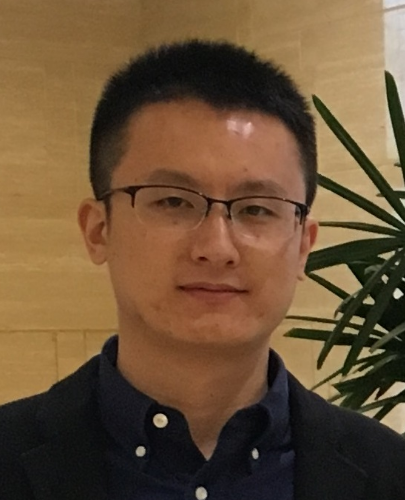 Shuhan Chen (陈舒涵)合作论文数College of Information and Artificial Intelligence, Yangzhou University;School of Information Engineering, Yangzhou University32
 Huimin Lu (陆慧敏)合作论文数School of Automation, Southeast University16
 Chun-xiao LI (李春晓)合作论文数15
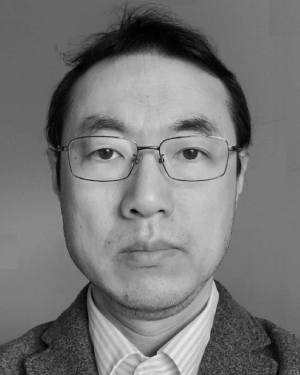 Lifeng Zhang合作论文数14Anran Zhen合作论文数11WanPei Chen (陈万培)合作论文数10
 Seiichi Serikawa合作论文数8Xiuqi Xu合作论文数School of Information Engineering, Yangzhou University , Yangzhou, China8ZhenMin Guo (郭振民)合作论文数7Jian Wang合作论文数6Shiyuan Yang合作论文数6
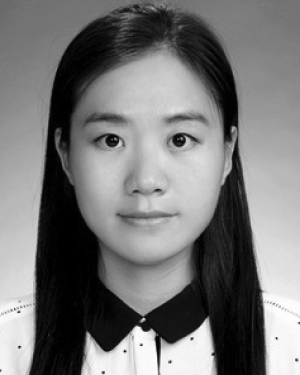 Meixiang Zhang (张美香)合作论文数School of Information Engineering, Yangzhou University6Ben Wang合作论文数5Jinhao Yu合作论文数5
 Ling Zheng (郑玲)合作论文数School of Electronics and Information Engineering, Anhui University5Qian Cheng (程茜)合作论文数5
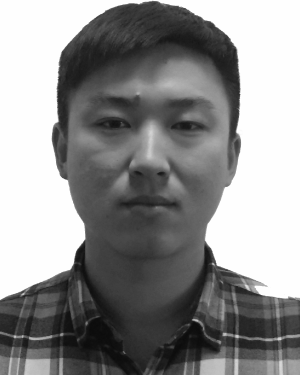 Jun Sun (孙军)合作论文数the Second Affiliated Hospi-tal, China Medical University5Xiang Yin合作论文数5Jindong Li合作论文数4
 Tan Xiuli合作论文数4Qian Fan合作论文数4
 Zeyu Chen合作论文数Baidu, Inc.4Ping Zhou合作论文数4HuiQin Zhang (张惠芹)合作论文数4
 Yun Li (李云)合作论文数扬州大学信息工程学院4Ming Song (宋鸣)合作论文数4
 Yujie Li (李玉洁)合作论文数Faculty of Engineering, Fukuoka University4Haonan Tang合作论文数3Guobing Hu合作论文数3Huining Wu (吴会宁)合作论文数3Dawei He合作论文数3Li Chunxiao合作论文数3Huiliang JIANG (姜会亮)合作论文数3Min Zhang合作论文数3ZHANG Gen-sheng (张根生)合作论文数3ChaoLong He (何朝龙)合作论文数3XiaoBin Zhang (张晓斌)合作论文数3Yan Gao (高燕)合作论文数3Yuhui Zhang (张瑜慧)合作论文数3
 Jiping Zhou (周骥平)合作论文数扬州大学机械工程学院3
 Lin Chen (陈林)合作论文数Institute Of Fluid Physics,Chinese Academy Of Sciences,Mianyang ,China3Jun Pan (潘钧)合作论文数3Xu Lian (连续)合作论文数3Yongai Zheng合作论文数3Tang Yingcheng合作论文数2Tianbao Sun合作论文数2
 Xiao Lv合作论文数2Yang Li合作论文数2




