采用共沉淀法制备羟基氧化铁/活性炭复合材料(FeOOH@GAC),并探讨其除Mn(Ⅱ)性能与机理.采用扫描电子显微镜(SEM)、比表面积分析仪、X-射线衍射仪(XRD)、傅里叶变换红外光谱仪(FT-IR)对负载前后活性炭的理化性质和特征基团进行表征,并分析羟基氧化铁(FeOOH)负载量及稳定性.结果表明,负载在活性炭表面的FeOOH为长度50~500 nm的针状颗粒.FeOOH@GAC吸附Mn(Ⅱ)的行为遵循Langmuir等温方程式和准二级动力学方程,FeOOH@GAC对水中Mn(Ⅱ)最大吸附质量比为16.47 mg/g,是活性炭(GAC)的3.25倍;吸附过程形成了 Mn—O振动峰,其吸附机理主要为静电吸附和化学吸附的共同作用.FeOOH@GAC是一种饮用水除Mn(Ⅱ)的优良吸附材料,为村镇含锰地下水的净化处理提供了新的解决途径.
综述了近年来多种铁氧化物及其改性材料吸附去除水中重金属离子的研究进展,介绍了铁氧化物及其改性材料的种类及其对水中多种重金属离子的吸附效果,并对其作用机理进行了归纳分析.指出了当前铁氧化物及其改性材料吸附去除水中重金属离子的研究中存在的主要问题,并对该材料的应用前景进行了展望.
Novel cobalt aluminum layered double hydroxide@cobalt aluminum Prussian blue analogs (CoAl-LDH@CoFePBA) nanosheet was synthesized via a self-sacrificed method from CoAl-LDH. The morphology and physicochemical properties characterization showed that CoAl-LDH@CoFe-PBA nanosheets were hexagon shape with diameter of 100 nm. Peroxymonosulfate (PMS) activation via CoAl-LDH@CoFe-PBA towards sulfamethoxazole (SMX) degradation was systematically examined. The catalytic system showed a satisfactory SMX degradation efficiency (over 80%) with the initial pH range of 3.0-9.0. In particular, only similar to 8 min was required to achieve 98% of SMX (40 mu M) degradation with 0.1 g/L CoAl-LDH@CoFe-PBA and 0.3 mM PMS. Besides, the underlying reaction mechanism and generation routes of various reactive oxygen species (ROS) with varied initial pH was explicated by the electron paramagnetic resonance (EPR) and quenching tests. The surface-bound (OH)-O-center dot and O-1(2) were responsible for SMX degradation at acidic pH, and O-1(2) was mainly produced from O-2(center dot-). At alkaline pH, SO4 center dot- and O-1(2) co-contributed to the degradation, while O-1(2) was generated from O-2(center dot-) and SO4 center dot-. Oxygen vacancy in the inner space of the catalyst was considered as key electron donors involved in O-2(center dot-) production. In addition, nine major degradation intermediates of SMX were identified and the possible degradation pathways were further proposed accordingly.
In this study, ultrafiltration coupled with electrochemical oxidation using a boron-doped diamond (BDD) electrode prior to reverse osmosis was employed to treat the simulated sea water. It was found that BDD based anodic pre-oxidation effectively improved the removal efficiency of dissolved organic matters especially enhance the rejection of fluorescent substances when prolong the oxidation time. Based on the analysis of XAD resin adsorption, the fraction of hydrophilic components significantly increased after the electro-oxidation pretreatment. In addition, the BDD based oxidation pretreatment was found to reduce the disinfection byproduct formation potential. A two-stage fouling model and the interfacial free energy were employed to investigate the fouling mitigation mechanisms via electrochemical oxidation pretreatment. The results show that membrane fouling was mitigated with increasing repulsive interactions and decreasing attractive interactions between humic acid molecules and the membrane surface after electrochemical oxidation. With longer electrochemical oxidation time, the dominant mechanism of membrane fouling shifted from complete pore blocking and cake filtration, mainly caused by hydrophobic humic acid compounds with higher molecular weight, to standard blocking and pore blocking, caused by hydrophobic humic acid compounds with low molecular weight.
为了探讨高效去除环境中微量内分泌干扰物的方法,比较研究了Fenton氧化和UV/Fenton氧化2种高级氧化技术降解BP和DBP的条件与降解特性.结果 表明,2种氧化体系在最佳反应条件为pH =4、Fe2+/H2O2投加物质的量比1∶6、反应时间30 min时,BP和DBP的降解率均可达到93%以上;但在相同的降解率下,UV/Fenton体系所需氧化剂量分别比Fenton体系减少了1/4和2/3,且UV/Fenton体系降解产物达80%以上矿化.这表明与Fenton法比,UV/Fenton法为更高效的去除水中微量DBP和BP的方法.当DBP和BP混合共降解时,氧化剂投加量分别比单独降解减少了1/4和3/7,而其降解率均可达93%以上,表明两者间具有较好地协同促进作用.降解动力学分析表明,UV/Fenton(或Fenton)氧化降解BP和DBP的过程可分为·OH的快速生成、直接快速氧化阶段(反应的前5 ~ 10 min)和受Fe3+/H2O2反应速率控制的缓慢降解2阶段,并可组合2个伪一级反应动力学模型较好地模拟整个反应过程,模型决定系数R2>0.99,均方根误差<0.2.
采用SWMM作为研究工具,首次提出以全局管网淤积系数(GSC)作为自变量,排水系统溢流节点数量及节点溢流量作为因变量,对城市排水系统进行模拟计算与分析,并辅以相对溢流节点数比和相对溢流量比两个参数,系统探讨了市政管道泥沙淤积程度对溢流积水及内涝影响的研究方法及步骤.提出控制一定的全局管网淤积系数GSC值,可调控管理研究区域内的溢流节点数和总溢流量,从而减少或避免城市积水和内涝风险.将研究方法成功应用于广州市某排水系统中,结果表明暴雨重现期不超过5年时,控制GSC<0.3是具有较好性价比的降低研究区积水和内涝风险的做法.
 Zhou Shi (施周)合作论文数College of Civil Engineering, Hunan University3
 Kaihan Yang合作论文数2NIAN Ya-xin (粘雅鑫)合作论文数2Kaibing Jiang (江凯兵)合作论文数2
 Huiying Wu (吴慧英)合作论文数School of Mechanical Engineering, Shanghai Jiao Tong University2
 Lin Deng (邓林)合作论文数College of Civil Engineering, Hunan University2HU Mo-nong (胡墨浓)合作论文数1LI Guang-chao (李广超)合作论文数1
 Haojie Zhang合作论文数College of Civil Engineering, Hunan University1
 Hanxuan Zeng (曾寒轩)合作论文数College of Civil Engineering, Zhejiang University of Technology1Tianbing Li (李天兵)合作论文数1
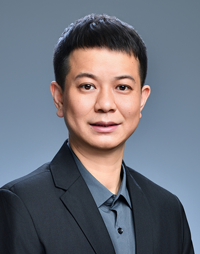 Bin Liu (柳斌)合作论文数Advanced Interdisciplinary Institute of Environment and Ecology, Beijing Normal University1
 Jun Yin合作论文数University of Missouri-Columbia, University of Missouri-Columbia1
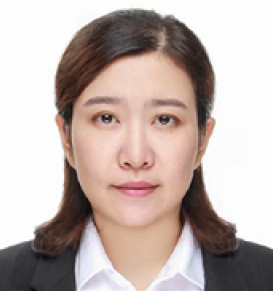 Tingting Zhu (朱婷婷)合作论文数School of Environmental Science & Engineering, Tianjin University1Wen Zhang (张文)合作论文数1




