Inaccurate prediction of droplet hydrodynamic resistance has a profound impact on droplet chip performance and lengthens the iterative design process. Previous studies measuring droplet resistance use various approaches such as interface comparison to quantify flow rate, and pressure taps; all these methods are classified as passive. Although each study supports well their own findings, the wide variety of conditions such as channel geometry and use of surfactant in combination with the difficulty in quantifying the droplet resistance leads to poor consensus across the different studies. Overall guidelines would be broadly beneficial to the community, but are currently fairly crude, with a rule of thumb of 2 to 5 times resistance increase. The active droplet control platform previously developed enables a novel approach that is herein confirmed as promising. This proof-of-concept study focuses on verifying this approach that employs a system identification method to determine the hydrodynamic resistance of a channel containing a single droplet, from which the droplet resistance is retrieved. This method has the potential to be further applied to a large variety of conditions, and most importantly, to non-Newtonian fluids once key limitations are overcome to improve measurement resolution. The current results qualitatively agree with the literature and demonstrate the promising future for this novel active approach to quantifying droplet resistance.
The usability and robustness of droplet microfluidic devices constitute significant challenges to the widespread adoption of droplet microfluidics despite the field's immense promise. Active droplet manipulation via visual feedback-based pressure driven control has addressed some of the concerns; however, the use of large and costly optical microscopes for acquiring visual feedback limits such systems for many applications. We present a compact and cost-effective (200 [USD]) droplet sensing system that leverages lensless imaging techniques using a single LED and a CMOS sensor. The imaging system can detect nearly all droplet interfaces (0.05 < miss rate, > 0.95 positive predictive value). Its accuracy (mean errors less than 10 [mu m]), Field of View (7.9 [mm(2)]), resolution (2.2 [mu m]) and sensing rate (40.1 [Hz]) are similar to existing optical microscope-based droplet identification systems. The lensless imaging system has acceptable performance while having a significantly smaller footprint and cost, which presents tremendous potential to miniaturize and modularize droplet microfluidic systems paving the road for widespread adoption. (C)& nbsp;2021 Elsevier B.V. All rights reserved.
Polydimethylsiloxane (PDMS) is a widely used material for microfluidic devices due to its low cost, superior optical properties and fast iterative design process. Its softness however creates challenges for the device design and operation because part of the applied pressures contributes to deform chips instead of controlling the flow. The resulting dynamic behaviour is often ignored in passive microfluidic that focuses on the static behaviour of the chip, however, can cause low accuracy to active microfluidic that actuates flow frequently. Therefore, understanding the dynamic behaviour of microfluidic devices due to material compliance is of fundamental and practical importance. In this study, the microfluidic chip compliance is carefully considered by separating it from the sample tubing compliance. The capacitance is retrieved by assuming a symmetric RC circuit based on the experimentally determined time constant and chip resistance. The experimental capacitance is compared to a theoretical formula for chip designs with different height-to-width ratios and height-to-length ratios and for various fluids. The accuracy is within one order of magnitude that is much closer than previous approximations.
Microfluidics has progressed tremendously as a field over the last two decades. Various areas of microfluidics developed in fully-fledged domains of their own such as organ-on-a-chip, digital and paper microfluidics. Nevertheless, the technological advancement of microfluidics as a field has not yet reached end-users for independent use. This is the key objective that is kept as a lens throughout this review. The ultimate goal is for microfluidics to be simply considered as a tool for application-focused research. A modular automated platform is envisioned to provide the stacking and modularity required to lower the knowledge barrier for end-users. The literature considered in this review is limited to active microfluidics and the analysis focuses on the potential for end-users to independently leverage the platforms for research in various fields such as cell assays, biochemistry, materials, and environmental factors monitoring.
With the aging population and rising rates of mobility disability, the demand for advanced smart rollators is increasing. To design control systems which improve safety and reliability, accurate prediction of human intent is required. In this paper, we present a classification method to predict intent of the rollator user using indirect inputs. The proposed classification algorithm uses data collected from an inertial measurement unit and an encoder implemented into a rollator. The developed intent estimation method is experimentally verified on our modified robotic platform. For our experiment with 7 healthy young adults, KNN classification algorithm was able to predict 3 intents (turn left, turn right and walk straight) with 92.9 % accuracy.
Microfluidics typically uses either a syringe pump that regulates the flow rate in microchannels or a pressure pump that controls the inlet pressures to drive the flow. In the context of pressure-driven flow, a reservoir holder containing liquid samples is normally used to interface the pressure pump with the microfluidic chip via soft tubing. The tubing connecting the pump and holder transports the pressurized air while the tubing connecting the holder and chip transports the liquid samples. The pressure output from the pump is usually assumed to be stable and the same as that applied to the liquid in the chip; however, in practice this assumption is often incorrect and may negatively impact chip performance. This assumption is critically challenged when applied to microfluidic chips involving dynamic control of fluids since the pressures are constantly varied (at > 10 Hz). This study presents a method for investigating, quantifying and modelling the pump stability and the dynamics of the air tubing using two pressure sensors. The relationship between the pressure output from the pump and the reservoir holder pressure is generalized as a first-order linear system. This relationship allows the software that controls the pressure pump to output the required pressure to the reservoir holder and thus to the microfluidic chip. These results should significantly improve the performance of microfluidic chips using active fluid control, and may also benefit passive fluid control applications.
Cut-in behavior commonly occurs in both urban and highway driving. Rear-end collisions happen when the lag vehicles cannot predict this abnormal lane change behavior of the front vehicles and response in time. However, related studies on cut-in event prediction and risk assessment have rarely been presented in autonomous driving field. A phase-based design framework is proposed in this work to realize online prediction and risk estimation of the cut-in behavior considering interactions between the involved vehicles. After preprocessing and analyzing a naturalistic driving dataset, a cut-in behavior predictor and a risk estimator are devised based on Gaussian mixture model. Comparing with baseline approaches, both the predictor and estimator designed following the proposed framework achieve enhanced results, which can further improve the driving safety of autonomous vehicles when cut-in behavior occurs.
Off-the-shelf planar strain gauges are ubiquitous and are generally designed for materials with a large elastic modulus such as steel or aluminum. Correspondingly, the strain gauges themselves are stiff and do not deform substantially under applied stress. Pairs of this type of strain gauge are typically used in a Wheatstone bridge circuit allowing the measurement of very small changes in resistance due to the changes in sensing element cross-sectional area to be measured. However, their use with softer low-modulus materials is limited due to the larger elastic deformations involved. The conductive property of graphene is leveraged to produce a different type of strain sensor that is sensitive yet also capable of significant elastic deformation. The graphene is dispersed in a silicone-based polymer matrix such that the deformation induces a change in resistance that can be measured using a voltage divider circuit. The target application for which this sensor is developed is to measure strain in a pressurized length of soft Tygon (R) tubing which is often used in pumping fluids through microfluidic devices. However, the silicone-based graphene polymer can easily be applied to a variety of other shapes and soft materials. (C) 2020 Elsevier B.V. All rights reserved.
An open-source precision pressure pump system and control software is presented, primarily designed for the experimental microfluidics community, although others may find additional uses for this precision pressure source. This mechatronic system is coined ‘µPump,’ and its performance rivals that of commercially available systems, at a fraction of the cost. The pressure accuracy, stability, and resolution are 0.09%, 0.02%, and 0.02% of the full span, respectively. The settling time to reach 2 bar from zero and stabilize is less than 2 s. Material for building a four-channel µPump (approx. $3000 USD) or an eight-channel µPump (approx. $5000 USD) is approximately a quarter, or a third of the cost of buying a high-end commercial system, respectively. The design rationale is presented, together with documented design details and software, so that the system may be replicated or customized to particular applications. µPump can be used for two-phase droplet microfluidics, single-phase microfluidics, gaseous flow microfluidics and any other applications requiring precise fluid handling. µPump provides researchers, students, and startups with a cost-effective solution for precise fluid control.
The process of detection and separation of yeast cells based on their morphological characteristics is critical to the understanding of cell division cycles, which is of vital importance to the understanding of some diseases such as cancer. The traditional process of manual detection is usually tedious and inconsistent. This paper presents a microfluidic device integrated with microvalves for fluid control for the sorting of yeast cells using image processing algorithms and confirmation based on their fluorescent tag. The proposed device is completely automated, low cost and easy to implement in an academic research setting. Design details of the integrated microfluidic system are highlighted in this paper, along with experimental validation. Real time cell sorting was demonstrated with a cell detection rate of 12 cells per minute.
In this paper, we consider the adaptive attitude control of spacecraft with time-varying inertial properties. We use a coordinate independent approach for the purpose of designing the control and estimation laws in terms of the rotation matrices representing the spacecraft body frame and reference tracking signals. This method helps to overcome the difficulties regarding the attitude representation on SO(3) such as ambiguities associated with quaternion representation and inherent singularities inside Euler parameters. We model the time variations in inertial parameters in two different ways, and design adaptive control schemes for each case. As the first uncertain dynamic model, we consider a setting of spacecraft with multiple moving appendages, and based on this model, design an adaptive control scheme with three different versions, where Frobenious norm is used in measuring the deviation of the estimated inertia tensors from their actual values. The proposed adaptive control scheme is later extended for the more direct model where the inertia tensor of the spacecraft has a nonlinear relation with the norm of the input moment. Further, we derive the allowable sets of initial conditions to ensure the convergence of the tracking error. Simulation results are provided to illustrate the effectiveness of our proposed approach.
This paper considers the fast and accurate estimation of motion variables of a rigid body object whose movement occurs from intermittent contacts with coordinating manipulators in nonprehensile manipulation tasks. The estimator operates under multiple sensory data including visual, joint torque, joint position and/or tactile measurements which are combined at the lower level to compensate for the latency and the slow sampling of the visual data. The estimator is real-time in the sense that it provides the motion data of the target object at the same fast sample rate of the servo controller without delay. The basic formulation is the multi-rate Kalman filter with the contact force vector as its process input, and the visual observation as its measurement output signal which is the down-sampled and delayed version of the configuration of the target object. Experimental tests are conducted for the case of planar object manipulation as well as the non-centroidal rotation under gravity using a robotic hand, and their results are presented to demonstrate the validity of the proposed estimation scheme.
In this paper we present a new cooperative adaptive cruise control with rear-end collision check employing deadzone switching techniques. The corresponding control task is to maintain desired spacing between consequent vehicles in a platoon using a decentralized control structure robust to sensor noises, whose magnitudes are assumed to be bounded from above by some known limits. The approach considered here follows a switching control design based on dead-zone using the relative velocity and position of the two closest neighbours.
An autonomous vehicle controller is presented for the purposes of improving vehicle path tracking at high speeds and near tire traction limits. Improvements to the state of the art are made by reducing the number of sensors and feedback variables needed to achieve dynamic control, and by tightly integrating traction control with a steering output controller to correct for modeling errors and actual disturbances. The controller is designed to interface with a path generation module, from which maximum attainable speeds are received and tracked by the controller. Simulation results using CarSim are provided for a vehicle traveling over a technical race course, encompassing many turn variations. The proposed system is shown to outperform a reference PID control system by achieving higher speeds around the race track without losing control.
In this study, the authors consider the robust adaptive attitude synchronisation problem for a network of rigid body agents using a modified version of the error function, which is recently introduced for constructing the attitude errors on SO(3). These attitude error vectors are particularly useful for networks with large initial attitude difference. They focus on devising an adaptive geometric approach to cope with situations where the inertia matrices are not available for measurement. The Frobenious norm is used as a measure for the difference between the actual values of moments of inertias and their estimated values, to construct the individual adaptive laws of agents. Compared to the previous methods for synchronisation on SO(3) such as those using quaternions, the authors' approach based on the introduced modified error function enables us to avoid any ambiguity for attitude representation. Finally, they study the robustness of the synchronisation task in the presence of external disturbances and unmodelled dynamics and propose a method to attenuate such effects. Simulation results illustrate the effectiveness of the proposed approach.
Autonomous driving requires reliable and accurate vehicle control at the limits of tire performance, which is only possible if accurate slip angle estimates are available. Recent methods have demonstrated the value of pneumatic trail for estimating slip angle in the non-linear region using the Fiala tire model. We present an improved slip angle estimation method based on the pneumatic trail method, which incorporates both lateral and longitudinal acceleration effects through the use of the Dugoff tire model. The proposed method offers significant improvements over existing methods, where longitudinal effects of the road-tire were assumed negligible. The results are demonstrated using CarSim, which relies on empirical data models for tire modelling and therefore presents a useful evaluation of the method.
The thermal control of a die is crucial for the development of high efficiency injection moulds. For an effective thermal management, this research provides a strategy to identify a thermal dynamic model and to design a controller. The neural network techniques and finite element analysis enable modeling to deal with various cycle-times for moulding process and uncertain dynamics of a die. Based on the system identification which is experimentally validated using a real system, controllers are designed using fuzzy-logic and self-tuning PID methods with backpropagation and radial basis function neural networks to tune control parameters. Through a comparative study, each controller's performance is verified in terms of response time and tracking accuracy under different moulding processes with multiple cycle-times.
This study proposes an effective thermal control for plastic injection molding (polymer: Santoprene 8211-45 with density of 790 kg/m3, injection pressure: 1400 psi (9,652,660 Pa)) in a laminated die. For this purpose, a comprehensive control strategy is provided to cover various themes. First, a new method for determining the optimal sensor locations as a prerequisite step for modeling and controller design is introduced. Second, system identification through offline and online training with finite element analysis and neural network techniques are used to develop an accurate model by incorporating uncertain dynamics of the laminated die. Third, an additive feedforward control by adding direct adaptive inverse control to self-adaptive PID is developed for temperature control of cavity wall (cavity size: 52.9 × 32.07 × 16.03 mm). A verification of designed controller's performance demonstrates that the proposed strategy provides accurate online temperature tracking and faster response under thermal dynamics with various cycle-times in the injection mold process.
This paper presents a model predictive control (MPC) based approach to improve a recently developed class of collaborative adaptive cruise control (CACC) schemes. The PID structure used previously is replaced with MPC, which is able to accommodate actuator limits and parameter estimation. In addition to the regular CACC functionalities, rear end collision control is also incorporated. This approach is able to avoid rear end collisions with the following car, as long as it can still maintain the safe distance with the preceding vehicle. Simulation results are presented which demonstrate the validity of the approach.
 Amir Khajepour合作论文数School of Mechanical Engineering, Beijing Institute of Technology;Department of Mechanical and Mechatronics Engineering, University of Waterloo18
 Christopher M. Clark合作论文数Department of Neurology, Perelman School of Medicine, University of Pennsylvania14
 Carolyn L. Ren合作论文数Waterloo Microfluidics Laboratory, Engineering Faculty, University of Waterloo;Department of Mechanical and Mechatronics Engineering, Engineering Faculty, University of Waterloo11
 Jaho Seo合作论文数École de technologie supérieure9
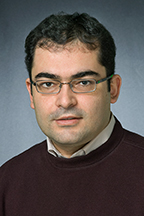 Baris Fidan合作论文数Department of Mechanical and Mechatronics Engineering, Faculty of Engineering, University of Waterloo;Cooperative & Adaptive Mechatronic Systems Lab, University of Waterloo;Department of Systems Design Engineering, University of Waterloo;Department of Electrical and Computer Engineering, University of Waterloo8
 Masoud Alimardani合作论文数8
 Ehsan Toyserkani合作论文数Multi-Scale Additive Manufacturing Lab, University of Waterloo;Department of Mechanical and Mechatronics Engineering, University of Waterloo8
 Marie Hébert合作论文数Mech & Mechatron Engn, Univ Waterloo7
 Nezih Topaloglu合作论文数Mechanical and Mechatronics Engineering, University of Waterloo7
 Thanh-Son Dao合作论文数University of Waterloo7Hamidreza Karbasi合作论文数7
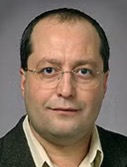 Mustafa Yavuz合作论文数Waterloo Institute for Nanotechnology, University of Waterloo;Department of Mechanical & Mechatronics Engineering, Faculty of Engineering, University of Waterloo;Biograph Sense Inc.7
 Patricia M. Nieva合作论文数Mechanical and Mechatronics Engineering, University of Waterloo7Aftab E Patla合作论文数5Sanjeev Bedi合作论文数Department of Mechanical Engineering, University of Waterloo5
 Keith Yu Kit Leung合作论文数5
 Steven L. Waslander合作论文数Toronto Robotics and AI Laboratory, Faculty of Applied Science and Engineering, Institute for Aerospace Studies, University of Toronto5
 Luke Ng合作论文数5
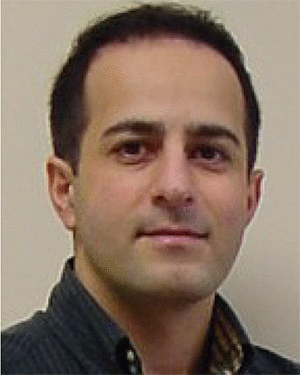 Mir Behrad Khamesee合作论文数Dept Mech & Mechatron Engn, Univ Waterloo4
 Ehsan Shameli合作论文数Department of Mechanical and Mechatronics Engineering, University of Waterloo4D. J. Gorman合作论文数Analdyne Inc.4
 Caglar Elbuken合作论文数Mechanical and Mechatronics Engineering, University of Waterloo4Bo Yang Yu合作论文数3Dl Strauss合作论文数3Mehran Armand合作论文数Department of Otolaryngology-Head and Neck Surgery, School of Medicine, Johns Hopkins University3Fadakar, I.合作论文数3
 Soo Jeon合作论文数University of Waterloo3Lochner Samuel J合作论文数3C. Pop合作论文数3D.M. Moziar合作论文数3
 Ismail Bayezit合作论文数Faculty of Aeronautics and Astronautics, Istanbul Technical University3Donatus Oguamanam合作论文数2Feyyaz Emre Sancar合作论文数University of Waterloo2Sirui Song合作论文数2Hyunki Bae合作论文数2
 Gerd Hirzinger合作论文数Institut fur Robotik und Mechatronik, Deutsches Zentrum fur Luft- und Raumfahrt2
 William W. Melek合作论文数Mechanical & Mechatronics Engineering Department, University of Waterloo2
 David Wang合作论文数Department of Electrical and Computer Engineering, University of Waterloo2H. W. Kerr合作论文数2Christ P. Paul合作论文数1Young-Jun Park合作论文数1Run Ze Gao合作论文数1William Owen合作论文数1m c hellinga合作论文数1mehrdad iravani tabrizipour合作论文数1Abdullah Yeaser合作论文数1jae dong kim合作论文数1Peng Bo合作论文数1
 F. Ismail合作论文数Fakultas Perikanan Dan Kelautan, Universitas Khairun1




