In both fixed and rotary wing aircraft, the move toward lighter structures has resulted in an increase in structural vibration and interior noise.Porous materials have been proposed as acoustic absorbers to reduce this noise.This paper discusses the development of equipment at the NASA Glenn Research Center for characterizing the acoustic performance of porous materials: a flow resistance apparatus to measure the pressure drop across a specimen of porous material, and a standing wave tube that uses a pair of stationary microphones to measure the normal incidence acoustic impedance of a porous material specimen.Specific attention is paid to making this equipment as flexible as possible in terms of specimen sizes need for testing to accommodate the small or irregular sizes often produced during the development phase of a new material.In addition, due to the unknown performance of newly developed material, safety features are included on the flow resistance apparatus to contain test specimens that shed particles or catastrophically fail during testing.Results of measurements on aircraft fiberglass are presented to verify the correct performance of the equipment.
Objective: In this study, we examined how effectively people can monitor new stimuli on a peripheral display while carrying out judgments on an adjacent central display. Background: Improved situation awareness is critical for improved operator performance in aviation and many other domains. Given the limited extent of foveal processing, acquiring additional information from peripheral vision offers high potential gains. Method: Participants carried out a sequence of central perceptual judgments while simultaneously monitoring the periphery for new stimuli. Peripheral detection was measured as a function of central-judgment difficulty, the relative timing of the two tasks, and peripheral event rate. Results: Participants accurately detected and located peripheral targets, even at the highest eccentricity explored here (~30°). Peripheral detection was not reduced by increased central-task difficulty but was reduced when peripheral targets arrived later in the processing of central stimuli and when peripheral events were relatively rare. Conclusion: Under favorable conditions—high-contrast stimuli and high event rate—people can successfully monitor peripheral displays for new events while carrying out an unrelated continuous task on an adjacent display. Application: In many fields, such as aviation, existing displays were designed with low-contrast stimuli that provide little opportunity for peripheral vision. With appropriate redesign, operators might successfully monitor multiple displays over a large visual field. Designers need to be aware of nonvisual factors, such as low event rate and relative event timing, that can lead to failures to detect peripheral stimuli.
Carrier and Pashler (1995) concluded-based on locus-of-slack dual-task methodology-that memory retrieval was subject to a central bottleneck. However, this conclusion conflicts with evidence from other lines of research suggesting that memory retrieval proceeds autonomously, in parallel with many other mental processes. In the present experiments we explored the possibility that Carrier and Pashler's conclusions were distorted by use of an experimental method unfavorable to parallel memory retrieval. New locus-of-slack experiments were performed that encouraged parallel memory retrieval strategies with instructions and feedback, along with the use of "preferred" stimulus-response modality mappings. Results from two psychological refractory period experiments showed that the effect of Task 2 recognition difficulty was consistently absorbed into cognitive slack, with both word and picture recognition. We conclude that the memory retrieval stage of recognition tasks can proceed in parallel with central operations of another task, at least under favorable conditions. Our new findings bring results from dual-task locus-of-slack methodology into agreement with other evidence that memory retrieval is not subject to severe, generic central resource limitations.
An understanding of both the areas of materials science and acoustics is necessary to successfully develop materials for acoustic absorption applications. This paper presents the basic knowledge and approaches for determining the acoustic performance of porous materials in a manner that will help materials researchers new to this area gain the understanding and skills necessary to make meaningful contributions to this field of study. Beginning with the basics and making as few assumptions as possible, this paper reviews relevant topics in the acoustic performance of porous materials, which are often used to make acoustic bulk absorbers, moving from the physics of sound wave interactions with porous materials to measurement techniques for flow resistivity, characteristic impedance, and wavenumber.
Several heat exchanger (HX) test panels were designed, fabricated and tested at the NASA Glenn Research Center to explore the fabrication and performance of several designs for composite heat exchangers. The development of these light weight, high efficiency air-liquid test panels was attempted using polymer composites and carbon foam materials. The fundamental goal of this effort was to demonstrate the feasibility of the composite HX for various space exploration and thermal management applications including Orion CEV and Altair. The specific objectives of this work were to select optimum materials, designs, and to optimize fabrication procedures. After fabrication, the individual design concept prototypes were tested to determine their thermal performance and to guide the future development of full-size engineering development units (EDU). The overall test results suggested that the panel bonded with pre-cured composite laminates to KFOAM Grade L1 scored above the other designs in terms of ease of manufacture and performance.
The classic theory of spatial attention hypothesized 2 modes, voluntary and involuntary. Folk, Remington, and Johnston (1992) reported that even involuntary attention capture by stimuli requires a match between stimulus properties and what the observer is looking for. This surprising conclusion has been confirmed by many subsequent studies. In these studies, however, the observer typically looks for the same property throughout an entire session. Real-world behavior, in contrast, often requires frequent shifts in attentional set. The present study examined whether such shifts weaken attentional settings, allowing task-irrelevant objects to capture attention. Surprisingly, fluctuating control settings did not increase vulnerability to capture by salient stimuli (color singletons and abrupt onsets). We conclude that the attention control system is remarkably flexible, able to rapidly and fully adopt new settings and abandon old settings.
5,266,207 A 5,282,955 A 5,321,102 A 5,457,564 A 5,502,082 A 5,541,234 A 5,605,983 A 5,691,054 A 5,710,187 A 5,818,636 A 5,846,658 A 5,872,070 A 5,990,184 A 6,156,812 A 6,284,908 B1 6,300,385 B1 6,364,953 B1 6,423,811 B1 6,428,898 B1 2002/0167118 Al 2003/0106487 Al 2004/0132846 Al 2004/0144726 Al 2005/0192366 Al 2005/0192367 Al 11/1993 2/1994 6/1994 10/1995 3/1996 7/1996 2/1997 11/1997 1/1998 10/1998 12/1998 2/1999 11/1999 12/2000 9/2001 10/2001 4/2002 7/2002 8/2002 11/2002 6/2003 7/2004 7/2004 9/2005 9/2005 Boye et al. Leventis et al. Loy et al. Leventis et al. Unger et al. Unger et al. Dauth et al. Tennent et al. Steckle, Jr. et al. Leventis et al. Tennent et al. Dismukes et al. Biesmans et al. Lau et al. Loy et al. Hashida et al. Kawakami et al. Lau et al. Barsotti et al. Billiet Huang Leventis et al. Chmelka et al. On et al. On et al. (12) United States Patent (1o) Patent No.: US 7,732,496 B1 Leventis et al. (45) Date of Patent: Jun. 8, 2010
In traditional perceptual decision-making experiments, two pieces of data recollected on each trial: response time and accuracy. But how confident were participants and how did their decision state evolve over time? We asked participants to provide a continuous readout of their decision state by moving a cursor along a sliding scale between a 100% certain left response and a 100% certain right response. Subjects did not terminate the trials; rather, trials were timed out at random and subjects were scored based on the cursor position at the time. Higher rewards for correct responses and higher penalties for errors were associated with extreme responses so that the response with the highest ex[pected value was that which accurately reflected the participant's odds of being correct. This procedure encourages participants to expose the time-course of their evolving decision state. Evidence on how well they can do this will be presented.
Recent dual-task studies suggest that a bottleneck prevents central mental operations from working on more than one task at a time, especially at relatively low practice levels. It remains highly controversial, however, whether this bottleneck is structural (inherent to human cognitive architecture) or merely a strategic choice. If the strategic hypothesis is testable, it ought to predict that, under sufficiently strong incentives, people could choose to bypass the bottleneck and perform both tasks in parallel. Because the incentives for parallel processing in previous studies have been modest, the authors introduced a novel dual-task paradigm with much greater incentives, induced by strict time deadlines for each task. With this paradigm, bottleneck delays would cause participants to frequently miss the time deadline or make errors, triggering immediate negative consequences (failure feedback). Nevertheless, participants had little success performing central operations in parallel; severe dual-task performance costs were observed, even with relatively easy tasks. These results greatly strengthen the case that the central bottleneck reflects a structural limitation that, at least at modest practice levels, cannot be avoided merely by trying harder.
A new class of strong, lightweight, porous materials has been invented as an outgrowth of an effort to develop reinforced silica aerogels. The new material, called X-Aerogel is less hygroscopic, but no less porous and of similar density to the corresponding unmodified aerogels. However, the property that sets X-Aerogels apart is their mechanical strength, which can be as much as two and a half orders of magnitude stronger that the unmodified aerogels. X-Aerogels are envisioned to be useful for making extremely lightweight, thermally insulating, structural components, but they may also have applications as electrical insulators, components of laminates, catalyst supports, templates for electrode materials, fuel-cell components, and filter membranes.
A method of imparting relatively hard protective outer skins to aerogel monoliths has been developed. Even more than aerogel beads, aerogel monoliths are attractive as thermal-insulation materials, but the commercial utilization of aerogel monoliths in thermal-insulation panels has been inhibited by their fragility and the consequent difficulty of handling them. Therefore, there is a need to afford sufficient protection to aerogel monoliths to facilitate handling, without compromising the attractive bulk properties (low density, high porosity, low thermal conductivity, high surface area, and low permittivity) of aerogel materials. The present method was devised to satisfy this need. The essence of the present method is to coat an aerogel monolith with an outer polymeric skin, by painting or spraying. Apparently, the reason spraying and painting were not attempted until now is that it is well known in the aerogel industry that aerogels collapse in contact with liquids. In the present method, one prevents such collapse through the proper choice of coating liquid and process conditions: In particular, one uses a viscous polymer precursor liquid and (a) carefully controls the amount of liquid applied and/or (b) causes the liquid to become cured to the desired hard polymeric layer rapidly enough that there is not sufficient time for the liquid to percolate into the aerogel bulk. The method has been demonstrated by use of isocyanates, which, upon exposure to atmospheric moisture, become cured to polyurethane/polyurea-type coats. The method has also been demonstrated by use of commercial epoxy resins. The method could also be implemented by use of a variety of other resins, including polyimide precursors (for forming high-temperature-resistant protective skins) or perfluorinated monomers (for forming coats that impart hydrophobicity and some increase in strength).
We describe a three-dimensional core–shell structure where the core is the assembly of nanoparticles that comprises the skeletal framework of a typical silica aerogel, and the shell is polystyrene. Specifically, the mesoporous surfaces of silica were first modified with amines by co-gelation of tetramethylorthosilicate (TMOS) and 3-aminopropyltriethoxysilane (APTES). Next, styrene moieties were attached to the amines by reaction with p-chloromethylstyrene. Finally, dangling styrene moieties were crosslinked by a free-radical polymerization process initiated by AIBN and styrene, p-chloromethylstyrene or 2,3,4,5-pentafluorostyerene introduced in the mesopores. Polystyrene crosslinked aerogels are mechanically strong, lightweight (0.41–0.77 g cm−3), highly porous materials (they consist of ca. 63% empty space, with a BET surface areas in the range of 213–393 m2 g−1). Their thermal conductivity (0.041 W m−1 K−1) is comparable to that of glass wool. Hydrophobicity, however, is the property that sets the new material apart from analogous polyurea and epoxy crosslinked aerogels. The contact angles of water droplets on disks cut from larger monoliths are >120°. (By comparison, the contact angle with polyurea crosslinked aerogels is only ca. 60°.) Polystyrene crosslinked aerogel monoliths float on water indefinitely, while their polyurea counterparts absorb water and sink within minutes.
Recent studies have provided evidence that dual-task interference is typically caused by a single-channel bottleneck, but the processing locus of the bottleneck has yet to be pinned down. A bottleneck locus at the response-selection stage is widely advocated, but an earlier locus would be consistent with most previous evidence. Four new experiments used the “locus of slack” method to investigate whether the stages postponed by the central bottleneck include stimulus classification, a very late stage of perceptual processing. The experiments varied stimulus classification difficulty for two different analogueue perceptual judgements. Experiment 1 found only modest absorption into slack for the difficulty of a spatial position judgement. Experiments 2–4 found virtually no absorption into slack for the difficulty of a box-width judgement. These results support a bottleneck locus beginning at or before the stage of stimulus classification and hence prior to the stage of response selection. Other evidence, however, leaves no doubt that response selection is also subject to bottleneck postponement. Two architectures are discussed that can account parsimoniously for both old and new results. One posits a single bottleneck resulting from a unified CPU-like central processor; the other posits multiple bottlenecks resulting from multiple processors accomplishing different substages of central processing.
GRC research has led to the development of epoxy-clay nanocomposites with 60-70% lower gas permeability than the base epoxy resin. Filament wound carbon fiber reinforced tanks made with this nanocomposite had a five-fold lower helium leak rate than the corresponding tanks made without clay. More recent work has produced new composites with more than a 100-fold reduction in helium permeability. Use of these advanced, high barrier composites would eliminate the need for a liner in composite cryotanks, thereby simplifying construction and reducing propellant leakage. Aerogels are attractive materials for use as cryotank insulation because of their low density and low thermal conductivity. However, aerogels are fragile and have poor environmental stability, which have limited their use to certain applications in specialized environments (e.g., in certain types of nuclear reactors as Cerenkov radiation detectors, and as thermal insulators aboard space rovers on Mars). New GRC developed polymer crosslinked aerogels (X-Aerogels) retain the low density of conventional aerogels, but they demonstrate a 300-fold increase in their mechanical strength. Currently, our strongest materials combine a density of approx. 0.45 g/cc, a thermal conductivity of approx. 0.04 W/mK and a compressive strength of ~185 MPa. Use of these novel aerogels as insulation materials/structural components in combination with the low permeability of epoxy-clay nanocomposites could significantly reduce cryotank weight and improve durability.
 Eric Ruthruff合作论文数University of New Mexico27
 Roger Remington合作论文数School of Psychology, The University of Queensland21
 Robert S. Mccann合作论文数NASA Ames Research Center16
 Hal Pashler合作论文数Department of Psychology, University of California, San Diego8
 Mark Van Selst合作论文数8
 James L. (Jay) McClelland合作论文数Center for Mind, Brain, Computation and Technology, Department of Psychology, Stanford University;University of Manchester6
 Nicholas Leventis合作论文数Missouri University of Science and Technology5
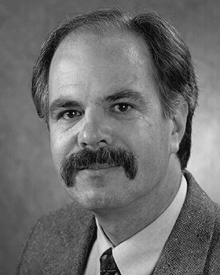 David C. Foyle合作论文数NASA Ames Research Center5Mei-Ching Lien合作论文数Oregon State University5
 Larry Hochhaus合作论文数5
 Charles L. Folk合作论文数Department of Psychology, Villanova University5Maria A. Kuczmarski合作论文数5cynthia h null合作论文数4
 Steven Yantis合作论文数Johns Hopkins University3
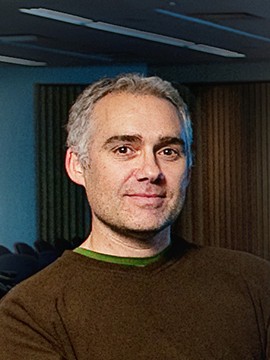 Alan Kingstone合作论文数Brain, Attention and Reality Lab, Department of Psychology, Faculty of Arts, The University of British Columbia3
 Elizabeth A. Franz合作论文数University of Otago3
 Mary Ann Meador合作论文数School of Polymer Science and Polymer Engineering, The University of Akron;Meador Aerospace Materials Group, LLC;ACS Applied Materials and Interfaces;ACS Materials AU3JPH VANSANTEN合作论文数2
 Michael Meador合作论文数Meador Aerospace Materials Group, LLC2
 Greg Corrado合作论文数Google2Mark Monheit合作论文数2Eve F. Fabrizio合作论文数2
 Richard Ivry合作论文数Department of Psychology, University of California, Berkeley;Institute of Cognitive and Brain Sciences, University of California, Berkeley;Helen Wills Neuroscience Institute, University of California, Berkeley2MC Lien合作论文数1RW REMINGTON合作论文数1e eugene shin合作论文数1Norbert Maertens合作论文数1sandra g hart合作论文数1Faysal Ilhan合作论文数1ulvi f ilhan合作论文数1Monheit M A合作论文数1
 Amala Dass合作论文数Department of Chemistry and Biochemistry, University of Mississippi1
 Arthur G. Samuel合作论文数Department of Psychology, Stony Brook University1
 Jan P. H. Van Santen合作论文数Center for Spoken;Language Understanding;School of Science, OGI;School of Science, OGI1Van Der Heijden合作论文数1Maria Romera合作论文数1Krista L. Horlitz合作论文数1Miri Gold合作论文数1Linda Mccorkle合作论文数1National Aeronautics合作论文数1James D. Kinder合作论文数1Anna Palczer合作论文数1Daniel A. Scheiman合作论文数Dynacs Eng . , Inc;Glenn Research Center1Space Administration合作论文数1
 Collin Green合作论文数NASA Ames Research Center1Shelly Whitsell合作论文数1Sandi G. Miller合作论文数1Ching Lien合作论文数1Jeannie Lynch合作论文数1




