J. David Singer, a globally recognized scholar of international politics, died Monday, December 28, 2009, in Ann Arbor, Michigan. He was involved in an auto accident on September 22 and had been hospitalized since. At the time of his death, Singer was Professor Emeritus at the University of Michigan, where he'd been on the faculty from 1958 until retiring in 2002. He was 84 years old.
This chapter focuses on the relationship among the states that emerged from the ruins of Spanish and Portuguese empires in Latin America. The Spanish colonies achieved their independence in three more or less separate movements. The first movement originated in Mexico and was joined by Central America. Nineteenth-century relations among the newly independent countries in Latin America involved a series of important conflicts and wars, and the impact of those struggles has often been visible in the twentieth century. Conflicts between Brazil and Argentina, for example, evoked the mediation of Great Britain, which managed to arrange the creation of the buffer state of Uruguay in 1830. The remainder of the nineteenth century in Latin America was most notable, perhaps, for the culmination of a long-term trend. The United States had issued its Monroe Doctrine in 1823, warning other states to refrain from colonizing efforts in the Western Hemisphere.
How do term limits affect international conflict behavior? We revisit this question using new quarter-year-level data on presidential political ambition in the US from 1816 to 2010. Multi-country research finds that the re-election motive decreases the likelihood of conflict initiation. We argue that there are good reasons to expect that the US is different. We find that politically ambitious US presidents are more likely to initiate international conflicts. Consistent with previous research, however, we find that political ambition appears to be unrelated to a president’s chances of becoming the target of a militarized dispute.
If contractualism causes both democracy and peace, the correlation between democracy and peace is spurious. But the definition of contractualism is sufficiently unclear as to create doubts that it has such an impact. In addition, if democracy has an impact on contractualism, then, even with an otherwise perfectly specified model, controlling for contractualism will bias estimates of the effect of democracy on peace. International trade involves contracting behavior between strangers in different states. In addition, unlike contracting behavior within states, trade involves interactions in the same arena where interstate conflict needs to be deterred. Contractualist states have existed in significant numbers only recently. This limits contractualism's ability to compete with democracy as a predictor of peace. Mousseau's previous findings have been extraordinarily fragile. Finally, observational data should be complemented by multiple streams of evidence. Some experimental data support democratic peace theory; analogous experiments would almost certainly not provide evidence to support contractualism.
As America begins the 21st century there is growing outcry across the land for reform of the nation's chaotic immigration policies. This text shows how immigration patterns are in direct conflict with emerging labour market trends and constitute a serious threat to the jobs of American workers.
The primary purpose of many alliances is to deter attacks on members of the alliance by potentially antagonistic states. Yet some alliances can increase the probability of conflict that may be initiated by alliance members. Cognizant of that possibility, states that wish to sustain peace may nevertheless intentionally form alliance commitments with revisionist leaders of other states. Faced with the partially conflicting goals of deterring antagonistic states while at the same time restraining allies, leaders often include in alliance treaties conditions that oblige allies to provide military assistance only if a member of the alliance is attacked by a state outside the alliance. However, other treaties may contain unconditional obligations to come to the defense of members of the alliance. Such alliances tend to arise from situations where some members of the alliance feel that their alliance partners need to have the flexibility even to engage in provocative behavior in order to deter the target of the alliance. Our analysis of alliance formation processes in the context of priorities that compete with each other provides a basis for two hypotheses. The first is that revisionist states with unconditional commitments from members of their alliance to come to their defense are more likely to initiate militarized conflict than states without such unconditional commitments. The second hypothesis is that revisionist states in alliances whose treaties stipulate that commitments to defend are conditional will be less likely to initiate militarized conflict than such states with allies who are committed to come to their defense without conditions. Statistical analyses of data generated with a view toward evaluations of both hypotheses (some of which provide new, more detailed categorizations of alliance treaties) suggest that they are valid.
Ray, James Lee. (2013) War on Democratic Peace. International Studies Quarterly, doi: 10.1111/isqu.12029 (c) 2013 International Studies Association Gartzke and Weisiger emphasize the pacifying impact of regime similarity. But the logic of their argument makes it seem unlikely that shared autocracy and democracy have equal pacifying impacts, because autocracies are so much more diverse. Regime similarity is in any case a problematic control variable. Since joint democracy and regime similarity are related by definition, any confounding impact regime similarity appears to have is produced in part by conceptual overlap rather than by a causal connection. Finally, even democratic states with diverse preferences might maintain peaceful relationships, because of their ability to make credible commitments and their respect for each other's determination or prowess as war fighters. Mousseau claims that contract intensity confounds the relationship between democracy and peace, but to the extent that democracy makes contract intensity more likely, contract intensity cannot be a confounding variable. Data on life insurance in force before 1940 suggest that contract-intensive states fought each other in World Wars I and II. Mousseau claims that contract intensity creates pacifying economic interdependence. But life insurance contracts provide unnecessarily limited information regarding the interactions among states that lead to interdependence. In short, neither of these articles creates serious doubts about the pacifying impact of shared democracy.
The economics profession both sanctioned and rationalized a business model of society which supported a minimally supervised rule of markets. As a consequence, the failure of markets has marginalized economics itself. It is left on the sidelines as politicians try to salvage something from the breakdown of the market order. Robert Skidelsky, 2009When I was in college, I majored in political science. But if I were going through college today, Id major in economics. It possesses a rigor that other fields in the social sciences dontand often greater relevance as well. Thats why economists are shaping national debates about everything from health care to poverty, while political scientists often seem increasingly theoretical and irrelevant. Nicholas D. Kristof, 2011Foreign policy decision makers tend to rely on historical analogies. The surge in Afghanistan, for example, was inspired in part by the surge in Iraq. Processes for dealing with foreign policy issues involving the wars in Iraq and Afghanistan were substantially different from those processes in the Bush and Obama administrations aimed at dealing with economic crises in 2008 and 2009. The latter processes were influenced extensively by economists, especially in the Obama administration. The decisions to send additional troops to the wars in Iraq and Afghanistan involved relatively few political scientists. More substantial input from political scientists in the decision making process about the surge in Afghanistan might have produced more knowledgeable and informative analyses of relevant historical and political data in the form of structured focused comparisons of the wars and counterinsurgency campaigns in Iraq and Afghanistan, as well as analyses and interpretations of data on larger numbers of cases pertaining to broader phenomena of which the US interventions in Iraq and Afghanistan are examples. Perhaps political scientists deserve a role within foreign policy making processes more similar to that reserved for economists in processes focusing on economic issues.
Singer et al. (1972) hypothesized that the distribution of military-industrial capabilities among the major powers, as reflected in an index referred to as CON, would have an impact on the incidence of war for those states. Subsequent research on the possible connection between CON and interstate conflict has continued for almost four decades. A recent book declares that CON is the single most potent predictor of interstate conflict. However, theoretical arguments linking CON to conflict tend to be implausible or illogical. Furthermore, empirical analyses over the years have produced inconsistent results. These problems cannot be traced to flaws in CON. The long history of CON suggests that models of interstate conflict would benefit from more cogent theoretical bases for choices of individual variables, as well as the set of variables included in those models.
The Obama administration decided in December of 2009 to commit 30,000 additional troops to the war in Afghanistan. The decision was apparently inspired to some extent by the apparent success of the surge (and COIN) strategy in the war in Iraq adopted in 2007. Foreign policy decision makers seem with some regularity to base decisions in important part on historical precedents and analogies.An examination of processes within both the Bush and the Obama administrations for dealing with economic policy decisions, on the one hand, and for addressing foreign policy issues, on the other, suggests that economists play a more prominent role in those processes addressing economic issues (such as arose during the financial crisis of 2008 and the Great Recession in 2009), than political scientists do when important foreign policy issues (such as the possible “surges” in the wars in Iraq and Afghanistan) arise.It is difficult at best to argue persuasively that foreign policy decisions would be more prudent and successful if political scientists were given more prominent roles in decision making processes. However, since most foreign policy decisions are based in important part on information and data regarding precedents and allegedly analogous cases, it is possible to develop a logical argument that analysis of that information and those data is consistently a crucial step in the formation of successful foreign policies. If political scientists were given roles in foreign policy making processes more similar to those assigned to economists in policy making processes addressed to economic issues, they might provide policy makers better informed, more coherent, penetrating, and perceptive analyses of information and data pertaining to historical precedents and prior cases. One possibly helpful step toward providing political scientists a more prominent role in future foreign policy making processes would involve the appointment of political scientists as National Security Advisors.
 S S Hasan合作论文数2
 Richard G. Shiavi合作论文数Department of Electrical Engineering and Computer Science, School of Engineering, Vanderbilt University2
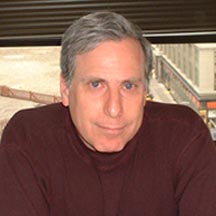 Bruce Bueno De Mesquita合作论文数Department of Politics, Ares & Science, New York University2A. M. Weisberger合作论文数2
 Dan M Spengler合作论文数2
 Miriam Fendius Elman合作论文数2
 Brandon Valeriano合作论文数University of Illinois at Chicago2
 Bruce Russett合作论文数Department of Political Science, Yale University2Meredith Reid Sarkees合作论文数1T Webster合作论文数1CS GOCHMAN合作论文数1Matthew DiLorenzo合作论文数Old Dominion Univ1Richard J. Stoll合作论文数1Patrick M.A. James合作论文数John H. Daniels Faculty of Architecture, Landscape, and Design, University of Toronto1
 Paul R. Hensel合作论文数Department of Political Science, College of Liberal Arts & Social Sciences, University of North Texas1Andrew Moravcsik合作论文数Center for European Studies Busch Hall1
 Claire Metelits合作论文数1
 Douglas M. Gibler合作论文数Department of Political Science, Institute for Social Science Research, University of Alabama1
 Nils Petter Gleditsch合作论文数Peace Research Institute Oslo;Department of Sociology and Political Science, Faculty of Social and Educational Sciences, Norwegian University of Science and Technology1Glenn Palmer合作论文数1
 T. Clifton Morgan合作论文数Department of Political Science, Rice University1Charles Gochman合作论文数1
 Allan Dafoe合作论文数Google DeepMind;Centre for the Governance of AI1
 John R. Oneal合作论文数Department of Political Science, College of Arts & Sciences, The University of Alabama1J. David Singer合作论文数1
 Paul F. Diehl合作论文数university of illinois at urbana champaign1
 James D. Morrow合作论文数Center for Political Studies, University of Michigan1
 Paul Diehl合作论文数Department of Global Studies, College of Liberal Arts and Sciences, University of Illinois at Urbana-Champaign1
 Havard Strand合作论文数University of Oslo;Centre for the Study of Civil War;International Peace Research Institute;International Peace Research Institute, University of Oslo1Ayse Vural合作论文数1Alan W. Cafruny合作论文数1Tony S Keller合作论文数1
 Brett V. Benson合作论文数1
 Daniel S Geller合作论文数1Thomas C. Walker合作论文数1
 Gary King合作论文数Institute for Quantitative Social Science, Harvard University;Department of Government, Faculty of Arts and Sciences, Harvard University1
 William Roberts Clark合作论文数University of Michigan1
 Patrick Regan合作论文数University of Notre Dame1




