The determination of the direction of a stellar core collapse via its neutrino emission is crucial for the identification of the progenitor for a multimessenger follow-up. A highly effective method of reconstructing supernova directions within the Deep Underground Neutrino Experiment (DUNE) is introduced. The supernova neutrino pointing resolution is studied by simulating and reconstructing electron-neutrino charged-current absorption on Ar-40 and elastic scattering of neutrinos on electrons. Procedures to reconstruct individual interactions, including a newly developed technique called "brems flipping," as well as the burst direction from an ensemble of interactions are described. Performance of the burst direction reconstruction is evaluated for supernovae happening at a distance of 10 kpc for a specific supernova burst flux model. The pointing resolution is found to be 3.4 degrees at 68% coverage for a perfect interaction-channel classification and a fiducial mass of 40 kton, and 6.6 degrees for a 10 kton fiducial mass respectively. Assuming a 4% rate of charged-current interactions being misidentified as elastic scattering, DUNE's burst pointing resolution is found to be 4.3 degrees (8.7 degrees) at 68% coverage.
This paper introduces a novel track-length extension fitting algorithm for measuring the kinetic energies of inelastically interacting particles in liquid argon time projection chambers (LArTPCs). The algorithm finds the most probable offset in track length for a track-like object by comparing the measured ionization density as a function of position with a theoretical prediction of the energy loss as a function of the energy, including models of electron recombination and detector response. The algorithm can be used to measure the energies of particles that interact before they stop, such as charged pions that are absorbed by argon nuclei. The algorithm's energy measurement resolutions and fractional biases are presented as functions of particle kinetic energy and number of track hits using samples of stopping secondary charged pions in data collected by the ProtoDUNE-SP detector, and also in a detailed simulation. Additional studies describe the impact of the dE/dx model on energy measurement performance. The method described in this paper to characterize the energy measurement performance can be repeated in any LArTPC experiment using stopping secondary charged pions.
The Module-0 Demonstrator is a single-phase 600 kg liquid argon time projection chamber operated as a prototype for the DUNE liquid argon near detector. Based on the ArgonCube design concept, Module-0 features a novel 80k-channel pixelated charge readout and advanced high-coverage photon detection system. In this paper, we present an analysis of an eight-day data set consisting of 25 million cosmic ray events collected in the spring of 2021. We use this sample to demonstrate the imaging performance of the charge and light readout systems as well as the signal correlations between the two. We also report argon purity and detector uniformity measurements, and provide comparisons to detector simulations.
ProtoDUNE Single-Phase (ProtoDUNE-SP) is a 770-ton liquid argon time projection chamber that operated in a hadron test beam at the CERN Neutrino Platform in 2018. We present a measurement of the total inelastic cross section of charged kaons on argon as a function of kaon energy using 6 and 7 GeV/$c$ beam momentum settings. The flux-weighted average of the extracted inelastic cross section at each beam momentum setting was measured to be 380$\pm$26 mbarns for the 6 GeV/$c$ setting and 379$\pm$35 mbarns for the 7 GeV/$c$ setting.
Located 2 km underground in SNOLAB, Sudbury, Canada, SNO+ is a large scale liquid scintillator experiment that primarily aims to search for neutrinoless double beta decay. Whilst SNO+ has light and radioactive calibration sources external to the inner volume, an internally deployed optical source is necessary for the full characterization of the detector model. A laser diffuser ball developed for SNO has previously demonstrated to be an effective optical calibration device for both SNO and SNO+ water phase. Since the introduction of liquid scintillator for SNO+, the material compatibility, cleanliness, and radiopurity requirements of any materials in contact with the internal medium have increased. Improving on the original SNO laserball design, a new laserball calibration device has been developed for the SNO+ scintillator phase with the goal of measuring the optical properties of the detector and performing routine PMT gain and timing calibrations. Simulations have been written to model the diffusion properties to optimise optical and temporal performance for calibration. Prototype laserballs have been built and characterised, demonstrating sub-ns timing resolution and a quasi-isotropic light distribution
DUNE is an international experiment dedicated to addressing some of the questions at the forefront of particle physics and astrophysics, including the mystifying preponderance of matter over antimatter in the early universe. The dual-site experiment will employ an intense neutrino beam focused on a near and a far detector as it aims to determine the neutrino mass hierarchy and to make high-precision measurements of the PMNS matrix parameters, including the CP-violating phase. It will also stand ready to observe supernova neutrino bursts, and seeks to observe nucleon decay as a signature of a grand unified theory underlying the standard model. The DUNE far detector implements liquid argon time-projection chamber (LArTPC) technology, and combines the many tens-of-kiloton fiducial mass necessary for rare event searches with the sub-centimeter spatial resolution required to image those events with high precision. The addition of a photon detection system enhances physics capabilities for all DUNE physics drivers and opens prospects for further physics explorations. Given its size, the far detector will be implemented as a set of modules, with LArTPC designs that differ from one another as newer technologies arise. In the vertical drift LArTPC design, a horizontal cathode bisects the detector, creating two stacked drift volumes in which ionization charges drift towards anodes at either the top or bottom. The anodes are composed of perforated PCB layers with conductive strips, enabling reconstruction in 3D. Light-trap-style photon detection modules are placed both on the cryostat's side walls and on the central cathode where they are optically powered. This Technical Design Report describes in detail the technical implementations of each subsystem of this LArTPC that, together with the other far detector modules and the near detector, will enable DUNE to achieve its physics goals.
The international collaboration designing and constructing the Deep Underground Neutrino Experiment (DUNE) at the Long-Baseline Neutrino Facility (LBNF) has developed a two-phase strategy toward the implementation of this leading-edge, large-scale science project. The 2023 report of the US Particle Physics Project Prioritization Panel (P5) reaffirmed this vision and strongly endorsed DUNE Phase I and Phase II, as did the European Strategy for Particle Physics. While the construction of the DUNE Phase I is well underway, this White Paper focuses on DUNE Phase II planning. DUNE Phase-II consists of a third and fourth far detector (FD) module, an upgraded near detector complex, and an enhanced 2.1 MW beam. The fourth FD module is conceived as a "Module of Opportunity", aimed at expanding the physics opportunities, in addition to supporting the core DUNE science program, with more advanced technologies. This document highlights the increased science opportunities offered by the DUNE Phase II near and far detectors, including long-baseline neutrino oscillation physics, neutrino astrophysics, and physics beyond the standard model. It describes the DUNE Phase II near and far detector technologies and detector design concepts that are currently under consideration. A summary of key R&D goals and prototyping phases needed to realize the Phase II detector technical designs is also provided. DUNE's Phase II detectors, along with the increased beam power, will complete the full scope of DUNE, enabling a multi-decadal program of groundbreaking science with neutrinos.
Doping of liquid argon TPCs (LArTPCs) with a small concentration of xenon is a technique for light-shifting and facilitates the detection of the liquid argon scintillation light. In this paper, we present the results of the first doping test ever performed in a kiloton-scale LArTPC. From February to May 2020, we carried out this special run in the single-phase DUNE Far Detector prototype (ProtoDUNE-SP) at CERN, featuring 720 t of total liquid argon mass with 410 t of fiducial mass. A 5.4 ppm nitrogen contamination was present during the xenon doping campaign. The goal of the run was to measure the light and charge response of the detector to the addition of xenon, up to a concentration of 18.8 ppm. The main purpose was to test the possibility for reduction of non-uniformities in light collection, caused by deployment of photon detectors only within the anode planes. Light collection was analysed as a function of the xenon concentration, by using the pre-existing photon detection system (PDS) of ProtoDUNE-SP and an additional smaller set-up installed specifically for this run. In this paper we first summarize our current understanding of the argon-xenon energy transfer process and the impact of the presence of nitrogen in argon with and without xenon dopant. We then describe the key elements of ProtoDUNE-SP and the injection method deployed. Two dedicated photon detectors were able to collect the light produced by xenon and the total light. The ratio of these components was measured to be about 0.65 as 18.8 ppm of xenon were injected. We performed studies of the collection efficiency as a function of the distance between tracks and light detectors, demonstrating enhanced uniformity of response for the anode-mounted PDS. We also show that xenon doping can substantially recover light losses due to contamination of the liquid argon by nitrogen.
The rapid development of general-purpose computing on graphics processing units (GPGPU) is allowing the implementation of highly-parallelized Monte Carlo simulation chains for particle physics experiments. This technique is particularly suitable for the simulation of a pixelated charge readout for time projection chambers, given the large number of channels that this technology employs. Here we present the first implementation of a full microphysical simulator of a liquid argon time projection chamber (LArTPC) equipped with light readout and pixelated charge readout, developed for the DUNE Near Detector. The software is implemented with an end-to-end set of GPU-optimized algorithms. The algorithms have been written in Python and translated into CUDA kernels using Numba, a just-in-time compiler for a subset of Python and NumPy instructions. The GPU implementation achieves a speed up of four orders of magnitude compared with the equivalent CPU version. The simulation of the current induced on 10^3 pixels takes around 1 ms on the GPU, compared with approximately 10 s on the CPU. The results of the simulation are compared against data from a pixel-readout LArTPC prototype.
Measurements of electrons from $\nu_e$ interactions are crucial for the Deep Underground Neutrino Experiment (DUNE) neutrino oscillation program, as well as searches for physics beyond the standard model, supernova neutrino detection, and solar neutrino measurements. This article describes the selection and reconstruction of low-energy (Michel) electrons in the ProtoDUNE-SP detector. ProtoDUNE-SP is one of the prototypes for the DUNE far detector, built and operated at CERN as a charged particle test beam experiment. A sample of low-energy electrons produced by the decay of cosmic muons is selected with a purity of 95%. This sample is used to calibrate the low-energy electron energy scale with two techniques. An electron energy calibration based on a cosmic ray muon sample uses calibration constants derived from measured and simulated cosmic ray muon events. Another calibration technique makes use of the theoretically well-understood Michel electron energy spectrum to convert reconstructed charge to electron energy. In addition, the effects of detector response to low-energy electron energy scale and its resolution including readout electronics threshold effects are quantified. Finally, the relation between the theoretical and reconstructed low-energy electron energy spectrum is derived and the energy resolution is characterized. The low-energy electron selection presented here accounts for about 75% of the total electron deposited energy. After the addition of lost energy using a Monte Carlo simulation, the energy resolution improves from about 40% to 25% at 50~MeV. These results are used to validate the expected capabilities of the DUNE far detector to reconstruct low-energy electrons.
We report the first measurement of $\pi^0$ production in neutral current (NC) interactions on argon with average neutrino energy of $\lesssim1$~GeV. We use data from the MicroBooNE detector's 85-tonne active volume liquid argon time projection chamber situated in Fermilab's Booster Neutrino Beam and exposed to $5.89\times10^{20}$ protons on target for this measurement. Measurements of NC $\pi^0$ events are reported for two exclusive event topologies without charged pions. Those include a topology with two photons from the decay of the $\pi^0$ and one proton and a topology with two photons and zero protons. Flux-averaged cross-sections for each exclusive topology and for their semi-inclusive combination are extracted (efficiency-correcting for two-plus proton final states), and the results are compared to predictions from the \textsc{genie}, \textsc{neut}, and \textsc{NuWro} neutrino event generators. We measure cross sections of $1.243\pm0.185$ (syst) $\pm0.076$ (stat), $0.444\pm0.098\pm0.047$, and $0.624\pm0.131\pm0.075$ $[10^{-38}\textrm{cm}^2/\textrm{Ar}]$ for the semi-inclusive NC$\pi^0$, exclusive NC$\pi^0$+1p, and exclusive NC$\pi^0$+0p processes, respectively.
A primary goal of the upcoming Deep Underground Neutrino Experiment (DUNE) is to measure the $\mathcal{O}(10)$ MeV neutrinos produced by a Galactic core-collapse supernova if one should occur during the lifetime of the experiment. The liquid-argon-based detectors planned for DUNE are expected to be uniquely sensitive to the $\nu_e$ component of the supernova flux, enabling a wide variety of physics and astrophysics measurements. A key requirement for a correct interpretation of these measurements is a good understanding of the energy-dependent total cross section $\sigma(E_\nu)$ for charged-current $\nu_e$ absorption on argon. In the context of a simulated extraction of supernova $\nu_e$ spectral parameters from a toy analysis, we investigate the impact of $\sigma(E_\nu)$ modeling uncertainties on DUNE's supernova neutrino physics sensitivity for the first time. We find that the currently large theoretical uncertainties on $\sigma(E_\nu)$ must be substantially reduced before the $\nu_e$ flux parameters can be extracted reliably: in the absence of external constraints, a measurement of the integrated neutrino luminosity with less than 10\% bias with DUNE requires $\sigma(E_\nu)$ to be known to about 5%. The neutrino spectral shape parameters can be known to better than 10% for a 20% uncertainty on the cross-section scale, although they will be sensitive to uncertainties on the shape of $\sigma(E_\nu)$. A direct measurement of low-energy $\nu_e$-argon scattering would be invaluable for improving the theoretical precision to the needed level.
Using neutrinos produced at the Spallation Neutron Source (SNS) at Oak Ridge National Laboratory (ORNL), the COHERENT collaboration has studied the $\mathrm{Pb}({\ensuremath{\nu}}_{e},\mathrm{X}n)$ process with a lead neutrino-induced-neutron (NIN) detector. Data from this detector are fit jointly with previously collected COHERENT data on this process. A combined analysis of the two datasets yields a cross section that is ${0.29}_{\ensuremath{-}0.16}^{+0.17}$ times that predicted by the MARLEY event generator using experimentally-measured Gamow-Teller strength distributions, consistent with no NIN events at $1.8\ensuremath{\sigma}$. This is the first inelastic neutrino-nucleus process COHERENT has studied, among several planned exploiting the high flux of low-energy neutrinos produced at the SNS.
The Pandora Software Development Kit and algorithm libraries provide pattern-recognition logic essential to the reconstruction of particle interactions in liquid argon time projection chamber detectors. Pandora is the primary event reconstruction software used at ProtoDUNE-SP, a prototype for the Deep Underground Neutrino Experiment far detector. ProtoDUNE-SP, located at CERN, is exposed to a charged-particle test beam. This paper gives an overview of the Pandora reconstruction algorithms and how they have been tailored for use at ProtoDUNE-SP. In complex events with numerous cosmic-ray and beam background particles, the simulated reconstruction and identification efficiency for triggered test-beam particles is above 80% for the majority of particle type and beam momentum combinations. Specifically, simulated 1 GeV/$c$ charged pions and protons are correctly reconstructed and identified with efficiencies of 86.1$\pm0.6$% and 84.1$\pm0.6$%, respectively. The efficiencies measured for test-beam data are shown to be within 5% of those predicted by the simulation.
The MicroBooNE liquid argon time projection chamber (LArTPC) maintains a high level of liquid argon purity through the use of a filtration system that removes electronegative contaminants in continuously-circulated liquid, recondensed boil off, and externally supplied argon gas. We use the MicroBooNE LArTPC to reconstruct MeV-scale radiological decays. Using this technique we measure the liquid argon filtration system's efficacy at removing radon. This is studied by placing a 500 kBq 222 Rn source upstream of the filters and searching for a time-dependent increase in the number of radiological decays in the LArTPC. In the context of two models for radon mitigation via a liquid argon filtration system, a slowing mechanism and a trapping mechanism, MicroBooNE data supports a radon reduction factor of greater than 97% or 99.999%, respectively. Furthermore, a radiological survey of the filters found that the copper-based filter material was the primary medium that removed the 222 Rn. This is the first observation of radon mitigation in liquid argon with a large-scale copper-based filter and could offer a radon mitigation solution for future large LArTPCs.
We report results from a search for neutrino-induced neutral current (NC) resonant Δ(1232) baryon production followed by Δ radiative decay, with a ⟨0.8⟩ GeV neutrino beam. Data corresponding to MicroBooNE's first three years of operations (6.80×10^{20} protons on target) are used to select single-photon events with one or zero protons and without charged leptons in the final state (1γ1p and 1γ0p, respectively). The background is constrained via an in situ high-purity measurement of NC π^{0} events, made possible via dedicated 2γ1p and 2γ0p selections. A total of 16 and 153 events are observed for the 1γ1p and 1γ0p selections, respectively, compared to a constrained background prediction of 20.5±3.65(syst) and 145.1±13.8(syst) events. The data lead to a bound on an anomalous enhancement of the normalization of NC Δ radiative decay of less than 2.3 times the predicted nominal rate for this process at the 90% confidence level (C.L.). The measurement disfavors a candidate photon interpretation of the MiniBooNE low-energy excess as a factor of 3.18 times the nominal NC Δ radiative decay rate at the 94.8% C.L., in favor of the nominal prediction, and represents a greater than 50-fold improvement over the world's best limit on single-photon production in NC interactions in the sub-GeV neutrino energy range.
In this article, we describe a modified implementation of Mask Region-based Convolutional Neural Networks (Mask-RCNN) for cosmic ray muon clustering in a liquid argon TPC and applied to MicroBooNE neutrino data. Our implementation of this network, called sMask-RCNN, uses sparse submanifold convolutions to increase processing speed on sparse datasets, and is compared to the original dense version in several metrics. The networks are trained to use wire readout images from the MicroBooNE liquid argon time projection chamber as input and produce individually labeled particle interactions within the image. These outputs are identified as either cosmic ray muon or electron neutrino interactions. We find that sMask-RCNN has an average pixel clustering efficiency of 85.9% compared to the dense network's average pixel clustering efficiency of 89.1%. We demonstrate the ability of sMask-RCNN used in conjunction with MicroBooNE's state-of-the-art Wire-Cell cosmic tagger to veto events containing only cosmic ray muons. The addition of sMask-RCNN to the Wire-Cell cosmic tagger removes 70% of the remaining cosmic ray muon background events at the same electron neutrino event signal efficiency. This event veto can provide 99.7% rejection of cosmic ray-only background events while maintaining an electron neutrino event-level signal efficiency of 80.1%. In addition to cosmic ray muon identification, sMask-RCNN could be used to extract features and identify different particle interaction types in other 3D-tracking detectors.
This article presents a measurement of $\nu_e$ interactions without pions in the final state using the MicroBooNE experiment and an investigation into the excess of low-energy electromagnetic events observed by the MiniBooNE collaboration. The measurement is performed in exclusive channels with (1$e$N$p$0$\pi$) and without (1$e$0$p$0$\pi$) visible final-state protons using 6.86$\times 10^{20}$ protons on target of data collected from the Booster Neutrino Beam at Fermilab. Events are reconstructed with the Pandora pattern recognition toolkit and selected using additional topological information from the MicroBooNE liquid argon time projection chamber. Using a goodness-of-fit test the data are found to be consistent with the predicted number of events with nominal flux and interaction models with a $p$-value of 0.098 in the two channels combined. A model based on the low-energy excess observed in MiniBooNE is introduced to quantify the strength of a possible $\nu_e$ excess. The analysis suggests that if an excess is present, it is not consistent with a simple scaling of the $\nu_e$ contribution to the flux. Combined, the 1$e$N$p$0$\pi$ and 1$e$0$p$0$\pi$ channels do not give a conclusive indication about the tested model, but separately they both disfavor the low-energy excess model at $>$90% CL. The observation in the most sensitive 1$e$N$p$0$\pi$ channel is below the prediction and consistent with no excess. In the less sensitive 1$e$0$p$0$\pi$ channel the observation at low energy is above the prediction, while overall there is agreement over the full energy spectrum.
We present a measurement of the $\nu_e$-interaction rate in the MicroBooNE detector that addresses the observed MiniBooNE anomalous low-energy excess (LEE). The approach taken isolates neutrino interactions consistent with the kinematics of charged-current quasi-elastic (CCQE) events. The topology of such signal events has a final state with 1 electron, 1 proton, and 0 mesons ($1e1p$). Multiple novel techniques are employed to identify a $1e1p$ final state, including particle identification that use two methods of deep-learning-based image identification, and event isolation using a boosted decision-tree ensemble trained to recognize two-body scattering kinematics. This analysis selects 25 $\nu_e$-candidate events in the reconstructed neutrino energy range of 200--1200\,MeV, while $29.0 \pm 1.9_\text{(sys)} \pm 5.4_\text{(stat)}$ are predicted when using $\nu_\mu$ CCQE interactions as a constraint. We use a simplified model to translate the MiniBooNE LEE observation into a prediction for a $\nu_e$ signal in MicroBooNE. A $\Delta \chi^2$ test statistic, based on the combined Neyman--Pearson $\chi^2$ formalism, is used to define frequentist confidence intervals for the LEE signal strength. Using this technique, in the case of no LEE signal, we expect this analysis to exclude a normalization factor of 0.75 (0.98) times the median MiniBooNE LEE signal strength at 90\% ($2\sigma$) confidence level, while the MicroBooNE data yield an exclusion of 0.25 (0.38) times the median MiniBooNE LEE signal strength at 90\% ($2\sigma$) confidence
The Deep Underground Neutrino Experiment (DUNE) is a next-generation long-baseline neutrino oscillation experiment with a primary physics goal of observing neutrino and antineutrino oscillation patterns to precisely measure the parameters governing long-baseline neutrino oscillation in a single experiment, and to test the three-flavor paradigm. DUNE's design has been developed by a large, international collaboration of scientists and engineers to have unique capability to measure neutrino oscillation as a function of energy in a broadband beam, to resolve degeneracy among oscillation parameters, and to control systematic uncertainty using the exquisite imaging capability of massive LArTPC far detector modules and an argon-based near detector. DUNE's neutrino oscillation measurements will unambiguously resolve the neutrino mass ordering and provide the sensitivity to discover CP violation in neutrinos for a wide range of possible values of $\delta_{CP}$. DUNE is also uniquely sensitive to electron neutrinos from a galactic supernova burst, and to a broad range of physics beyond the Standard Model (BSM), including nucleon decays. DUNE is anticipated to begin collecting physics data with Phase I, an initial experiment configuration consisting of two far detector modules and a minimal suite of near detector components, with a 1.2 MW proton beam. To realize its extensive, world-leading physics potential requires the full scope of DUNE be completed in Phase II. The three Phase II upgrades are all necessary to achieve DUNE's physics goals: (1) addition of far detector modules three and four for a total FD fiducial mass of at least 40 kt, (2) upgrade of the proton beam power from 1.2 MW to 2.4 MW, and (3) replacement of the near detector's temporary muon spectrometer with a magnetized, high-pressure gaseous argon TPC and calorimeter.
 I. Kreslo合作论文数92
 A. Ereditato合作论文数Yale University91
 J. Asaadi合作论文数87v paolone合作论文数82
 Xuewu Qian (钱鑫)合作论文数Brookhaven Natl Lab82
 Camillo Mariani合作论文数Univ Manchester82
 Ornella Palamara合作论文数81R. Guenette合作论文数81M. Mooney合作论文数81D. Naples合作论文数81Z. Pavlovic合作论文数81A. Schukraft合作论文数81Rochester L.合作论文数80Wesley Ketchum合作论文数80J. L. Raaf合作论文数University of Cincinnati80
 Giles Barr合作论文数Department of Physics, University of Oxford80J. Nowak合作论文数80S. Gollapinni合作论文数79M. Soderberg合作论文数Yale University79
 Flavio Cavanna合作论文数Dipartimento di Fisica e INFN, Università dell'Aquila79M. H. Kirby合作论文数79T. Usher合作论文数78D. A. Martinez Caicedo合作论文数78
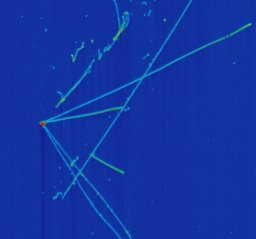 D. Caratelli合作论文数78k terao合作论文数78B. R. Littlejohn合作论文数78
 Y. -T. Tsai合作论文数Natl Accelerator Lab, SLAC78T. Strauss合作论文数78
 A. Rafique合作论文数Argonne Natl Lab78
 Joshua Spitz合作论文数Physics, College of Literature, Science, and the Arts, University of Michigan-Ann Arbor78Toups Matthew H合作论文数78
 Andrzej Szelc合作论文数School of Physics and Astronomy, College of Science and Engineering, University of Edinburgh78T. Bolton合作论文数78
 Brett Viren合作论文数77A. P. Furmanski合作论文数77
 William C. Louis合作论文数Physics Division, Los Alamos National Laboratory77S. Balasubramanian合作论文数77
 T. Wongjirad合作论文数Department of Physics and Astronomy, Tufts University77M. H. Shaevitz合作论文数76
 Mary Convery合作论文数Fermi National Accelerator Laboratory76
 G. Horton-Smith合作论文数Stanford Linear Accelerator Center, Stanford University76J. Zennamo合作论文数75Andrew Mastbaum合作论文数75J. Mousseau合作论文数74
 Janet M. Conrad合作论文数Department of Physics, Massachusetts Institute of Technology;Laboratory for Nuclear Science, Massachusetts Institute of Technology;Plasma Science and Fusion Center, Massachusetts Institute of Technology74P. Guzowski合作论文数73J. S. Marshall合作论文数73D. García Gámez合作论文数71
 Giuseppe Cerati合作论文数Fermi National Accelerator Laboratory, U.S. Department of Energy71




