Advancing research methodologies grounded in critical theories and fostering scientific knowledge conscious of racism require thoughtfulness, integrity, rigor, and an unwavering commitment to racial justice. It demands that we, as researchers, pause and reflect-that we consider the multitude of ways that our racial socialization, biases, and all levels of racism (e.g., systemic, interpersonal, internalized) influence the entire research process. This article advocates for qualitative researchers to take a deliberate pause and engage in thoughtful reflection about racism, racial identity, power, and bias, as well as the importance and ethics of questioning methodologies to help prevent the creation of racially oppressive scholarship. To achieve this goal, we present the racism-conscious reflexivity in research (RCR) framework, which invites researchers to actively pay attention to how (a) racial identity schemas, (b) racialized cognitive and emotional biases, (c) information processing strategies, and (d) social interactions between and among research team members shape all aspects of a research study. The RCR framework also considers how these four areas influence how researchers respond to and think about racism, its influence on people's experiences, and its operations in research methodologies. Coding scenarios are used to illustrate the application of the RCR framework in the analysis and interpretation process of qualitative research. Methodological guidance is provided.
In the inaugural speech for the Society of Counseling Psychology’s Janet E. Helms Racial Justice Award, the author thanked the multiple parties responsible for establishing the award in recognition of her efforts toward promoting racial justice and for providing impetus for future generations to carry forth the mission of racial justice in the various domains that define counseling psychology. In addition, she contended that the march toward racial justice has been obscured by multicultural pluralism that denies the effects of racism on everyone regardless of culture or other isms. As a consequence, counselors’ skills are often inadequate for addressing systemic policies intended to neutralize racial justice efforts. The author proposes some crude racial justice guidelines for counselors to encourage them to mitigate the confusion that now exists with respect to racism, racial justice, and culture in our profession and society at large.
Over 30 years ago, counseling psychology researchers began to identify the harmful effects of racially and culturally unresponsive supervision from the perspectives of supervisees. Missing from the literature, however, is empirical evidence from the perspectives of supervisors. Moreover, research has failed to explore the influence of context (e.g., mental health sites) on supervision that addresses race and culture. The present study explores supervisors' perspectives and experiences as they pertain to the racial climates of mental health work environments and the influences of their institutional racial climates on their supervision practices. Interviews with 8 psychologists, who identified as Black (n = 4) or White (n = 4), were analyzed using directed content analysis guided by the racial identity social interaction model. Core domains and themes from the analysis revealed connections between the supervisors' perceptions of the racial climate of their institutions and the challenges of supervising on race and culture. Findings from the study highlight the ways that supervisors in mental health settings attempt to protect their supervisees in environments in which they themselves feel unprotected. Limitations and implications of the study for supervision theory. research, and practice are discussed.
The authors evaluate Dialogues on Race, an interracial group intervention in which undergraduate student facilitators led conversations about race with their peers. The evaluation process is described, including developing collaborative relationships, identifying program goals, selecting measures, and analyzing and presenting results. The authors discuss lessons learned about evaluating an interracial dialogue intervention that did not originally include researchers in the hope that this examination will encourage others to evaluate similar campus interventions.Diálogos sobre Raza es una intervención de grupo interracial en la que estudiantes universitarios moderaron conversaciones sobre raza con sus compañeros. Se describe el proceso de evaluación, incluyendo el desarrollo de relaciones de colaboración, la identificación de objetivos del programa, la selección de medidas, y el análisis y presentación de los resultados. Los autores discuten las lecciones aprendidas sobre la evaluación de una intervención interracial dialogada que en principio no incluyó a investigadores con la esperanza de que este examen animará a otros a evaluar intervenciones similares en sus campus.
Counseling programs across the country are increasingly incorporating social justice advocacy training into their curricula. However, much remains to be learned about the developmental processes by which students develop advocacy skills and apply those skills after they graduate. To address these questions and drive further innovation in the field of advocacy training, we conducted an evaluation of the Community Advocacy Project, a yearlong microlevel advocacy training model that teaches mental health counseling master's students to use relationship-centered advocacy with individuals in marginalized communities. We interviewed 19 counselors within 2.5 years of their graduation from the project about their experiences of the program and their current advocacy work. Using qualitative description, we developed a model describing processes of Internal Grappling, Building the Advocacy Relationship, and Integrating the Advocate Identity that highlights the importance of a yearlong one-on-one advocacy relationship, intensive reflection and supervision, and community collaboration.
In a series of four articles, the authors described the experiences of White researchers, teachers, and practitioners in addressing multicultural issues, which sometimes included racism. Yet, the authors focused very little attention on the benefits of their internalized Whiteness as impediments to fulfilling their scholarly and professional goals. Moreover, the authors did not use any theoretical formulation to guide their examination of White multicultural experts who seek to intervene in contentious topic areas. In this reaction, I suggest that the authors use White racial identity theory to examine some of the racial dynamics that they encounter and to deconstruct Whiteness as it occurs in the types of situations that they described. Examples illustrate the implicitness of White identity theory in virtually all of the articles. In addition, while acknowledging that White people are the ultimate authorities on Whiteness, the author proposes some initial ideas for how White allies might begin to deconstruct Whiteness.
Background Social justice orientation (SJO) is the motivation to promote justice and equity among all in society. Researchers argue that students of Color with high SJO can resist structural racism in their schools/society and have positive academic outcomes. Purpose In the present study, a longitudinal model of cultural and environmental predictors (i.e., school relational climate, school language climate, Spanish language background, and English proficiency) and civic/educational outcomes (i.e., community engagement, grades, school engagement, school dropout) of SJO among Latina/o youths was developed and tested. Participants The study was conducted with a subsample of Latinas/os taken from the National Education Longitudinal Study of 1988. Participants were enrolled in eighth grade (N = 1,472), sampled from different schools and regions in the U.S., and followed through three waves of data collection from 8th through 12th grade. Research Design A longitudinal, correlational design was used to explore the association among the constructs studied. Data Collection and Analysis Secondary data analyses were conducted. Structural equation modeling techniques were used to analyze the data. Results Early school relational climate (8th grade) was a positive predictor of SJO, which in turn predicted more community and school engagement, higher grades, and decreased likelihood of dropping out of school (12th grade) via personal agency. In addition, school language climate and language skills predicted a greater sense of personal agency, which in turn predicted higher grades and a decreased likelihood of dropping out. Conclusions The results of the present study underscore the importance of strengths-based and cultural approaches in education in a sample of Latina/o students. Specifically, close attention should be paid to school cultural climate variables in which positive relational climates and cultural language climates are addressed in schools. The integration of sociopolitical context, critical consciousness, and SJO may be key factors in improving the educational and counseling experiences of Latina/o youths.
Discrimination is related to depression and poor self-esteem among Black men. Poorer self-esteem is also associated with depression. However, there is limited research identifying how self-esteem may mediate the associations between discrimination and depressive symptoms for disparate ethnic groups of Black men. The purpose of this study was to examine ethnic groups as a moderator of the mediating effects of self-esteem on the relationship between discrimination and depressive symptoms among a nationally representative sample of African American (n = 1201) and Afro-Caribbean American men (n = 545) in the National Survey of American Life. Due to cultural socialization differences, we hypothesized that self-esteem would mediate the associations between discrimination and depressive symptoms only for African American men, but not Afro-Caribbean American men. Moderated-mediation regression analyses indicated that the conditional indirect effects of discrimination on depressive symptoms through self-esteem were significant for African American men, but not for Afro-Caribbean men. Our results highlight important ethnic differences among Black men.
As part of celebrating 25 years of the Janet E. Helms Mentoring Award for Mentoring and Scholarship in Professional Psychology at the annual Winter Roundtable on Cultural Psychology and Education, the first and the 25th recipients were interviewed, including Janet E. Helms, for whom the award was named, and Lillian Comas-Díaz, the 2015 recipient. Both women have been highly influential scholars, teachers, and mentors in the field of psychology, particularly regarding racial–cultural and social justice issues. During our interview, we covered a number of themes: mentoring as a lifeline, mentoring and social justice activism, mentoring in the digital age, and words of wisdom for new mentors.
Measurement yields perhaps the most critical evidence influencing whether culturally adapted evidence- based practice (EBP) and empirically supported treatments (EST) are deemed more effective for African Americans, Latino/a Americans, Asian/Pacific Islander Americans, Native Americans, and related immigrant groups than standard treatments, as well as for determining the validity of results of surveys of health conditions in nondominant populations internationally. However, little attention has been given to measuring the effects of race and ethnic culture, as experiential constructs rather than sociodemographic categories, on diagnosis, the treatment process, and outcomes. Three meta-analyses of culturally adapted treatments and three studies cited in them were analyzed to determine the ways in which researchers incorporated measurement of racial and ethnic cultural dynamics as explicit factors in any phase of their interventions. The analysis revealed that researchers did not report adapting standard measures to address cultural influences, nor did they define symptoms from participants' cultural or racial experiences. The author concludes that although there are criteria for judging good research designs, which may or not be feasible for research on nondominant racial and ethnic groups, there are no paradigms for developing measures or for interpreting existing measures to incorporate ethnicity and racialized experiences. Some principles from cross-cultural assessment research (i.e., functional, conceptual, metric, and linguistic equivalence) are adapted to suggest how measures for investigating the effectiveness of culturally adapted interventions for nondominant ethnic and racialized groups might be developed and/or used more appropriately throughout the course of the intervention.
 Carlton Everett Green合作论文数9
 Maryam M. Jernigan合作论文数9
 Kevin T. Henze合作论文数7
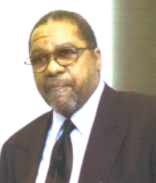 Robert T Carter合作论文数Teachers College, Columbia University7
 Terry L. Sass合作论文数4
 Ethan H. Mereish合作论文数Dept Hlth Studies, Amer Univ4Jackquelyn Mascher合作论文数4
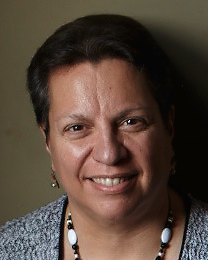 Marie L Miville合作论文数Teachers College, Columbia University3
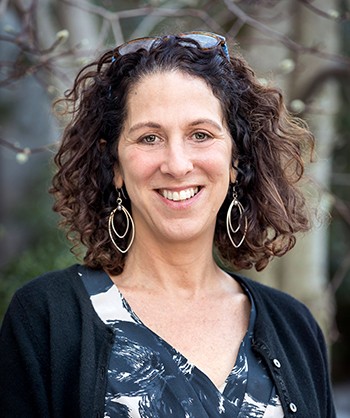 Lisa A. Goodman合作论文数Department of Counseling, Developmental, and Educational Psychology, Carolyn A. and Peter S. Lynch School of Education and Human Development, Boston College3
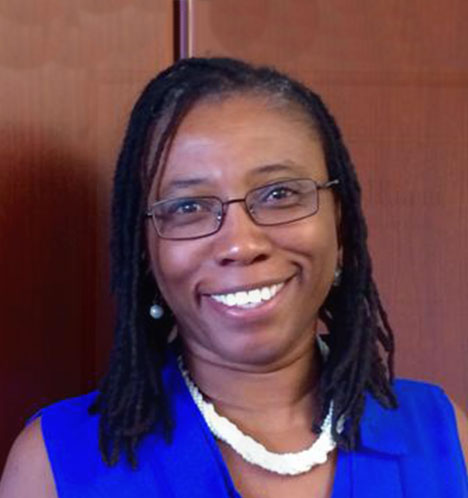 Nicolas Guerda合作论文数University of Miami3
 Clara Hill合作论文数Department of Psychology, College of Behavioral & Social Sciences, University of Maryland3Leyla Perez-Gualdron合作论文数3Justin C. Perry合作论文数Cleveland State University3marcia m liu合作论文数2Christian Cho合作论文数2Weintraub Sarah R合作论文数2Therese C Mihlbauer合作论文数2S. B. Spiegel合作论文数2
 Angela M. Desilva合作论文数2H.-P. Schlake合作论文数2Victoria Tichenor合作论文数2Tina Q. Richardson合作论文数2
 Belle Liang合作论文数Michigan State University2
 Rachel E. Latta合作论文数2Kimberly M. Ashby合作论文数1
 Joerg-Christian Tonn合作论文数1Erin Forquer合作论文数1Kristen S. Vance合作论文数1
 Robert Behr合作论文数1michael t brown合作论文数1JA SIMONS合作论文数1Kiara Manosalvas合作论文数1elizabeth sparks合作论文数1Julia Medzhitova合作论文数1
 Olaf Michel合作论文数1Cynthia Chen合作论文数1Carlton Green合作论文数1Leyla G. Gualdron-Murhib合作论文数1Shraddha Sundaram合作论文数1
 Josh Manlove合作论文数Indiana Univ Purdue Univ1E Stennert合作论文数1
 Maggi Price合作论文数Harvard University1
 Myrna L. Friedlander合作论文数Department of Educational & Counseling Psychology, School of Education, University at Albany1
 Wampold Bruce E合作论文数University of Wisconsin1Charles J. Gelso合作论文数1Chen Cynthia E合作论文数1
 Autin Kelsey L合作论文数Dept Psychol, Univ Florida1
 Chavez-Dueñas Nayeli Y合作论文数The Chicago School of Professional Psychology1
 Adames Hector Y合作论文数The Chicago School of Professional Psychology1




