This workshop expands historical approaches in HCI and design research, with a particular focus on speculative design. We aim to bring together researchers with diverse orientations and practices to open discussions about historicism and how historical approaches and methods can be applied to critical and speculative design, fostering reflexivity in design practice. Through hands-on activities, we will explore various approaches drawn from the humanities, social sciences, and design studies. The workshop activity topic will revolve around three themes that we believe can be productive for historicizing speculative design: rupture and continuity, figure-ground reversal, and the present as past or future. To that end, we will synthesize insights to develop a research agenda that identifies key topics and possible directions for expanding historical approaches to speculative design and outline a set of design strategies that integrate these theoretical concepts into practice.
Fostering mindful relationships with nature is crucial for addressing the environmental crisis. Virtual Reality (VR) shows potential for ecological engagement, but its impact depends on how nature is framed and experienced. This paper explores copresence, the feeling of togetherness, as a design approach for cultivating reciprocal and attentive interactions with nonhuman entities. Drawing on expert interviews, we developed Eyes of the Wild, a VR wildlife experience. In a between-subjects study (n = 32), we examined how copresence, manipulated by enabling or disabling mutual awareness and behavioral responsiveness (e.g., animals responding to user presence), might support nature-connectedness. Surveys showed pre-post improvements across both conditions, with no significant differences between groups. However, qualitative findings revealed nuanced engagement patterns, including temporal-spatial dynamics, perceptual asymmetries, and the complexities of copresent interactions, which shaped participants' sense of trust and connection with nonhuman others. These insights underscore the potential and challenges of leveraging copresence for nature-centric VR.
In this research, we investigate the potential of enhanced interactivity in providing new possibilities for interactive narratives within Virtual Reality (VR). We introduce "Rekindle," a first-person narrative experience in VR. The narrative offers the interactor an embodied experience as a gay protagonist on a journey to reclaim lost memories, set against the backdrop of a dystopian future where a regime enforces stringent heteronormativity through the manipulation of memories. Central to this experience is the Memory Retrieval Mechanism, which empowers the interactor to explore and retrieve scattered memories. This activity reinforces immersion and the interactor’s connection within the narrative. By integrating coherent interactions grounded in narrative, "Rekindle" facilitates the creation of dramatic agency, thereby enhancing the narrative by making the story more compelling and consistent.
In this paper, we treat VR as a new writing space in the long tradition of inscription. Constructing Virtual Reality (VR) narratives can then be understood as a process of inscribing text in space, and consuming them as a process of “reading” the space. Our research objective is to explore the meaning-making process afforded by spatial narratives—to test whether VR facilitates traditional ways of weaving complex, multiple narrative strands and provides new opportunities for leveraging space. We argue that, as opposed to the linear space of a printed book, a VR narrative space is similar to the physical space of a museum and can be analyzed on three distinct levels: (1) the architecture of the space itself, (2) the collection, and (3) the individual artifacts. To provide a deeper context for designing VR narratives, we designed and implemented a testbed called RealityMedia to explore digital remediations of traditional narrative devices and the spatial, immersive, and interactive affordances of VR. We conducted task-based user study using a VR headset and follow-up qualitative interviews with 20 participants. Our results highlight how the three semantic levels (space, collection, and artifacts) can work together to constitute meaningful narrative experiences in VR.
Working or WERKing on a wearable technology project in a transdisciplinary group can be an effective way of learning new skills and collaboration techniques. This paper describes a case study of running a wearable technology group project within an undergraduate course entitled Wearable Technology and Society. The computational media students in the class collaborated with outside performance artists (drag queens and a street dancer) to create interactive performance garments. Design methods such as the use of boundary objects aided in communication of ideas and cooperation across disciplines and cultural barriers. The requirement that the interactive garment function appropriately in a real performance lent urgency and gravity to the experience, motivating cohesive and expedited problem solving in the transdisciplinary group. The use of these methods on a project with real world outcomes and consequences facilitated an authentic learning experience for the students involved.
How augmented reality and virtual reality are taking their places in contemporary media culture alongside film and television. This book positions augmented reality (AR) and virtual reality (VR) firmly in contemporary media culture. The authors view AR and VR not as the latest hyped technologies but as media—the latest in a series of what they term “reality media,” taking their place alongside film and television. Reality media inserts a layer of media between us and our perception of the world; AR and VR do not replace reality but refashion a reality for us. Each reality medium mediates and remediates; each offers a new representation that we implicitly compare to our experience of the world in itself but also through other media. The authors show that as forms of reality media emerge, they not only chart a future path for media culture, but also redefine media past. With AR and VR in mind, then, we can recognize their precursors in eighteenth-century panoramas and the Broadway lights of the 1930s. A digital version of Reality Media, available through the book's website, invites readers to visit a series of virtual rooms featuring interactivity, 3-D models, videos, images, and texts that explore the themes of the book.
We report here on an application of reality media (virtual and augmented reality) to digital cultural heritage. The particular challenge we address is: how to combine VR and AR to bridge the gap between the center (the museum housing cultural artifacts) and periphery (the heritage site where the artifacts were found) while at the same time attending to, even enhancing, the aura of both artifacts and sites? Our proposed solution is to implement the cultural heritage technique known as situated simulation (sitsim) in combination with a social virtual environment called Hubs. Our case study is a sitsim of the Acropolis in Athens, which can function on location and remotely and offers real-time conferencing capabilities for its participants.
In this article, the authors examine the aesthetics of immersion in two emerging media forms: 360° video and 3D VR. Their goal is to move beyond addressing technical affordances, to consider the techniques and choices that producers of 360° video and 3D VR are making to exploit these affordances, and what resulting effects those viewing experiences have. They discuss the tension between transparency and reflectivity in two contrasting examples, in particular: the Danish company Makropol’s Anthropia (2017) and Arora and Unseld’s The Day the World Changed (2018). The authors argue that technical affordances are part of a complex process of mediation that includes both experimentation with the technology at hand and a reliance on earlier media forms. It is critical, they argue, to understand the creative tension between established forms and new ones that underscore new aesthetic and narrative experiences in VR and 360° formats.
 Blair Macintyre合作论文数School of Art+Design, College of Arts, Media and Design, Northeastern University;Khoury College of Computer Sciences, Northeastern University;Jpmorgan Chase44
 Maria Engberg合作论文数Blekinge Institute of Technology26
 Maribeth Gandy合作论文数19
 Steven Dow合作论文数Cognitive Science Department, University of California San Diego10
 Emmanuel Moreno合作论文数5
 Richard Arthur Grusin合作论文数Department of English, College of Arts and Sciences, University of Wisconsin-Milwaukee5
 Jill Fantauzzacoffin合作论文数4Michael Joyce合作论文数4Brendan Hannigan合作论文数BS in Computer Science, Texas A and M University4
 Juan D. Rogers (Juan Rogers)合作论文数School of Public Policy, Ivan Allen College of Liberal Arts, Georgia Institute of Technology4
 Christopher Oezbek合作论文数4
 Evan Barba合作论文数Georgia Tech BrainLab School of Interactive Computing MC 0760, Georgia Institute of Technology4
 Jaemin Lee合作论文数School of Architecture, Georgia Institute of Technology4
 Rebecca Rouse合作论文数Georgia Institute of Technology3
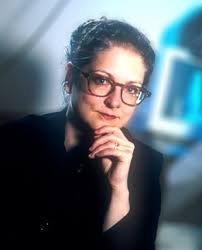 Diane Gromala合作论文数Simon Fraser University3
 William Ribarsky合作论文数Department of Computer Science, The University of North Carolina at Charlotte;Graphics, Visualization & Usability Center, College of Computing, Georgia Institute of Technology;DHS SouthEast Regional Visualization and Analytics Center3
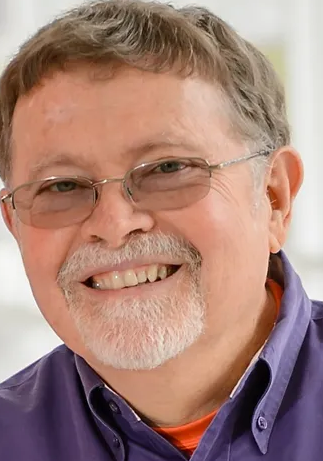 Larry Hodges合作论文数North Carolina School of Science and Mathematics;School of Computing, Clemson University;Virtually Better, LLC;Recovr, Inc.3Kenneth J. Knoespel合作论文数2susan liebeskind合作论文数2
 Nassim Parvin合作论文数School of Literature, Media, and Communication, Ivan Allen College of Liberal Arts, Georgia Institute of Technology2Mark Bernstein合作论文数Eastgate Systems, Inc.2
 Elizabeth Mynatt合作论文数Khoury College of Computer Sciences, Northeastern University2Michael Nitsche合作论文数Georgia Institute of Technology, Atlanta, GA2
 Laura M. Levy合作论文数Facultad de Ciencias Exactas y Naturales, Universidad de Buenos Aires2Markus Haas合作论文数2Charles Van Der Mast合作论文数Faculty Electrical Engineering, Mathematics and Computer Science, EWI, Department Mediamatics, Delft University of Technology2
 Jouke Casper Verlinden合作论文数Faculty of Industrial Design Engineering, Delft University of Technology2Kathryn Farley合作论文数2
 Jonas Löwgren合作论文数Division of Media and Information, Technology, Department of Science and Technology, Linköping University2Isaac Kulka合作论文数2
 Andrea Grimes Parker合作论文数School of Interactive Computing, College of Computing, Georgia Institute of Technology;Google Research2
 Beki Grinter合作论文数Scheller College of Business, Georgia Institute of Technology;College of Computing, Georgia Institute of Technology;GVU Center, Georgia Institute of Technology;Robotics and Intelligent Machines Center, Georgia Institute of Technology;School of Interactive Computing, Georgia Institute of Technology2Hector Fan合作论文数1R VANTEYLINGEN合作论文数1John B. Smith合作论文数1F Nake合作论文数1Laurie Dean Baird合作论文数1Philip A. Stadter合作论文数1Eugene N. Borza合作论文数1
 Ricardo Ribani合作论文数1Peichi Chung合作论文数1N Berger Shem-Shaul合作论文数1Amy J. Lambeth合作论文数1So-youn Jang合作论文数1
 Ulrik Ekman合作论文数Department of Arts and Cultural Studies, Faculty of Humanities, University of Copenhagen1Martin Bednar合作论文数1
 Heidi Biggs合作论文数Department of Digital Media, School of Literature, Media, and Communication, Ivan Allen College of Liberal Arts, Georgia Institute of Technology1Morten Søndergaard合作论文数1Brian Davidson合作论文数1




