This note documents predictions for the inclusive production cross sections of the Standard Model Higgs boson at the Large Hadron Collider at a centre of mass energy of 13.6 TeV. The predictions here are based on simple extrapolations of previously documented predictions published in the CERN Yellow Report "Deciphering the Nature of the Higgs Sector". The predictions documented in this note should serve as a reference while a more complete and update-to-date derivation of cross section predictions is in progress.
A novel method to reconstruct the energy of hadronic showers in the CMS High Granularity Calorimeter (HGCAL) is presented. The HGCAL is a sampling calorimeter with very fine transverse and longitudinal granularity. The active media are silicon sensors and scintillator tiles readout by SiPMs and the absorbers are a combination of lead and Cu/CuW in the electromagnetic section, and steel in the hadronic section. The shower reconstruction method is based on graph neural networks and it makes use of a dynamic reduction network architecture. It is shown that the algorithm is able to capture and mitigate the main effects that normally hinder the reconstruction of hadronic showers using classical reconstruction methods, by compensating for fluctuations in the multiplicity, energy, and spatial distributions of the shower's constituents. The performance of the algorithm is evaluated using test beam data collected in 2018 prototype of the CMS HGCAL accompanied by a section of the CALICE AHCAL prototype. The capability of the method to mitigate the impact of energy leakage from the calorimeter is also demonstrated.
This corrects the article DOI: 10.1103/PhysRevLett.126.162301.
The upgrade of the CMS experiment for the high luminosity operation of the LHC comprises the replacement of the current endcap calorimeter by a high granularity sampling calorimeter (HGCAL). The electromagnetic section of the HGCAL is based on silicon sensors interspersed between lead and copper (or copper tungsten) absorbers. The hadronic section uses layers of stainless steel as an absorbing medium and silicon sensors as an active medium in the regions of high radiation exposure, and scintillator tiles directly readout by silicon photomultipliers in the remaining regions. As part of the development of the detector and its readout electronic components, a section of a silicon-based HGCAL prototype detector along with a section of the CALICE AHCAL prototype was exposed to muons, electrons and charged pions in beam test experiments at the H2 beamline at the CERN SPS in October 2018. The AHCAL uses the same technology as foreseen for the HGCAL but with much finer longitudinal segmentation. The performance of the calorimeters in terms of energy response and resolution, longitudinal and transverse shower profiles is studied using negatively charged pions, and is compared to GEANT4 predictions. This is the first report summarizing results of hadronic showers measured by the HGCAL prototype using beam test data.
Received 28 July 2023DOI:https://doi.org/10.1103/PhysRevLett.131.089901© 2023 American Physical SocietyPhysics Subject Headings (PhySH)Research AreasPolarization phenomenaRelativistic heavy-ion collisionsNuclear Physics
and GRETINA a 1{pi} detector is under construction. However, the momentum in developing this technology to its full potential must continue towards GRETA, a full 4{pi} calorimeter. GRETA will carry {gamma}-ray spectroscopy into the next generation where it will be needed to fully exploit the science opportunities at radioactive beam facilities and increase the reach of stable beam facilities. In addition, {gamma}-ray tracking technology will have important applications for science, medicine, and homeland security.
The Mu2e experiment at Fermilab will search for the neutrinoless μ−→e− conversion in the field of an aluminum nucleus. The Mu2e data-taking plan assumes two running periods, Run I and Run II, separated by an approximately two-year-long shutdown. This paper presents an estimate of the expected Mu2e Run I search sensitivity and includes a detailed discussion of the background sources, uncertainties of their prediction, analysis procedures, and the optimization of the experimental sensitivity. The expected Run I 5σ discovery sensitivity is Rμe=1.2×10⁻¹⁵, with a total expected background of 0.11±0.03 events. In the absence of a signal, the expected upper limit is Rμe<6.2×10⁻¹⁶ at 90% CL. This represents a three order of magnitude improvement over the current experimental limit of Rμe<7×10⁻¹³ at 90% CL set by the SINDRUM II experiment.
A bstract A search for the exclusive decays of the Higgs and Z bosons to a ϕ or ρ meson and a photon is performed with a pp collision data sample corresponding to an integrated luminosity of up to 35 . 6 fb −1 collected at $$ \sqrt{s}=13 $$ s = 13 TeV with the ATLAS detector at the CERN Large Hadron Collider. These decays have been suggested as a probe of the Higgs boson couplings to light quarks. No significant excess of events is observed above the background, as expected from the Standard Model. Upper limits at 95% confidence level were obtained on the branching fractions of the Higgs boson decays to ϕ γ and ρ γ of 4 . 8 × 10 −4 and 8 . 8 × 10 −4 , respectively. The corresponding 95% confidence level upper limits for the Z boson decays are 0 . 9 × 10 −6 and 25 × 10 −6 for ϕ γ and ρ γ, respectively.
We report the measurement of K*0 meson at midrapidity (|y| < 1.0) in Au + Au collisions at root sNN = 7.7, 11.5, 14.5, 19.6, 27, and 39 GeV collected by the STAR experiment during the Relativistic Heavy Ion Collider (RHIC) beam energy scan program. The transverse momentum spectra, yield, and average transverse momentum of K*0 are presented as functions of collision centrality and beam energy. The K*0/K yield ratios are presented for different collision centrality intervals and beam energies. The K*0/K ratio in heavy-ion collisions are observed to be smaller than that in small-system collisions (e + e and p + p). The K*0/K ratio follows a similar centrality dependence to that observed in previous RHIC and Large Hadron Collider measurements. The data favor the scenario of the dominance of hadronic rescattering over regeneration for K*0 production in the hadronic phase of the medium.
We present the first results from an all-sky all-frequency (ASAF) search for an anisotropic stochastic gravitational-wave background using the data from the first three observing runs of the Advanced LIGO and Advanced Virgo detectors. Upper limit maps on broadband anisotropies of a persistent stochastic background were published for all observing runs of the LIGO-Virgo detectors. However, a broadband analysis is likely to miss narrowband signals as the signal-to-noise ratio of a narrowband signal can be significantly reduced when combined with detector output from other frequencies. Data folding and the computationally efficient analysis pipeline, {\tt PyStoch}, enable us to perform the radiometer map-making at every frequency bin. We perform the search at 3072 {\tt{HEALPix}} equal area pixels uniformly tiling the sky and in every frequency bin of width $1/32$~Hz in the range $20-1726$~Hz, except for bins that are likely to contain instrumental artefacts and hence are notched. We do not find any statistically significant evidence for the existence of narrowband gravitational-wave signals in the analyzed frequency bins. Therefore, we place $95\%$ confidence upper limits on the gravitational-wave strain for each pixel-frequency pair, the limits are in the range $(0.030 - 9.6) \times10^{-24}$. In addition, we outline a method to identify candidate pixel-frequency pairs that could be followed up by a more sensitive (and potentially computationally expensive) search, e.g., a matched-filtering-based analysis, to look for fainter nearly monochromatic coherent signals. The ASAF analysis is inherently independent of models describing any spectral or spatial distribution of power. We demonstrate that the ASAF results can be appropriately combined over frequencies and sky directions to successfully recover the broadband directional and isotropic results.
We present results of an all-sky search for continuous gravitational waves which can be produced by spinning neutron stars with an asymmetry around their rotation axis, using data from the third observing run of the Advanced LIGO and Advanced Virgo detectors. Four different analysis methods are used to search in a gravitational-wave frequency band from 10 to 2048 Hz and a first frequency derivative from $-10^{-8}$ to $10^{-9}$ Hz/s. No statistically-significant periodic gravitational-wave signal is observed by any of the four searches. As a result, upper limits on the gravitational-wave strain amplitude $h_0$ are calculated. The best upper limits are obtained in the frequency range of 100 to 200 Hz and they are ${\sim}1.1\times10^{-25}$ at 95\% confidence-level. The minimum upper limit of $1.10\times10^{-25}$ is achieved at a frequency 111.5 Hz. We also place constraints on the rates and abundances of nearby planetary- and asteroid-mass primordial black holes that could give rise to continuous gravitational-wave signals.
ATHENA has been designed as a general purpose detector capable of delivering the full scientific scope of the Electron-Ion Collider. Careful technology choices provide fine tracking and momentum resolution, high performance electromagnetic and hadronic calorimetry, hadron identification over a wide kinematic range, and near-complete hermeticity. This article describes the detector design and its expected performance in the most relevant physics channels. It includes an evaluation of detector technology choices, the technical challenges to realizing the detector and the R D required to meet those challenges.
We report the results of the first joint observation of the KAGRA detector with GEO600. KAGRA is a cryogenic and underground gravitational-wave detector consisting of a laser interferometer with three-kilometer arms, and located in Kamioka, Gifu, Japan. GEO600 is a British--German laser interferometer with 600 m arms, and located near Hannover, Germany. GEO600 and KAGRA performed a joint observing run from April 7 to 20, 2020. We present the results of the joint analysis of the GEO--KAGRA data for transient gravitational-wave signals, including the coalescence of neutron-star binaries and generic unmodeled transients. We also perform dedicated searches for binary coalescence signals and generic transients associated with gamma-ray burst events observed during the joint run. No gravitational-wave events were identified. We evaluate the minimum detectable amplitude for various types of transient signals and the spacetime volume for which the network is sensitive to binary neutron-star coalescences. We also place lower limits on the distances to the gamma-ray bursts analysed based on the non-detection of an associated gravitational-wave signal for several signal models, including binary coalescences. These analyses demonstrate the feasibility and utility of KAGRA as a member of the global gravitational-wave detector network.
We performed an experiment using tritium and hydrogen cryogenic gas targets at Thomas Jefferson National Accelerator Facility (JLab) in 2018 (E12-17-003)[1, 2]. In this article, we discuss the Λ/Σ0 hyperon electroproduction from hydrogen target. Elementary Λ/Σ0 hyperon production processes are important not only for an absolute mass scale calibration in our experiment, but also for the study of the electroproduction mechanisms themselves. In this article, we reported the results of the differential cross section for the p(e, e’K+)Λ/Σ0 reaction at Q2 ∼ 0.5 (GeV/c)2.
We present a directed search for continuous gravitational wave (CW) signals emitted by spinning neutron stars located in the inner parsecs of the Galactic Center (GC). Compelling evidence for the presence of a numerous population of neutron stars has been reported in the literature, turning this region into a very interesting place to look for CWs. In this search, data from the full O3 LIGO--Virgo run in the detector frequency band $[10,2000]\rm~Hz$ have been used. No significant detection was found and 95$\%$ confidence level upper limits on the signal strain amplitude were computed, over the full search band, with the deepest limit of about $7.6\times 10^{-26}$ at $\simeq 142\rm~Hz$. These results are significantly more constraining than those reported in previous searches. We use these limits to put constraints on the fiducial neutron star ellipticity and r-mode amplitude. These limits can be also translated into constraints in the black hole mass -- boson mass plane for a hypothetical population of boson clouds around spinning black holes located in the GC.
We present the results of a model-based search for continuous gravitational waves from the low-mass X-ray binary Scorpius X-1 using LIGO detector data from the third observing run of Advanced LIGO and Advanced Virgo. This is a semicoherent search that uses details of the signal model to coherently combine data separated by less than a specified coherence time, which can be adjusted to balance sensitivity with computing cost. The search covered a range of gravitational-wave frequencies from 25 to 1600 Hz, as well as ranges in orbital speed, frequency, and phase determined from observational constraints. No significant detection candidates were found, and upper limits were set as a function of frequency. The most stringent limits, between 100 and 200 Hz, correspond to an amplitude h 0 of about 10 −25 when marginalized isotropically over the unknown inclination angle of the neutron star’s rotation axis, or less than 4 × 10 −26 assuming the optimal orientation. The sensitivity of this search is now probing amplitudes predicted by models of torque balance equilibrium. For the usual conservative model assuming accretion at the surface of the neutron star, our isotropically marginalized upper limits are close to the predicted amplitude from about 70 to 100 Hz; the limits assuming that the neutron star spin is aligned with the most likely orbital angular momentum are below the conservative torque balance predictions from 40 to 200 Hz. Assuming a broader range of accretion models, our direct limits on gravitational-wave amplitude delve into the relevant parameter space over a wide range of frequencies, to 500 Hz or more.
Two-particle correlation measurements projected onto two-dimensional, transverse rapidity coordinates (y_T1,y_T2), allow access to dynamical properties of the QCD medium produced in relativistic heavy-ion collisions that angular correlation measurements are not sensitive to. We report non-identified charged-particle correlations for Au + Au minimum-bias collisions at √(s_ NN) = 200 GeV taken by the STAR experiment at the Relativistic Heavy-Ion Collider (RHIC). Correlations are presented as 2D functions of transverse rapidity for like-sign, unlike-sign and all charged-particle pairs, as well as for particle pairs whose relative azimuthal angles lie on the near-side, the away-side, or at all relative azimuth. The correlations are constructed using charged particles with transverse momentum p_T ≥ 0.15 GeV/c, pseudorapidity from -1 to 1, and azimuthal angles from -π to π. The significant correlation structures that are observed evolve smoothly with collision centrality. The major correlation features include a saddle shape plus a broad peak with maximum near y_T ≈ 3, corresponding to p_T ≈ 1.5 GeV/c. The broad peak is observed in both like- and unlike-sign charge combinations and in near- and away-side relative azimuthal angles. The all-charge, all-azimuth correlation measurements are compared with the theoretical predictions of hijing and epos. The results indicate that the correlations for peripheral to mid-central collisions can be approximately described as a superposition of nucleon + nucleon collisions with minimal effects from the QCD medium. Strong medium effects are indicated in mid- to most-central collisions.
A mass spectroscopy experiment with a pair of nearly identical high-resolution spectrometers and a tritium target was performed in Hall A at Jefferson Lab. Utilizing the (e, e' K+) reaction, enhancements, which may correspond to a possible Lambda nn resonance and a pair of Sigma NN states, were observed with an energy resolution of about 1.21 MeV (sigma), although greater statistics are needed to make definitive identifications. An experimentally measured Lambda nn state may provide a unique constraint in determining the Lambda n interaction, for which no scattering data exist. In addition, although bound A = 3 and 4 Sigma hypernuclei have been predicted, only an A = 4 Sigma hypernucleus (He-4(Sigma)) was found, utilizing the (K-, pi(-)) reaction on a He-4 target. The possible bound Sigma NN state is likely a Sigma(0)nn state, although this has to be confirmed by future experiments.
We describe a search for gravitational waves from compact binaries with at least one component with mass 0.2 M_⊙ – 1.0 M_⊙ and mass ratio q ≥ 0.1 in Advanced LIGO and Advanced Virgo data collected between 1 November 2019, 15:00 UTC and 27 March 2020, 17:00 UTC. No signals were detected. The most significant candidate has a false alarm rate of 0.2 yr^-1. We estimate the sensitivity of our search over the entirety of Advanced LIGO's and Advanced Virgo's third observing run, and present the most stringent limits to date on the merger rate of binary black holes with at least one subsolar-mass component. We use the upper limits to constrain two fiducial scenarios that could produce subsolar-mass black holes: primordial black holes (PBH) and a model of dissipative dark matter. The PBH model uses recent prescriptions for the merger rate of PBH binaries that include a rate suppression factor to effectively account for PBH early binary disruptions. If the PBHs are monochromatically distributed, we can exclude a dark matter fraction in PBHs f_PBH≳ 0.6 (at 90 range. However, if we allow for broad PBH mass distributions we are unable to rule out f_PBH = 1. For the dissipative model, where the dark matter has chemistry that allows a small fraction to cool and collapse into black holes, we find an upper bound f_DBH < 10^-5 on the fraction of atomic dark matter collapsed into black holes.
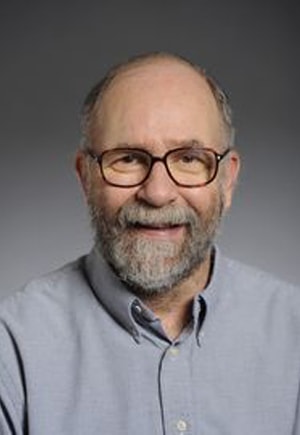 Thomas Ferguson合作论文数Department of Physics, Mellon College of Science, Carnegie Mellon University81
 Helmut Vogel合作论文数Department of Physics, Carnegie Mellon University76
 K. M. Ecklund合作论文数71
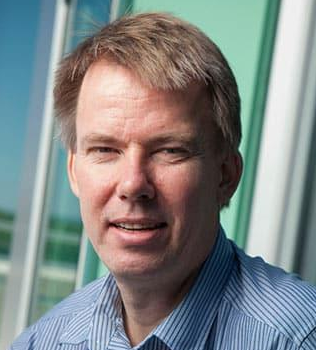 Anders Ryd合作论文数Laboratory for Elementary-Particle Physics, Department of Physics, The College of Arts & Sciences, Cornell University71R. Gray合作论文数70R. Redjimi合作论文数68L. Gibbons合作论文数68
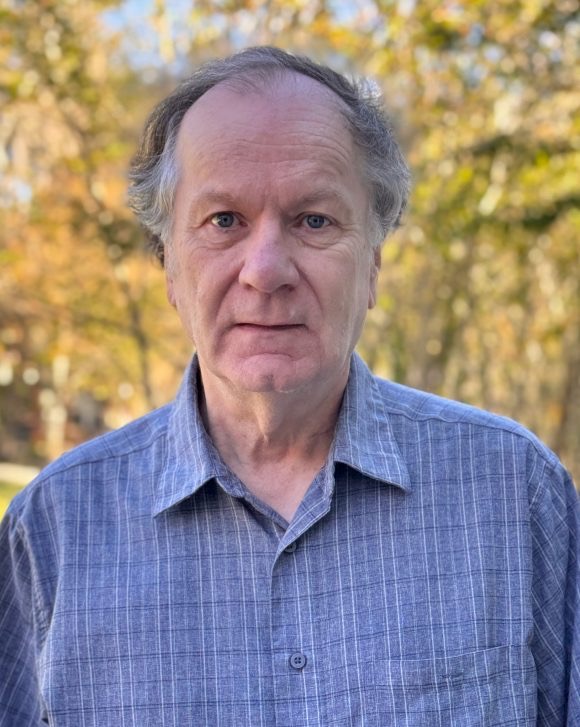 John Yelton合作论文数Department of Physics, College of Liberal Arts and Sciences, University of Florida;Institute for High Energy Physics and Astrophysics, College of Liberal Arts and Sciences, University of Florida68V. Pavlunin合作论文数66
 Hernan Mendez合作论文数66
 Horst Severini合作论文数Homer L. Dodge Department of Physics and Astronomy, Dodge Family College of Arts and Sciences, The University of Oklahoma;Oklahoma Center for High Energy Physics65n adam合作论文数65Y. Kubota合作论文数65
 T. E. Coan合作论文数65Antonio Luque Lopez合作论文数63
 Jim Pivarski合作论文数Princeton University62
 David G. Cassel合作论文数Department of Physics, College of Arts & Sciences, Cornell University61
 Roy A. Briere合作论文数Department of Physics, Mellon College of Science, Carnegie Mellon University61
 Jean Etienne Duboscq合作论文数Cornell University58I. Danko合作论文数58
 Marina Artuso合作论文数Department of Physics, College of Art and Sciences, Syracuse University58
 Steven Blusk合作论文数College of Arts and Sciences, Syracuse University58
 Nabil Menaa合作论文数Syracuse University58J. P. Cummings合作论文数Rensselaer Polytechnic Institute58
 Radia Sia合作论文数58b sanghi合作论文数57
 Giuliana Bonvicini合作论文数CEPRA57Martin Weinberger合作论文数57K. Berkelman合作论文数57
 Ralf Ehrlich合作论文数AGR57
 Sean Dobbs合作论文数Department of Physics, College of Arts and Sciences, Florida State University57S. W. Gray合作论文数56d riley合作论文数56R. Patel合作论文数56J. Kandaswamy合作论文数56
 David Cinabro合作论文数College of Liberal Arts and Sciences, Wayne State University;U.S. Department of Energy56c cawlfield合作论文数55C. Sedlack合作论文数55H. Schwarthoff合作论文数55a tomaradze合作论文数55D. Peterson合作论文数55g tatishvili合作论文数55n lowrey合作论文数55
 Vladimir Savinov合作论文数Department of Physics & Astronomy, University of Pittsburgh;The Department of Quantum Reality, University of Pittsburgh55T. Wilksen合作论文数55
 Zaza Metreveli合作论文数Northwestern U55V. Potlia合作论文数55S. Athar合作论文数55B. Eisenstein合作论文数55




