We propose to deepen the understanding how youth perceive philosophy practices. What is philosophy for them? What benefits and learning do they perceive from it, both in school and in life in general? Collecting data on these questions seems crucial if we want to examine whether and to what extent this practice meets the expectations rooted in it. In this sense, our proposal aims to question the ambitions and achievements by adopting the descriptive and clear-eyed postures mentioned in the dossier. To answer these questions, we propose a qualitative analysis of a corpus of recorded interviews with students from Quebec (16-17 years old) and France (11-14 years old). We have observed common points: students agree on a social dimension of the practice, describing it as a process of questioning that aims at deepening ideas and understanding others’ points of view. However, differences emerge in how they conceive the benefits according to the contexts. The analysis shows that some challenges remain to optimize the benefits of philosophical practices for students.
Ce numéro de Studia est consacré à la pratique de la philosophie pour enfants en tant qu'action éducative.Les contributeurs sont des praticiens et chercheurs engagés dans la pratique de philosophie avec les enfants.Nous leur avons demandé de présenter leur réflexion que ce soit à partir de travaux de recherche ou de situations de discussions philosophiques avec les enfants.Les éclairages apportés sont variés : depuis des réflexions théorico-pratiques fondées sur des travaux de recherche jusqu'à la présentation de dispositifs, d'outils et de démarches empiriques envisagées de manière accompagnée d'une approche réflexive.Ainsi, ce qui est offert aux lecteurs est plus ou moins directement utilisable, mais toujours assorti d'une analyse critique, car faire de la philosophie avec des enfants ne s'improvise pas.C'est une vision naïve de croire qu'il suffit de donner la parole aux enfants sur un sujet « grave » pour en faire de petits philosophes.Le but de ces pratiques n'est pas de s'émerveiller que l'un d'entre eux pense « comme » tel ou tel philosophe.L'animateur doit apprendre à écouter (et comprendre) ce que disent les enfants, à solliciter les habiletés mentales, à encourager la liberté de penser, mais aussi à guider la recherche.L'ambition de cette publication est de proposer aux praticiens des repères pour ce type d'activités.Les deux premières contributions nous présentent des réflexions qui mettent en relation théorie et pratique.Cédric Cortial, professeur certifié de philosophie et intervenant en philosophie avec les enfants, explore les manières d'être de l'animateur d'ateliers de philosophie avec les enfants.Ce point est particulièrement crucial car combien de fois, en formation, ne nous demande-t-on pas si l'intervenant doit
Ce numéro de Studia est consacré à la pratique de la philosophie pour enfants en tant qu’action éducative. Les contributeurs sont des praticiens et chercheurs engagés dans la pratique de philosophie avec les enfants. Nous leur avons demandé de présenter leur réflexion que ce soit à partir de travaux de recherche ou de situations de discussions philosophiques avec les enfants. Les éclairages apportés sont variés : depuis des réflexions théorico-pratiques fondées sur des travaux de recherche jusqu’à la présentation de dispositifs, d’outils et de démarches empiriques envisagées de manière accompagnée d’une approche réflexive. Ainsi, ce qui est offert aux lecteurs est plus ou moins directement utilisable, mais toujours assorti d’une analyse critique, car faire de la philosophie avec des enfants ne s’improvise pas.
Il s’agit de la seconde publication issue du workshop qui s’est tenu, du 2 au 4 juin 2022, à Cluj, co-organisé par le Département de philosophie de l’Université Babeș-Bolyai de Cluj-Napoca (Roumanie) et le Laboratoire LIDILEM de l’Université Grenoble Alpes (France). Le but de ce workshop était de s’interroger sur les méthodes de recherche et d’investigation et les modèles épistémologiques qui sous-tendent les démarches de description et de compréhension de ce qui se passe dans une interaction. Nous souhaitions croiser les conceptualisations et les méthodologies à l’œuvre dans l’étude de diverses formes d’interaction : humain-humain, humain-animal, homme-machine, etc.
Experimenting Thinking in Image Schemas. Teenagers are Wondering “Where Do Thoughts Come From?”. An intellectual view of philosophy as an activity focusing on understanding abstract concepts and their relationships deprives philosophical exercise of the participation of the body and senses. If we reject the mind-body dualism, as Dewey, Johnson, etc. did, then we are constantly engaged in interactions with the world and others, and can thus consider the act of thinking from our own experiences. Inspired by an experimentalist conception of school and life, as well as the method of inquiry developed by Dewey, the Philosophy for Children program provides an inquiry process that invites participants to conceptualize and reason philosophically in a collaborative manner. Do these practices implement an embodied cognition? To find out, we selected a discussion as a case study and analyzed it based on the observation that the issue to be discussed by the participants - “where do thoughts come from?” contains two image schemas: path (come from) and source (where). We have noted a variety and a significant number of expressions (“they come from within”, “they come from what happens outside”, etc.) whose analysis enhances a better understanding of how an experience of understanding the origins of our thoughts fits into the discourse and contributes to a collective conceptualization of “thinking”.
An intellectual view of philosophy as an activity focusing on understanding abstract concepts and their relationships deprives philosophical exercise of the participation of the body and senses. If we reject the mind-body dualism, as Dewey, Johnson, etc. did, then we are constantly engaged in interactions with the world and others, and can thus consider the act of thinking from our own experiences. Inspired by an experimentalist conception of school and life, as well as the method of inquiry developed by Dewey, the Philosophy for Children program provides an inquiry process that invites participants to conceptualize and reason philosophically in a collaborative manner. Do these practices implement an embodied cognition? To find out, we selected a discussion as a case study and analyzed it based on the observation that the issue to be discussed by the participants - "where do thoughts come from?" contains two image schemas: path (come from) and source (where). We have noted a variety and a significant number of expressions ("they come from within", "they come from what happens outside", etc.) whose analysis enhances a better understanding of how an experience of understanding the origins of our thoughts fits into the discourse and contributes to a collective conceptualization of "thinking".
Speech acts, mental acts and thinking skills in practices of philosophy for children. This paper aims to describe the links between speech acts and thinking skills in a new type of corpus: the philosophical discussions with children. Reflective practices have been developing over the last twenty years in several countries from Lipman's educational program, called Philosophy for children. The majority of existing studies describing this conversation new form are produced in psychology, pedagogy and education sciences researches. Thus, linguistic analysis about this topic are few and recent (Auriac-Peyronnet & Colletta, 2015). To fill this lack, we propose to analyze philosophical discussions with regard to the relationships between dialog, speech and thought. REZUMAT. Acte de vorbire, acte mentale și abilități cognitive în discuții filosofice cu copii. Această lucrare își propune să descrie relația dintre actele de vorbire și abilitățile cognitive într-un nou tip de corpus, discuțiile filosofice cu copii. Practici de reflecție au fost dezvoltate în mai multe țări în ultimii 20 de ani, pornind de la programul educațional al lui Lipman, Philosophy for children (Filosofia pentru copii). Majoritatea studiilor care descriu acest tip de conversație sunt realizate în domenii precum psihologia, pedagogia și științele educației și, prin urmare, analize lingvistice despre acest subiect sunt puține și recente (Auriac-Peyronnet & Colletta, 2015). Pentru a umple acest gol, analizăm discuții filosofice din perspectiva relațiilor dintre dialog, vorbire și gândire. Cuvinte cheie: corpus nou, analiză interacțională, abilități cognitive, acte de vorbire, interacțiune verbală, filosofie pentru copii.
This paper aims to describe the links between speech acts and thinking skills in a new type of corpus: the philosophical discussions with children. Reflective practices have been developing over the last twenty years in several countries from Lipman's educational program, called Philosophy for children. The majority of existing studies describing this conversation new form are produced in psychology, pedagogy and education sciences researches. Thus, linguistic analysis about this topic are few and recent (Auriac-Peyronnet & Colletta, 2015). To fill this lack, we propose to analyze philosophical discussions with regard to the relationships between dialog, speech and thought.
 Anda Fournel合作论文数Lab LIDILEM, Univ Grenoble Alpes17
 Jean-Marc Colletta合作论文数4Sandra Lagrange-Lanaspre合作论文数3Marinette Matthey合作论文数2Marie-Louise Moreau合作论文数2Tiphaine Mout合作论文数2
 Philippe Dessus合作论文数Laboratoire d'Informatique de Grenoble, Université Grenoble Alpes2
 Cyril Trimaille合作论文数2
 Mihai Dascalu合作论文数Natural Language Processing Laboratory, National University of Science and Technology POLITEHNICA Bucharest2Sylvie Wharton合作论文数1Gabriela Fiema合作论文数1
 Antonietta Specogna合作论文数1Catherine Frier合作论文数1Olivier Michaud合作论文数1Mathieu Gagnon合作论文数1Emmanuelle Auriac-Slusarczyk合作论文数1jeanne gonach合作论文数1Samuel Vernet合作论文数1Eric Triquet合作论文数1
 Emmanuele Auriac Slusarczyk合作论文数1Ramona Kunene Nicolas合作论文数1
 Anamaria Curea合作论文数Linguist, Univ Babes Bolyai Cluj Napoca1
 Christophe Luxembourger合作论文数Univ Lorraine, Dept Psychol, Lab 2LPN, F-54021 Nancy, France1Saint-Dizier de Almeida Valérie合作论文数1
 Stefan Trausan-Matu合作论文数Politehnica University of Bucharest1
 Anne Dister合作论文数1
 Philippe Blanchet合作论文数Haute Bretagne1Marie-Rose Simoni-Aurembou合作论文数1
 Gudrun Ledegen合作论文数1Aurélie Venouil合作论文数1Clara Mortamet合作论文数1Virginie Kaufmann合作论文数1
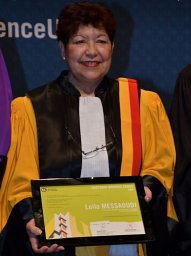 Leila Messaoudi合作论文数Division of Endocrinology, University of Louvain Medical School1




