This paper discusses the problem of having cognitive agents display an ethical behavior when simulating humans engaged in collaborative activities. It reviews briefly the notion of ethics for humans and its implementation in systems of cognitive agents, reviews some research approaches, and lists the factors to take into account for simulation of collaborative work. An example of training a medical leader constituting a preliminary approach, is used to illustrate the discourse.
Distributed artificial intelligence (DAI) involves study of the distribution of intelligent processes among independent entities. The introduction of the contract-net is a milestone in the history of DAI. In between, artificial intelligence experienced successes and failures, was praised and despised, but developed numerous original hardware and software techniques which are widely used in everyday computing. In artificial intelligence, the concept of the agent grew from the early work on blackboards, contract-net, and actors. Separately, in applied fields such as manufacturing, object-oriented systems were being developed with increasing intelligence being incorporated into the objects. The chapter reviews some of the research on the blackboard architecture, the contract net, actors, and introduces agents. The heritage of cognitive agents is clearly artificial intelligence. Interface agents facilitate the interaction between a user and a computer system. They are intended to improve interaction, e.g., accessing information, assisting with work, doing learning, or just providing entertainment.
This chapter examines the desirable characteristics of an intelligent complex agent and describes the necessary modules needed to implement such desirable characteristics. The internal architecture of an agent is essentially the description of its modules and how they work together. Agent architectures used in various agent-based systems range from the very simple to the very complex. The Communication Interface of an agent is its only interface to other agents. It is usually implemented using methods or functions for receiving messages from and sending messages to other agents. Many different agent architectures have been described in the literature for agent-based concurrent design and manufacturing systems. Agent architectures described in the literature may be classified into the following four categories according to the agent's behavior: deliberative, reactive, collaborative and hybrid architectures. In reactive agent architectures, deliberative reasoning is replaced by emergent behavior, which adapts to changes in the real-world environment in a timely way.
Part One: Introduction Chapter 1: General Introduction. 1.1 Motivation. 1.2 Book Organization. 1.3 How To Use This Book. Chapter 2: Collaborative Design and Manufacturing. 2.1 Introduction. 2.2 Engineering Design. 2.3 Advanced Manufacturing Systems. 2.4 Next Generation Collaborative Design and Manufacturing Systems. Chapter 3: DAI and Agents. 3.1 Classic AI and DAI. 3.2 Research Themes in DAI. 3.3 Models of DAI Systems. 3.4 Objects vs. Agents. 3.5 Different Types of Agents. 3.6. Why Agents for Collaborative Design and Manufacturing. Part Two: Important Issues Chapter 4: Knowledge Representation in Agent-Based Concurrent Design and Manufacturing Systems. 4.1 Introduction 4.2 What needs to be Represented. 4.3 How to Represent Knowledge in Agent-Based Systems. 4.4 Research Literature and Further References. Chapter 5: Learning in Agent-Based Concurrent Design and Manufacturing Systems. 5.1 Introdution. 5.2 Why to Learn. 5.3 Single-Agent Learning or Multi-Agent Learning. 5.4 When to Learn. 5.5 Where to Learn. 5.6 What is to be Learned. 5.7 How to Learn. 5.8 Examples. 5.9 Research Literature and Additional References. Chapter 6: Agent Structures. 6.1 Introduction. 6.2 Desirable characteristics of an agent. 6.3 Essential Modules (Components) for agents. 6.4 Different Approaches. 6.5 Comparison of Different Approaches. 6.6 Research Literature and further References. Chapter 7: Multi-Agent System Architectures. 7.1 Introduction. 7.2 Organization and System Architectures. 7.3 Different Approaches. 7.4 Select a suitable system architecture for a specific application. 7.5 Research Literature and Additional Readings. Chapter 8: Communication, Cooperation and Coordination. 8.1 Introduction. 8.2 Communication. 8.3 Coordination. 8.4 Cooperation. 8.5 Coordination, Cooperation and Communication. 8.6 Research Literature and Further References. Chapter 9: Collaboration, Task Decompsition and Allocation. 9.1 Introduction. 9.2 Different Approaches for Task Decomposition and Allocation. 9.3 Coordinated Task Allocation by Mediation. 9.4 Distributed Task Allocation. 9.5 Task Decomposition in MetaMorph: an Example. 9.6 Research Literature and Additional References. Chapter 10: Negotiation and Conflict Resolution. 10.1 Introduction. 10.2 Classification of Negotiation Categories. 103. Negotiation Protocols. 10.4 Negotiation Strategies. 10.5 Negotiation for Conflict Resolution. 10.6 Examples in Concurrent Design and Manufacturing. 10.7 Research Literature and Additional Information. Chapter 11: Ontology Problems. 11.1 Introduction. 11.2 What is Ontology? 11.3 Ontology and Knowledge Sharing. 11.4 Ontology Problems in Concurrent Design and Manufacturing. 11.5 Related concepts, Theories and Methods. 11.6 Ontolingua: A System for Managing Portable Ontologies. 11.7 Research Literature and Additional References. Chapter 12: Other Important Issues. 12.1 Introduction. 12.2 Agent Encapsulation. 12.3 Human machine integration (human participation). 12.4 System dynamics. 12.5. Design and manufacturability assessments. 12.6 Integration of manufacturing Planning, Scheduling and Execution. 12.7 Distributed Dynamic Scheduling. 12.8 Enterprise Integration and Supply Chain Management. 12.9 Legacy problem. 12.10 External interfaces. Part Three: Agent-Based Systems for Engineering Design & Manufacturing Chapter 13: Agent-Based Engineering Design Systems. 13.1 Introduction. 13.2 PACT (PACE) 13.3 SHARE (DSC) 13.4 First-Link, Next-Link and Process Link. 13.5 DIDE. 13.6 SiFAs. 13.7 RAPPID. 13.8 Other projects. 13.9 Summary. Chapter 14: Agent-Based manufacturing Planning, Scheduling and Control. 14.1 Introduction. 14.2 MetaMorph. 14.3 AARIA. 14.4 ADDYMS. 14.5 Other Projects. 14.6 Summary. Chapter 15: Enterprise Integration and Supply Chain Management. 15.1 Introduction. 15.2 ISCM. 15.3 CIIMPLEX. 15.4 MetaMorph II. 15.5 AIMS. 15.6 Other Projects. 15.7 Summary. Part Five: Developing Agent-Based Design and Manufacturing Systems Chapter 16: Methodology, Standards, Tools, Languages, and Frameworks. 16.1 Introduction. 16.2 Tools and Framework. 16.3 Methodology, Languages, and Standards. 16.4 Further references. Chapter 17: Building Agent-Based Design and Manufacturing Systems. 17.1 Introduction. 17.2 Selecting or developing an agent architecture. 17.3 Selecting an approach for agent organization. 17.4 Selecting or developing protocols for inter-agent communication. 17.5 Developing mechanisms for cooperation, coordination and negotiation. 17.6 Selecting platforms, tools and languages. 17.7 Agent-Oriented Design and Analysis. 17.8 Simulation and Implementation. 17.9 Testing, Debugging and Evaluation. Chapter 2: Collaborative Design and Manufacturing, Chapter 3: DAI and Agents. Part Two: Important Issues Chapter 4: Knowledge Representation in Agent-Based Concurrent Design and Manufacturing Systems. Chapter 5: Learning in Agent-Based Concurrent Design and Manufacturing Systems. Chapter 6: Agent Structures. Chapter 7: Multi-Agent System Architectures. Chapter 8: Communication, Cooperation and Coordination. Chapter 9: Collaboration, Task Decomposition and Allocation. Chapter 10: Negotiation and Conflict Resolution. Chapter 11: Ontology Problems. Chapter 12: Other Important Issues. Part Three: Agent-Based Systems for Engineering Design and Manufacturing Chapter 13: Agent-Based Engineering Design Systems. Chapter 14: Agent-Based manufacturing Planning, Scheduling and Control. Chapter 15: Enterprise Integration and Supply Chain Management. Part Four: Developing Agent-Based Design and Manufacturing Systems Chapter 16: Methodlogy, Standards, Tools, Languages, and Frameworks
For wider use of agent technology in design and manufacturing, powerful agent development tools and supporting standards and methodologies are much needed. This chapter introduces the more widely known of these tools, frameworks, languages, standards, and methodologies, giving for each: its name; company, institution or research group name. It examines more well-known agent development tools and frameworks in alphabetic order, in two categories: commercial products and academic and research projects. Wide use of agent technology in industry depends on the availability of development tools and platforms that save developers having to implement the same basic functionality for each system. Analysis and design methodologies for multi-agent systems are quite rare in the literature. R. Levy et al. identify the primary infrastructure services required by agent-based applications, and evaluate current operating systems, programming languages and development tools to determine their suitability for implementing agent-based applications.
/ domitile.lourdeaux/ jean-paul.barthes}@hds.utc.fr RESUME. Lorsqu'ils travaillent en equipe, les humains font des erreurs. Pour entrainer un apprenant en environnement virtuel collaboratif a s'adapter a des coequipiers ayant des comportements non optimaux, nous proposons (1) une augmentation du langage de description de l'activite ACTIVITY-DL ainsi que des mecanismes de propagation de contraintes qui faciliteront le raisonnement des agents ; et (2) un modele d'agent dans lequel chaque agent est decrit par trois dimensions (integrite, bienveillance, competences) correspondant au modele de confiance MDS. De plus chaque agent a des buts collectifs et personnels et des croyances sur l'integrite, la bienveillance et les competences de chaque autre. Ce modele d'agent est associe a un moteur decisionnel permettant de generer des comportements proches de ceux des humains. En particulier, les agents prennent les autres en compte et sont capables de raisonner sur leurs croyances sur les autres, a la fois lorsqu'ils choisissent quel but privilegier (collectif ou individuel) et lorsqu'ils selectionnent une tâche. Nous avons conduit une evaluation preliminaire dans laquelle les participants ont evalue les comportements generes avec notre systeme. ABSTRACT. When working in teams, people make mistakes. To train someone in a collaborative virtual environment to adapt to teammates that bahave non optimally, we propose (1) an augmentation of the ACTIVITY-Description Language as well as mechanisms of propagation of constraints that will facilitate agents' reasoning; and (2) an agent model in which each agent is described through three dimensions (integrity, benevolence, abilities) corresponding to the MDS trust model. Besides each agent has different personal and collective goals and has beliefs about others' integrity, benevolence and abilities. This agent model is associated to a decision-making system that allows agents to adopt human-like behaviors. In particular, agents take others into account and are able to reason on their beliefs about others both when choosing which goal (collective or individual) to focus on and when selecting a task. We conducted a preliminary evaluation in which participants evaluated the behaviors produced with our system. MOTS-CLES : systemes multi-agents, prise de decision, confiance, activite collective.
Collaborative software development is a complex activity. An important factor that needs to receive attention in collaborative software development is software quality. High quality software reduces the development and the maintenance; improves delivery schedules; and reduces repairs and rework. In order to measure, evaluate, control and improve the software quality, software metrics can be used. In this research we present an advanced collaborative environment for software development currently being built, called ACE4SD, which intends to support the improvement of the code quality during collaborative software development. ACE4SD is a system of systems composed of a software development environment, a multi-agent system and a platform to capitalize and manage knowledge, all of them being integrated in the same environment. ACE4SD can provide personalized support to team members to improve the code quality and encourage its reuse, it can answer questions or doubts arisen during the development, record document problems and solutions, and improve the awareness and collaboration between the participants.
This paper describes a new heuristic approach letting an agent in a multi-agent system make a decision for selecting tasks to undertake. The proposed approach consists in giving the agent a profile including preferences and physical parameters, and a description of its beliefs about the environment. The decision engine allowing the agent to do a specific task is local to the agent and takes into account the agent goals, physical and emotional state and beliefs by combining heuristics priorities for each possible task. The approach is flexible, allowing to model situations where agents represent humans. It can be extended to multiple agents in collaborative environments.
This paper presents the ONTOCODESIGN platform for collaboratively designing an ontology for CSCWD. The ontology is meant to help SMC/CSCWD Committee members to better interact and organize their scientific production, and to help the Steering Committee make more informed decisions. Indeed, organized research groups usually have steering committees supporting their actions, and making decisions implementing the group's strategy. A big picture that reveals a network of topics, exposing how the community reacts to changes (trends, discoveries, social impacts, etc) is critical for making good decisions. We believe that a collaborative approach for building a CSCWD ontology will help keeping track of CSCWD themes and allow developing more consensual and effective initiatives. The ONTOCODESIGN platform uses a multi-agent environment and a multilingual context The paper describes its architecture and its first implementation.
Finding reliable partners to interact with in open environments is a challenging task for software agents, and trust and reputation mechanisms are used to handle this issue. From this viewpoint, we can observe the growing body of research on this subject, which indicates that these mechanisms can be considered key elements to design multiagent systems (MASs). Based on that, this article presents an extensive but not exhaustive review about the most significant trust and reputation models published over the past two decades, and hundreds of models were analyzed using two perspectives. The first one is a combination of trust dimensions and principles proposed by some relevant authors in the field, and the models are discussed using an MAS perspective. The second one is the discussion of these dimensions taking into account some types of interaction found in MASs, such as coalition, argumentation, negotiation, and recommendation. By these analyses, we aim to find significant relations between trust dimensions and types of interaction so it would be possible to construct MASs using the most relevant dimensions according to the types of interaction, which may help developers in the design of MASs.
When users collaborate, they leave traces in some way or another. These traces in return offer a clue whether a user is competent enough on a subject. This helps further collaboration because knowing the specialization of users helps to distribute tasks reasonably. In this article, we propose a semantic model of traces and analyze classified traces using a Bayes classifier. We exploit the results to offer recommendation on competent users accordingly.
In a Web-based Collaborative Working Environment (CWE), traces are always produced by past activities or interactions. Although every trace derives from the stored information, the modeled trace not only represents knowledge but also experience from the interactive actions among the actors or between an actor and the system. Normally, with the increasing complexity of group structure and frequent collaboration needs, the existing interactions become more difficult to grasp and analyze. This article focuses on defining, modeling and exploiting the various traces in the context of CWE, in particular Collaborative Traces (CTs) left in the shared/collaborative workspace. A model of collaborative trace that can efficiently enrich group experience and facilitate group collaboration is proposed and explained in details. Furthermore, we introduce and define a type of complex filter as a possible approach to exploit the traces. Four basic scenarios of collaborative trace exploitation are presented to describe its effects and advantages in CWE. A general model and framework of CT-based SWOT Analysis is discussed with examples. For practical applications, the validation of our model is examined in the context of the collaborative platform E-MEMORAe2.0. In addition, a remark concerning recommendations based on collaborative traces is given in the conclusion.
 Weiming Shen (沈卫明)合作论文数School of Mechanical Science & Engineering, Huazhong University of Science and Technology;Fuyao University of Science and Technology23
 Claude Moulin合作论文数Compiègne University of Technology21
 Dominique Lenne合作论文数11
 Fabricio Enembreck合作论文数Pontifícia Universidade Católica do Paraná11
 Junzhou Luo (罗军舟)合作论文数School of Computer Science and Engineering, Southeast University10
 Alistair Jones合作论文数9
 Domitile Lourdeaux合作论文数Heudiasyc Laboratory, UMR CNRS 6599, University of Technology of Compiegne,9
 Marie-Helene Abel合作论文数7
 Kenji Sugawara合作论文数Faculty of Information and Network Science Chiba Institute of Technology, Japan6Lydie Edward合作论文数6
 Gilson Yukio Sato合作论文数UTFPR, Federal Technological University of Paraná6
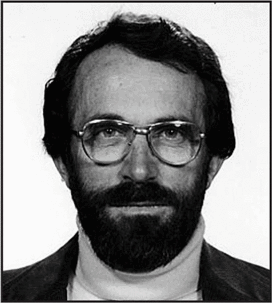 Douglas H. Norrie合作论文数6
 Emerson Cabrera Paraiso合作论文数Laboratoire Heudiasyc, Université de Technologie de Compiègne6
 Milton Ramos合作论文数5Fathia Bettahar合作论文数5Thierry Gidel合作论文数4
 Jianming Yong合作论文数University of Southern Queensland4Zongkai Lin (林宗楷)合作论文数中国科学院计算技术研究所4
 Yusuke Manabe合作论文数Faculty of Software and Information Science, Iwate Prefectural University4
 Kejia Chen (陈可佳)合作论文数School of Computer Science, Nanjing University of Posts and Telecommunications4
 Atman Kendira合作论文数France Telecom R&D Lannion4Céline Joiron合作论文数3
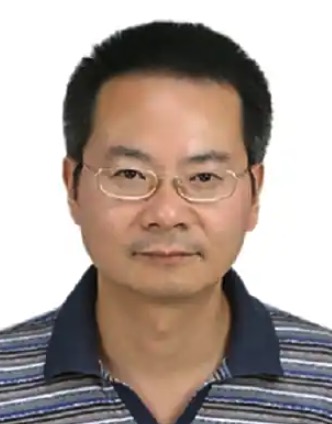 Wenfeng Li (李文锋)合作论文数School of Transportation and Logistics Engineering, Wuhan University of Technology3Qiang Li (李强)合作论文数3Edson Emílio Scalabrin合作论文数Pontifícia Universidade3
 Frederic Furst合作论文数3Gilles Kassel合作论文数Université de Picardie Jules Verne3
 Marco Luca Sbodio合作论文数Italy Innovation Center3
 Jano Moreira de Souza合作论文数Departamento de Engenharia de Computação e Informação, Federal University of Rio de Janeiro3
 Adriana S. Vivacqua合作论文数Universidade Federal Fluminense3
 Cesar Augusto Tacla合作论文数Instituto de Engenharia de Sistemas e Computadores, Lisboa, Portugal3
 Hilton Jose Silva de Azevedo合作论文数3
 Jinghui Zhang (张竞慧)合作论文数School of Computer Science and Engineering, Southeast University2
 Anne E. James合作论文数Department of Computing and the Digital Environment, Coventry University2
 Sergio F. Ochoa合作论文数Department of Computer Science, University of Chile2
 Antonio Guerrieri合作论文数Talent Garden Cosenza2
 Jean-Marie Burkhardt合作论文数INRIA2Omar Gonzalez-Padilla合作论文数2
 Marcio Fuckner合作论文数2
 Yuki Kaeri合作论文数2
 Kuo-Ming Chao合作论文数University of Roehampton;Bournemouth University;National Engineering Laboratory for E-Commerce Technologies, Fudan University2Tangqiu Li合作论文数2
 Lucile Callebert合作论文数2
 Giancarlo Fortino合作论文数SenSysCal S.r.l.;Laboratory of Smart, PErvasive and Mobile systems Engineering, Department of Computer, Modeling, Electronic, and System Engineering, University of Calabria;Shenzhen Institute of Advanced Technology, Chinese Academy of Sciences;Huazhong Agricultural University2Fabrice Camus合作论文数1Nahum Korda合作论文数1Otto Robert Lessing合作论文数1
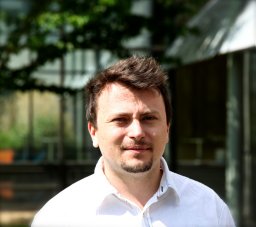 Andrea Luigi Guerra合作论文数Politecn Torino1e plot合作论文数1




