In a recent interchange in the pages of this journal, Piedfort-Marin et al. (2021, 2022, 2023) and Dodier et al. (2022) have highlighted the ongoing controversies surrounding the diagnosis of dissociative identity disorder (DID)-controversies documented by a recent survey of French psychiatrists attending the 2023 annual meeting of l'Encephale. Does DID characteristically arise as a response to early traumatic experiences such as childhood sexual abuse? Can individuals develop amnesia for these traumatic events via the mechanism of "repressed memory/dissociative amnesia," presumably as a protective mechanism to cope with such experiences? Does the development of "alters," who themselves report full or partial amnesia for one another, represent a further manifestation of this post-traumatic process? Or, as others claim, is DID often a product of suggestive influences, be they therapeutic techniques or cultural influences? In this paper, we suggest that some insights into this controversy may be gained by following the history of DID over the last 50 years as it has been portrayed in novels, films, television series, and most recently on social media posts that have garnered billions of views. Turning next to the output of the scientific community, we also point to the dwindling acceptance of the theory of "repressed memory/dissociative amnesia" among scientists writing in the peer-reviewed literature. These reflections compel us to confront the challenging philosophical question of how to judge whether a psychiatric syndrome is "real." (c) 2024 Elsevier Masson SAS. All rights reserved.
Décrit en tant que signe précoce de schizophrénie (ou de Démence Précoce) entre les années 1927 et 1930 par les deux psychiatres français Paul Abély et Achille Delmas, le « signe du miroir » a fait l’objet, les années suivantes, hors de France, d’études approfondies par des spécialistes éminents. Ils discutaient de sa valeur séméiologique ainsi que des premières interprétations proposées. On soulignera à cet égard le rôle premier des idées psychanalytiques, lesquelles faisaient référence au concept de narcissisme. Un autre constat est la négligence relative accordée aux résultats de l’épreuve spéculaire chez d’autres catégories de malades, notamment au cours des déficiences intellectuelles liées à l’âge (alors qu’il s’agit maintenant d’un thème d’étude privilégié).
P.A. Ostankov fut un pur représentant de l’École de psychiatrie de Léningrad. Celle-ci restait dominée par l’héritage de V. Bekhterev, et les travaux de son élève Ostankov en portent la marque. Déjà traditionnellement d’inspiration neuropsychiatrique et organiciste, la psychiatrie russe du temps des Soviets, et en raison de la place qu’ils avaient accordée à l’œuvre de I. Pavlov, devint essentiellement « physiologique ». Cette évolution était plus marquée à Moscou qu’à Léningrad dont les psychiatres cherchaient à maintenir les liens avec l’Occident et se tenaient informés des derniers travaux. Les quatre publications de P.A. Ostankov dans les Annales Médico-Psychologiques de 1934 à 1939 sont ainsi représentatives d’une conception de la psychiatrie qui, en France, avait été celle de Dupré et de son École, et qui paraissait dépassée pour les jeunes psychiatres. En 1943, Ostankov porta témoignage de l’origine juive des victimes d’une tuerie de masse commise par les Allemands.
En l’absence de documents médicaux, le récit de la cécité de John Howard Griffin et de sa guérison ne repose que sur ses déclarations et celles de ses biographes. Ce récit est généralement accepté, même si une enquête révèle les doutes qu’il suscita chez certains de ses amis et correspondants. Après un examen des sources disponibles, nous concluons qu’il s’agissait d’une pseudo-cécité, mélange d’une simulation volontaire puis d’un trouble « fonctionnel ». La possibilité d’un miracle qui avait été évoquée à l’époque – mais jamais par John Howard Griffin lui-même – est développée en référence à deux mystiques célèbres du XXe siècle. La compréhension psychologique de cette pseudo-cécité s’appuie sur le concept de fonction, c’est-à-dire sur son aspect utilitaire. À cet égard se dégagent une fonction « escapiste » pour se tirer de difficultés et une fonction « promotionnelle » quand il se présenta comme un aveugle de guerre lors du lancement de ses premiers romans.
John Howard Griffin (1920-1980) achieved fame after publishing his best-selling Black Like Me . In that book, he recounts how in late 1959 he deliberately changed his physical appearance in order pass as an African-American and travel in the segregated South. Prior to this deliberate simulation, Griffin was blind for a decade. We will review his own account of his blindness, including its causes (a wartime injury) and its course over time, but also challenge it in light of various records, including his military discharge papers, his journal and his correspondence. A dubious episode of regressive of spinal cord paraplegia is also noted. (c) 2024 Elsevier Masson SAS. All rights are reserved, including those for text and data mining, AI training, and similar technologies.
Plus de trente ans après avoir introduit le terme de syndrome de Charles Bonnet, le Pr Georges de Morsier, dans un mémoire original des Annales Médico-Psychologiques publié en 1967, en fixa définitivement la définition. Il y réaffirmait l’intégrité intellectuelle et mentale de ces sujets du grand âge qui présentent des hallucinations visuelles, habituellement critiquées, ainsi que l’absence de toute pathologie ophtalmologique ayant pu jouer un rôle. Il en faisait uniquement la conséquence d’une atteinte des aires visuelles du cerveau. Ce mémoire, qui est habituellement cité comme étant la référence princeps de la description du syndrome de Charles Bonnet, était déjà contesté de son temps quant à l’absence d’une responsabilité d’une atteinte ophtalmologique ; et celle-ci est actuellement admise. On peut comprendre l’erreur du Pr de Morsier par son adhésion sans partage à la doctrine organiciste de Clérambault.
John Howard Griffin (1920–1980) acquit la célébrité après la publication de son best-seller Dans la peau d’un Noir. Il y racontait comment, après avoir volontairement transformé son apparence, il s’était immergé dans la société, alors largement raciste (début des années 1960) du sud des États-Unis. Cette simulation volontaire avait été précédée d’un épisode marquant de son existence : une cécité qui dura une dizaine d’années. L’histoire de cette cécité est racontée dans son journal intime (non publié) tel qu’il a été propagé par ses biographes. Il y donne sa cause : un traumatisme cérébral de guerre et décrit son évolution. Ce récit est confronté à notre propre lecture de son journal, à un document officiel (son certificat de démobilisation) et à ses propres déclarations tirées de sa correspondance de l’époque. Il est également rapporté un épisode, douteux, de paraplégie régressive d’origine médullaire.
Fils aîné de Jacques Moreau de Tours, Paul Moreau de Tours suit la voie de son père et choisit la carrière d’aliéniste, d’abord à La Salpêtrière, puis à la Maison de Santé d’Ivry. II est président de la Société Médico-Psychologique en 1885. Ses travaux sont multiples et parmi ceux-ci les thèmes du suicide et de la criminologie sont tous les deux sous-tendus, dans certains cas, par le phénomène de contagion de personne à personne en mettant en exergue comme facteur favorisant le rôle de la Presse. Dans cet article, paru dans le numéro 18 des Annales Médico-Psychologiques de 1893, il réalise une analogie entre le crime à deux et le concept de « folie à deux » tel qu’il a été décrit par Jules Falret et Charles Lasègue en étudiant le mécanisme de contagion.
Joseph Capgras (1873-1950) and his pupils described between 1923 and 1924 the 3 first cases of a phenomenon that they called "Illusion des sosies" and quickly designated as Capgras' syndrome (CS). The 1923 princeps case defined the phenomenon as coming from the impossibility for the patient to have access to the identity of a person and, because the resemblance was preserved, to declare that she dealt with a "sosie" (a double). The explanation was limited to the conjecture that there existed a different emotional factor between the memory image and the actual perception. The 2 following cases were more oriented towards the, then booming, psychodynamic explanations which lead in case 3, where the aetiology was organic, to misunderstand its interest. Afterwards, the syndrome which has been early known in the UK, its second chosen homeland will be the object, from psychologists specialists of face recognition studies, ofunitarian explanations in the frame of a Cognitive neuropsychiatry. This approach is challenged in the name of a discontinuity between psychiatric and organic cases by supporters of a "regional epistemology" peculiar to psychiatry. A reflection about terminology concludes, in agreement with the concept of syndrome, that CS is both a natural and a practical kind. (c) 2024 Elsevier Masson SAS. All rights are reserved, including those for text and data mining, AI training, and similar technologies.
Described as an early sign of schizophrenia (or dementia praecox) between the years 1927 and 1930 by two French psychiatrists, Paul Abely and Achille Delmas, the "mirror sign" was subsequently the object of in-depth studies by eminent specialists outside of France who discussed its semiotic value and its early interpretations. In this regard, we will underscore the key role played by psychoanalytical ideas, specifically the concept of narcissism. We will also note the relative neglect of results of the mirror test for other categories of patients, particularly those with intellectual deficiencies due to aging (a now well-studied group). (c) 2024 Elsevier Masson SAS. All rights are reserved, including those for text and data mining, AI training, and similar technologies.
Joseph Capgras (1873–1950) et ses élèves décrivirent entre 1923 et 1924 les trois premiers cas d’un phénomène appelé « Illusion des sosies » et rapidement désigné comme le syndrome de Capgras. L’observation princeps de 1923 définit le phénomène comme résultant de l’impossibilité pour la malade d’accéder à l’identité d’une personne et, parce que sa ressemblance était conservée, à déclarer qu’elle avait affaire à un « sosie » (un double). L’explication était limitée à la supposition qu’il existait un coefficient émotif différent entre l’image-souvenir et la perception actuelle. Les deux cas suivants seront plus orientés vers des explications de type psychodynamiques, alors en plein essor, ce qui conduira dans le cas 3, dont l’étiologie était organique, à en méconnaître l’intérêt. Par la suite, le syndrome qui avait très tôt été introduit au Royaume-Uni, sa deuxième patrie d’élection, y fera l’objet, de la part de psychologues spécialistes de la reconnaissance des visages, d’interprétations unitaires entrant dans le cadre d’une neuropsychiatrie cognitive. Cette approche est contestée au nom d’une discontinuité par les tenants d’une « épistémologie régionale » propre à la psychiatrie. Une réflexion sur la terminologie conclut, en accord avec le terme de syndrome, qu’il s’agit à la fois d’une « forme naturelle » et d’une « forme pratique ».
Eldest son of Jacques Moreau de Tours, Paul Moreau de Tours followed in his father's footsteps and chose a career as an alienist, first at La Salpetriere and then at the Maison de Sante in Ivry. He was president of the Societe Medico-Psychologique in 1885. His work was extensive, and among his various topics, the themes of suicide and criminology were both, in some cases, underpinned by the phenomenon of person-to-person contagion, highlighting the role of the Press as a contributing factor. In this article "le crime a deux", published in issue 18 of the Annales Medico-Psychologiques in 1893, he draws an analogy with the concept of "folie a deux" as described by Jules Falret and Charles Lasegue, by studying the mechanism of contagion. (c) 2024 Elsevier Masson SAS. All rights are reserved, including those for text and data mining, AI training, and similar technologies.
PA Ostankov was a pure representative of the Leningrad school of psychiatry. It remained dominated by the legacy of V. Bekhterev and the works of his pupil Ostankov bear its mark. Long inspired by neuropsychiatry and organicism, Russian psychiatry became, in the Soviet era, essentially "physiological," due to the place given to Pavlov's work. This evolution was more important in Moscow than in Leningrad, where psychiatrists sought to maintain links and familiarity with Western psychiatry. P.A. Ostankov's four articles in the Annales Medico-Psychologiques published between 1934 and 1939 are representative of a conception of psychiatry that, in France, had been that of Dupre and his school and which appeared outdated to younger psychiatrists. In 1943, Ostankov bore witness to the Jewish origin of the victims of a mass murder committed by the Germans. (c) 2024 Elsevier Masson SAS. All rights are reserved, including those for text and data mining, AI training, and similar technologies.
Given the lack of available medical records, any study of John Howard Griffin's blindness must rely on Griffin's own words and that of his biographers. Griffin's account of his blindness has generally been accepted, even though some of his friends privately expressed doubts as to its genuineness. After reviewing various sources, we conclude that Griffin's blindness was a pseudo-blindness that is a combination of "functional disorder" and outright simulation. We will further enquire into the possibility that Griffin experienced a miraculous healing - an explanation that he personally rejected - by briefly examining the well-publicized cases of two 20th Century Catholic holy women. We will then lay the groundwork for a psychological explanation of Griffin's blindness, concluding that it had two functions: an escapist one, which allowed him to avoid embarrassment, and a promotional one, which helped him market his novels. (c) 2024 Elsevier Masson SAS. All rights are reserved, including those for text and data mining, AI training, and similar technologies.
More than 30 years after having introduced the term "Charles Bonnet syndrome", Professor Georges de Morsier fixed its definition in a 1967 study published in Annales Medico-Psychologiques. In this study, he reaffirmed the intellectual and mental integrity of the elderly patients among whom this syndrome occurs. He denied that the hallucinations associated with this syndrome were caused by any visual pathology, claiming instead that they were the result of lesions in the visual areas of the brain. This study, which is often cited as the first description of the syndrome, was challenged in its day. Today, the role of visual pathologies in the etiology of the syndrome is widely acknowledged. One may explain de Morsier's mistake by pointing to his strict adherence to de Clerambault's organicist doctrine. (C) 2024 Elsevier Masson SAS. All rights are reserved, including those for text and data mining, AI training, and similar technologies.
Achille Delmas also treated patients affected by alcoholism and drug addiction at the "maison de santed'Ivry". As his student Itzko Bussel explained in his thesis, Delmas showed his patients a kindly and compassionate demeanor and did not seek to wean them off their drug at all cost. Maurice Utrillo's stay at the facility was beneficial as it ended a long series of forced hospitalizations due to delirious drunkenness. By contrast, Roger Gilbert-Lecomte, who was affected by a severe addiction to opium-containing drugs, sank into a fatal decay after his stay. Antonin Artaud's stay is detailed and a parallel is drawn between the care given to him in Rodez by Dr Gaston Ferdie`re and Dr Delmas' more indulgent attitude. C 2023 Elsevier Masson SAS. All rights reserved.
Le Dr Achille Delmas, psychiatre d’exercice libéral, acquit la célébrité entre les deux guerres par ses travaux qui se situaient dans le prolongement de ceux du Pr Ernest Dupré. Il défendait une conception des maladies mentales issue de la théorie des constitutions, c’est-à-dire de dispositions héritées, persistantes tout au long de la vie, dont la plus fréquente était la constitution cyclothymique. Il représentait ainsi un courant traditionaliste et se montrait un adversaire résolu, aussi bien de la psychanalyse que de la sociologie. Dans son ouvrage Psychologie pathologique du suicide, il défendait le rôle essentiel des troubles de l’humeur et critiquait vigoureusement les thèses sociologiques issues des travaux de Durkheim et d’Halbwachs. Ses travaux méritent d’être actualisés face à un « sociologisme » contemporain qui rend responsables du suicide les conditions de milieu, et particulièrement de travail, et qui tend à nier le rôle des facteurs pathologiques.
 Olivier Saladini合作论文数15O Saladini合作论文数7Olivier Walusinski合作论文数4E Bidault合作论文数3Lempérière Thérèse合作论文数3Jean Garrabé合作论文数3
 Yann Cojan合作论文数3V Gelin合作论文数2
 Michel Caire合作论文数2
 Eduwin orlando Sanabria合作论文数2c nespor合作论文数2
 Gabriel Kocevar合作论文数INSERM, U1044, F-69008 Lyon, France2Kopp N合作论文数2
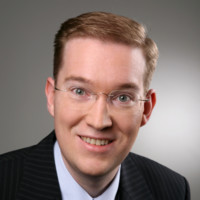 Dirk W. Lachenmeier合作论文数Department of Plant-Based Foods, Chemical and Veterinary Investigation Laboratory of Karlsruhe2
 Luis Garcia-Larrea合作论文数NeuroPain Lab, Lyon Neurological Hospital, Lyon Centre for Neuroscience, Claude Bernard University Lyon 1;Pain Center, Lyon Neurological Hospital, Lyon Centre for Neuroscience, Claude Bernard University Lyon 1;INSERM2J Benyaya合作论文数2
 Jacques Luauté合作论文数Centre de Recherche en Neurosciences de Lyon;Hôpital Henry Gabrielle2S Sansone合作论文数1JP Forray合作论文数1
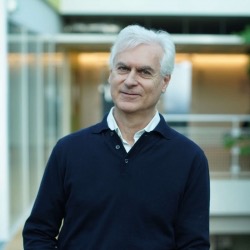 Jean-Luc Martinot合作论文数Centre Borelli;Inserm, CNRS1
 Paolo Bartolomeo合作论文数1Karel W de Pauw合作论文数1Stephen F. Signer合作论文数1M C Masure合作论文数1Veyrat C.-J. Blanc合作论文数1Km Leafhead合作论文数1Mh Daocastellana合作论文数1JP Luaute合作论文数1P Schneider合作论文数1
 Alistair Burns合作论文数Division of Neuroscience, University of Manchester;Manchester Institute for Collaborative Research on Ageing, University of Manchester;Department of Psychiatry, Medical Sciences Division, University of Oxford1Marková Ivana S合作论文数1
 Harrison G. Pope合作论文数Biological Psychiatry Laboratory, McLean Hospital, Harvard Medical School1Breaux Theodore A合作论文数1Arnaud Pascal合作论文数1Bellaiche S合作论文数1
 Patrik Vuilleumier合作论文数Laboratory for Behavioral Neurology and Imaging of Cognition, Department of Basic Neurosciences, Faculty of Medicine, University of Geneva1Maryline Cabaret合作论文数1
 Hans Förstl合作论文数Klinik und Poliklinik für Psychiatrie und Psychotherapie, Technische Universität München1A. Sattel合作论文数1Anthony B. Joseph合作论文数Medfield State Hospital, McLean Hospital1S. Ciancia合作论文数1
 Hadyn D. Ellis合作论文数King's Coll., U. Aberdeen1Christoph Besthorn合作论文数1Jane Comte合作论文数1David Nathan-Maister合作论文数1Joachim Emmert合作论文数1C Geiger-Kabisch合作论文数1D. Caparros-Lefebvre合作论文数1




