In order to elucidate the correlated motion of atomic electrons, we investigate the attosecond-scale dynamics of their entanglement arising due to nonsequential ionization driven by a strong, linearly-polarized laser field. The calculation is based on numerical integration of the time-dependent Schrödinger equation for helium irradiated by a one-cycle, near-infrared field whose intensity is in the neighborhood of 1 PW/cm^2. The entanglement measure (Schmidt weight) is resolved on a sub-cycle timescale, and its key dependency on the field profile is exposed for the first time by tuning the carrier-envelope phase (CEP) to control the ionization-recollision timing. We find that between CEP cases, this can result in a 20% enhancement in the peak entanglement. A connection is made between the entanglement, the probability current, and the correlation coefficient for the two electron momenta, providing new insights into the nonsequential ionization mechanism.
Genuine multipartite entanglement is crucial for quantum information and related technologies, but quantifying it has been a long-standing challenge. Most proposed measures do not meet the “genuine” requirement, making them unsuitable for many applications. In this work, we propose a journey toward addressing this issue by introducing an unexpected relation between multipartite entanglement and hypervolume of geometric simplices, leading to a tetrahedron measure of quadripartite entanglement. By comparing the entanglement ranking of two highly entangled four-qubit states, we show that the tetrahedron measure relies on the degree of permutation invariance among parties within the quantum system. We demonstrate potential future applications of our measure in the context of quantum information scrambling within many-body systems.
Recently, a proper genuine multipartite entanglement measure has been found for three-qubit pure states [see Xie and Eberly, Phys. Rev. Lett. 127, 040403 (2021)PRLTAO0031-900710.1103/PhysRevLett.127.040403], but capturing useful entanglement measures for mixed states has remained an open challenge. So far, it requires not only a full tomography in experiments, but also huge calculational labor. A leading proposal was made by Gühne, Reimpell, and Werner [Phys. Rev. Lett. 98, 110502 (2007)PRLTAO0031-900710.1103/PhysRevLett.98.110502], who used expectation values of entanglement witnesses to describe a lower bound estimation of entanglement. We provide here an extension that also gives genuine upper bounds of entanglement. This advance requires only the expectation value of any Hermitian operator. Moreover, we identify a class of operators A_{1} that not only give good estimates, but also require a remarkably small number of experimental measurements. In this Letter, we define our approach and illustrate it by estimating entanglement measures for a number of pure and mixed states prepared in our recent experiments.
Here we develop an informal speculation, which is focused on the existence of fundamental scales for measures of physical interest. In the present case, the scale of interest is the one for energy density, or pressure, for which a fundamental scale is not commonly known. Currently, however, the results being achieved in connection with high, and particularly extremely high, values of energy density are of interest. These speculative remarks are submitted as a contribution to the celebration of a birthday anniversary of Iwo Bialynicki-Birula and address the possibility that a search for the missing energy density scale can conceal and/or reveal something of fundamental interest. This may be particularly true, thinking of a search for such a scale, because a parallel example, a search of historical significance for a new physical scale, can be cited. The present author has enjoyed knowing Professor Iwo Białynicki-Birula, and thanks him for the continuing pleasure of communication and consultation, as well as for a period of random occasions of table tennis warfare, and a close cooperation shared thirty years after that, which is recalled here.
Genuine multipartite entanglement is crucial for quantum information and quantum technologies but quantifying it has been a long-standing challenge. Most existing measures do not meet a “genuine” requirement, making them unsuitable for many applications. Here, we present a surprising triangle measure for tripartite entanglement, and introduce the extension to four-qubit systems. We discuss potential avenues for further generalizations along this geometric path. This indicates that our work may pave the way for further advancements.
Entanglement is known to decay even in isolated systems, an effect attributed to spontaneous emission. This fragility of entanglement can be exacerbated by entanglement sudden death (ESD), where entanglement drops to zero abruptly within a finite time. It is natural to assume that multipartite entanglement is more vulnerable to ESD, as it involves more parties experiencing spontaneous emission. In this work, we challenge this assumption and present a contrasting conclusion, asserting that multipartite entanglement demonstrates increased robustness against ESD from spontaneous emission.
We present an ab initio study of the nonsequential strong-field ionization dynamics of a model two-electron atom with helium character. Single- and double-ionization events are characterized and displayed using detector signals extracted at different points in the two-electron two-dimensional space. The double photoelectron momentum distribution is calculated via coherent path-summation over virtual particle trajectories. Insights into different ionization and electron recollision pathways are gained from detailed virtual-particle tracking and energy-time readouts. This study demonstrates the extension of virtual detector theory to strong-field multi-electron quantum dynamics and highlights the importance of the evolving quantum phase in quasi-classical electron propagation.
Coherent transients are excited in atomic and molecular systems when a phase relation is able to persist at least semistably between an exciting light field and the system's response. A steady state can occur whenever the multiplicity of "reservoir" effects in the background has reached a stable average. The theory of coherent transients typically makes an important distinction between two types of average, labeled either homogeneous or inhomogeneous. The terms refer to the type of randomness existing over the experimental "system" and originating in the system's environment. An example of inhomogeneous randomness and relaxation to a steady state is found in the distribution of transition frequencies of otherwise identical atoms or molecules trapped as impurities in a host crystal and arising from the host crystal's random strain fields, which induce a permanent energy-level shift in each of the impurities under study. These unchanging level shifts allow, in principle, the experimenter to assign permanent energy-level information in a one-by-one way to system members. Examples of homogeneous randomness are also common. For example, because of continuing collisions, energy-level shifts throughout a vapor cell are random and are constantly changing. Their effect is individually transient, and any consequent relaxation effects are observable only homogeneously over the entire sample, allowing no information to be retained about individual atoms and molecules. We remark at the end of this chapter that the existence of vector-space non factorization, called "quantum entanglement" by Schrödinger in 1935, leads to nonintuitive effects in transients that are currently still under some discussion as not being completely explained. One example is the predicted, and multiply observed, phenomenon labelled ESD, which stands for entanglement sudden death.
Here we develop an informal speculation, which is focused on the existence of fundamental scales for measures of physical interest. In the present case, the scale of interest is the one for energy density, or pressure, for which a fundamental scale is not commonly known. Currently, however, the results being achieved in connection with high, and particularly extremely high, values of energy density are of interest. These speculative remarks are submitted as a contribution to the celebration of a birthday anniversary of Iwo Bialynicki-Birula and address the possibility that a search for the missing energy density scale can conceal and/or reveal something of fundamental interest. This may be particularly true, thinking of a search for such a scale, because a parallel example, a search of historical significance for a new physical scale, can be cited. The present author has enjoyed knowing Professor Iwo Bialynicki-Birula, and thanks him for the continuing pleasure of communication and consultation, as well as for a period of random occasions of table tennis warfare, and a close cooperation shared thirty years after that, which is recalled here.
This special issue "Coherent Control: Photons, Atoms and Molecules", honors the life and work of Bruce W. Shore who passed away on January 9, 2021 at the age of 85.
The temporal and spectral consequences of an intermediate resonance en route to photoionization are investigated theoretically in two ways: by solving few-level model equations and by ab initio numerical solution of the time-dependent Schrödinger equation, in both cases for hydrogen in three dimensions. The model consists of atomic states resonantly field-dressed in a three-level reduction of the hydrogen atom that consists of the 2p–3d (Balmer) transition and one energetically-distant continuum state. The model’s level occupation probabilities are derived from three Schrödinger amplitude equations and are benchmarked against an ab initio numerical solution for the hydrogen electron’s wavefunction under the same field. We examine contrasts between the results of the two approaches with a particular focus on Autler–Townes doublets that appear in the photoelectron spectrum.
Restriction to the one-excitation context allows two identical two-level atoms and their common one-mode cavity field to exhibit previously unreported features of three-party entanglement during fully coherent evolution. We find entanglement showing dynamical behavior in the form of nonanalytic slope discontinuities in the time record. Specifically, the entanglements of the system can become abruptly frozen in time, remaining at a constant value, and can subsequently suddenly begin thawing from this value. We calculate the onset timing of such sudden freezings and sudden thawings under several different initial conditions. The conditions producing permanent freezing of entanglement are found. We also identify a nontrivial upper limit for the sum of three individual bipartite entanglements, which exposes the concept of entanglement "volume" and the volume shrinkage that accompanies the entanglement sharing. Further analysis of these freezing and thawing processes reveals quantitative and qualitative constraints on entanglement sharing of three qubits.
Although genuine multipartite entanglement has already been generated and verified by experiments, most of the existing measures cannot detect genuine entanglement faithfully. In this work, by exploiting for the first time a previously overlooked constraint for the distribution of entanglement in three-qubit systems, we reveal a new genuine tripartite entanglement measure, which is related to the area of a so-called concurrence triangle. It is compared with other existing measures and is found superior to previous attempts for different reasons. A specific example is illustrated to show that two tripartite entanglement measures can be inequivalent due to the high dimensionality of the Hilbert space. The properties of the triangle measure make it a candidate in potential quantum tasks and available to be used in any multiparty entanglement problems.
Entanglement freezing has been demonstrated existing in various noisy decoherence mechanisms. Here we explore its universality by investigating freezing behavior in a lossless multiparty system, i.e., an N-site optical lattice (or equivalently spin-chain) system. Interesting phenomenon of permanent entanglement freezing is found for the infinite-size case (N → ∞). As the multiparty system size reduces to finite N , the interesting behavior of dynamical entanglement “thawing” start to emerge. Especifically, alternative appearances of “freezing” and “thawing” can be identified as time evolves. Our results may provide useful guidance to entanglement control in quantum tasks.
We discuss recent developments in measurement protocols that generate quantum entanglement between two remote qubits, focusing on the theory of joint continuous detection of their spontaneous emission. We consider a device geometry similar to that used in well-known Bell state measurements, which we analyze using a conceptually transparent model of stochastic quantum trajectories; we use this to review photodetection, the most straightforward case, and then generalize to the diffusive trajectories from homodyne and heterodyne detection as well. Such quadrature measurement schemes are a realistic two-qubit extension of existing circuit QED experiments, which obtain quantum trajectories by homodyning or heterodyning a superconducting qubit’s spontaneous emission, or an adaptation of existing optical measurement schemes to obtain jump trajectories from emitters. We mention key results, presented from within a single theoretical framework, and draw connections to concepts in the wider literature on entanglement generation by measurement (such as path information erasure and entanglement swapping). The photon which-path information acquisition, and therefore the two-qubit entanglement yield, is tunable under the homodyne detection scheme we discuss, at best generating equivalent average entanglement dynamics as in the comparable photodetection case. In addition to deriving this known equivalence, we extend past analyses in our characterization of the measurement dynamics: we include derivations of bounds on the fastest possible evolution toward a Bell state under joint homodyne measurement dynamics and characterize the maximal entanglement yield possible using inefficient (lossy) measurements.
A new genuine tripartite entanglement measure is revealed, interpreted as the area of a so-called concurrence triangle. The new measure is found superior to previous attempts. Specific examples are illustrated.
We experimentally observe that quantum duality of a single photon is controlled by its self-entanglement through a three-way quantum coherence identity $V^2+D^2+C^2=1$. Here V, D, C represent waveness, particleness, and self-entanglement respectively.
We introduce a quantification of genuine three-party pure-state coherence for wave fields, classical and quantum, by borrowing concepts from classical optics. The tensor structure of a classical paraxial light beam composed of three principle degrees of freedom is shown to be equivalent to that of a three-qubit quantum state. The traditional basis-independent optical coherence quantity called degree of polarization is then determined to be the desired quantitative two-party coherence measure. When appropriately generalized, a set of fundamental constraint relations is derived among three two-party coherences. The constraint relations can be geometrically interpreted and visualized as tetrahedra nested within a coherence cube. A measure of three-party coherence is defined based on the constraints. We are reporting completed experimental tests and confirmations of the constraints as well as measurement of three-party coherence in the optical context. Our approach based on classical optics also opens an alternative way to analyze quantum coherence.
We provide the first experimental confirmation of a three-way quantum coherence identity possessed by single pure-state photons. Our experimental results demonstrate that traditional wave-particle duality is specifically limited by this identity. As a new consequence, we show that quantum duality itself can be amplified, attenuated, or turned completely off. In the Young double-slit context this quantum coherence identity is found to be directly relevant, and it supplies a rare quantitative backup for one of Bohr's philosophical pronouncements.
 X.-F. Qian合作论文数the Department of Physics &, Rochester Theory Center;Astronomy University of Rochester;Rochester Theory Center, the Department of Physics & Astronomy University of Rochester33
 Rainer Grobe合作论文数Department of Physics, Illinois State University22
 Ting Yu合作论文数Department of Physics, School of Engineering and Science, Stevens Institute of Technology22
 Juha Javanainen合作论文数Department of Physics;University of Connecticut;Department of Physics, University of Connecticut19S. L. Haan合作论文数17
 Chi-Kwong Law合作论文数Department of Physics, The Chinese University of Hong Kong16
 Kam Wai Clifford Chan合作论文数Department of Chemical Pathology, The Chinese University of Hong Kong15
 Q. Su合作论文数15
 B. David Clader合作论文数Department of Physics and Astronomy;University of Rochester13Vamivakas A Nick合作论文数University of Rochester, University of Rochester12
 Peter Walden Milonni合作论文数University of Rochester12Raphael Panfili合作论文数12
 Seyed Mohammad Hashemi Rafsanjani合作论文数11
 Kazimierz Rzazewski合作论文数Centrum Fizyki Teoretycznej11
 Xu Wang (王旭)合作论文数Graduate School of China Academy of Engineering Physics11M Kalinski合作论文数10
 Peter Drummond合作论文数Center for Quantum and Optical Science, Swinburne University of Technology10
 Songbo Xie合作论文数Center for Coherence and Quantum Optics, University of Rochester9
 Peter Knight合作论文数Department of Physics, Faculty of Natural Sciences, Imperial College London9Z. Deng合作论文数9shantanu agarwal合作论文数Information Sciences Institute, University of Southern California9J. Sanchez-Mondragon合作论文数INAOE9Phay J. Ho合作论文数9
 Foek T Hioe合作论文数Department of Physics, St. John Fisher College/University of Rochester9
 Miguel A. Alonso合作论文数The Institute of Optics, Hajim School of Engineering & Applied Sciences, University of Rochester;Laboratory for Laser Energetics, University of Rochester8Krzysztof Wodkiewicz合作论文数8L. Roso-Franco合作论文数7
 Sreenath K. Manikandan合作论文数KTH Royal Inst Technol, Stockholm Univ7
 Curtis Broadbent合作论文数7
 M. V. Fedorov合作论文数7William C. Mccolgin合作论文数7
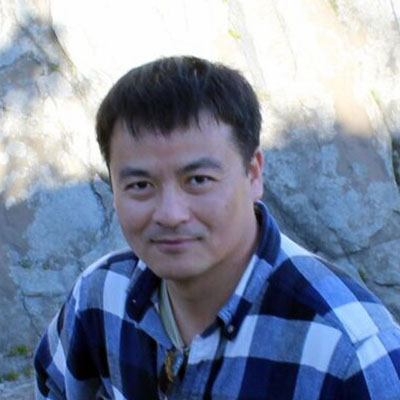 Han Pu (浦晗)合作论文数Department of Physics and Astronomy, Wiess School of Natural Sciences, Rice University7
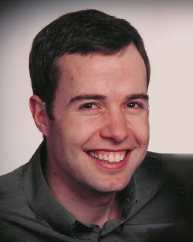 John Charles Howell合作论文数Department of Physics and Astronomy, University of Rochester/Racah Institute of Physics, Hebrew University7MJ KONOPNICKI合作论文数6
 Daniel Younis合作论文数Dept Phys & Astron, Univ Rochester6W.-C. Liu合作论文数6Alfred P. Marchetti合作论文数6
 Bruce W. Shore合作论文数6
 N. B. Narozhny合作论文数Moscow Engineering Physics Institute, State University6Jj Yeh合作论文数5R. Grobe合作论文数5
 Q. Park合作论文数Department of Physics, College of Science, Korea University5Tian Justin合作论文数Department of Physics &, Rochester Theory Center;Astronomy, University of Rochester;Rochester Theory Center and Department of Physics & Astronomy, University of Rochester5
 Iwo Białynicki Birula合作论文数Warsaw University/Center For Theoretical Physics, Polish Academy of Sciences/Polish Academy of Sciences5Elizabeth Groves合作论文数5Jay Richard Ackerhalt合作论文数5J. Durnin合作论文数5Nicholas P Bigelow合作论文数5
 Victor V Kozlov合作论文数5




