Continuous Spatio-Temporal Video Super-Resolution (C-STVSR) aims to simultaneously enhance the spatial resolution and frame rate of videos by arbitrary scale factors, offering greater flexibility than fixed-scale methods that are constrained by predefined upsampling ratios. In recent years, methods based on Implicit Neural Representations (INR) have made significant progress in C-STVSR by learning continuous mappings from spatio-temporal coordinates to pixel values. However, these methods fundamentally rely on dense pixel-wise grid queries, causing computational cost to scale linearly with the number of interpolated frames and severely limiting inference efficiency. We propose GS-STVSR, an ultra-efficient C-STVSR framework based on 2D Gaussian Splatting (2D-GS) that drives the spatiotemporal evolution of Gaussian kernels through continuous motion modeling, bypassing dense grid queries entirely. We exploit the strong temporal stability of covariance parameters for lightweight intermediate fitting, design an optical flow-guided motion module to derive Gaussian position and color at arbitrary time steps, introduce a Covariance resampling alignment module to prevent covariance drift, and propose an adaptive offset window for large-scale motion. Extensive experiments on Vid4, GoPro, and Adobe240 show that GS-STVSR achieves state-of-the-art quality across all benchmarks. Moreover, its inference time remains nearly constant at conventional temporal scales (X2–X8) and delivers over X3 speedup at extreme scales X32, demonstrating strong practical applicability.
Vision-Language-Action (VLA) models offer a promising paradigm for generalist robotic policies, yet their adaptation is hindered by data inefficiency and poor generalization. We argue that these bottlenecks stem from the prevailing Direct Instruction-to-Control Mapping, which forces models to memorize monolithic trajectories rather than reusable motion patterns, i.e., primitives. We propose PrimitiveVLA, a framework that shifts this paradigm toward a Primitive-Centric Disassemble Assemble paradigm. Supported by a shared Multimodal Canonical Representation (MCR), PrimitiveVLA unifies two phases: (1) Fine-tuning-phase Disassembly, which uses an automated pipeline to disassemble demonstrations into reusable primitives; and (2) Inference-phase Assembly, which employs a VLM-based planner and an LLM-generated switch module for robust closed-loop execution. By disassembling tasks into reusable primitives, PrimitiveVLA enables VLA models to learn invariant motion patterns instead of task-specific trajectories. Extensive experiments show that our framework improves data efficiency and achieves superior zero-shot generalization across unseen and long-horizon tasks.
Multi-Agent Path Finding (MAPF) is a coordination problem that requires computing globally consistent, collision-free trajectories from individual start positions to assigned goal positions under combinatorial planning complexity. In dense environments, suboptimal initial plans induce compound conflicts that hinder feasible repair. For repair-based solvers like LNS2, initial plan quality critically affects downstream repair, yet this factor remains underexplored. We propose DiffLNS, a hybrid framework that integrates a discrete denoising diffusion probabilistic model (D3PM) with LNS2. The D3PM serves as an initializer with sparse social attention that learns a spatiotemporal prior over coordinated multi-agent action trajectories from expert demonstrations and samples multiple joint plans. Operating directly on the categorical action space, our discrete diffusion preserves the MAPF action structure and samples from a multimodal joint-plan distribution to produce diverse drafts well suited for neighborhood repair. These drafts act as warm starts for downstream repair, which completes unfinished trajectories and resolves remaining conflicts under hard MAPF constraints. Experimental results show that despite being trained only on instances with at most 96 agents, the initializer generalizes to scenarios with up to 312 agents at inference time. Across 20 complex and congested settings, DiffLNS achieves an average success rate of 95.8
Diffusion planning is a promising method for learning high-performance policies from offline data. To avoid the impact of discrepancies between planning and reality on performance, previous works generate new plans at each time step. However, this incurs significant computational overhead and leads to lower decision frequencies, and frequent plan switching may also affect performance. In contrast, humans might create detailed short-term plans and more general, sometimes vague, long-term plans, and adjust them over time. Inspired by this, we propose the Temporal Diffusion Planner (TDP) which improves decision efficiency by distributing the denoising steps across the time dimension. TDP begins by generating an initial plan that becomes progressively more vague over time. At each subsequent time step, rather than generating an entirely new plan, TDP updates the previous one with a small number of denoising steps. This reduces the average number of denoising steps, improving decision efficiency. Additionally, we introduce an automated replanning mechanism to prevent significant deviations between the plan and reality. Experiments on D4RL show that, compared to previous works that generate new plans every time step, TDP improves the decision-making frequency by 11-24.8 times while achieving higher or comparable performance.
This paper provides a review of the NTIRE 2026 challenge on mobile real-world image super-resolution, highlighting the proposed solutions and the resulting outcomes. The challenge aims to recover high-resolution (HR) images from low-resolution (LR) counterparts generated through unknown degradations with a x4 scaling factor while ensuring the models remain executable on mobile devices. The objective is to develop effective and efficient network designs or solutions that achieve state-of-the-art real-world image super-resolution performance. The track of the challenge evaluates performance using a weighted combination of image quality assessment (IQA) score and speedup ratios. The competition attracted 108 registrants, with 16 teams achieving a valid score in the final ranking. This collaborative effort advances the performance of mobile real-world image super-resolution while offering an in-depth overview of the latest trends in the field.
Large Language Models (LLMs) achieve strong program repair performance but often suffer from over-editing, where excessive modifications overwrite correct code and hinder bug localization. We systematically quantify its impact and introduce precise repair task, which maximizes reuse of correct code while fixing only buggy parts. Building on this insight, we propose PRepair, a framework that mitigates over-editing and improves repair accuracy. PRepair has two components: Self-Breaking, which generates diverse buggy programs via controlled bug injection and min–max sampling, and Self-Repairing, which trains models with Edit-Aware Group Relative Policy Optimization (EA-GRPO) using an edit-aware reward to encourage minimal yet correct edits. Experiments show that PRepair improves repair precision by up to 31.4% under fix 1 @1 , a metric that jointly considers repair correctness and extent, and significantly increases decoding throughput when combined with speculative editing, demonstrating its potential for precise and practical code repair.
Large language models (LLMs) have shown promising capabilities in hardware description language (HDL) generation. However, existing approaches often rely on free-form natural language descriptions that are often ambiguous, redundant, and unstructured, which poses significant challenges for downstream Verilog code generation. We treat hardware code generation as a complex transformation from an open-ended natural language space to a domain-specific, highly constrained target space. To bridge this gap, we introduce Core Refined Understanding eXpression (CRUX), a structured intermediate space that captures the essential semantics of user intent while organizing the expression for precise Verilog code generation. We further design a two-stage training framework, comprising Joint Expression Modeling and Dual-Space Optimization, to enhance the quality of both CRUX and Verilog code. Experiments across multiple Verilog generation benchmarks demonstrate that our model, QiMeng-CRUX, achieves state-of-the-art performance among general models, particularly under challenging design tasks. Furthermore, the CRUX space proves transferable and beneficial when used as input prompts for other code models, highlighting its effectiveness in narrowing the gap between free-form natural language descriptions and precise Verilog generation.
Training Large Language Models (LLMs) for reasoning tasks is increasingly driven by Reinforcement Learning with Verifiable Rewards (RLVR), where Proximal Policy Optimization (PPO) provides a principled framework for stable policy updates. However, the practical application of PPO is hindered by unreliable advantage estimation in the sparse-reward RLVR regime. This issue arises because the sparse rewards in RLVR lead to inaccurate intermediate value predictions, which in turn introduce significant bias when aggregated at every token by Generalized Advantage Estimation (GAE). To address this, we introduce Segmental Advantage Estimation (SAE), which mitigates the bias that GAE can incur in RLVR. Our key insight is that aggregating $n$-step advantages at every token(as in GAE) is unnecessary and often introduces excessive bias, since individual tokens carry minimal information. Instead, SAE first partitions the generated sequence into coherent sub-segments using low-probability tokens as heuristic boundaries. It then selectively computes variance-reduced advantage estimates only from these information-rich segment transitions, effectively filtering out noise from intermediate tokens. Our experiments demonstrate that SAE achieves superior performance, with marked improvements in final scores, training stability, and sample efficiency. These gains are shown to be consistent across multiple model sizes, and a correlation analysis confirms that our proposed advantage estimator achieves a higher correlation with an approximate ground-truth advantage, justifying its superior performance.
Circuit pipelining is essential for improving the frequency and throughput of sequential circuits, yet it still largely relies on manual design at the behavioral level, which is effort-intensive, error-prone, and fails to exploit fine-grained gate-level opportunities. Existing automatic approaches analyze feedforward paths to insert registers but fall back to conservative stalling in the presence of feedback loops, sacrificing parallelism to preserve correctness. As a result, neither manual nor existing automatic methods simultaneously achieve fine-grained throughput optimization and correctness guarantees on arbitrary sequential circuits. We present an automatic pipelining framework that combines gate-level forwarding and customized scheduling. Our key insight is that gate-level analysis reveals shorter feedback loops, whose hazards can be resolved by forwarding paths spanning fewer pipeline stages, thus avoiding long multi-cycle dependencies that cause redundant stalls. Our method consists of two steps: the first focuses on fine-grained optimization beyond behavioral-level analysis, while the second ensures correctness for arbitrary circuits. Concretely, we (i) greedily assign pipeline stages at the gate level and create short forwarding paths for fine-grained pipeline optimization, and (ii) design a circuit-specific scheduler to ensure correctness. The scheduler analyzes state-conditioned reads/writes to predict future dependencies and apply only the necessary stalls, and is then synthesized into hardware using an improved Binary Speculative Diagram (BSD) algorithm with acceptable hardware overhead. Across diverse circuit datasets, our approach identifies 35.23% redundant pipeline stalls overlooked by behavioral-level manual designs and improves throughput by 9.46% for 3-stage and 23.07% for 4-stage pipelines over EDA-based automatic pipelining techniques, while guaranteeing functional correctness on arbitrary sequential circuits.
Vision-and-Language Navigation (VLN) requires an agent to dynamically explore complex 3D environments following human instructions. Recent research underscores the potential of harnessing large language models (LLMs) for VLN, given their commonsense knowledge and general reasoning capabilities. Despite their strengths, a substantial gap in task completion performance persists between LLM-based approaches and domain experts, as LLMs inherently struggle to comprehend real-world spatial correlations precisely; additionally, LLM inference can make the decision-making process considerably inefficient. To address these issues, we propose a novel dual-process thinking framework dubbed R3, integrating LLMs' generalization capabilities with VLN-specific expertise in a zero-shot manner. The framework comprises three core modules: Runner, Ruminator, and Regulator. The Runner is a lightweight transformer-based expert model that ensures efficient and accurate navigation under regular circumstances. The Ruminator employs a multimodal LLM as the backbone and adopts chain-of-thought (CoT) prompting to elicit structured reasoning from the LLM. The Regulator monitors the navigation progress and controls the appropriate thinking mode according to three criteria, integrating Runner and Ruminator harmoniously. Experimental results illustrate that R3 significantly outperforms other state-of-the-art methods, exceeding 3.28% and 3.30% in SPL and RGSPL respectively on the REVERIE benchmark, highlighting the effectiveness of our method in handling challenging VLN tasks.
Large Language Models (LLMs) have been widely adopted as task planners for AI agents in sequential decision-making problems, leveraging their extensive world knowledge. However, the gap between their general knowledge and environment-specific requirements often leads to inaccurate plans. To address this, existing approaches rely on frequent LLM queries to iteratively refine plans based on immediate environmental feedback, which incurs substantial query costs. However, this refinement is typically guided by short-term environmental feedback, limiting LLMs from developing plans aligned with long-term rewards. We propose **Co**de Driven **P**lanning w**i**th Domain-Adaptive Sele**C**tor (CoPiC). Instead of relying on frequent queries, CoPiC employs LLMs to generate a diverse set of high-level planning programs, which iteratively produce and refine candidate plans. A trained domain-adaptive selector then evaluates these candidates and selects the one most aligned with long-term rewards for execution. Using high-level planning programs as planner and domain-adaptive selector as estimator, CoPiC improves planning while significantly reducing query costs. Results in ALFWorld, NetHack, and StarCraft II Unit Building show that CoPiC outperforms advanced LLM-based baselines, achieving an average (1) 19.14\% improvement in success rate and (2) 79.39\% reduction in token costs.
Developing high-performance GPU kernels is critical for AI and scientific computing, but remains challenging due to its reliance on expert crafting and poor portability. While large language models (LLMs) offer promise for automation, both general-purpose and finetuned LLMs suffer from two fundamental and conflicting limitations: correctness and efficiency. The key reason is that existing LLM-based approaches directly generate the entire optimized low-level programs, requiring exploration of an extremely vast space encompassing both optimization policies and implementation codes. To address the challenge of exploring an intractable space, we propose Macro Thinking Micro Coding (MTMC), a hierarchical framework inspired by the staged optimization strategy of human experts. It decouples optimization strategy from implementation details, ensuring efficiency through high-level strategy and correctness through low-level implementation. Specifically, Macro Thinking employs reinforcement learning to guide lightweight LLMs in efficiently exploring and learning semantic optimization strategies that maximize hardware utilization. Micro Coding leverages general-purpose LLMs to incrementally implement the stepwise optimization proposals from Macro Thinking, avoiding full-kernel generation errors. Together, they effectively navigate the vast optimization space and intricate implementation details, enabling LLMs for high-performance GPU kernel generation. Comprehensive results on widely adopted benchmarks demonstrate the superior performance of MTMC on GPU kernel generation in both accuracy and running time. On KernelBench, MTMC achieves near 100% and 70% accuracy at Levels 1-2 and 3, over 50% than SOTA general-purpose and domain-finetuned LLMs, with up to 7.3× speedup over LLMs, and 2.2× over expert-optimized PyTorch Eager kernels. On the more challenging TritonBench, MTMC attains up to 59.64% accuracy and 34× speedup. All models and datasets will be made publicly available.
3D Gaussian Splatting (3DGS) is a breakthrough in 3D reconstruction using 3D Gaussians. However, even on high-end GPUs like the NVIDIA A100, reconstructing complex scenes remains time-consuming, taking over 15 minutes. The main bottleneck is a-computation, which accounts for 71.25% of training workload, yet 93.03% of it is invalid due to the localized influence of Gaussians. To address this issue, we propose Cambricon-GS, an accelerator for 3DGS training with Gaussian-Pixel hybrid parallelism. At the software level, we introduce a hybrid parallel workflow that breaks the limitation of conventional pixel-only parallelism through two key techniques: Center-Pixel Gaussian Culling (CPGC), which eliminates invalid Gaussians early, and Seed-Driven Gaussian Region Exploration (SDGRE), which reduces invalid computation for partially valid Gaussians by selectively exploring valid regions. Overall, the workflow significantly reduces a computations, lowering the workload to 17.99%. At the hardware level, Cambricon-GS decouples alpha-computation and alpha blending into GUnits and PUnits, organized in a 2D mesh-based NoC that supports asynchronous execution and efficient data routing. We further boost performance via Gaussian/Pixel load balancing and tiled SSIM based pipelining. The evaluation results show that Cambricon-GS achieves 19.63x, 14.86x, 15.42x, 2.98x and 2.63x speedup, and 78.62x, 63.00x, 61.72x, 3.89x and 3.22x energy saving, compared to A100, GSCore, GBU, GSArch, and GauSPU, respectively, with negligible image quality loss.
Long-context inference in Large Language Models (LLMs) is bottlenecked by the linear growth of Key-Value (KV) cache memory. Existing KV cache compression paradigms are fundamentally limited by heuristics: heuristic budgeting relies on statistical priors rather than task objectives, causing resource misallocation, while heuristic selection relies on coupled query-key interactions or static inductive biases (e.g., attention sinks). To address this limitation, we introduce LKV (Learned KV Eviction), which formulates KV compression as an end-to-end differentiable optimization problem. LKV integrates LKV-H to learn task-optimized global budgets, and LKV-T to derive intrinsic KV importance without materializing attention matrices. This design bypasses heuristic proxies, strictly aligning compression with task objectives. Extensive evaluations demonstrate that LKV achieves state-of-the-art performance on both LongBench and RULER benchmarks at high compression rates. In particular, on LongBench, LKV achieves near-lossless performance with only 15% KV cache retention. Crucially, our analysis identifies learned budgeting as the dominant driver of fidelity, demonstrating that data-driven allocation is essential to overcome the limitations of hand-crafted heuristics.
Context-based Meta-Reinforcement Learning (Meta-RL) is a powerful approach for training a generalizable agent by using context variables derived from historical data. However, due to the uneven distribution of these historical data in different tasks, the context variable tends to memorize trajectory features from training rather than capturing essential task information, introducing bias and impairing the agent’s generalization ability. In response to this challenge, we examine this problem from a causal perspective and identify that contextual bias arises from the indirect effect via the indirect path from task to context variable. In causal inference theory, such effects transmitted through indirect paths are proven to introduce biases into the estimation of target variables, which forms a well-established conclusion in the causal domain. Leveraging this insight, we propose the Contextual Bias Reduction Meta-RL (CBRM), a novel off-policy method addressing biases in the context variable from two perspectives: Firstly, we employ a policy initialization approach, in tandem with the auxiliary reward, to reduce biases in trajectories. Secondly, we use contrastive learning to penalize the context encoder that extracts trajectory information. Experimental results show that CBRM achieves state-of-the-art performance.
While Large Language Models (LLMs) have shown promise in translating natural-language specifications to Register-Transfer Level (RTL) designs, they often fail on complex, port-rich IPs. Existing frameworks typically separate generation from debugging, relying on static decomposition and iterative repair, which is hard to verify and yields unstable, inefficient maintenance. In this work, we propose VPID, a multi-agent framework for generating complex Verilog that achieves monotonic functional improvement. Given RTL’s inherent concurrency and the alignment between verification and port-level behavior, our key insight is to treat ports as verifiable boundaries for dynamic decomposition, enabling fine-grained analysis to pinpoint root causes and guide targeted debugging. Specifically, we implement a behavior locking mechanism that preserves the behavior of verified ports to ensure monotonicity, preventing regressions in correct functionalities. To accelerate convergence, we introduce an experience-guided refinement strategy that distills historical waveform mismatches into constraints, guiding the targeted debugging for the unverified ports. Together with precise Abstract Syntax Tree (AST)-based code extraction, these mechanisms enable an efficient incremental generation workflow. Experiments on RealBench demonstrate that VPID outperforms both one-pass general-purpose LLMs and existing agent-based frameworks in both syntax and functional correctness, presenting a robust approach for automating Verilog generation for complex RTL designs.
Real-SR endeavors to produce high-resolution images with rich details while mitigating the impact of multiple degradation factors. Although existing methods have achieved impressive achievements in detail recovery, they still fall short when addressing regions with complex gradient arrangements due to the intensity-based linear weighting feature extraction manner. Moreover, the stochastic artifacts introduced by degradation cues during the imaging process in real LR increase the disorder of the overall image details, further complicating the perception of intrinsic gradient arrangement. To address these challenges, we innovatively introduce kernel-wise differential operations within the convolutional kernel and develop several learnable directional gradient convolutions. These convolutions are integrated in parallel with a novel linear weighting mechanism to form an Adaptive Directional Gradient Convolution (DGConv), which adaptively weights and fuses the basic directional gradients to improve the gradient arrangement perception capability for both regular and irregular textures. Coupled with DGConv, we further devise a novel equivalent parameter fusion method for DGConv that maintains its rich representational capabilities while keeping computational costs consistent with a single Vanilla Convolution (VConv), enabling DGConv to improve the performance of existing super-resolution networks without incurring additional computational expenses. To better leverage the superiority of DGConv, we further develop an Adaptive Information Interaction Block (AIIBlock) to adeptly balance the enhancement of texture and contrast while meticulously investigating the interdependencies, culminating in the creation of a DGPNet for Real-SR through simple stacking. Comparative results with 15 SOTA methods across three public datasets underscore the effectiveness and efficiency of our proposed approach.
Diffusion transformers (DiTs) have demonstrated remarkable success in text-to-video generation. However, the self-attention mechanism in DiTs imposes significant computational and memory burdens, particularly when handling long patch sequences like high-resolution or long-time videos. While sparse attention shows promise in reducing self-attention costs, existing approaches struggle to deliver performance gains due to the unique challenges in DiTs, i.e., varied sparse patterns across layers and timesteps, and the cumulative nature of inference errors over timesteps. In this article, we propose DASA, an algorithm-hardware co-design that effectively addresses these challenges of attention sparsification in DiTs. Specifically, leveraging the insight that the generation quality is primarily influenced by overall distribution drift rather than changes in specific values, we introduce a novel distribution-aware filtering (DAF) mechanism for sparsification. To further accelerate the process, we design a specialized filtering unit that enables fast candidate selection based on the proposed DAF mechanism. Experimental results show that DASA achieves 2.52 & times; speed up compared to A100 GPU, and up to1.22 & times; speedup over state-of-the-art accelerators for self-attention computation.
Neural Scene Representation (NSR) is a promising technique for representing real scenes. By learning from dozens of 2D photos captured from different viewpoints, NSR computes the 3D representation of real scenes. However, the performance of NSR processing running on GPU is insufficient for applications. Cambricon-R achieves high performance of more than 60 scenes per second, but at the cost of modeling quality. In this paper, we propose Cambricon-SR, an algorithm-hardware co-designed accelerator to improve NSR performance and quality. First, we propose a novel NSR algorithm with sparse encoding table, it achieves more than 80% of sparsity for the encoding table with negligible accuracy loss. Second, to efficiently eliminate the invalid memory access requests to the pruned entries, we propose the sparse index unit based on sequential SRAM access to address the challenge of irregular memory access to the sparse structure bitmap. It achieves a throughput increase of 7.54x for the encoding stage with an additional area overhead of 8.59%. Third, we propose the dynamic shared buffer for the MLP units to reduce the buffer usage by 85.3% so that we can increase the number of the MLP units. We conduct experimental evaluations on 8 typical scenes. The results demonstrate that, compared with A100 GPU and Cambricon-R, Cambricon-SR achieves 1259x and 4.12x speedup, and reduces the energy consumption by 1139x and 2.98x for each training iteration of NSR, respectively.
The rise of GPU-based high-performance computing (HPC) has driven the widespread adoption of parallel programming models such as CUDA. Yet, the inherent complexity of parallel programming creates a demand for the automated sequential-to-parallel approaches. However, data scarcity poses a significant challenge for machine learning-based sequential-to-parallel code translation. Although recent back-translation methods show promise, they still fail to ensure functional equivalence in the translated code. In this paper, we propose \textbf{QiMeng-MuPa}, a novel \textbf{Mu}tual-Supervised Learning framework for Sequential-to-\textbf{Pa}rallel code translation, to address the functional equivalence issue. QiMeng-MuPa consists of two models, a Translator and a Tester. Through an iterative loop consisting of Co-verify and Co-evolve steps, the Translator and the Tester mutually generate data for each other and improve collectively. The Tester generates unit tests to verify and filter functionally equivalent translated code, thereby evolving the Translator, while the Translator generates translated code as augmented input to evolve the Tester. Experimental results demonstrate that QiMeng-MuPa significantly enhances the performance of the base models: when applied to Qwen2.5-Coder, it not only improves Pass@1 by up to 28.91\% and boosts Tester performance by 68.90\%, but also outperforms the previous state-of-the-art method CodeRosetta by 1.56 and 6.92 in BLEU and CodeBLEU scores, while achieving performance comparable to DeepSeek-R1 and GPT-4.1. Our code is available at \url{https://github.com/kcxain/mupa}.
 Rui Zhang (张蕊)合作论文数Institute of Computing Technology, Chinese Academy of Sciences44
 Yunji Chen (陈云霁)合作论文数Intelligent Processor Research Center, Institute of Computing Technology, Chinese Academy of Sciences;University of Chinese Academy of Sciences40
 Qi Guo (郭崎)合作论文数Institute of Computing Technology, Chinese Academy of Sciences;University of Chinese Academy of Sciences39
 Zidong Du (杜子东)合作论文数State Key Laboratory of Processors, Institute of Computing Technology, Chinese Academy of Sciences37
 Shaohui Peng合作论文数SKL of Processors, Institute of Computing Technology, Chinese Academy of Sciences;University of Chinese Academy of Sciences31
 Xing Hu (胡杏)合作论文数Institute of Computing Technology, Chinese Academy of Sciences29Di Huang合作论文数27
 Ling Li (李玲)合作论文数Institute of Software, Chinese Academy of Sciences;University of Chinese Academy of Sciences21Xueping Chen合作论文数20
 Xishan Zhang (张曦珊)合作论文数Institute of Computing Technology, Chinese Academy of Sciences;University of Chinese Academy of Sciences19Qi Yi合作论文数17
 Ruizhi Chen合作论文数Chinese Academy of Sciences, University of Chinese Academy of Sciences16Yuanbo Wen合作论文数University of Chinese Academy of Sciences12
 Yifan Hao (郝一帆)合作论文数Institute of Computing Technology, Chinese Academy of Sciences10
 Zihao Zhang (张子豪)合作论文数Institute of AI for Industry, Chineses Academy of Sciences8Yunkai Gao合作论文数7
 Fan Wu合作论文数Institute of Software, Chinese Academy of Sciences7Pengwei Jin合作论文数Chinese Acad Sci, Inst Comp Technol, SKL Comp Architecture, Beijing, Peoples R China7Siming Lan合作论文数6BenWu You (尤本武)合作论文数6XuePing Chen (陈学平)合作论文数6
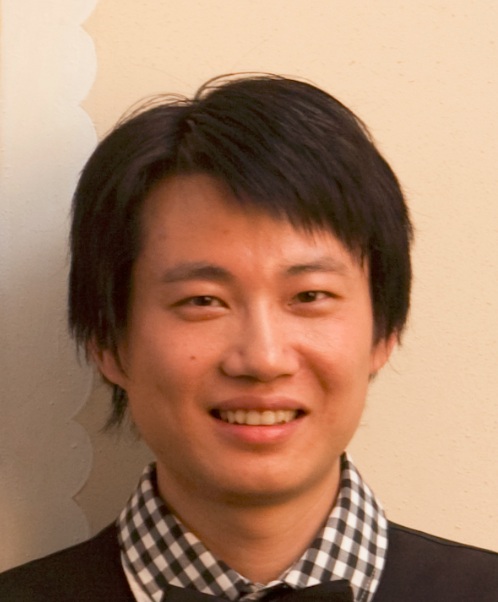 Tianshi Chen (陈天石)合作论文数Institute of Computing Technology, Chinese Academy of Sciences;Cambricon Technologies Corporation Limited6
 Zhengjun Zha (查正军)合作论文数Department of Automation, School of Information Science and Technology, University of Science and Technology of China;National Engineering Laboratory for Brain-Inspired Intelligence Technology and Application, University of Science and Technology of China6
 Yang Cao (曹洋)合作论文数Department of Automation, School of Information Science and Technology, University of Science and Technology of China6
 Zhuo Su (苏卓)合作论文数School of Computer Science and Engineering, Sun Yat-Sen University6Renjing Pei (裴仁静)合作论文数Huawei Technologies Ltd.6Shuyao Cheng合作论文数State Key Lab of Processors, Institute of Computing Technology, Chinese Academy of Sciences5Long Peng合作论文数5
 Xinkai Song合作论文数School of Computer Science and Technology, University of Chinese Academy of Sciences5XianYi Xiao (肖先仪)合作论文数5QingKai Xu (徐庆凯)合作论文数5KuanXin He (何宽信)合作论文数5Song Liu (刘松)合作论文数5
 Radu Timofte合作论文数Computer Vision Laboratory, Institute of Computer Science, Faculty of Mathematics and Computer Science, Julius Maximilians University of Würzburg;ETH Zurich5
 Shaoli Liu (刘少礼)合作论文数Cambricon Technologies Corporation Limited5
 Youliang Yan (颜友亮)合作论文数Noah’s Ark Lab, Huawei Technologies Ltd5Gaiyun Zhang (张改云)合作论文数5Yuxuan Guo合作论文数4Zikang Tian合作论文数4
 Long Sun (孙龙)合作论文数Intelligent Media Analysis Group, School of Computer Science, Nanjing University of Science and Technology4Liu Chang合作论文数Chinese Acad Sci, Inst Comp Technol, SKL Comp Architecture, Beijing, Peoples R China4QingLi Zhang (张清莉)合作论文数4
 Jiangxin Dong (董姜鑫)合作论文数Intelligent Media Analysis Group, School of Computer Science and Engineering, Nanjing University of Science and Technology4
 Xueyi Zou合作论文数Central Research Institute, Huawei4
 Jinshan Pan (潘金山)合作论文数School of Computer Science and Engineering, Nanjing University of Science and Technology4
 Youzhi Ma (马有志)合作论文数Institute of Crop Sciences, Chinese Academy of Agricultural Sciences4Liancheng Li合作论文数4
 Zhaoshi Xu (徐兆师)合作论文数Institute of Crop Science, Chinese Academy of Agricultural Sciences4




