Due to the large number of XML data and information and its advantage of simplicity, semi-structure, extensibility and self-description, clustering XML document has become a hot issue in XML data mining. LSPX model is a kind of XML data structure representation model, which is simple in construction process and short in time. The incremental clustering algorithm based on this model and the similarity calculation gets high time efficiency and good clustering effect. But the weakness of sensitivity to the order of input appeared in traditional incremental clustering. In order to further improve the clustering efficiency of XML documents, in this paper, a new XML clustering algorithm (CO-LSPX) is proposed, which is based on the cluster core and LSPX. The experimental result shows that the proposed method can increase efficiency of clustering, reduce the time consumption greatly, as well as mute the sensitivity of input data order on the basis of ensuring the quality of clustering results.
The increasing popularity of Linked Data Streams has led to the developments of several RDF stream processing engines. Among them, CQELS has been developed with a native and adaptive approach, which gives it a performance advantage over other engines. In the traditional Complex Event Processing, temporal logics between events have a wide range of applications in the financial securities, traffic control, security control, health and other fields. However, existing RDF stream processing provides insufficient support for temporal logics and complex event detection. In some previous work, researchers have elaborated on the need for extending CQELS in the temporal logic and provided some theoretical ideas but failed to realize. In this paper, we extend the current version of CQELS with the support for temporal logics. Our implementation extends the CQELS language expressiveness and realizes complex event processing over linked data streams. Moreover, we demonstrate the efficiency of our approach with experimental results comparing to the original CQELS implementation.
For traditional client-server streaming service pattern, a centralized multimedia stream server serves client's requests. But with the increasing popularity of streaming applications, this pattern introduces new challenges over best-effort network: high latency and loss rates can not provide good quality audio/video streaming to client, centralized server has a limit on delivering many simultaneously streams, the same stream sessions can not share data between each other. To address these issues, we deploy a streaming proxy server close to client to cache media objects in memory and disk to reduce the network traffic, the server load and the data delivery latency. In this paper, we propose a novel cache of streaming proxy server based on cluster architecture. In particular, dynamic shared running memory cache (DSRMC), network prefetch and cache admission policy are integrated in streaming caching design. Simulation results demonstrate the effectiveness of this novel cache.
Aiming at the problem that there are generally a great deal of redundant alerts in network security systems,this paper proposes a new transaction model which clusters the alerts by means of similarity evaluation and a hierarchical mechanism to reduce the amount of alerts efficiently.In addition,this model mines the potential correlation of alerts and produces new rules via association analysis, which will be helpful in recognizing new attack patterns and improving the efficiency of clustering.
针对目前流行的进程迁移系统普遍存在通用性差、剩余依赖性大等种种缺陷,我们提出了一种新的、完全在Linux内核实现的集群进程迁移系统.本文简要分析了该系统的框架,并详细阐述了该系统实现的核心技术和关键机制.
Traditional streaming media service pattern(client/server) has the problems of heavy load of streaming media server and frequent jitter during playback.To solve the issues mentioned above,the paper illustrates the Single Streaming Image(SSI) mechanism for implementing streaming media caching proxy system and proposes corresponding algorithms for receiving and sending streaming data.Also the paper does a deep research of theoretic model about streaming pre-fetching and innocatively proposes streaming pre-fetching policy based on the of RTCP packet feedback and RTP packet network delay,which can guarantee the quality of playback.The result of performance test shows that our proposed mechanisms including SSI and streaming pre-fetching are corrective and efficient.
With the explosive growth of multimedia streaming service, streaming proxy server is deployed to reduce response time, server load and network traffic. Existing single node proxy server has limitation on delivering many simultaneously streams. To solve this problem, in this paper, we propose a scalable streaming proxy server based on cluster architecture. We conduct some simulation experiments, which exhibit high scalability and high performance with our design.
The present Web scheduling systems have some deficiencies such as poor scalability and high system overhead. We propose a new content-aware scheduling system, which is implemented in the TCP/IP layer of the Linux kernel. This paper describes the design principles and implementation of our content-aware scheduling system, in which some technologies such as the TCP handoff and the piggy mechanism are adopted. We conclude from the experiment results that our content-aware scheduling system has better scalability and higher performance than many other schedulers.
 Hai Jin (金海)合作论文数School of Computer Science & Technology, Huazhong University of Science and Technology;Zhengzhou University4
 Kaiqin Fan合作论文数4Haidong Fu合作论文数2Di Zhao合作论文数2Zhi-ling YANG (杨志玲)合作论文数2Zongfen Han合作论文数1Mengxue Wei合作论文数1xiaohui zou (邹晓辉)合作论文数1
 Feng Gao (高峰)合作论文数Department of Computer Science and Technology, Wuhan University of Science and Technology1
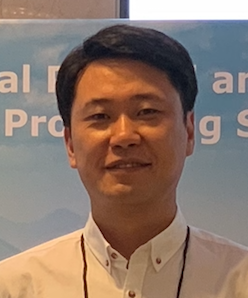 Song Wu (吴松)合作论文数School of Computer Science and Technology, Huazhong University of Science and Technology;Parallel and Distributed Computing Institute, Huazhong University of Science and Technology;Service Computing Technology and System Lab, Huazhong University of Science and Technology1
 Xuping Tu (涂旭平)合作论文数School of Computer Science and Artificial Intelligence, Huanggang Normal University1




