Police collect many kinds of data and are expected to analyze it for problem-solving. But there’s insufficient capacity to analyze all data. We show how police can apply large language models (LLMs) to unstructured data for problem-solving. We do this by applying LLMs to unstructured residents’ reports of homeless camping. LLMs are prompted to code resident concerns from 2021 to 2024 in Boulder, Colorado. A total of 10,286 reports were coded to identify 10 kind of problems. Substantial agreement between LLM coding was found (Cohen’s K = 0.67). Longer reports more frequently had concerns. 1
Mayhew and colleagues (1976) showed that opportunities for crime matter, sparking a revolution in crime theory, research, and prevention. But they could not resolve a conflict between subjective and objective interpretations of opportunity: does a crime opportunity depend on an offender perceiving it, or is it an objective fact of a situation? We reconcile these interpretations. Using a vehicle theft example, we illustrate the conflict and suggest that the subjective interpretation helps describe opportunity exploitation by offenders; only an objective interpretation can account for opportunity creation. We review 62 ideas elaborating crime opportunities. These ideas show that crime scientists embrace both opportunity exploitation and opportunity creation, which we call the Janus-faced opportunity perspective. It requires us to replace the offender view of opportunity with three alternative views: one subjective and two objective. Each has strengths and weaknesses. We conclude that the assumed conflict disappears when we realize that we use subjective explanations and objective explanations for different purposes.
Since the Chicago School, neighborhoods have been a staple in criminology research. However, some criminologists argue that there is no consensus on the definition of a neighborhood. This is important because if criminologists cannot agree on the theoretical concept of neighborhoods, they cannot synthesize neighborhood research across multiple studies. To test the “no consensus” assertion, we conducted a concept consensus review of all articles using the term “neighborhood” in the top 10 journals in criminology from 2010 to 2020. We found 310 articles where the term neighborhood was an important concept in the study. Of these articles, only 15 provided an explicit conceptual definition. An additional 6 articles provided ambiguous conceptual definitions. We probed the content of conceptual definitions and found they varied widely, often omitting essential elements. Finally, we examined the operational definitions used in the 310 studies and found 50 unique operationalizations of neighborhood. Therefore, we conclude that there is no consensus about the theoretical meaning of neighborhood in criminology. Criminologists should either reach a consensus about the meaning of neighborhood or abandon the concept and use newer alternatives.
 Shannon J. Linning合作论文数Sch Criminol, Simon Fraser Univ36
 David Weisburd合作论文数Department of Criminology, Law and Society, George Mason University;Institute of Criminology, Faculty of Law, The Hebrew University19
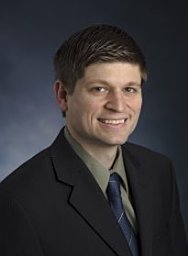 Joshua Hinkle合作论文数Georgia State University13
 Tamara D. Madensen合作论文数13
 Kate Bowers合作论文数Department of Security and Crime Science, Faculty of Engineering Science, University College London12
 Tamara D. Herold合作论文数11
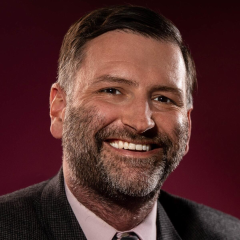 Cody W. Telep合作论文数Center for Correctional Solutions, School of Criminology and Criminal Justice, Arizona State University;Watts College of Public Service and Community Solutions, Arizona State University;Office of Community Health, Engagement, and Resiliency, Arizona State University;International Summer School for Policing Scholars;Center for Evidence-Based Crime Policy, George Mason University11
 YongJei Lee合作论文数Sch Publ Affairs, Univ Colorado10
 Elizabeth R. Groff合作论文数National Institute of Justice10
 Charlotte Gill合作论文数9
 George F. Rengert合作论文数9
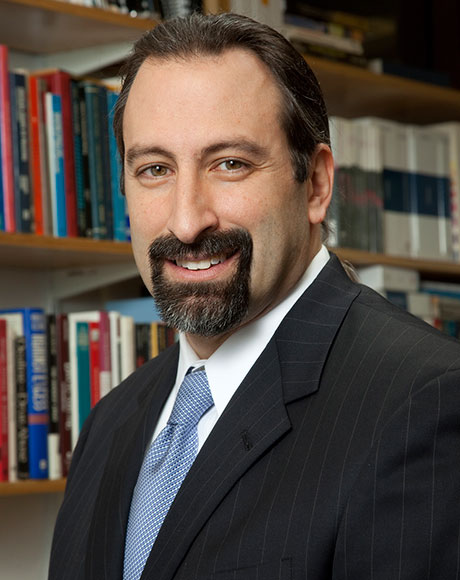 Anthony A. Braga合作论文数School of Criminology and Criminal Justice, College of Social Sciences and Humanities, Northeastern University9Brian A. Lawton合作论文数8SooHyun O合作论文数8
 Julie Hibdon合作论文数School of Justice and Public Safety, Southern Illinois University8
 Breanne Cave合作论文数Govt Accountabil Off, Washington, DC USA8
 Lin Liu (柳林)合作论文数School of Geography and Remote Sensing, Guangzhou University;University of Cincinnati8
 Lum Cynthia合作论文数George Mason University8Travis Taniguchi合作论文数8
 Jerry H. Ratcliffe合作论文数Department of Criminal Justice, College of Liberal Arts, Temple University8Gerben Bruinsma合作论文数8
 Sue-Ming Yang合作论文数University of Maryland College Park7
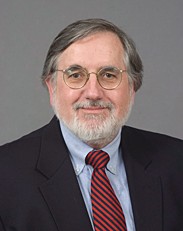 Francis T. Cullen合作论文数School of Criminal Justice, University of Cincinnati6
 Shane Johnson合作论文数Department of Security and Crime Science, University College London6
 Natalie Martinez合作论文数Sch Criminal Justice, Univ Cincinnati5
 Rob T. Guerette合作论文数Department of Criminal Justice, Florida International University5
 Pamela Wilcox合作论文数Sch Criminal Justice, Univ Cincinnati4James Frank合作论文数4
 Troy Payne合作论文数Univ Alaska Anchorage3
 Minxuan Lan合作论文数Univ Cincinnati, Dept Geog & GIS, Cincinnati, OH 45221 USA3
 Ajima Olaghere合作论文数Coll Educ Criminal Justice & Human Serv, Univ Cincinnati3
 Nicholas Corsaro合作论文数Department of Criminology and Criminal Justice, Southern Illinois University3
 Cheryl Lero Jonson合作论文数University of Cincinnati3
 Ronald V. Clarke合作论文数University of Wisconsin3justin a heinonen合作论文数2
 Lacey Schaefer合作论文数Sch Criminol & Criminal Justice, Griffith Univ Arts Educ & Law2
 Robin S. Engel合作论文数2
 Doris Layton MacKenzie合作论文数The Criminal Justice Research Center, College of the Liberal Arts, The Pennsylvania State University/Department of Sociology, The Pennsylvania State University/Evaluation Research Group, Department of Criminology and Criminal Justice, University of Maryland2
 Denise Gottfredson合作论文数Department of Criminology and Criminal Justice, University of Maryland2Nick Tilley合作论文数Department of Security and Crime Science, Faculty of Engineering Sciences, University College London2
 Peter Reuter合作论文数Department of Criminology and Criminal Justice, School of Public Policy, University of Maryland2
 Lawrence W. Sherman合作论文数Institute of Criminology, University of Cambridge/University of Maryland, College Park/Jerry Lee Centre of Experimental Criminology, University of Cambridge2
 Shawn D. Bushway合作论文数Rockefeller College of Public Affairs and Policy, University at Albany, State University of New York2Justin Ready合作论文数Arizona State Unversity2
 Marie Skubak Tillyer合作论文数Dept Criminal Justice, Univ Texas San Antonio2
 Michael Sean Scott合作论文数Center for Problem-oriented Policing , Inc2jeonglim kim合作论文数1Michael Scott合作论文数1david weisburd合作论文数1




