In this introductory chapter to Schmeinck, D. and Lidstone, J. (2014) “Current trends and issues in geographical education” in Schmeinck, D. and Lidstone, J. (2014) Eds) Standards and Research in Geographical Education: Current Trends and International Issues. Berlin. Mensch und Buch Verlag. Pp. 5 - 16. , the authors review and analyse eleven papers originally presented to the Congress of the International Geographical Union held in Cologne in 2012. Taking the collection of papers as a single corpus representing the “state of the art” of geography education, they applied lexical and bibliometric analyses in an innovative attempt to identify the nature of geographical education as represented by this anthology of peer reviewed chapters presented at the start of the second decade of the Twenty-first century?
John G. Lidstone, a regular visitor to Malta, offers an enthusiast's thoughts of a bus system that worked, but looked as though it should not.
This paper examines the enabling effect of using blended learning and synchronous internet mediated communication technologies to improve learning and develop a Sense of Community (SOC) in a group of post graduate students consisting of a mix of on-campus and off campus students. Both quantitative and qualitative data collected over a number of years supports the assertion that the blended learning environment enhanced both teaching and learning. The development of a SOC was pivotal to the success of the blended approach when working with geographically isolated groups within a single learning environment.
This paper examines the enabling effect of using blended learning and synchronous internet mediated communication technologies to improve learning and develop a Sense of Community (SOC) in a group of post-graduate students consisting of a mix of on-campus and off-campus students. Both quantitative and qualitative data collected over a number of years supports the assertion that the blended learning environment enhanced both teaching and learning. The development of a SOC was pivotal to the success of the blended approach when working with geographically isolated groups within a single learning environment.
Early childhood educators insist on recognition of young children’s personal agency and have identified that young children experience life more holistically than any other age group. This paper identifies the irony that, despite clear evidence that artistic expression is essential to development in young children, to date, the field of art in early childhood education has rarely embraced phenomenology which would appear to be an ideal means of illuminating young children’s experiences. We exemplify the importance of congruence and authentic artistic experience with a study into young children’s experiences of displaying their art. We describe the central features of Giorgi’s (1985a, 1985b) approach to phenomenological psychology and assert its appropriateness not only on the grounds that it is an empirical, clear and concise way of uncovering human experience, but also because it is congruent with current understandings of early childhood and reveals the children’s authentic experiences of themselves as artists.
The question of research paradigms in geography and environmental education is one that the editors address regularly in the manuscript review process. Because the fields of geography and environmental education encompass broad ranges of disciplinary content and professional education, it is often necessary to take both a content perspective and a perspective on research methodologies or paradigms that form the basis for the research studies that are submitted to International Research in Geography and Environmental Education (IRGEE). Three types of research traditions form our collective past – observing and reporting the local environment, large-scale research treatments and the philosophy of geographical and environmental education. The fourth, mixed methods research design, is somewhat more recent in its systematic application. Taking a more general view of the research, we are often reminded that some of the most far-reaching research is small in scale and local. For example, the research completed by Jean Piaget used the paradigm of local observation and reflection. It was the observation of his own children and reflection on their readiness to explain (including the thinking and manipulating) phenomena that adults took for granted. From those observations grew a theory of child development that continues to be discussed (both the pros and cons) more than most others theories a century later. The markings of his research were a small sample, very careful observations over long periods (years) and reflection on the observations. Terrain analysis using maps is a skill that was especially important during World War II. Many thousands of military personnel took tests of map reading ability and their performances were analysed to determine the most effective ways to both design maps and train map readers. While those studies are not frequently cited in the research literature, they did build on the notion that both educational and training programmes could be evaluated for their efficacy. Large-scale studies, under certain conditions and funding support, are recognised as research paradigms of importance. John Dewey and Alfred North Whitehead both researched theories of education, the structure of knowledge and learning. However, we seldom encounter reports of either large or small observations in their writing. They did observe learning first hand, reflected on it, made adjustments to their theoretical positions at times and developed philosophers of education that have endured the decades. Research in geography and environmental education today is often reminiscent of those philosophical research paradigms in vague ways through reflective thought and searching for patterns of meaning in the research questions.
Many statements on education, emanating from all levels from government ministers to classroom teachers, have claimed that one of the foremost purposes of schooling is to enhance economic futures by creating ‘smart states’ and ‘clever countries’ while also preparing citizens to make personal contributions to engendering sustainable societies. In fact, at the start of the 21st century it is hard to find anywhere in the world where purposes of schooling are still defined in terms of gaining knowledge as an end in itself. At the global level, the rise of a new creative group with a new ‘creative’ ethos has been identified by Florida (2003) as an international trend. He charts the growth of creative centres which attract creative talent and creative industry, and whose growth is eclipsing that of industrial style centres. Florida defines the creative class (p. 8) as ‘people in science and engineering, architecture and design, education, arts, music and entertainment, whose economic function is to create new ideas, new technologies and/or creative context’. He claims that their mind-set values diversity and tolerance (p. 120) and may be identified at the levels of economics and geography. Creative people gravitate to places that offer them the lifestyle and ‘exposure to diversity’ (Simonton, 1984: l45) that will nurture their creativity. More recently, Friedman (2006) has documented how creative and innovative integration of new perspectives on globalisation with traditional economic functions have ‘flattened’ the earth in ways that would have been inconceivable only a decade or so ago. Given the demonstrable economic (and, arguably, social) advantages of nurturing creativity and innovation, it is unsurprising that governments around the world have embraced these concepts and seek ways to promote them through their education systems. One of us recently engaged in a quite heated discussion with colleagues on educational priorities which resulted in general agreement that three of the most important priorities for school education in these early years of the 21st century are:
 Rod Gerber合作论文数9Joe Stoltman合作论文数8
 Joseph P Stoltman合作论文数4Rebecca A. Stephenson合作论文数3
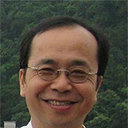 Chi Chung Lam合作论文数3
 Paul W Shield合作论文数2
 Daniela Schmeinck合作论文数Universidad de la Educación2
 Nora Chiang合作论文数2waldo w braden合作论文数1robert l holt合作论文数1australian surveying合作论文数1
 michael nagel合作论文数School of Education, University of the Sunshine Coast1yifeng yuan合作论文数1
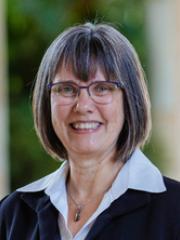 Jan Packer合作论文数School of Business, Faculty of Business, Economics and Law, The University of Queensland1
 Jan Novak合作论文数1
 Kenneth M. Johnson合作论文数Department of Pharmacology and Toxicology, UTMB1
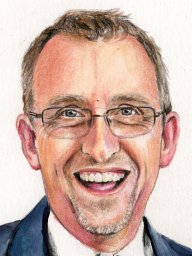 John D. Turner合作论文数Management School, Queen ' s University;University Belfast;Queen ' s University, Queen ' s University Belfast1
 Roy Ballantyne合作论文数The University of Queensland, University of Queensland1
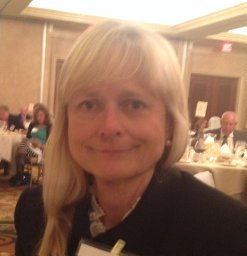 Sarah Bednarz合作论文数Dept Geog, Texas A&M Univ1Donna Tangen合作论文数1Margot Duncan合作论文数1Keith B. Lucas合作论文数1Lisa C. Ehrich合作论文数Queensland University of Technology1
 Rod Nason合作论文数1Sue Burkill合作论文数1
 Kathy Ann Mills合作论文数Christian Heritage College1Eleanor Rawling合作论文数1lisa m dechano合作论文数1Melvin L. Defleur合作论文数1Caleb Gattegno合作论文数1




