As scientists working at the International Rice Research Institute and other institutions that have investigated greenhouse gas emissions from rice fields, we read the recent article in PNAS by Kritee et al. (1) with great interest. The observed N2O emissions from rice fields in South India including previously unknown high rates definitely constitute an important finding that warrants being reported. We also agree that recommendations on farming practices should give close attention to timing and rates of N fertilizer application in relation to water management. Other generalizations in this study, however, are largely unfounded and speculative. We raise several critical issues that are further substantiated by information … [↵][1]1To whom correspondence should be addressed. Email: r.wassmann{at}irri.org. [1]: #xref-corresp-1-1
Agriculture is considered to be “climate-smart” when it contributes to increasing food security, adaptation and mitigation in a sustainable way. This new concept now dominates current discussions in agricultural development because of its capacity to unite the agendas of the agriculture, development and climate change communities under one brand. In this opinion piece authored by scientists from a variety of international agricultural and climate research communities, we argue that the concept needs to be evaluated critically because the relationship between the three dimensions is poorly understood, such that practically any improved agricultural practice can be considered climate-smart. This lack of clarity may have contributed to the broad appeal of the concept. From the understanding that we must hold ourselves accountable to demonstrably better meet human needs in the short and long term within foreseeable local and planetary limits, we develop a conceptualization of climate-smart agriculture as agriculture that can be shown to bring us closer to safe operating spaces for agricultural and food systems across spatial and temporal scales. Improvements in the management of agricultural systems that bring us significantly closer to safe operating spaces will require transformations in governance and use of our natural resources, underpinned by enabling political, social and economic conditions beyond incremental changes. Establishing scientifically credible indicators and metrics of long-term safe operating spaces in the context of a changing climate and growing social-ecological challenges is critical to creating the societal demand and political will required to motivate deep transformations. Answering questions on how the needed transformational change can be achieved will require actively setting and testing hypotheses to refine and characterize our concepts of safer spaces for social-ecological systems across scales. This effort will demand prioritizing key areas of innovation, such as (1) improved adaptive management and governance of social-ecological systems; (2) development of meaningful and relevant integrated indicators of social-ecological systems; (3) gathering of quality integrated data, information, knowledge and analytical tools for improved models and scenarios in time frames and at scales relevant for decision-making; and (4) establishment of legitimate and empowered science policy dialogues on local to international scales to facilitate decision making informed by metrics and indicators of safe operating spaces.
To ensure future food security, there is an urgent need for improved co-ordination of agricultural research. While advances in biotechnology hold considerable promise, significant technology gaps exist that may reduce their impact. Examples include an incomplete knowledge of target breeding environments, a limited understanding and/or application of optimal crop management practices, and underfunded extension services. A better co-ordinated and more globalized approach to agricultural research through the implementation of Global Crop Improvement Networks (GCIN) is proposed. Such networks could underpin agricultural research and development by providing the following types of services: (i) increased resolution and precision of environmental information, including meteorological data, soil characteristics, hydrological data, and the identification of environmental 'hotspots' for a range of biotic, abiotic, and socio-economic constraints; (ii) augmented research capacity, including network-based variety and crop management trials, faster and more comprehensive diagnosis of emerging constraints, timely sharing of new technologies, opportunities to focus research efforts better by linking groups with similar productivity constraints and complementary skills, and greater control of experimental variables in field-based phenotyping; and (iii) increased communication and impacts via more effective dissemination of new ideas and products, the integration of information globally to elicit well-timed local responses to productivity threats, an increased profile, and the publicity of threats to food security. Such outputs would help target the translation of research from the laboratory into the field while bringing the constraints of rural communities closer to the scientific community. The GCIN could provide a lens which academia, science councils, and development agencies could use to focus in on themes of common interest, and working platforms to integrate novel research approaches on crop adaptation and rural development.
Maize is one of the most important food crops in the world and, together with rice and wheat, provides at least 30% of the food calories to more than 4.5 billion people in 94 developing countries. In parts of Africa and Mesoamerica, maize alone contributes over 20% of food calories. Maize is also a key ingredient in animal feed and is used extensively in industrial products, including the production of biofuels. Increasing demand and production shortfalls in global maize supplies have worsened market volatility and contributed to surging global maize prices. Climatic variability and change, and the consequent rise in abiotic and biotic stresses, further confound the problem. Unless concerted and vigorous measures are taken to address these challenges and accelerate yield growth, the outcome will be hunger and food insecurity for millions of poor consumers. We review the research challenges of ensuring global food security in maize, particularly in the context of climate change. The paper summarizes the importance of maize for food, nutrition and livelihood security and details the historical productivity of maize, consumption patterns and future trends. We show how crop breeding to overcome biotic and abiotic stresses will play a key role in meeting future maize demand. Attention needs to be directed at the generation of high yielding, stress-tolerant and widely-adapted maize varieties through judicious combination of conventional and molecular breeding approaches. The use of improved germplasm per se will not, however, be enough to raise yields and enhance adaptation to climate change, and will need to be complemented by improved crop and agronomic practices. Faced with emasculated state extension provision and imperfect markets, new extension approaches and institutional innovations are required that enhance farmers’ access to information, seeds, other inputs, finance and output markets. Over the long-term, large public and private sector investment and sustained political commitment and policy support for technology generation and delivery are needed to overcome hunger, raise the incomes of smallholder farmers and meet the challenges of growing demand for maize at the global level.
There is growing interest in the extent to which market opportunities for local crops can bridge the gap between poverty alleviation and in situ conservation. We explore this issue through case studies of the blue and pozole maize specialty markets in the Mexican central highlands. Both markets utilize maize landraces that are cultivated predominantly by smallholder farmers. The pozole maize value chain relies on localized production and infrastructure investment that contributes to value-adding activities such as producing pre-cooked pozole. Blue maize, meanwhile, is more widely cultivated, and although there are fewer opportunities for farmers to add value, this grain feeds into small-scale, largely female-run businesses. Both markets have the potential to contribute to local livelihood improvements and in situ conservation, but careful policy design would be necessary to scale up these markets without diminishing their benefits.
 David LeZaks合作论文数2
 Todd Rosenstock合作论文数world agroforestry centre2
 Eva Wollenberg合作论文数Center for International;Forestry Research;Center for International|Forestry Research2
 Jay Gulledge合作论文数University of Louisville2
 Robert B. Zougmoré合作论文数Alliance of Bioversity International and CIAT2
 Alessandro De Pinto合作论文数Environment and Production Technology, International Food Policy Research Institute2Bekele Shiferaw合作论文数1Marianne Bänziger合作论文数1
 Petr Kosina合作论文数1
 Sudhir Yadav合作论文数1
 Molly Jahn合作论文数Department of Plant and Agroecosystem Sciences, College of Agricultural and Life Sciences, University of Wisconsin-Madison;Defense Advanced Research Projects Agency, US Department of Defense1
 Baldur Janz合作论文数1
 Bjoern Ole Sander合作论文数1
 Yam Kanta Gaihre合作论文数International Fertilizer Development Center1
 Boddupalli Prasanna合作论文数International Maize and Wheat Improvement Center1
 Kraus David W合作论文数1
 Sonja Vermeulen合作论文数CGIAR Research Program on Climate Change, Agriculture, and Food Security, University of Copenhagen1
 Mario Herrero合作论文数Department of Global Development, Cornell University;Cornell Atkinson Center for Sustainability, Cornell University1Braun Hans合作论文数1
 Andy Jarvis合作论文数Bezos Earth Fund1
 Klaus Butterbach-Bahl合作论文数Institute of Meteorology and Climate Research - Atmospheric Environmental Research, Karlsruhe Institute of Technology1
 Peter R. Hobbs合作论文数School of Integrative Plant Science Soil And Crop Sciences Section, Cornell University1
 Bas Bouman合作论文数International Rice Research Institute1
 Mary Scholes合作论文数School of Animal, Plant and Environmental Sciences, University of the Witwatersrand1Stuart Alexander M合作论文数International Rice Research Institute;School of Biological Sciences, The University of Reading;International Rice Research Institute, The University of Reading1
 John Beddington合作论文数Imperial College London1
 Kai Sonder合作论文数1
 Reiner Wassmann合作论文数International Rice Research Institute1D. E. Johnson合作论文数1
 Alder Keleman合作论文数c/o Food and Agriculture Organization, Yale University1
 Henry Neufeldt合作论文数Earth System Science – Climate Change Group, Wageningen University and Research Centre1
 Ngonidzashe Chirinda合作论文数Department of Agroecology and Environment, Aarhus University1
 Robert J. Scholes合作论文数Global Change and Sustainability Research Institute, Witwatersrand University1
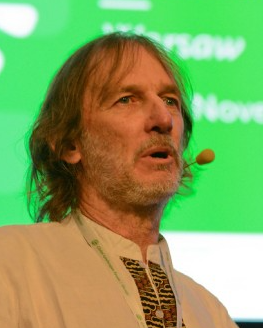 Bruce Morgan Campbell合作论文数Clim-Eat;Global Center on Adaptation;University of Copenhagen1
 Ralf Kiese合作论文数Institute for Meteorology and Climate Research (IMK-IFU),, Karlsruher Institut für Technologie (KIT),1Bram Govaerts合作论文数1
 Grant R Singleton (Grant Singleton)合作论文数Natural Resources Institute, Faculty of Engineering & Science, University of Greenwich;International Rice Research Institute1
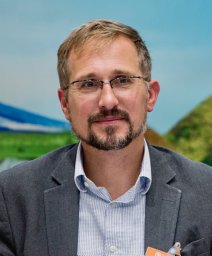 Fabrice DeClerck合作论文数EAT;Bioversity International1
 Matthew Reynolds合作论文数CIMMYT1
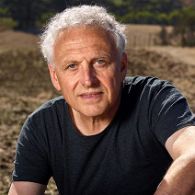 Holger Meinke合作论文数Tasmanian Institute of Agriculture, School of Land and Food, University of Tasmania1
 Bruce A. Linquist合作论文数Department of Plant Sciences, University of California1




