We present a perspective article that considers the Indigenous evaluation model developed in 2019 by Wehipeihana, a Māori scholar, as an invitation and a guide to reflect on relationships between geoscience education researchers and collaborating communities. After describing the ‘to/for/with/by/as’ Indigenous evaluation model, we offer a translation into geoscience education research (GER) spaces. Using key indicators and a hypothetical context, we illustrate an application in informal and formal GER spaces. We argue that GER currently occurs mainly as research is done to/for communities. Expanding the field horizons into research with/by or as communities could increase relevancy, representation, innovation, quality and impact.
Quantitative microbial risk assessment (QMRA) is a growing interdisciplinary field addressing exposures to microbial pathogens and infectious disease processes. Risk science is inherently interdisciplinary, but few of the contributing disciplinary programs offer courses and training specifically in QMRA. To develop multidisciplinary training in QMRA, an annual 10-day long intensive workshop was conducted from 2015 to 2019-the Quantitative Microbial Risk Assessment Interdisciplinary Instructional Institute (QMRA III). National leaders in the fields of public health, engineering, microbiology, epidemiology, communications, public policy, and QMRA served as instructors and mentors over the course of the program. To provide cross-training, multidisciplinary teams of 5-6 trainees were created from the approximately 30 trainees each year. A formal assessment of the program was performed based on observations and surveys containing Likert-type scales and open-ended prompts. In addition, a longitudinal alumni survey was also disseminated to facilitate the future redevelopment of QMRA institutes and determine the impact of the program. Across all years, trainees experienced statistically significant increases (P < 0.05) in their perceptions of their QMRA abilities (e.g., use of specific computer programs) and knowledge of QMRA constructs (e.g., risk management). In addition, 12 publications, three conference presentations, and two research grants were derived from the QMRA III institute projects or tangential research. The success of QMRA III indicates that a short course format can effectively address many multidisciplinary training needs. Key features of QMRA III, including the inter-disciplinary training approach, hands-on exercises, real-world institute projects, and interaction through a mentoring process, were vital for training multidisciplinary teams housing multiple forms of expertise. Future QMRA institutes are being redeveloped to leverage hybrid learning formats that can further the multidisciplinary training and mentoring objectives.
The coronavirus disease 2019 pandemic highlighted the need for more rapid and routine application of modeling approaches such as quantitative microbial risk assessment (QMRA) for protecting public health. QMRA is a transdisciplinary science dedicated to understanding, predicting, and mitigating infectious disease risks. To better equip QMRA researchers to inform policy and public health management, an Advances in Research for QMRA workshop was held to synthesize a path forward for QMRA research. We summarize insights from 41 QMRA researchers and experts to clarify the role of QMRA in risk analysis by (1) identifying key research needs, (2) highlighting emerging applications of QMRA; and (3) describing data needs and key scientific efforts to improve the science of QMRA. Key identified research priorities included using molecular tools in QMRA, advancing dose-response methodology, addressing needed exposure assessments, harmonizing environmental monitoring for QMRA, unifying a divide between disease transmission and QMRA models, calibrating and/or validating QMRA models, modeling co-exposures and mixtures, and standardizing practices for incorporating variability and uncertainty throughout the source-to-outcome continuum. Cross-cutting needs identified were to: develop a community of research and practice, integrate QMRA with other scientific approaches, increase QMRA translation and impacts, build communication strategies, and encourage sustainable funding mechanisms. Ultimately, a vision for advancing the science of QMRA is outlined for informing national to global health assessments, controls, and policies.
Earth science is struggling. Despite the economic and social impacts of natural hazards, the growing need for minerals, oil, gas, and other resources extracted from the planet, the loss of clean water and soil resources resulting from human activity, and the looming climate crisis - earth science remains undertaught and undervalued. A direct result of this undervaluing is a severe shortage in scientists trained to work in environmental, energy, and earth-related fields. This chapter reflects on the status of earth science in schools and universities across the globe, as well as recent developments in earth science education and education research. We suggest that earth science education researchers should adopt a more holistic research agenda and to turn their attention to the lack of earth science education in schools and universities as well as the limited focus of earth science curriculum. We suggest that increased attention to earth systems education, environmental insight, and social well-being in the context of earth science is needed to prepare students for effective decision-making around earth phenomena. Rethinking the earth science curriculum to build greater links between science and society would have the added benefit of encouraging more people from many backgrounds to participate in earth science education and careers. This curriculum will also include new avenues of research focused on changing the attitudes of geoscientists toward their role in society and the adoption of geoethical values.
The Earth sciences lack representation of Latine scholars in academia and industry. Latine scholars encounter systematic barriers within academic environments globally, including discrimination and gender biases, lack of guidance due to cultural differences, funding limitations for non-citizens, access burden of visa applications, and language-barriers for non-native English speakers (Carrera et al., 2023; Valenzuela-Toro and Viglino, 2021).
This article maps and compares four universities' policies and procedures for addressing faculty and staff sexual misconduct in higher education in the UK and US. While universities have engaged in significant work to grapple with student-student sexual misconduct, attention to misconduct perpetrated, and experienced, by higher education employees is relatively nascent. In this paper, we explore the maze of institutional processes and actors that victim-survivors of FASSM might encounter. We describe what is known about prevalence of FASSM in the US and UK and offer an overview of the policy landscape in both settings. Inspired by Patricia Yancey Martin, we analyze publicly available policy documents on FASSM from two US and two UK universities and map out visually the range of investigative, reporting, and sanctioning processes. We introduce an analytic distinction between an actor and a practitioner within the FASSM context, whereby actors are those tasked with administrative duties in handling sexual misconduct reports, while practitioners are those with specialized knowledge and training that enables them to prioritize victim-survivor needs. These illustrative diagrams suggest that while university employees are tasked to act on reports and disclosures of sexual misconduct, it is difficult to identify specialist practitioners with expertise to support victim-survivors of FASSM. Ultimately, this work provides a deeper understanding of what practice looks like in relation to higher education FASSM, and we outline implications for future research directions.
Many geoscience phenomena cannot be perceived at human temporal or spatial scales. As a consequence, we can only understand many processes that drive geological phenomena through analogical reasoning. Building deep conceptual understanding requires instruction that activates the appropriate source analogs and allows students to build useful conceptual metaphors. In this paper we illustrate, using plate tectonics as an example, how educational guidelines for teaching geosciences can be developed by linking the Model of Educational Reconstruction with Conceptual Metaphor Theory. Qualitative content analysis in combination with systematic metaphor analysis of scientific textbooks and semi-structured interviews conducted with students (n = 36) provided insight into the image schemas used by scientists and learners. Difficulties in understanding plate tectonics structures and processes, e.g. subduction, arise because many students understand tectonic plates as single bodies, rather than composites. Similarly, students’ difficulties explaining plate movement result from activation of a push rather than a pull schema. Through exploring schemas for plate tectonics, we illustrate the value of combining Conceptual Metaphor Theory and the Model of Educational Reconstruction for (1) understanding alternative conceptions as grounded in image schemas and (2) developing educational guidelines for improving instruction.
Natural selection is a fundamental scientific process, yet students and educators alike demonstrate misconceptions of the process. Though images are used often in science to facilitate learning, it is less common to assess learners' understanding through their own drawings. This study utilizes a multiple-choice assessment of evolutionary processes and a drawing prompt to investigate participants' abilities to draw the process of natural selection. We analyzed multiple-choice assessments and drawings from 109 geoscientists from a range of career levels. Drawings were coded for the presence of six components of natural selection. We found that geoscientists scored better on the six-point multiple-choice assessment (mean = 4.2, SD = 1.1) than on the six-point drawing score (mean = 3.0, SD = 1.8). A regression analysis was performed on drawing scores to explore predictors of more complete drawings. Higher multiple-choice scores were a significant predictor of higher drawing scores. The regression analysis also indicated that women scored significantly higher on their drawings. Our results suggest that drawings may be useful assessment tools for measuring understanding of natural selection, and that images used in teaching natural selection are recalled by learners when drawing natural selection. The mismatch between recall and scientific models suggests modifications to artwork used in instruction might be beneficial.
Geoscience organizations shape the discipline. They influence attitudes and expectations, set standards, and provide benefits to their members. Today, racism and discrimination limit the participation of, and promote hostility towards, members of minoritized groups within these critical geoscience spaces. This is particularly harmful for Black, Indigenous, and other people of color in geoscience and is further exacerbated along other axes of marginalization, including disability status and gender identity. Here we present a twenty-point anti-racism plan that organizations can implement to build an inclusive, equitable and accessible geoscience community. Enacting it will combat racism, discrimination, and the harassment of all members.
There is a critical inconsistency in the literature on analogical retrieval. On the one hand, a vast set of laboratory studies has found that people often fail to retrieve past experiences that share deep relational commonalities, even when they would be useful for reasoning about a current problem. On the other hand, historical studies and naturalistic research show clear evidence of remindings based on deep relational commonalities. Here, we examine a possible explanation for this inconsistency-namely, that remindings based on relational principles increase as a function of expertise. To test this claim, we devised a simple analogy-generation task that can be administered across a wide range of expertise. We presented common events as the bases from which to generate analogies. Although the events themselves were unrelated to geoscience, we found that when the event was explainable in terms of a causal principle that is prominent in geoscience, expert geoscientists were likely to spontaneously produce analogies from geoscience that relied on the same principle. Further, for these examples, prompts to produce causal analogies increased their frequency among nonscientists and scientists from another domain, but not among expert geoscientists (whose spontaneous causal retrieval levels were already high). In contrast, when the example was best explained by a principle outside of geoscience, all groups required prompting to produce substantial numbers of analogies based on causal principles. Overall, this pattern suggests that the spontaneous use of causal principles is characteristic of experts. We suggest that expert scientists adopt habitual patterns of encoding according to the key relational principles in their domain, and that this contributes to their propensity to spontaneously retrieve relational matches. We discuss implications for the nature of expertise and for science instruction and assessment.
Interdisciplinary learning is regarded as very important by many science educators (e.g. Hicks, Fitzsimmons, & Polunin, 2010; Begg et al., 2014). However, science education research is mostly focused within the discipline. This study provides a first step towards understanding students' conceptions of the co-evolution of earth systems and life on earth. First-year students (N=293) in the United States and Germany were asked about their conceptions of seven major evolutionary events in Earth’s history and changes to Earth`s size and continental positions over time through open-ended surveys. The study adresses the following research questions: 1) What conceptions do students have about large-scale changes to Earth’s biology, the position of the continents, and the size of the Earth over long geological periods of time? 2) What relationships, if any, exist between student paradigms about absolute and relative times and their conceptions of changes (and underlying causes) that occur to life and the planet? 3) How do the conceptions differ between American and German students? The presentation will show the main results of the study. The results indicate the needs for interdisciplinary learning in schools. References Bishop, B.A. & Anerson, C.W. (1990). Student conception of natural selection and ist role in evolution. Journal of Research in Science Teaching, 27 (5), 415-427 Begg, M. D., Crumley, G., Fair, A. M., Martina, C. A., McCormack, W. T., Merchant, C., Umans, J. G. (2014). Approaches to preparing young scholars for careers in interdisciplinary team science. J Investig Med, 62(1), 14–25. Conrad, D. (2015). Schülervorstellungen zur Plattentektonik. Ergebnisse einer qualitativen Interviewstudie mit Schülern der neunten Jahrgangsstufe [students` conceptions of plate tectonics. Results of a qualitative interview study with ninth grade students]. Zeitschrift für Geographiedidaktik, 43(3), 175-204. Dolphin, G., & Benoit, W. (2016). Students’ mental model development during historically contextualized inquiry: how the ‘Tectonic Plate’ metaphor impeded the process. International Journal of Science Education, 38(2), 276–297. https://doi.org/10.1080/09500693.2016.1140247 Hicks, C. C., Fitzsimmons, C., & Polunin, N. V. C. (2010). Interdisciplinarity in the environmental sciences: Barriers and frontiers. Environmental Conservation, 37(4), 464–477.
AbstractUrban agriculture is a growing movement in cities across the United States, including the post‐industrial Midwest. Maintaining a resilient local food system is a challenge given the environmental, resource, and institutional barriers facing urban farmers. In this descriptive correlational study, we take an in‐depth look at the demographics, farm characteristics, motivations, barriers, and resilience indicators of individuals in the urban agriculture system in Lansing, Michigan, a city of the US Midwest with a growing urban agriculture system. Survey responses (n = 92) revealed that support actors, community gardeners, and farmers have descriptive differences in their motivations, with support actors (e.g. non‐profits, university extension, or municipalities) being most strongly motivated by social and environmental justice. Community gardeners reported the lowest barriers to engaging in urban agriculture. Individuals who reported stronger motivations for building community and social and environmental justice showed significant correlations to several resilience indicators, indicating that those motivations may be important to system resilience. Urban agriculture support agencies report high barriers and are most often consulted for informational and social support. These results can inform recommendations for organizations, local governments, and researchers working in midwestern urban agriculture initiatives to better assess and promote a thriving system into the future.
While interdisciplinary collaboration is desired among researchers, traditional science instruction generally results in science disciplines being taught as separate entities. This study focuses on student understanding of concepts at the intersection of two isolated disciplines—geoscience and bioscience—across two purposeful samples of college-aged students (United States, Germany). Specifically, we explored: 1) how students conceptualize large-scale biologic and geologic changes on Earth over deep time; 2) the relationship between student’s conceptions and their understanding of evolutionary and geologic theories; and 3) how those conceptualizations explicate the need for integration of concepts within school curricula. Students were asked to respond to items about seven major evolutionary events in Earth’s history (biosciences) and perceived changes to Earth’s size and continental positions over time (geosciences). Both groups exhibited difficulties understanding absolute ages in deep time, although Young Earth and Young Life perspectives were present in the U.S. group and absent in the German group. Conceptions about changes to Earth’s size and continental positions over time were consistent across both groups. Findings highlight the need for scientific education instruction in both countries that is interdisciplinary in content.
Engagements between climate scientists and communities feature challenges but are also essential for successfully preparing for climate change. This is particularly true for indigenous peoples who are proactively responding to the threats that climate change poses by engaging in collaborations with climate decision-support organizations. The potential for risks and rewards associated with engagements like these makes developing tools for comprehensively, consistently, and equitably assessing cross-cultural climate collaborations a critical challenge. This paper describes a multicultural team's efforts to develop a survey that can assess collaborations between Native American tribes in the United States and climate science organizations. In the process, the developing survey's oscillations between acting as a boundary object and acting as an epistemic object in the project revealed common ground as well as existing differences across the cultural, disciplinary, and professional divides involved. Delphi expert elicitation was shown to be an effective approach for negotiating a cross-cultural research effort like this one because of its ability to establish consensus while delineating gaps. This experience highlights that assessing cross-cultural climate collaborations requires that both researchers and the tools that they use have the capacity to identify both common ground and distinctions between climate scientists and the communities with which they collaborate.
 Karen S. Mcneal合作论文数Department of Geosciences, Mississippi State University17
 Steven W. Anderson合作论文数School of Chemistry, Earth Sciences, and Physics, University of Northern Colorado16
 Tamara Shapiro Ledley合作论文数Bentley University11
 Aileen Huang-Saad合作论文数The Roux Institute, Northeastern University10
 josepha p kurdziel合作论文数9Caitlin K. Kirby合作论文数Coll Nat Sci, Michigan State Univ8
 Emily M Geraghty Ward合作论文数7
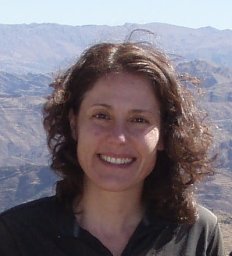 Carmala "Carmie" Garzione合作论文数College of Science, University of Arizona7Patricia Jaimes合作论文数6
 Anne U. Gold合作论文数Cooperat Inst Res Environm Sci Educ & Outreach, Univ Colorado6
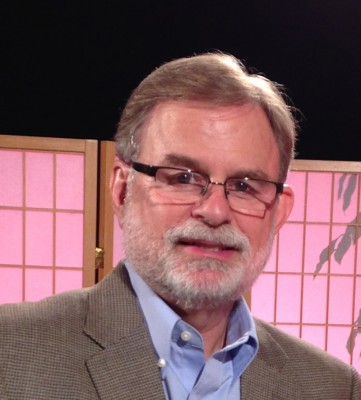 Bruce J. MacFadden合作论文数Thompson Earth Systems Institute, Florida Museum of Natural History, University of Florida6
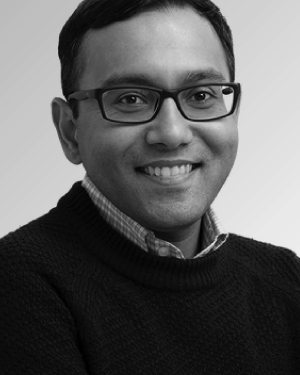 Prateek Shekhar合作论文数6
 William J. Boone合作论文数Division of General Internal Medicine, University of Cincinnati Medical Center;Miami University;University of Cincinnati Medical Center, Miami University6Chris Caldwell合作论文数5
 Christopher L Atchison合作论文数Dept Geol, Univ Cincinnati5
 Jade Mitchell合作论文数Department of Biosystems and Agricultural Engineering, Michigan State University5
 Thomas Stephen合作论文数Michigan State University Museum, Michigan State University5Meredith L. Beilfuss合作论文数5
 Heather Petcovic合作论文数Department of Geosciences;Mallinson Institute for Science Education;Michigan University;Mallinson Institute for Science Education, Western Michigan University5
 Mark Howard Weir合作论文数5Saunia Withers合作论文数5
 K. K. Ellins合作论文数4
 Steven Semken合作论文数School of Earth and Space Exploration, Arizona State University;Learning Engineering Institute, Arizona State University4Scott E. Kalafatis合作论文数Falk Sch Sustainabil & Environm, Chatham Univ4
 Sara Harris合作论文数Department of Earth, Ocean and Atmospheric Sciences, Faculty of Science, The University of British Columbia4Ording Gabriel合作论文数4
 Caitlin N. Callahan合作论文数4
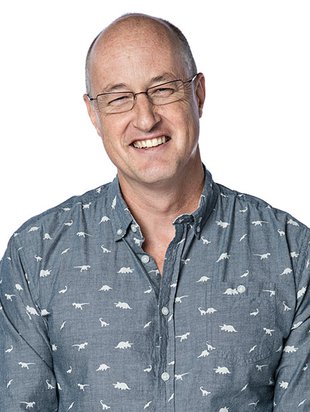 John M. Eiler合作论文数Division of Geological and Planetary Sciences, California Institute of Technology4
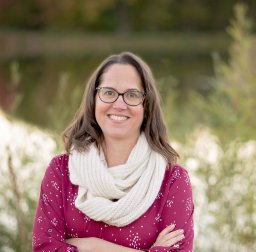 Nicole D Ladue合作论文数Department of Geology and Environmental Geosciences, Northern Illinois University in DeKalb.4
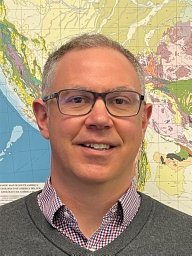 Gregory Hoke合作论文数Department of Earth and Environmental Sciences, College of Arts and Sciences, Syracuse University4
 Kathleen M. Baker合作论文数4
 Kyle Powys Whyte合作论文数Department of Philosophy, Michigan State University4
 Prosenjit Ghosh合作论文数Physical Research Laboratory;Indian Institute of technology;Physical Research Laboratory, Indian Institute of technology4E. Bardar合作论文数3Katherine K. Ellins合作论文数3joe t elkins合作论文数3
 Dominik Conrad合作论文数University of Education Ludwigsburg3Carmen M. McCallum合作论文数Leadership & Counseling, Eastern Michigan University3
 Scott K Clark合作论文数Dep. of Geology, Univ. of Illinois at Urbana-Champaign3
 Kenneth A. Farley合作论文数Division of Geological and Planetary Sciences, California Institute of Technology3Lorenz Amanda R合作论文数SDepartment of Entomology, Michigan State University3
 Andreas Mulch合作论文数IMG-ANTHROPOLE, University of Lausanne Institute of Mineralogy and Geochemistry3
 Kristen E St. John合作论文数3Ryan P. Bowles合作论文数3C. G. Chase合作论文数2Teresa L McElhinny合作论文数2Christina Morton合作论文数2A. J. Sussman合作论文数2nick haddad合作论文数2




