Amid escalating global energy challenges, hydrogen-based clean energy has gained prominence, with Solid Oxide Electrolysis Cells (SOECs) emerging as a key hydrogen production technology. However, critical operational bottlenecks—extreme high temperatures, intricate multi-physical field interactions, and resultant thermal stress—impede SOEC durability and stability, necessitating advanced management tools.Digital Twin (DT) technology presents a transformative solution to address these bottlenecks. This study designs and develops an innovative SOEC digital twin operation platform, which integrates real-time data acquisition, transmission, and neural network algorithms to enable a suite of advanced functionalities.This platform enables real-time 2D/3D contour visualization of internal temperature fields, immersive component navigation, multi-parameter collaborative monitoring, rapid prediction and reconstruction of 3D physical fields, predictive maintenance, and intelligent optimization of operating parameters for solid oxide electrolysis cells (SOECs). Leveraging a modified Transformer model (physical field reconstruction error < 2%), TCN-GRU-Attention model (current density prediction MAE=0.0158 A·cm−2), and MOPSO multi-objective optimization algorithm (electrolysis efficiency improved by 2.1%), it provides digital technical support for the full-process operation and maintenance of SOECs, significantly enhancing their visualized maintenance capabilities and production efficiency, and offering important practical reference for the engineering application of SOECs.
The temperature distribution spatial contour of solid oxide electrolysis cells (SOECs) is a critical indicator for evaluating device performance, energy consumption, and maintenance safety. Conventional computational fluid dynamics (CFD) simulations, while accurate, suffer from excessive computational time and poor timeliness, making them unsuitable for real-time field monitoring. To address this, this paper proposes an improved Transformer neural network model driven by CFD data for real-time prediction of SOEC internal temperature field spatial contours. The model integrates a hybrid architecture of CNN and Transformer, where a multi-coupled CNN extracts operational parameter features, and a positional encoding Transformer reconstructs the spatial distribution of physical fields. Experimental results show that the model completes temperature field reconstruction within seconds, reducing computational resource consumption by over 90 % compared to traditional CFD methods. In terms of accuracy, the mean absolute error (MAE) of temperature field prediction is controlled below 2 K, and the current density field prediction accuracy exceeds 95 %. This approach breaks through the timeliness bottleneck of conventional simulations, provides an efficient and reliable technical support for intelligent operation and maintenance of SOEC digital twins and demonstrates significant engineering value for enhancing the operational stability and intelligent management of SOEC systems.
In contrast to the relatively straightforward rising dynamics of single bubbles, the behavior of multiple bubbles involves a more intricate interplay of flow field dynamics, trajectory patterns, morphological changes, and mass transfer phenomena. To reveal the coalescence characteristics and mass transfer effects of CO2 bubbles during the rising process, this study developed a coupled mass transfer numerical model for bubbles. The Volume of Fluid (VOF) method was used in combination with a mass transfer code for solving the model. The effects of bubble pair initial spacing and liquid viscosity on the coalescence and mass transfer were discussed. The numerical simulation results show that as the initial distance between the two bubbles decreases, the interaction force between the bubbles increases, and the possibility of bubble coalescence increases, the coalescence behavior reduces the contact area and thus decreases the amount of CO2 dissolved about 24.07%. When the initial viscosity of the liquid phase is low, there is an oscillation in the bubble velocity, and the two bubbles tend to merge. As the initial viscosity of the liquid phase increases, resistance increases, causing a decrease in bubble velocity. Consequently, the path of bubble ascent shifts from "approach-repulsion-approach" to "continuous repulsion." The viscous resistance reduces the gas-liquid contact area, resulting in a corresponding decrease in the mass transfer rate, the dissolution amount of carbon dioxide decreased by approximately 24.42% in this case. The exploration of coupled fluid dynamics and mass transfer phenomena at the multi-bubble scale holds paramount importance in guiding the design and exploration of gas-liquid two-phase flow systems.
Sonogashira coupling of N-tosyl aryltriazenes is reported to offer arylalkynes in yields up to 92% with the aid of tetrabutylammonium bromide (TBAB) as a dual activator for both the palladium catalyst and aryltriazenes. Common functional groups could be well tolerated, although large electronic effects from alkynes were observed. TBAB-assisted oxidative addition of palladium(0) to aryltriazene instead of in situ formed arylhalide has been proposed to initiate the catalytic cycle.
针对CO2气泡在纯水中的上升过程,通过高速摄像机捕捉气泡上升时的瞬时图片;通过调节蠕动泵的转速以及选用不同直径的不锈钢管从而获得不同尺寸的CO2气泡;利用Matlab数字图像处理技术提取所产生气泡的直径以及质心位置,得出了不同等效直径下气泡的运动轨迹、瞬时纵横比以及瞬时速度变化.研究结果表明,气泡的瞬时横向速度、瞬时纵横比、横向振幅呈周期性变化,与直径大小无关;其横向振幅与横向速率振幅成正比,并且小直径气泡的瞬时横向速度振荡周期是瞬时纵横比和瞬时纵向速度振荡周期的2倍.针对气泡上升时终速度变化,通过对比不同学者的预测关系式,提出了一个更为精确的终速度预测式.
The separation system is designed to separate and concentrate the aqueous glycol solution under a low-temperature heat source. The experiment found that the pore size of the capillary wick, the verticality of the evaporator, as well as the degree of vacuum and the inlet flow rate of the working fluid are important factors for the success of the experiment. At a vacuum of 10 kpa and a flow rate of less than 5 mL/min, the ethylene glycol aqueous solution was separated and concentrated at a temperature between 90 and 105?, and the ethylene glycol content in the condensate was less, reducing the loss of ethylene glycol. The steam side vacuum capillary evaporation system proposed in this paper utilizes the difference of the surface force between the metal porous structure and the binary solution, thereby causing excess increase of the relative volatility of the two solution components, and strengthening the separation effect of the binary solution, meanwhile, the system can uses industrial waste heat as heat source, which has great potential to be a new kind of binary solution separation method.
为揭示CO2气泡群在方形鼓泡塔中上升过程的气液两相流行为,采用双流体模型耦合PBM(种群平衡方法)进行数值模拟,考虑气泡间的聚并和破碎现象,与部分实验结果相互对比,验证数值模型具有一定的可靠性,并分析入口气速、塔高宽比和入口分布器结构对气液流动情况、相含率和液相速度的影响,模拟结果表明:气泡群的上升过程出现了周期性的羽流震荡现象,改变气速会影响塔内气泡羽流的震荡程度;流动过程液相发生湍动,随着塔高宽比增大,液相循环模式实现了从"冷却塔"形式到"交错涡旋"的转变;不同入口结构下相含率分布有差异,大入口的震荡更早到来,但震荡持续时间较小入口结构短.研究CO2气泡群的多相流动规律为鼓泡塔的设计和优化提供了理论参考.
Cu-Zr alloy is mainly used in the field of electronic information and is the key material of integrated circuits lead frame. This paper summarizes the microstructure, properties and research progress of Cu-Zr binary alloy, Cu-Ag-Zr alloy, Cu-Cr-Zr alloy, introduces their main strengthening mechanisms, expounds the main processing technologies of the Cu-Zr alloy and their effects on the properties of the alloy, and on this basis, prospects the future development direction of the Cu-Zr alloy.
Capillary distillation is an azeotropic distillation technology, which combines the mechanism of surface adsorption, capillary action, as well as the distillation process. Different variations of activity coefficient and saturated vapor pressure of azeotropic components occur in the capillary pore structure, which leads to the separation. In this paper, 5A, 4A, and 3A molecular sieve capillary porous media were selected as capillary packing to study the separation effect on azeotropic mixture of isopropanol-water solution experimentally. It was found that 4A molecular sieve worked better, the best reflux ratio is 6, and the best packing height is 0.4 m. Based on the abovementioned experimental results, a back propagation (BP) neural network is developed and utilized in the separation process. The effects of parameters such as the composition of feedstock solution, reflux ratio, and packing height on the concentration of isopropyl alcohol at the top of packed capillary distillation column were predicted, and the accuracy reached 96.7%. The proposed prediction method is helpful for developing the technology of separating azeotropic solution by capillary distillation with packing suitable for industrial application.
利用Volume of Fluid(VOF)法对静止水中CO2气泡的上升过程进行数值模拟,采用自定义程序考虑传质过程,研究了不同初始直径的气泡上升过程中瞬时速度、传质系数、CO2溶解量以及气泡传质尾迹的变化.结果表明,气泡上升过程中横向速度周期性变化并且随着气泡初始直径增大,振荡幅度减小,而纵向速度随气泡初始直径增大而增大.在初始直径3.5~6mm的范围内,随着气泡初始直径增大CO2溶解量增大,其尾流表现为对称态、过渡态及周期性脱落三种状态.初始直径3.5~6 mm的气泡尾流发生转变的临界Re随着气泡初始直径增大而增大,其尾流周期性脱落的频率为17~22Hz,且脱离频率随气泡初始直径增大而减小.气泡尾流与传质尾迹保持一致,随着气泡初始直径增大,气泡传质尾迹影响的范围也增大.
Data-driven method has been widely used in Fluid Catalytic Cracking (FCC) process modeling. However, due to the complexity of chemical process both in time and spatial domain, how to reflect the time and spatial characteristics of FCC units and build corresponding model is important to construct a better model for the gasoline yield prediction. In this paper, a special neural network structure was developed to deal with the input variables with different time scales considering the collection characteristics of various variables, as well as the time continuity of large-scale process manufacturing units, LSTMs with different time scales are stacked to extract temporal and spatial features to help capture the relationship between influencing factors and product yield. The characteristics of FCC process are also fully reflected in data processing and building model. It is demonstrated from the conclusions that the new model developed in this paper performs better than the traditional LSTM networks, which will be of great help to the intelligent upgrading of the FCC process.
为获得合理的Cu-20Ag合金线材连续拉拔工艺及综合性能更为优异的线材质量,基于Deform有限元软件对Cu-20Ag合金线材多道次连续拉拔过程进行了数值模拟研究,获得了等效应力和等效应变的分布信息,利用点追踪功能分析了多道次连续拉拔过程中线材芯部沿径向到圆周表层的应力和应变的变化情况.并对通过多道次连续拉拔实验制备得到的线材进行了显微组织和断口形貌分析,获得了合金的组织演变规律.结果表明:Cu-20Ag线材表层金属的变形程度比芯部更为剧烈,且随着拉拔道次的增加,线材纵截面各处的等效应力和等效应变值都不断增大.经过多道次连续拉拔,线材纵截面的连续纤维组织近似完全平行于轴向,组织间距逐渐变小且越来越密集,线材组织的细化和均匀化程度也得到了明显增加.
毛细管精馏通过利用毛细结构内固液分子相互作用力和微孔结构界面曲率影响,改变混合液的气液平衡,实现对共沸溶液的分离.为探究毛细管精馏的操作条件对气液相间传质效率的影响,通过使用CFD数值模拟研究影响乙酸乙酯-乙醇混合溶液相间传质的因素,如气相进口速度、气相进口质量分数和孔隙率.结果表明:气相速度越大,会降低对乙酸乙酯的分离效率;填料孔隙率为0.5时,对乙酸乙酯的分离效果较好;气相进口乙酸乙酯质量分数的增大会降低乙酸乙酯的分离效率.并使用Materials Studio软件对分子间作用力进行计算,结果发现填料与乙醇的结合能较强,进而促进乙酸乙酯的分离.研究对于开发适合工业应用的填料毛细管精馏分离共沸溶液技术具有一定的参考意义.
选用活性氧化铝、分子筛等多种具有毛细管结构的多孔介质填料,比较不同毛细管填料对乙酸乙酯-乙醇混合溶液的分离效果,发现分离效果最佳的毛细管填料为活性氧化铝;以活性氧化铝为填料,分析了乙酸乙酯-乙醇原料溶液中乙酸乙酯的质量分数(wF)、回流比(R)、填料高度(H)、精馏温度等操作参数对分离效率的影响规律,寻找出单因素最佳的操作条件为wF=69%、R=3、H=0.45 m,为开发适合工业应用的填料毛细管精馏分离混合溶液技术提供参考.
Optimizing the retaining ring structure can improve the quality of Chemical Mechanical Polishing (CMP). This study establishes a two-dimensional Computational Fluid Dynamics-Discrete Element Method (CFD-DEM) model, while the model is validated by experiments. The results graphically demonstrate the influence of the retaining ring groove design on the motion of the slurry abrasive particles. The size of the retaining ring groove appears to have a threshold value, above which the abrasives start to have significant distribution in the wafer region. As the groove size continues to increase, the number of abrasives entering the ring increases abruptly and oscillates at specific nodes. The abrasive transfer rate increases with the number of grooves in the early stage but reaches a limit at a certain number of grooves. Meanwhile, the retaining ring position affects the transfer of the abrasives. This study provides a base for optimizing the design of retaining rings.
随着科学技术的发展,核动力技术正日趋成熟,但由于核电站装机容量大、结构系统复杂,运行于高温高压的极端工况,反应堆芯积累着大量放射性物质并且有迅速释放的可能,特殊的核安全问题仍然存在.为使学生掌握核电系统综合换热原理,建立核电系统安全运行观念,文章在分析传统核电系统综合换热实验特点及局限性的基础上,介绍了基于三维虚拟仿真技术建设的压水堆核电站系统综合换热虚拟仿真实验,并从实验设计原则、教学目的、实验原理、考核要求、实施效果等方面对该实验的实施进行了详细的介绍.
采用三室真空冷型竖引连铸+多道次冷拉拔变形工艺制备了不同线径的Cu-20 mass%Ag合金线材,测试了合金线材在不同变形量下的导电率和抗拉强度,分析了其显微组织的演变规律.结果表明:铸态Cu-20 mass%Ag合金杆坯(φ7.84 mm)的导电率为80.3%IACS,抗拉强度为263 MPa;当拉拔变形量达到98.4%(φ1 mm),线材的导电率为69.6%IACS,抗拉强度达到889 MPa.铸态Cu-20 mass%Ag合金杆坯的共晶组织在横截面上呈现为连续的网状结构,在纵截面上呈现为鱼骨状.随着变形量的增加,Cu-20 mass%Ag合金的共晶组织沿拉拔方向形成长纤维并沿轴向排列,纤维间距逐渐减小.在拉拔变形过程中,Cu-20 mass%Ag合金的主要强化机制是位错强化和细晶强化.
针对铜箔在特殊领域应用时导电性与耐腐蚀性差的问题,采用空气喷涂法在铜箔表面涂覆石墨烯涂层,通过调节石墨烯涂镀液中甲基吡咯烷酮与乙二醇的体积比,实现石墨烯涂层在铜箔表面空间结构的精确调控.研究结果表明:石墨烯在铜箔表面的空间形态与厚度,可以通过分散剂的种类和喷涂液的体积来控制.当分散溶剂中甲基吡咯烷酮与乙二醇的体积比为2:1时,涂覆石墨烯的铜箔阻抗最大,在盐水中的抗腐蚀性能最好.
在外加磁场作用下,磁流变液因具有一定的黏性应力和可控的屈服应力,故能呈现出明显的耐压能力.即使发生瞬时过压,当压力回落时,磁流变液密封也可自动愈合,使得其在很多领域得到了广泛应用.介绍磁流变液的基本特征及其密封应用;对磁流变液密封结构设计相关事项进行了论述;针对如何提高磁流变液密封耐压压降方面,重点阐述影响其密封性能的主要因素;分别基于宾汉姆塑性模型、双黏度模型、赫谢十尔-巴克利模型和具有屈服前黏度的赫谢尔-巴克利模型,着重探讨磁流变液屈服应力及其密封耐压压降数学模型的建模方法,并对磁流变液密封发展趋势提出预测,为开展密封技术及其他应用研究提供理论基础与技术支持.
拉拔力是影响丝线材拉拔稳定性的关键因素,也是设计及选用拉丝机的主要技术参数.本文基于DEFORM-3D有限元分析软件建立了铜银合金拉拔有限元模型.对不同材料参数、不同入模角、摩擦因数和不同定径区长度等条件下的拉拔过程进行了研究,分析了加工硬化指数、入模角、摩擦因数和定径区长度变化对拉拔力的影响规律,并验证了模型的可靠性.研究结果表明:随着硬化指数的减小,稳态拉拔力逐渐增大.当入模角为12°时,拉拔力最小,为最佳模角.随摩擦因数的增大,稳态拉拔力呈增大趋势,且当摩擦因数为0.1时,拉拔力波动剧烈.定径区长度的变化对稳态拉拔力影响不明显.
 Li Zhang (张莉)合作论文数School of Mechanical and Power Engineering, East China University of Science and Technology13
 Kexing Song (宋克兴)合作论文数Henan Academy of Sciences12
 Yanjun Zhou (周延军)合作论文数School of Materials Science and Engineering, Henan University of Science and Technology11
 Hong Xu (徐宏)合作论文数绿色高效过程装备与节能教育部工程研究中心 华东理工大学9
 JunLing Fan (范俊玲)合作论文数6
 Fangjun Hong (洪芳军)合作论文数School of Mechanical Engineering, Shanghai Jiao Tong University6LI Fei (李飞)合作论文数5PEI Donghao (裴东号)合作论文数5
 Jin Xuan合作论文数Department of Mechanical Engineering, The University of Hong Kong5
 Ping Cheng (郑平)合作论文数School of Mechanical Engineering, Shanghai Jiao Tong University5Lü Chang-chun (吕长春)合作论文数4
 Yutian Ding (丁雨田)合作论文数Wenzhou Pump and Valve Engineering Research Institute, Lanzhou University of Technology4Tao Huang合作论文数4RUAN Jincheng (阮锦程)合作论文数4Yong Hu (胡勇)合作论文数4Dingbiao Chen (陈鼎彪)合作论文数Changzhou Hengfeng Special Conductor Co., Ltd3ZHANG Yan-min合作论文数3CaiHong Lei (雷才洪)合作论文数3XueBin Zhang (张学宾)合作论文数3WenBin Gao (高文斌)合作论文数3
 Baoan Wu (吴保安)合作论文数Chongqing Materials Research Institute Co., Ltd.3
 Haoran Xu合作论文数2Xiaoyu Shen合作论文数2Qing LUO (罗青)合作论文数2Zhang Chao-Min合作论文数2Yong Ding合作论文数2Wu Hao合作论文数2DAI Chaonan (戴超男)合作论文数2Hanjiang Wu (吴捍疆)合作论文数2Yaohua XING (邢耀华)合作论文数2Jie ZHONG (钟杰)合作论文数2Cunli Feng (封存利)合作论文数河南森格材料科技有限公司2
 Chu Cheng (程楚)合作论文数2LingBao Kong (孔令宝)合作论文数2
 Xujun Mi (米绪军)合作论文数China Grinm Group Corporation Limited2ZhiQiang Liu合作论文数2
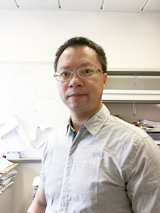 Ni Meng (倪萌)合作论文数Department of Building & Real Estate,The Hong Kong Polytechnic University2Haitao Liu合作论文数2
 Yuanhua Wang (王元华)合作论文数School of Mechanical and Power Engineering, East China University of Science and Technology2
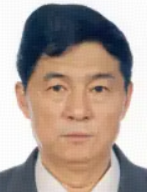 Jilin He (何季麟)合作论文数School of Materials Science and Engineering, Zhengzhou University;Zhongyuan Critical Metals Laboratory, Zhengzhou University2Min Zhou (周敏)合作论文数2
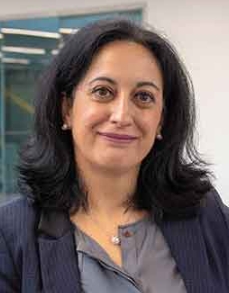 Mercedes Maroto-Valer合作论文数Institute for GeoEnergy Engineering, School of Energy, Geoscience, Infrastructure and Society, Heriot Watt University;Institute of Mechanical, Process & Energy Engineering, School of Energy, Geoscience, Infrastructure and Society, Heriot Watt University;Industrial Decarbonisation Research and Innovation Centre2
 Pingmei Ming (明平美)合作论文数河南理工大学机械学院2Yingchong Zhang合作论文数1Zijun Guan合作论文数1Wenbin Ding合作论文数1Junzhong Zhang合作论文数1Hualong Chu合作论文数1




