本文对广西北部湾海域管角螺(Hemifusus tuba)的生殖系统进行了解剖和观察,采用组织切片技术对其生殖腺发育和生殖细胞的发生过程进行研究.结果表明:广西北部湾管角螺为雌雄异体,雌雄比例接近1:1.雄性生殖系统主要由精巢、贮精囊、前列腺、输精管和阴茎(阴茎囊和交接器)构成,精巢发育分为增殖期、生长期、成熟与排放期、退化期4个时期.雌性生殖系统由卵巢、输卵管、囊腺体(蛋白腺和缠卵腺)、生殖孔和腹足口组成,卵巢的发育分为增殖期、生长期、成熟与排放期、休止期4个时期.精细胞发生经过精原细胞、初级精母细胞、次级精母细胞、精细胞期和成熟精子期5个阶段.卵细胞发生经过卵原细胞、初级卵母细胞、次级卵母细胞、成熟卵子4个阶段.管角螺生殖腺在1周年内具有2个繁殖周期,且卵巢与精巢的周年变化规律相吻合.此外,观测的全部雌性个体除了雌性生殖系统外,还具有雄性生殖器官输精管和阴茎.广西北部湾管角螺雌性个体均存在性畸变现象,性畸变率为100%.
Hemifusus tuba has been facing high catching pressure and the risk of stocks exhausting in recent years.To determine its genetic variation and describe its population structure,individuals of 5 natural populations of H.tuba inhabiting Chinese coast including Lianyungang(LYG),Wenzhou(WZ),Taishan(TS),Zhanjiang(ZJ) and Fangchenggang(FCG) were collected and analyzed with amplified fragment length polymorphism(AFLP) technique at first time.Two primer pairs amplified 310 loci of 150 individuals,of which,277 loci were polymorphic,accounting for 89.35%.Five populations differentiated slightly;the expected heterozygosity ranged from 0.3824 to 0.4766,and most genetic variation existed within populations.Fst value and inter-population genetic distance showed that the differentiation among populations was not significant.UPGMA tree showed a close relationship between population ZJ and FCG.Frequencies of dominant genes were similar among 5 populations.It was concluded that the natural populations of H.tuba had high intra-population genetic diversities and low inter-population differentiation.Our findings will certainly facilitate the stock management and conservation as well as genetic improvement of H.tuba.
The random amplified polymorphic DNA(RAPD) technique and the morphological variation analysis were used to evaluate population genetics among three wild populations of clam Lutraria siebaldii in coastal Guangxi and Guangdong provinces and one population Lutraria maxima in coastal Vietnam.A total of 428 scorable markers were amplified from 20 RAPD primers in 145 samples from different populations of Lutraria siebaldii and Lutraria maxima,ranging from 125 to 5 000 bp in size,and the number of the scorable bands for each primer varied from 6 to 17,with the average polymorphic band proportion of 84.5%.The mean percent of polymorphic loci in four populations were ranged from 76.1% to 91.9% with genetic distance from 0.1321 to 0.2441 among individuals.The cluster analysis according to their genetic distances,first Zhanjiang,Beihai and Fangcheng populations,and then with Vietnam population,revealed that the 3 wild populations of Lutraria siebaldii were distinguished by 8 primers.The morphological variations showed that the samples from Zhanjiang,Beihai and Fangcheng populations were rather similar in morphology,whereas Vietnam population differed greatly from the other populations in morphology,indicating that these clams were divided into different species.In the principal component analysis,the contributory ratio of the three principal components was 49.13%,17.18% and 14.02%,respectively,and the cumulative contributory ratio was 80.33%.The discrimination functions of the four populations were set up,the discrimination accuracy being 88.9%~100.0% for P1 and 86.7%~ 100.0% for P2,the integrative discrimination accuracy being 95.9%.The resource of Lutraria siebaldii was found in good condition with high genetic variation and Lutraria siebaldii had good culture prospects.
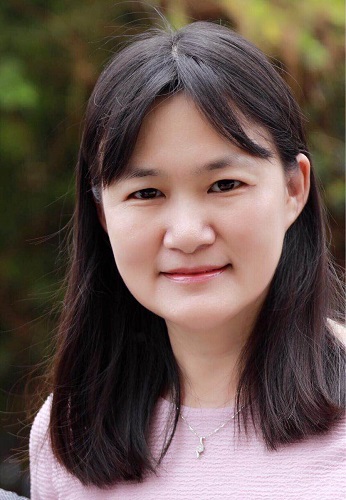 Ying Pan (潘英)合作论文数College of Animal Science and Technology, Guangxi University3
 Xiangju Su (苏翔驹)合作论文数3Dejin Chen (陈德金)合作论文数2Xueping Wu (吴雪萍)合作论文数2bin li (李斌)合作论文数1Yida PAN (潘奕达)合作论文数1Tiantian TANG (唐甜甜)合作论文数1Fuguang Luo合作论文数1Wenjie WANG (王文杰)合作论文数1HuiFang Zheng (郑惠芳)合作论文数1
 Cuimin Mu合作论文数1Zhibiao Tan (覃志彪)合作论文数College of Animal Science and Technology, Guangxi University1
 Qi Li (李琪)合作论文数Fisheries College, Ocean University of China;Key Laboratory of Mariculture, Ministry of Education, Ocean University of China1




