Neurodynamic algorithms represent one of the important approaches for sparse recovery, owing to their fast convergence, real-time processing capability, and parallel implementation advantages, and have been widely applied across various fields. However, for high-dimensional sparse recovery problems with complex data distributions, existing neurodynamic algorithms still suffer from slow convergence and convergence time bounds that depend on the initial values. This paper develops two fixed-time neurodynamic algorithms based on classical locally competitive algorithm (LCA) to deal with the least absolute shrinkage and selection operator (Lasso) problem, which are applied to sparse signal recovery (SSR) and image recovery. Firstly, a generalized LCA (GenLCA) is designed based on the classical LCA, incorporating element-wise normalization method (EwNM) and sliding mode control technique. Then, in the framework of the GenLCA, time-varying coefficients are introduced to design a time-varying GenLCA (TGenLCA). In contrast to the classical LCA, the proposed neurodynamic algorithms are able to adaptively scale the learning rates of each dimension. Furthermore, the fixed-time convergence of the proposed neurodynamic algorithms to the optimal solution of the Lasso problem is established, with settling-time functions independent of the initial values. Finally, the effectiveness and superior convergence of the proposed neurodynamic algorithms are verified by SSR and image recovery experiments.
This paper explores exponential bipartite synchronization in multilayer signed networks, where intra-layer connections may exhibit positive or negative weights. In contrast to existing studies, this work incorporates both proportional time delays and the complexity of multilayer network topologies. Under the assumption that each layer’s signed graph is structurally balanced, a fuzzy adaptive controller is designed to drive the network toward synchronization. Several key lemmas and sufficient conditions are established to guarantee exponential bipartite synchronization. Numerical simulations are conducted to verify the theoretical findings, and the proposed approach is further demonstrated through its application to image protection.
Multi-view unsupervised feature selection has attracted a lot of attention for describing objects in a more detailed and comprehensive way. However, most of the existing methods encounter the following three problems: (1) As the original multi-view features often contain noise, the fixed graph similarity matrix cannot accurately obtain the similarity relationship between different samples. (2) The learning of graph similarity matrix and feature selection process are independent of each other, which leads to high computational complexity. (3) Cross-view consistency is neglected while considering the diversity of features across views. To tackle these problems, a novel subspace learning technique and low-rank tensor constraint are integrated to guide the multi-view unsupervised feature selection (SCTLR-MUFS). Specifically, self-representation information is obtained via subspace learning to construct similarity matrix, then pseudo-label matrix is utilized to generate the projection matrix for ordering the importance of features. To solve the formulated unsupervised feature selection model, an optimization algorithm with theoretically guaranteed convergence is developed. Additionally, computational complexity is analyzed. Simulation experiments on eight benchmark datasets demonstrate the superiority of SCTLR-MUFS compared with eleven state-of-the-art methods. The code is publicly available at https://github.com/suxiao1824308603/SCTLR-MUFS.
The problem of secure consensus for MASs under attack from two random networks is investigated. Both linear and nonlinear systems are considered, and the frequency and duration of asynchronous DoS attacks and the attack strength of spoofing attacks are analyzed. A random network attack model is proposed that uses two independent Bernoulli random sequences to integrate the two attacks and whether the system is nonlinear into a unified framework. We give sufficient conditions for consensus for the attack-free system. To mitigate the negative impact of two types of attacks on system consensus, a state-compensated attack-resistant controller is proposed, based on the core design concept of actively attenuating deviations in system states during DoS attack periods. By introducing a state feedback compensation term during the effective phase of a DoS attack, the controller counteracts the impact of communication interruptions caused by the attack, while retaining the original distributed consensus control structure during normal communication periods, thereby achieving adaptive switching of control strategies between attack periods and normal periods. Finally, the correctness of the theoretical analysis is verified by simulation examples.
While reinforcement learning (RL) has advanced optimal control under limited resources, existing approaches often neglect two critical challenges in real-world engineering: switching communication topologies and time delays. This paper distinguishes itself by addressing the online adaptive optimal consensus control problem for multi-agent systems (MASs) that explicitly include these factors. The switching network topology is characterized by a Markov chain, capturing random changes, and a periodic switching signal, modeling scheduled variations. We first formulate a quadratic cost function to evaluate system performance and derive the associated Hamilton-Jacobi-Bellman (HJB) equation. A policy iteration (PI) method is established to solve this HJB equation offline. Leveraging this, a novel online adaptive optimal controller is proposed using a critic-actor neural network structure. This structure learns the optimal control policy in real-time without requiring knowledge of the system dynamics. The convergence of the policy iteration algorithm and the stability of the closed-loop system are rigorously analyzed. Finally, simulation examples are presented to demonstrate the efficacy and superiority of the proposed control mechanism.
Heart rate (HR) is a critical physiological indicator that reflects both the physical and mental health of an individual. Compared with the traditional contact HR measurement method, remote photoplethysmography (rPPG), a facial video-based noncontact HR measuring method, has attracted extensive attention because of its simplicity, noninvasive, and low cost. However, the rPPG signal is relatively weak, and the inevitable interference in the extraction process, such as motion and light, will greatly reduce the quality of the rPPG signal and the accuracy of HR prediction. To address these issues, we construct a stagewise spatio-temporal decoupled architecture, STE-rPPGNet, which explicitly separates shallow spatial encoding, differential temporal enhancement, and multidimensional attention refinement for robust rPPG signal reconstruction, providing additional physiological interpretability of intermediate representations. In particular, this structure uses 3-D central difference convolution (3D-CDC) to learn the time difference information and enhance the spatio-temporal representation. Furthermore, we design a multidimensional attention optimization stage consisting of DCBAM and TAM to refine channel, spatial, and temporal dependencies in a coordinated manner. We train and evaluate our model on three public PURE, UBFC-rPPG, and MMPD datasets, and the results show that our model achieves state-of-the-art performance in HR measurement. Beyond architectural improvement, this work provides a physiology-driven perspective for spatio-temporal representation learning in weak-signal reconstruction, offering insight into how temporal gradients and multidimensional attention can be collaboratively organized for remote physiological measurement.
In this paper, the asymptotic synchronization of reaction-diffusion networks with signed graph topologies is explored. By integrating Lyapunov functional theory with differential inequality techniques, including the Green formula, explicit sufficient conditions are derived to guarantee network synchronization under systematically designed control protocols. Saturation-compliant quantized control strategies are developed, with adaptive quantization mechanisms tailored for leaderless networks and intermittent quantization schemes optimized for leader-following architectures. Spatiotemporal numerical experiments validate the theoretical consistency and synchronization performance of the proposed methods.
Text-to-image models based on diffusion models are capable of generating highly realistic images from text descriptions. Nevertheless, in practical applications, the generated images frequently fail to fully satisfy user requirements regarding position and structure due to the absence of detailed location information and complex structural demands in the text descriptions. In order to improve the accuracy of the generated image in position and structure, the introduction of additional control conditions such as keypoint annotations or semantic segmentation has become an important research direction. This paper proposes a novel method based on a lightweight pre-trained diffusion model called CTIGEN-CDM. The model reduces computational costs by pruning the denoising network of the diffusion model and integrates control conditions into the denoising process through a gating mechanism to guide image generation. These control conditions encompass Canny edge detection, HED edge detection, depth maps, keypoints, and semantic segmentation. Experimental results reveal that CTIGEN-CDM possesses excellent generation quality and broad application potential. This method can generate high-quality images with precise positioning and structure while significantly saving computational resources, and it offers a promising new solution for text-to-image generation tasks.
This paper investigates the bipartite synchronization of signed Lur'e networks with proportional delays using quantized control strategies and pinning control techniques. Unlike typical time delays, proportional delays are unbounded and time-varying, which significantly complicates the synchronization of the network. The signed nature of the network is characterized by communication links between adjacent nodes that can take positive or negative values. Under the assumption of a balanced network structure, bipartite synchronization can be achieved by satisfying specific conditions and coordinate transformation criteria. Using Lyapunov stability theory and linear matrix inequalities (LMI), sufficient conditions are derived for bipartite leader-following and leaderless synchronization in signed Lur'e networks with proportional delays. Finally, simulation cases are provided to confirm the validity of the theoretical derivation.
Current methods for restoring underexposed images typically rely on supervised learning with paired underexposed and well-illuminated images. However, collecting such datasets is often impractical in real-world scenarios. Moreover, these methods can lead to over-enhancement, distorting well-illuminated regions. To address these issues, we propose IGDNet, a Zero-Shot enhancement method that operates solely on a single test image, without requiring guiding priors or training data. IGDNet exhibits strong generalization ability and effectively suppresses noise while restoring illumination. The framework comprises a decomposition module and a denoising module. The former separates the image into illumination and reflection components via a dense connection network, while the latter enhances non-uniformly illuminated regions using an illumination-guided pixel adaptive correction method. A noise pair is generated through downsampling and refined iteratively to produce the final result. Extensive experiments on four public datasets demonstrate that IGDNet significantly improves visual quality under complex lighting conditions. Quantitative results on metrics like PSNR (20.41dB) and SSIM (0.860dB) show that it outperforms 14 state-of-the-art unsupervised methods. The code will be released soon.
Hand gesture recognition (HGR) is a significant research area with applications in human-computer interaction, artificial intelligence, and more. In the early stage of development of HGR, there are high hardware costs and large usage requirements. To reduce the high cost expenditure and increase the application scenario, deep learning has played a crucial role. With the greater depth perception and more computing power, currently HGR is more about continuous recognition in space based on vedio. But in this article, it considers that there is a growing demand for lightweight networks with high precision for end-to-end HGR applications. In that, it still tends to recognize consecutive video frames and get results quickly. This paper introduces an enhanced network called YOLOv8-G2F, which is based on YOLOv8. It incorporates improved lightweight modules not only replace the traditional convolution module of the network's backbone and neck but also for the C2f module in YOLOv8. The network employs linear transformations, group convolution, and depthwise separable convolution to extract image information using simpler networks. Furthermore, model pruning is also used to further reduce model size and improve accuracy. The improved model achieved a recognition accuracy of 99.2% on the nus-ii gesture dataset with a model size of 2.33 MB. After extensive comparison and ablation experiments, YOLOv8-G2F demonstrated significant progress over existing algorithms.
This paper proposes the adaptive optimized consensus control of nonstrict-feedback discrete-time switched multiagent systems through incorporating the reinforcement learning strategy with event-triggered mechanisms. A simplified smooth approximation function is developed to address asymmetric input saturation constraints, effectively alleviating saturation problems while preserving closed-loop stability. Under the actor-critic framework, an adaptive controller is developed through the integration of the reinforcement learning backstepping algorithm and the approximation capability of neural networks. An external function term resolves the nonstrict-feedback structural challenge, complemented by a minimal learning parameter technique that reduces computational complexity. Furthermore, to enhance control performance and resource utilization efficiency, both periodic and input-quantized event-triggered mechanisms are considered. Lyapunov stability analysis demonstrates that all closed-loop signals are guaranteed to be semi-globally uniformly ultimately bounded under appropriate control parameters. Finally, numerical simulations validate the theoretical feasibility and confirm the control scheme's efficacy in coordination tasks of multiagent systems.
This paper investigates finite-time (FET) and fixed-time (FDT) bipartite synchronization of signed networks with time-varying and distributed delays (mixed delays) using quantized control strategies. The communication links between adjacent nodes can be either positive or negative, representing the signed nature of the network. Assuming a balanced network structure, sufficient conditions for FET and FDT bipartite synchronization are derived through coordinate transformations, norm analytical techniques, and differential inequalities. Finally, three simulation results are provided to validate the efficacy of the theoretical findings.
In recyclable waste management, intelligent recycling systems must efficiently identify, count, and measure material distances. Traditional approaches rely on Light Detection and Ranging (LiDAR) cameras, which can be costly. To address this, we propose a cost-effective method utilizing a standard binocular camera for plastic bottle recognition, counting, and ranging. Our method introduces a novel approach that integrates object detection with distance calculation in a single framework. A custom detection model, YOLO-PB, enhances recognition accuracy, while a binocular stereo-matching technique enables precise distance measurements. By reducing the need for manual intervention, our method improves efficiency and accuracy, achieving a detection accuracy (mAP@50) of 0.971 and distance measurements with a precision of 0.01 cm within a 10-50 cm range. These results demonstrate that our system matches the performance of traditional LiDAR-based systems, providing a robust and cost-effective solution for plastic bottle recycling.
This paper explores using convolutional neural networks (CNNs) for unsupervised image segmentation. The method enhances pixel labeling accuracy through superpixel and propagates back strategies. Leveraging CNN’s feature extraction capabilities, pixels are assigned labels without training data or prior knowledge. In an unsupervised context, a single image is the network’s input, and parameters are updated via gradient descent. A preprocessing module applies image smoothing before network input to improve segmentation performance. The convolutional kernels alternate between 3× 3 and 1× 1 sizes, and the activation functions, including ReLU and Batch Normalization, are reordered. Additionally, the Gray-Level Co-occurrence Matrix is integrated, and an adaptive superpixel method is introduced. Experimental results show significant improvements in Precision, Recall, and F1-score across corresponding datasets and superior performance in statistical indices like ARE, DH, AMI, and FMI.
As a core branch of financial forecasting, stock forecasting plays a crucial role for financial analysts, investors, and policymakers in managing risks and optimizing investment strategies, significantly enhancing the efficiency and effectiveness of economic decision-making. With the rapid development of information technology and computer science, data-driven neural network technologies have increasingly become the mainstream method for stock forecasting. Although recent review studies have provided a basic introduction to deep learning methods, they still lack detailed discussion on network architecture design and innovative details. Additionally, the latest research on emerging large language models and neural network structures has yet to be included in existing review literature. In light of this, this paper comprehensively reviews the literature on data-driven neural networks in the field of stock forecasting from 2015 to 2023, discussing various classic and innovative neural network structures, including Recurrent Neural Networks (RNNs), Convolutional Neural Networks (CNNs), Transformers, Graph Neural Networks (GNNs), Generative Adversarial Networks (GANs), and Large Language Models (LLMs). It analyzes the application and achievements of these models in stock market forecasting. Moreover, the article also outlines the commonly used datasets and various evaluation metrics in the field of stock forecasting, further exploring unresolved issues and potential future research directions, aiming to provide clear guidance and reference for researchers in stock forecasting.
This paper investigates security synchronization in complex dynamical networks (CDNs) using a self-triggered impulsive control (STIC) with actuation delays and a quantizer. 1) By integrating network topology and Lyapunov function theory, we introduce a new self-triggered mechanism (STM), unlike traditional computationally intensive STMs, which embeds a fixed dwell time to eliminate Zeno behavior and avoid continuous state monitoring, solving the delay-induced desynchronization issue ignored by existing STIC studies. 2) A logarithmic quantizer is fused with STM, reducing communication resource consumption compared to unquantized STIC, while ensuring low relative quantization error. 3)Global Asymptotic Stability in the Mean (GAS-M) synchronization criteria are derived via the Lyapunov method and graph theory, explicitly linking STM parameters, network topology, and attack intensities. 4) A numerical example of Chua's circuits under deception attacks and denial-of-service (DoS) attacks is provided to demonstrate the effectiveness of the theoretical findings on GAS-M under random attacks.
This paper investigates bipartite synchronization in signed networks, where connections between nodes may be positive or negative. In contrast to previous studies, this work incorporates stochastic perturbations and time-varying delays. Assuming the signed graph of the network is structurally balanced, an adaptive control strategy is introduced to regulate the nodes and achieve synchronization. Several key lemmas and sufficient conditions are provided to achieve bipartite synchronization. Finally, a numerical example is presented to validate the theoretical findings.
Heart rate is one of the most crucial physiological indicators of the human body, which can reflect the health status of the cardiovascular and cerebrovascular. Therefore, heart rate monitoring in real-time is essential for the prevention and treatment of cardiovascular and cerebrovascular diseases. Remote Photoplethysmography (rPPG) is a non-contact heart rate measurement method, which addresses the limitation of traditional heart rate measurement methods that need to contact with the subjects, and has a broad application prospect in ward vital signs monitoring and remote physiological health monitoring. How to use the rPPG method to measure heart rate more accurately is still a challenging problem. In this paper, we propose the TS-CAN+ method, which is based on TS-CAN and further incorporates convolutional block attention modules and replaces the ordinary convolution of the appearance branch with the depthwise separable convolution to improve the network accuracy. To validate the performance of our model, we conduct extensive experiments on the public PURE, UBFC-rPPG, and MMPD datasets. The experimental results indicate that compared with TS-CAN, the mean absolute error of TS-CAN+ is reduced by 37.21% in the cross-dataset test on UBFC-rPPG dataset and reduced by 12.18% on MMPD dataset.
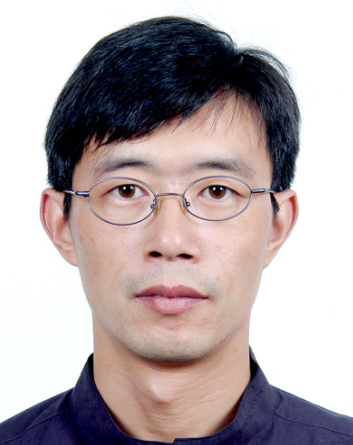 Chuandong Li (李传东)合作论文数College of Electronic and Information Engineering, Southwest University29
 Xing He (何兴)合作论文数College of Electronic and information Engineering, Southwest University;Westa College, Southwest University26
 Tingwen Huang (黄廷文)合作论文数Faculty of Computer Science and Control Engineering, Shenzhen University of Advanced Technology21
 Wei Zhang (张伟)合作论文数College of Electronic and Information Engineering, Southwest University12
 Shiping Wen合作论文数Faculty of Engineering and Information Technology, University of Technology Sydney;Intelligent Computing System Lab, University of Technology Sydney11
 Pengcheng Wei合作论文数11
 Jinyue Yang合作论文数6
 Hailong Yan合作论文数University of Electronic Science and Technology of China5Wenqiang Yang合作论文数5
 Xujun Yang合作论文数4Zhizhang Li合作论文数4Zhengyang Wu合作论文数4Hongyu Yang合作论文数Chongqing Univ Technol, Sch Comp Sci & Engn, Chongqing 400054, Peoples R China4
 Qiankun Song (宋乾坤)合作论文数School of Mathematics and Statistics, Chongqing Jiaotong University;School of Science, Chongqing Jiaotong University4
 Xin Wang (王欣)合作论文数College of Electronic and Information Engineering, Southwest University4Zili Cao合作论文数3Luting Zhang合作论文数3Shiqin Deng合作论文数3Yi Jun合作论文数3CHENG Ping-guang (成平广)合作论文数3Wei Xiong合作论文数3Jin Liu合作论文数3
 Long Li合作论文数3Lihua Tan合作论文数3
 Yanxia Zhang合作论文数3
 Yanjun Liu合作论文数3
 Chao Liu (刘超)合作论文数School of Mechanics and Civil Engineering, China University of Mining and Technology3
 Xiao-Yang Liu合作论文数Department of Electrical Engineering, Columbia University3
 You Zhao (赵友)合作论文数College of Electronic and Information Engineering, Southwest University3
 Chaojie Li合作论文数School of Electrical Engineering and Telecommunications, The University of New South Wales3
 Tengfei Weng合作论文数3
 Qi Han (韩琦)合作论文数MEGVII Technology2
 Yu Qin合作论文数2Zi-qiang QIAO (谯自强)合作论文数2
 Hongfei Li (李洪飞)合作论文数College of Electronic and Information Engineering, Southwest University2YangJun Pei (裴仰军)合作论文数2YingXian Zhu (朱盈贤)合作论文数2
 Ling Chen (陈玲)合作论文数College of Electronic and Information Engineering, Southwest University2Dun Zhang合作论文数2
 Yu Zhu (朱煜)合作论文数Department of Electronics and Communication Engineering, School of Information Science and Engineering, East China University of Science and Technology2
 Wanli Zhang (张万里)合作论文数School of Integrated Circuit Science and Engineering, University of Electronic Science and Technology of China2
 Zheng Yang合作论文数College of Computer and Information Science, Southwest University;University of Helsinki2
 Guo Chen合作论文数School of Electrical Engineering and Telecommunications, University of New South Wales2Yachen He合作论文数1Jiayu Wang (王佳渝)合作论文数1Yl Li合作论文数1




