Continuous Arterial Blood Pressure (ABP) monitoring requires invasive arterial catheterization, while non-invasive cuff-based devices only provide intermittent spot readings and are unsuitable for continuous monitoring. We introduce Physio-Mamba, a physiology-informed framework for reconstructing continuous ABP waveforms from photoplethysmography (PPG). The model encodes physiology at the input by processing PPG together with the acceleration photoplethysmogram (APG), and at the objective by using a Physiological-Dynamic loss that aligns second-order pressure dynamics to preserve clinically salient features. A Mamba-based MaskNet offers bidirectional long-context temporal modeling with linear time and memory complexity. In subject-independent splits of the Sensors dataset and cross-dataset testing on BCG, Physio-Mamba achieves competitive accuracy, preserves key morphology such as the systolic upstroke and the dicrotic notch, and generalizes across datasets. These results show that embedding explicit physiological priors is a practical and effective route to cuffless ABP reconstruction. Furthermore, they motivate causal real-time variants, uncertainty-aware outputs, and broader clinical validation.
Object detection is pivotal in robotics, but its immense computational demands make the models slow and power-hungry, underscoring the need for quantization. However, when the quantization is applied in practice, cluttered backgrounds and irregular object morphologies cause redundant activations (or anomalies) that inflate precision requirements and waste bit capacity, hindering the preservation of informative features. Moreover, without a clear criterion for defining such anomalies, attempts to exclude or mitigate them often distort useful features. To address this problem, we present InlierQ, an inlier-centric post-training quantization approach that establishes a general criterion to differentiate anomalies from informative inliers. Specifically, InlierQ computes gradient-aware volume saliency scores, classifies each volume as an inlier or outlier, and fits a posterior distribution over these scores using the Expectation–Maximization (EM) algorithm. This design effectively suppresses the influence of outliers while preserving informative inlier features. InlierQ is a label-free, drop-in method and uses only 64 samples for calibration. Experiments on the COCO and nuScenes benchmarks demonstrate consistent reductions in quantization errors across camera-based (2D and 3D) and LiDAR-based (3D) object detection.
Visual autoregressive (VAR) models generate images through next-scale prediction, naturally achieving coarse-to-fine, fast, high-fidelity synthesis mirroring human perception. In practice, this hierarchy can drift at inference time, as limited capacity and accumulated error cause the model to deviate from its coarse-to-fine nature. We revisit this limitation from an information-theoretic perspective and deduce that ensuring each scale to contribute high-frequency content not explained by earlier scales mitigates the train–inference discrepancy. With this insight, we propose Scaled Spatial Guidance (SSG), a training-free, inference-time guidance that steers generation toward the intended hierarchy while maintaining global coherence. SSG emphasizes target high-frequency signals, defined as the semantic residual, isolated from a coarser prior. To obtain this prior, we leverage a principled frequency-domain procedure, Discrete Spatial Enhancement (DSE), devised to sharpen and better isolate the semantic residual through frequency-aware construction. SSG applies broadly across VAR models leveraging discrete visual tokens, regardless of tokenization design or conditioning modality. Experiments demonstrate SSG yields consistent gains in fidelity and diversity while preserving low latency, revealing untapped efficiency in coarse-to-fine image generation.
Achieving diverse and high-quality audio transformations from text prompts remains challenging, as existing methods are fundamentally constrained by their reliance on a limited set of differentiable audio effects. This paper proposes FxSearcher, a novel gradient-free framework that discovers the optimal configuration of audio effects (FX) to transform a source signal according to a text prompt. Our method employs Bayesian Optimization and CLAP-based score function to perform this search efficiently. Furthermore, a guiding prompt is introduced to prevent undesirable artifacts and enhance human preference. To objectively evaluate our method, we propose an AI-based evaluation framework. The results demonstrate that the highest scores achieved by our method on these metrics align closely with human preferences. Demos are available at https://hojoonki.github.io/FxSearcher/
Large Vision Language Models show impressive performance across image and video understanding tasks, yet their computational cost grows rapidly with the number of visual tokens. Existing token pruning methods mitigate this issue through empirical approaches while overlooking the internal mechanism of attention. In this paper, we propose a novel training free token pruning framework grounded in the dual form perspective of attention. We reformulate attention as an implicit linear layer whose weight matrix is the sum of rank 1 outer products, each generated by a single token's key value pair. Token pruning thus reduces to selecting an optimal subset of these rank 1 updates that best approximates the original dual weight matrix. Extending this perspective to standard softmax attention in LVLMs, we derive a novel metric quantifying both a token's information magnitude and information duplication. To efficiently select the subset with the proposed metric, we introduce Progressive Chunked Maximal Marginal Relevance. Extensive experiments demonstrate that our method achieves a better trade off between performance and efficiency, while providing another perspective on existing pruning approaches.
We propose Tailored ViT Slimming (TVS), a budget-aware multi-dimensional pruning framework for Vision Transformers. TVS injects learnable masks into MHSA and MLP modules and applies adaptive non-convex sparsity regularization to achieve maximal utilization of parameters under strict module-wise budgets. In addition, by retaining scaled masks after pruning, TVS avoids abrupt accuracy drops and provides stable initialization for fine-tuning. On ImageNet-1k with DeiT-S and DeiT-B, TVS consistently outperforms prior ViT compression methods. This result empirically shows that the non-convex sparsity regularizer is effective not only in CNNs but also in ViTs.
Large multimodal models (LMMs) have recently demonstrated remarkable performance in video question answering (VideoQA), yet reasoning over video remains challenging due to high inference cost and diluted information. Keyframe selection offers efficiency and sharper reasoning but suffers from sparse supervision and redundant frame choices when relying only on image-text similarity. We present a question-aware keyframe selection framework with two components: pseudo keyframe labels derived from LMMs that provide informative supervision and a coverage regularization that promotes diverse, complementary evidence across time. Experiments on NExT-QA show that our method significantly improves accuracy, especially for temporal and causal question types, establishing keyframe selection as an effective and learnable module for VideoQA.
We address text-based 3D human motion editing, where the goal is to preserve the style and structure of a source motion while applying edits described in natural language. The release of the MotionFix dataset has spurred active research into training-based diffusion models that directly generate an edited motion from a source motion and a text instruction. While previous works have focused primarily on learning when an edit should occur temporally, our goal is to create a model that understands not only this temporal aspect but also which specific joints are responsible for the change. Targeting this, we propose a novel architecture and a complementary auxiliary task to aid its training. Our architecture consists of two axis-anchored transformers, which extract distinct features along the joint and time dimensions respectively, and a cross-axis fusion block that integrates these representations. We further introduce an auxiliary task that trains the joint-anchored transformer to regress the Soft-DTW distance between source and target joint rotations. This objective teaches the module to understand which joints to modify and which to preserve. Through comprehensive experiments on the MotionFix dataset, we demonstrate that our method significantly improves semantic alignment with both the text instruction and the source motion, as well as the overall fidelity of the generated motion, achieving state-of-the-art results.
LLM agents for sequential decision tasks are often post-trained with trajectory-level outcome labels, but such labels provide little supervision for preserving multiple successful branches from the same decision state. We study this problem as successful strategy coverage: how broadly a model realizes distinct successful strategies under a fixed rollout budget. We present Direct Diversity Optimization (DDO), an offline post-training method that combines Divergence-Tree Collection (DTC) with the Reference-Relative Target-Odds Objective (RTO). DTC constructs state-aligned branch sets rooted at shared decision states, and RTO trains the model to match reference-relative targets over successful alternatives. DDO achieves the strongest task success and successful strategy coverage among the compared post-training methods across BabyAI, BabaIsAI, and WebShop. It also achieves the highest recovery rate after local action replacement and higher task success and coverage than successful-only imitation and decoding-time diversification controls.
Personalized text-to-image generation suffers from concept entanglement, where irrelevant residual information from reference images is captured, leading to a trade-off between concept fidelity and text alignment. Recent disentanglement approaches attempt to solve this utilizing manual guidance, such as linguistic cues or segmentation masks, which limits their applicability and fails to fully articulate the target concept. In this paper, we propose \textbf{ConceptPrism}, a novel framework that automatically disentangles the shared visual concept from image-specific residuals by comparing images within a set. Our method jointly optimizes a target token and image-wise residual tokens using two complementary objectives: a reconstruction loss to ensure fidelity, and a novel exclusion loss that compels residual tokens to discard the shared concept. This process allows the target token to capture the pure concept without direct supervision. Extensive experiments demonstrate that ConceptPrism effectively resolves concept entanglement, achieving a significantly improved trade-off between fidelity and alignment.
Video dataset condensation aims to mitigate the immense computational cost of video processing, but faces the unique challenge of preserving the complex interplay between spatial content and temporal dynamics. Prior work often unnaturally disentangles these elements, overlooking their essential interdependence. We introduce Progressive Refinement and Insertion for Sparse Motion (PRISM), a novel approach that preserves this critical coupling. PRISM begins with a minimal set of key frames and dynamically synthesizes new ones by identifying moments of high motion complexity, where simple interpolation fails, through gradient misalignments. This adaptive process allocates new frames only where such complexity exists, creating highly efficient and temporally coherent synthetic datasets. Extensive experiments show PRISM achieves highly competitive performance on standard action recognition benchmarks, often matching or exceeding prior methods, while creating powerful representations with significantly less storage
Mixed Sample Data Augmentation (MSDA) techniques, such as Mixup, CutMix, and PuzzleMix, have been widely acknowledged for enhancing performance in a variety of tasks. A previous study reported the class dependency of traditional data augmentation (DA), where certain classes benefit disproportionately compared to others. This paper reveals a class dependent effect of MSDA, where some classes experience improved performance while others experience degraded performance. This research addresses the issue of class dependency in MSDA and proposes an algorithm to mitigate it. The approach involves training on a mixture of MSDA and non-MSDA data, which not only mitigates the negative impact on the affected classes, but also improves overall accuracy. Furthermore, we provide in-depth analysis and discussion of why MSDA introduced class dependencies and which classes are most likely to have them.
Test-time adaptation (TTA) has been widely explored to prevent performance degradation when test data differ from the training distribution. However, fully leveraging the rich representations of large pretrained models with minimal parameter updates remains underexplored. In this paper, we propose a novel approach, Intrinsic Mixture of Spectral Experts (IMSE), that leverages the spectral experts inherently embedded in Vision Transformers. We decompose each linear layer via singular value decomposition (SVD) and adapt only the singular values, referring to each decomposed rank-1 component as a spectral expert while keeping the singular vectors fixed. We further identify a key limitation of entropy minimization in TTA: it often reduces feature variance, causing the model to rely on domain-specific cues rather than class-discriminative features. To address this, we propose a diversity maximization loss based on singular vector–input alignment, which maximizing diversity of response pattern. In the continual test-time adaptation (CTTA) scenario, beyond preserving pretrained knowledge, it is crucial to retain and reuse knowledge from previously observed domains. We introduce Domain-Aware Spectral Code Retrieval, which estimates input distributions to detect domain shifts, and retrieves adapted singular values for rapid adaptation. Extensive experiments show that our method achieves state-of-the-art performance on ImageNet-C/R/A under single-domain TTA. In CTTA, it improves accuracy by 3.4pp with 2,000$\times$ fewer trainable parameters.
Pretrained vision-language models such as CLIP excel at zero-shot recognition but often fail at compositionality, particularly attribute-object and relational structures. Recent studies mitigate this issue by augmenting training with synthetic hard negatives generated by a cascade of large language models and text-to-image models, which incurs substantial pipeline overhead. We instead propose MLLMCLIP, a heterogeneous distillation framework that transfers multimodal knowledge directly from a generative Multimodal Large Language Model (MLLM) teacher into a discriminative CLIP student, bypassing synthetic data entirely. To bridge the architectural mismatch between the two paradigms, we introduce an attention-based per-layer token selection and a CKA-based distillation loss. Compared to prior CLIP-enhancement methods, MLLMCLIP achieves state-of-the-art compositional accuracy while delivering consistent gains on standard zero-shot classification and image-text retrieval, showing that feature-level distillation strengthens both compositional and general vision-language representation capability.
Large audio language models (LALMs) have shown impressive capabilities on diverse audio understanding tasks, ranging from speech transcription to music analysis. However, because LALMs are typically trained to produce text-aligned responses, their hidden states are progressively shaped for text generation rather than for preserving acoustic information. As a result, the diverse acoustic content that audio carries, such as phonetic detail, prosody, sound events, affect, and pitch, is lost along the way and difficult to leverage in the response. We introduce Continuous Audio Thinking (CoAT), a framework that equips audio language models with a continuous latent workspace for organizing acoustic information prior to response generation, grounded by distillation from audio experts. Within the thinking space, the model can utilize the rich acoustic information provided by expert distillation when generating its response. Furthermore, the proposed continuous thinking block can be processed in a single prefill, so CoAT does not require additional autoregressive decoding cost over the baseline. Across three LALMs, Qwen2-Audio, Qwen2.5-Omni-7B, and Audio Flamingo 3, performance gains on a broad benchmark suite spanning audio reasoning, audio understanding, music classification, speech emotion, and speech transcription demonstrate the effectiveness of CoAT. Further analysis confirms that the auxiliary supervision propagates from the thinking positions to the model's textual responses.
Video Diffusion Transformers (VDiTs) have demonstrated significant capabilities in high-fidelity video generation. However, their ability to produce long-duration videos is fundamentally constrained by the quadratic complexity of the self-attention mechanism. Recent clustering-based sparse attention methods improve the quality-speed trade-off by grouping semantically similar tokens, but their practical efficiency remains limited by two bottlenecks: substantial clustering overhead and low CTA utilization caused by irregular cluster-induced blocks. We propose HyperVAttention (HVA), a training-free sparse attention framework that addresses both bottlenecks jointly. To reduce clustering overhead, we introduce 3D local-window clustering, which exploits the spatio-temporal locality of video tokens to restrict centroid search to fixed local neighborhoods, and implement it with a custom Triton kernel for efficient execution. We further propose a hybrid clustering strategy that performs full clustering only at anchor steps and updates only subset tokens at intermediate steps, leveraging the temporal stability of cluster assignments across denoising steps. To improve CTA utilization, we present hardware-aware cluster merging that minimizes CTA-aligned execution cost through parallel agglomerative merging, improving block density and approximation fidelity by utilizing idle tile capacity. Together, these components reduce clustering overhead, avoid redundant updates, and better align sparse attention with the fixed tile structure of modern GPU kernels. Experiments on Text-to-Video generation show that HVA establishes a new Pareto frontier for training-free sparse attention in video diffusion, reducing end-to-end latency by up to 2.13× while improving fidelity over existing training-free sparse attention baselines.
We introduce ARGOS, the first benchmark and framework that reformulates multi-camera person search as an interactive reasoning problem requiring an agent to plan, question, and eliminate candidates under information asymmetry. An ARGOS agent receives a vague witness statement and must decide what to ask, when to invoke spatial or temporal tools, and how to interpret ambiguous responses, all within a limited turn budget. Reasoning is grounded in a Spatio-Temporal Topology Graph (STTG) encoding camera connectivity and empirically validated transition times. The benchmark comprises 2,691 tasks across 14 real-world scenarios in three progressive tracks: semantic perception (Who), spatial reasoning (Where), and temporal reasoning (When). Experiments with four LLM backbones show the benchmark is far from solved (best TWS: 0.383 on Track 2, 0.590 on Track 3), and ablations confirm that removing domain-specific tools drops accuracy by up to 49.6 percentage points.
Sparse Autoencoders (SAEs) have emerged as a powerful tool for interpreting the internal representations of CLIP vision encoders, yet existing analyses largely focus on the semantic meaning of individual features. We introduce information scope as a complementary dimension of interpretability that characterizes how broadly an SAE feature aggregates visual evidence, ranging from localized, patch-specific cues to global, image-level signals. We observe that some SAE features respond consistently across spatial perturbations, while others shift unpredictably with minor input changes, indicating a fundamental distinction in their underlying scope. To quantify this, we propose the Contextual Dependency Score (CDS), which separates positionally stable local scope features from positionally variant global scope features. Our experiments show that features of different information scopes exert systematically different influences on CLIP's predictions and confidence. These findings establish information scope as a critical new axis for understanding CLIP representations and provide a deeper diagnostic view of SAE-derived features.
Large Language Model Red-Teaming, which proactively identifies vulnerabilities of large language models, is an essential process for ensuring safety. Finding effective and diverse attacks in red team activities is important, but achieving both is challenging. Generative Flow Networks (GFN) that perform distribution matching are a promising method, but they are notorious for training instability and mode collapse. In particular, unstable reward functions in red team activities accelerate mode collapse. We propose Stable-GFN (S-GFN), which eliminates Z estimation in GFN and reduces training instability. S-GFN avoids Z-estimation through pairwise comparisons and employs a robust masking methodology against noisy rewards. Additionally, we propose a fluency stabilizer to prevent the model from getting stuck in local optima that produce gibberish. S-GFN provides more stable training while maintaining the optimal policy of GFN. We demonstrate the overwhelming attack performance and diversity of S-GFN across various settings.
Understanding dynamic outdoor environments requires capturing complex object interactions and their evolution over time. LiDAR-based 4D point clouds provide precise spatial geometry and rich temporal cues, making them ideal for representing real-world scenes. However, despite their potential, 4D LiDAR remains underexplored in the context of Multimodal Large Language Models (MLLMs) due to the absence of high-quality, modality-specific annotations and the lack of MLLM architectures capable of processing its high-dimensional composition. To address these challenges, we introduce B4DL, a new benchmark specifically designed for training and evaluating MLLMs on 4D LiDAR understanding. In addition, we propose a scalable data generation pipeline and an MLLM model that, for the first time, directly processes raw 4D LiDAR by bridging it with language understanding. Combined with our dataset and benchmark, our model offers a unified solution for spatio-temporal reasoning in dynamic outdoor environments. We provide rendered 4D LiDAR videos, generated dataset, and inference outputs on diverse scenarios at: https://mmb4dl.github.io/mmb4dl/
 Hansang Lee合作论文数Department of Mechanical Design Engineering, Chungnam National University26
 Jaehyun Choi合作论文数22
 Heechul Jung合作论文数Department of Artificial Intelligence, Kyungpook National University21Jae Young Lee合作论文数17
 Dongyoon Han合作论文数NAVER AI Lab16
 Doyeon Kim合作论文数Hyundai Motors Institute of Advanced Technology Development15
 Jeongwoo Ju合作论文数15Hanbyel Cho合作论文数14
 Gyojin Han合作论文数Statistical Inference and Information Theory Laboratory, School of Electrical Engineering, Korea Advanced Institute of Science & Technology14Janghyeon Lee合作论文数LG AI Research14haeil lee合作论文数School of Electrical Engineering, Korea Advanced Institute of Science and Technology14Helen Hong合作论文数14
 Eojindl Yi合作论文数13
 Jiwan Hur合作论文数Statistical Inference & Information Theory Laboratory, School of Electrical Engineering, KAIST13
 Pyunghwan Ahn合作论文数School of Electrical Engineering, Korea Advanced Institute Of Science And Technology13
 Donggyu Joo合作论文数Gloal AI Center, Samsung Research13
 Jiwhan Kim合作论文数School of Electrical Engineering, KAIST12Dong-Jae Lee合作论文数12Hyounguk Shon合作论文数12
 Junho Yim合作论文数AI Technology Division, LG Energy Solution12
 Hyeong Gwon Hong合作论文数Kim Jaechul Graduate School of AI, Korea Advanced Institute of Science and Technology11
 Yooshin Cho合作论文数Samsung Research11
 Sihaeng Lee合作论文数Korea Adv Inst Sci & Technol, Div Future Vehicle, Daejeon, South Korea11
 Taek-Soo Kim合作论文数Advanced Packaging and Thin Film Laboratory, School of Electrical Engineering, Korea Advanced Institute of Science and Technology11
 Yunho Jeon合作论文数Sch. of Electr. Eng., Seoul Nat. Univ.;c;Sch. of Electr. Eng., Seoul Nat. Univ.11
 Wonjun Hwang合作论文数SAMSUNG Advanced Institute of Technology11
 Jaemyung Yu合作论文数Statistical Inference and Information Theory Laboratory, Korea Advanced Institute of Science and Technology;School of Electrical Engineering, Korea Advanced Institute of Science and Technology10
 In So Kweon合作论文数Robotics and Computer Vision Lab, School of Electrical Engineering, Korea Advanced Institute of Science and Technology10
 Dongyeun Lee合作论文数Information & Electronics Research Institute, Korea Advanced Institute of Science and Technology8
 Byungju Kim合作论文数Amazon8Han Sang Lee合作论文数7
 Chan-Ho Lee合作论文数7
 Hyunwoo Kim合作论文数Newnal7
 Jae Sung Ahn合作论文数7
 Youngwook Kee合作论文数Department of Electrical Engineering, KAIST;c;Department of Electrical Engineering, KAIST7
 ByungIn Yoo合作论文数Samsung Electronics;Samsung Advanced Institute of Technology7Alan S Willsky合作论文数Laboratory for Information and Decision Systems;Department of Electrical Engineering and Computer Science ;Massachusetts Institute of Technology;Computer Science and Artificial Intelligence Laboratory7Minseok Park合作论文数Sch Elect Engn, Korea Adv Inst Sci & Technol6Juseung Yun合作论文数6
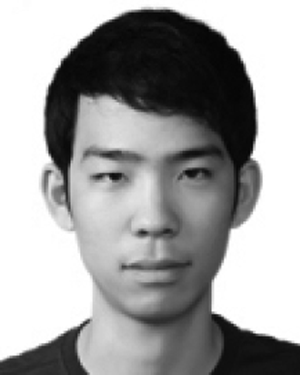 Minju Jung合作论文数KAIST;c;KAIST6Jaeyoung Lee合作论文数6
 Jae-Joon Han合作论文数Samsung Advanced Institute of Technology;Samsung Electronics6
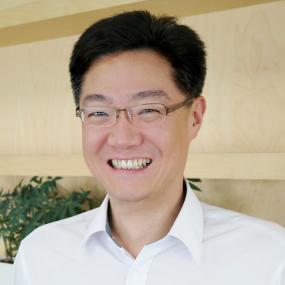 Changkyu Choi合作论文数Samsung Advanced Institute of Technology6Han S. Lee合作论文数5
 Sunghyun Baek合作论文数Statistical Inference and Information Theory Lab, School of Electrical Engineering, Korea Advanced Institute of Science and Technology5Injae Lee合作论文数5
 Jeonghyo Ha合作论文数5
 Sungryull Sohn合作论文数LG Global AI Center5
 Daniel Cremers合作论文数Departments of Informatics and Mathematics, School of Computation, Information and Technology, Technical University of Munich5




