Mixture-of-Experts (MoE) models scale capacity for strong quality while keeping per-token compute bounded through sparse expert activation. Yet low-latency MoE serving is increasingly challenging, because it spans two inference phases with fundamentally different bottlenecks: prefill is dominated by token-wise expert computation, whereas decode is constrained by memory traffic from the batch-wise activated expert set. However, existing training-free acceleration methods optimize only a single resource proxy, either the experts each token executes or the experts a batch activates, and either discard the excluded experts' contribution or leave it only implicitly approximated. In this paper, we propose ExFold, a unified training-free expert-folding framework for jointly accelerating MoE prefill and decode. ExFold casts both prefill and decode as one budgeted output-approximation problem: execute only a phase-specific constrained expert set while projecting the contribution of budget-excluded experts onto retained experts using calibrated scalar projectors. Motivated by the observation that many expert outputs are directionally aligned but differ in magnitude, ExFold calibrates a pairwise scalar-projector matrix on unlabeled data and uses it at inference time to fold excluded expert contributions into retained experts. Under this view, prefill acceleration becomes token-level Top-K folding, and decode acceleration becomes batch-level expert-pool folding. The two phases differ only in how retained experts are selected, while excluded contributions are recovered by one shared folding mechanism. We implement ExFold as a plug-and-play plugin in vLLM, with a lightweight expert-folding CUDA kernel, delivering up to 1.41x TTFT and 2.45x TPOT speedups while retaining about 99
The field of 4D world modeling—aiming to jointly capture spatial geometry and temporal dynamics—has witnessed remarkable progress in recent years, driven by advances in large-scale generative models and multimodal learning. However, the development of truly general 4D world models remains fundamentally constrained by the availability of high-quality data. Existing datasets and benchmarks often lack the dynamic complexity, multi-domain diversity, and spatial-temporal annotations required to support key tasks such as 4D geometric reconstruction, future prediction, and camera-controlled video generation. To address this gap, we introduce OmniWorld, a large-scale, multi-domain, multi-modal dataset specifically designed for 4D world modeling. OmniWorld consists of a newly collected OmniWorld-Game dataset and several curated public datasets spanning diverse domains. Compared with existing synthetic datasets, OmniWorld-Game provides richer modality coverage, larger scale, and more realistic dynamic interactions. Based on this dataset, we establish a challenging benchmark that exposes the limitations of current state-of-the-art (SOTA) approaches in modeling complex 4D environments. Moreover, fine-tuning existing SOTA methods on OmniWorld leads to significant performance gains across 4D reconstruction and video generation tasks, strongly validating OmniWorld as a powerful resource for training and evaluation. We envision OmniWorld as a catalyst for accelerating the development of general-purpose 4D world models, ultimately advancing machines’ holistic understanding of the physical world.
We present VINO, a unified visual generator that performs image and video generation and editing within a single framework. Instead of relying on task-specific models or independent modules for each modality, VINO uses a shared diffusion backbone that conditions on text, images and videos, enabling a broad range of visual creation and editing tasks under one model. Specifically, VINO couples a vision-language model (VLM) with a Multimodal Diffusion Transformer (MMDiT), where multimodal inputs are encoded as interleaved conditioning tokens, and then used to guide the diffusion process. This design supports multi-reference grounding, long-form instruction following, and coherent identity preservation across static and dynamic content, while avoiding modality-specific architectural components. To train such a unified system, we introduce a multi-stage training pipeline that progressively expands a video generation base model into a unified, multi-task generator capable of both image and video input and output. Across diverse generation and editing benchmarks, VINO demonstrates strong visual quality, faithful instruction following, improved reference and attribute preservation, and more controllable multi-identity edits. Our results highlight a practical path toward scalable unified visual generation, and the promise of interleaved, in-context computation as a foundation for general-purpose visual creation.
Pre-trained video models learn powerful priors for generating high-quality, temporally coherent content. While these models excel at temporal coherence, their dynamics are often constrained by the continuous nature of their training data. We hypothesize that by injecting the rich and unconstrained content diversity from image data into this coherent temporal framework, we can generate image sets that feature both natural transitions and a far more expansive dynamic range. To this end, we introduce iMontage, a unified framework designed to repurpose a powerful video model into an all-in-one image generator. The framework consumes and produces variable-length image sets, unifying a wide array of image generation and editing tasks. To achieve this, we propose an elegant and minimally invasive adaptation strategy, complemented by a tailored data curation process and training paradigm. This approach allows the model to acquire broad image manipulation capabilities without corrupting its invaluable original motion priors. iMontage excels across several mainstream many-in-many-out tasks, not only maintaining strong cross-image contextual consistency but also generating scenes with extraordinary dynamics that surpass conventional scopes. Our code and model weights will be made publicly available.
3D Gaussian Splatting (3DGS) has demonstrated impressive performance in scene reconstruction. However, most existing GS-based surface reconstruction methods focus on 3D objects or scenes with limited scale. Directly applying these methods to large-scale scene reconstruction will pose challenges such as high memory costs, excessive time consumption, and lack of geometric detail, which makes it difficult to implement in practical applications. 3D Gaussian Splatting (3DGS) has demonstrated impressive performance in scene reconstruction. However, most existing GS-based surface reconstruction methods are limited to single-machine settings and focus on individual objects or scenes with limited scale. When extended to large-scale scene reconstruction, these methods suffer from high memory consumption, prolonged training time, and insufficient geometric detail, which makes it difficult to implement in practical applications. To overcome these limitations, a natural solution is to distribute the learning workload across multiple collaborative devices. However, collaborative distributed learning presents unique challenges, including efficiently training models on resource-limited local devices and effectively integrating knowledge across devices to maintain global consistency and high-quality reconstruction. To address these challenges, we propose CoSurfGS, a novel collaborative-distributed framework that enables high-quality large-scale surface reconstruction while maintaining efficient training and GPU memory utilization. Specifically, we propose two modules: Local Model Compression (LMC), which eliminates redundant Gaussians to improve memory and training efficiency on each device; and Model Aggregation Schemes (MAS), which enhance global reconstruction quality by collaboratively distilling knowledge from multiple distributed devices. Extensive experiments on Urban3d, MegaNeRF, and BlendedMVS demonstrate that our proposed method can achieve fast and scalable high-fidelity surface reconstruction and photorealistic rendering.
We present WinT3R, a feed-forward reconstruction model capable of online prediction of precise camera poses and high-quality point maps. Previous methods suffer from a trade-off between reconstruction quality and real-time performance. To address this, we first introduce a sliding window mechanism that ensures sufficient information exchange among frames within the window, thereby improving the quality of geometric predictions without introducing a large amount of extra computation. In addition, we leverage a compact representation of cameras and maintain a global camera token pool, which enhances the reliability of camera pose estimation without sacrificing efficiency. These designs enable WinT3R to achieve state-of-the-art performance in terms of online reconstruction quality, camera pose estimation, and reconstruction speed, as validated by extensive experiments on diverse datasets.
We introduce $\pi^3$, a feed-forward neural network that offers a novel approach to visual geometry reconstruction, breaking the reliance on a conventional fixed reference view. Previous methods often anchor their reconstructions to a designated viewpoint, an inductive bias that can lead to instability and failures if the reference is suboptimal. In contrast, $\pi^3$ employs a fully permutation-equivariant architecture to predict affine-invariant camera poses and scale-invariant local point maps without any reference frames. This design not only makes our model inherently robust to input ordering, but also leads to higher accuracy and performance. These advantages enable our simple and bias-free approach to achieve state-of-the-art performance on a wide range of tasks, including camera pose estimation, monocular/video depth estimation, and dense point map reconstruction. Code and models will be publicly available.
Large reasoning models (LRMs) like OpenAI o1 and DeepSeek-R1 achieve high accuracy on complex tasks by adopting long chain-of-thought (CoT) reasoning paths. However, the inherent verbosity of these processes frequently results in redundancy and overthinking. To address this issue, existing works leverage Group Relative Policy Optimization (GRPO) to reduce LRM output length, but their static length reward design cannot dynamically adapt according to the relative problem difficulty and response length distribution, causing over-compression and compromised accuracy. In this paper, we propose , a novel GRPO-based efficient reasoning method with progressive CoT length calibration. makes a two-fold contribution: First, it dynamically estimates the optimal length with peak accuracy during training, and further guides the overlong responses to approach the optimal length, in order to achieve length reduction while sustaining high accuracy. Second, it dynamically modulates the length reward coefficient to avoid the unwarranted penalization of correct reasoning paths. Extensive experiment results show that achieves up to 52.5\% average length compression with improved accuracy, and achieves up to 16.6\% accuracy improvement on challenging benchmarks like AIME25.
Long-context inference is central to modern large language model (LLM) applications such as retrieval-augmented generation and multi-document reasoning. To mitigate the growing inference cost, recent work has explored key-value (KV) cache reuse to reduce redundant prefill computation. However, existing reuse methods primarily focus on computation savings and overlook a critical bottleneck in long-context LLM serving: the cost of storing and accessing large KV caches. While KV compression appears to be a natural complement, naively combining compression with non-prefix KV reuse often leads to severe accuracy degradation. In this work, we propose C^2KV, a unified framework for non-prefix KV reuse that jointly optimizes KV extraction and inference-time concatenation. C^2KV learns a composable and compressed KV cache manifold that is explicitly designed to be position-agnostic. Our approach introduces a lightweight sidecar Extractor with learnable compression tokens and a structured attention flow, enabling modular KV representations that can be flexibly reused and concatenated without modifying the frozen base model. We further employ a compression-concatenation co-training strategy to align extraction-time representations with their downstream reuse behavior. Extensive experiments across multiple long-context benchmarks and model families demonstrate that C^2KV significantly reduces KV cache storage and transfer costs, achieving up to 17× inference speedup under long contexts, while preserving generation quality.
In the domain of 3D content creation, achieving optimal mesh topology through AI models has long been a pursuit for 3D artists. Previous methods, such as MeshGPT, have explored the generation of ready-to-use 3D objects via mesh auto-regressive techniques. While these methods produce visually impressive results, their reliance on token-by-token predictions in the auto-regressive process leads to several significant limitations. These include extremely slow generation speeds and an uncontrollable number of mesh faces. In this paper, we introduce MeshCraft, a novel framework for efficient and controllable mesh generation, which leverages continuous spatial diffusion to generate discrete triangle faces. Specifically, MeshCraft consists of two core components: 1) a transformer-based VAE that encodes raw meshes into continuous face-level tokens and decodes them back to the original meshes, and 2) a flow-based diffusion transformer conditioned on the number of faces, enabling the generation of high-quality 3D meshes with a predefined number of faces. By utilizing the diffusion model for the simultaneous generation of the entire mesh topology, MeshCraft achieves high-fidelity mesh generation at significantly faster speeds compared to auto-regressive methods. Specifically, MeshCraft can generate an 800-face mesh in just 3.2 seconds (35× faster than existing baselines). Extensive experiments demonstrate that MeshCraft outperforms state-of-the-art techniques in both qualitative and quantitative evaluations on ShapeNet dataset and demonstrates superior performance on Objaverse dataset. Moreover, it integrates seamlessly with existing conditional guidance strategies, showcasing its potential to relieve artists from the time-consuming manual work involved in mesh creation.
The integration of geometric reconstruction and generative modeling remains a critical challenge in developing AI systems capable of human-like spatial reasoning. This paper proposes Aether, a unified framework that enables geometry-aware reasoning in world models by jointly optimizing three core capabilities: (1) 4D dynamic reconstruction, (2) action-conditioned video prediction, and (3) goal-conditioned visual planning. Through task-interleaved feature learning, Aether achieves synergistic knowledge sharing across reconstruction, prediction, and planning objectives. Building upon video generation models, our framework demonstrates zero-shot synthetic-to-real generalization despite never observing real-world data during training. Furthermore, our approach achieves zero-shot generalization in both action following and reconstruction tasks, thanks to its intrinsic geometric modeling. Notably, even without real-world data, its reconstruction performance is comparable with or even better than that of domain-specific models. Additionally, Aether employs camera trajectories as geometry-informed action spaces, enabling effective action-conditioned prediction and visual planning. We hope our work inspires the community to explore new frontiers in physically-reasonable world modeling and its applications.
Spatial intelligence is the ability of a machine to perceive, reason, and act in three dimensions within space and time. Recent advancements in large-scale auto-regressive models have demonstrated remarkable capabilities across various reasoning tasks. However, these models often struggle with fundamental aspects of spatial reasoning, particularly in answering questions like "Where am I?" and "What will I see?". While some attempts have been done, existing approaches typically treat them as separate tasks, failing to capture their interconnected nature. In this paper, we present Generative Spatial Transformer (GST), a novel auto-regressive framework that jointly addresses spatial localization and view prediction. Our model simultaneously estimates the camera pose from a single image and predicts the view from a new camera pose, effectively bridging the gap between spatial awareness and visual prediction. The proposed innovative camera tokenization method enables the model to learn the joint distribution of 2D projections and their corresponding spatial perspectives in an auto-regressive manner. This unified training paradigm demonstrates that joint optimization of pose estimation and novel view synthesis leads to improved performance in both tasks, for the first time, highlighting the inherent relationship between spatial awareness and visual prediction.
World models serve as essential building blocks toward Artificial General Intelligence (AGI), enabling intelligent agents to predict future states and plan actions by simulating complex physical interactions. However, existing interactive models primarily predict visual observations, thereby neglecting crucial hidden states like geometric structures and spatial coherence. This leads to rapid error accumulation and temporal inconsistency. To address these limitations, we introduce DeepVerse, a novel 4D interactive world model explicitly incorporating geometric predictions from previous timesteps into current predictions conditioned on actions. Experiments demonstrate that by incorporating explicit geometric constraints, DeepVerse captures richer spatio-temporal relationships and underlying physical dynamics. This capability significantly reduces drift and enhances temporal consistency, enabling the model to reliably generate extended future sequences and achieve substantial improvements in prediction accuracy, visual realism, and scene rationality. Furthermore, our method provides an effective solution for geometry-aware memory retrieval, effectively preserving long-term spatial consistency. We validate the effectiveness of DeepVerse across diverse scenarios, establishing its capacity for high-fidelity, long-horizon predictions grounded in geometry-aware dynamics.
3D Gaussian Splatting (3DGS) has shown promising performance in novel view synthesis. Previous methods adapt it to obtaining surfaces of either individual 3D objects or within limited scenes. In this paper, we make the first attempt to tackle the challenging task of large-scale scene surface reconstruction. This task is particularly difficult due to the high GPU memory consumption, different levels of details for geometric representation, and noticeable inconsistencies in appearance. To this end, we propose GigaGS, the first work for high-quality surface reconstruction for large-scale scenes using 3DGS. GigaGS first applies a partitioning strategy based on the mutual visibility of spatial regions, which effectively grouping cameras for parallel processing. To enhance the quality of the surface, we also propose novel multi-view photometric and geometric consistency constraints based on Level-of-Detail representation. In doing so, our method can reconstruct detailed surface structures. Comprehensive experiments are conducted on various datasets. The consistent improvement demonstrates the superiority of GigaGS.
3D Gaussian Splatting (3DGS) has demonstrated impressive performance in scene reconstruction. However, most existing GS-based surface reconstruction methods focus on 3D objects or limited scenes. Directly applying these methods to large-scale scene reconstruction will pose challenges such as high memory costs, excessive time consumption, and lack of geometric detail, which makes it difficult to implement in practical applications. To address these issues, we propose a multi-agent collaborative fast 3DGS surface reconstruction framework based on distributed learning for large-scale surface reconstruction. Specifically, we develop local model compression (LMC) and model aggregation schemes (MAS) to achieve high-quality surface representation of large scenes while reducing GPU memory consumption. Extensive experiments on Urban3d, MegaNeRF, and BlendedMVS demonstrate that our proposed method can achieve fast and scalable high-fidelity surface reconstruction and photorealistic rendering. Our project page is available at .
3D Gaussian Splatting (3DGS) has shown promising performance in novel view synthesis. Previous methods adapt it to obtaining surfaces of either individual 3D objects or within limited scenes. In this paper, we make the first attempt to tackle the challenging task of large-scale scene surface reconstruction. This task is particularly difficult due to the high GPU memory consumption, different levels of details for geometric representation, and noticeable inconsistencies in appearance. To this end, we propose GigaGS, the first work for high-quality surface reconstruction for large-scale scenes using 3DGS. GigaGS first applies a partitioning strategy based on the mutual visibility of spatial regions, which effectively grouping cameras for parallel processing. To enhance the quality of the surface, we also propose novel multi-view photometric and geometric consistency constraints based on Level-of-Detail representation. In doing so, our method can reconstruct detailed surface structures. Comprehensive experiments are conducted on various datasets. The consistent improvement demonstrates the superiority of GigaGS.
In recent years, 3D Gaussian splatting has emerged as a powerful technique for 3D reconstruction and generation, known for its fast and high-quality rendering capabilities. To address these shortcomings, this paper introduces a novel diffusion-based framework, GVGEN, designed to efficiently generate 3D Gaussian representations from text input. We propose two innovative techniques:(1) \textit{Structured Volumetric Representation}. We first arrange disorganized 3D Gaussian points as a structured form GaussianVolume. This transformation allows the capture of intricate texture details within a volume composed of a fixed number of Gaussians. To better optimize the representation of these details, we propose a unique pruning and densifying method named the Candidate Pool Strategy, enhancing detail fidelity through selective optimization. (2) \textit{Coarse-to-fine Generation Pipeline}. To simplify the generation of GaussianVolume and empower the model to generate instances with detailed 3D geometry, we propose a coarse-to-fine pipeline. It initially constructs a basic geometric structure, followed by the prediction of complete Gaussian attributes. Our framework, GVGEN, demonstrates superior performance in qualitative and quantitative assessments compared to existing 3D generation methods. Simultaneously, it maintains a fast generation speed ($\sim$7 seconds), effectively striking a balance between quality and efficiency.
 Weicai Ye (叶伟才)合作论文数ETH Zurich;State Key Lab of CAD & CG, Zhejiang University;ZJU-SenseTime Joint Lab of 3D Vision1
 Tong He (贺通)合作论文数Shanghai AI Lab1
 Di Huang (黄迪)合作论文数Intelligent Recognition and Image Processing Lab, School of Computer Science and Engineering, Beijing University1
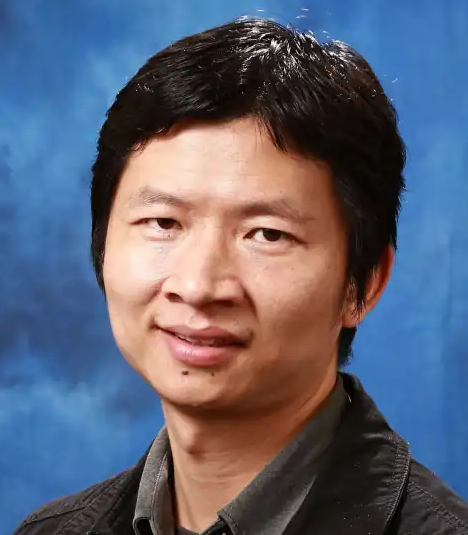 Wanli Ouyang (欧阳万里)合作论文数Shanghai Artificial Intelligence Laboratory1




