In this article, data-compatibility analysis (DCA) problem is investigated with both the measurement noise and input noise considered. The expectation-maximization (EM) algorithm is exploited to deal with the unknown noise statistics. Motivated by the fact that although there exists an excellent EM based estimator for dynamic systems, it cannot be used in the context of DCA due to the presence of nonadditive input noises, a generalized EM based estimator is developed to reconstruct the flight path, as well as to estimate the sensor model parameters. Making full use of the special dependencies among the state components and the fact that the associated dynamic system has an affine nonlinear structure, the generalized estimator retains many advantages of the existing EM based one, such as the simple optimization process for the unknowns. Experimental results show that it can give more accurate results than the classical output error method and the existing EM based one in the case of high input noise.
Reliable weather forecasting is quite important for sectors with weather-dependent decision-making. To capture unknown and complex dependencies from multiple spatiotemporal factors, i.e., autocorrelated, meteorological causal, meteorological spatial factors, this paper proposes a spatiotemporal feature extraction and fusion network inspired by humans' multi-level cognition process, namely, SFEF-Net, including the data pre-processing stage, transfer pre-training stage, spatiotemporal feature extraction stage, and spatiotemporal feature fusion stage. Specifically, inspired by humans' empirical analysis, the 24 Solar Terms knowledge and Pearson correlation coefficient analysis are utilized to respectively select input timestamps and influencing factors in the first stage. Inspired by humans' associative learning, a Long Short-Term Memory Network (LSTM) layer with powerful remember capability is trained via weather data from multiple neighbored monitoring stations in the second stage, and further is transferred for better feature extraction. Inspired by humans' independent analysis, every factor is separately captured and analyzed via the pre-trained LSTM layer in the third stage, which also coincides with the philosophical idea of divide and conquer. Inspired by humans' comprehensive consideration, extracted features are fused level by level via the attention mechanism with dynamic weights in the fourth stage, which avoids invalid dependencies between multiple features and overfitting. The real-world daily average air temperature forecasting in Shaanxi Province, China is taken to demonstrate the SFEF-Net beyond 12 baseline methods. Additionally, forecasts of drastic change period, ablation analysis, multiple steps, and different stations further present the effectiveness of the SFEF-Net.
We consider the robust filtering problem for a state-space model with outliers in correlated measurements. We propose a new robust filtering framework to further improve the robustness of conventional robust filters. Specifically, the measurement fitting error is processed separately during the reweighting procedure, which differs from existing solutions where a jointly processed scheme is involved. Simulation results reveal that, under the same setup, the proposed method outperforms the existing robust filter when the outlier-contaminated measurements are correlated, while it has the same performance as the existing one in the presence of uncorrelated measurements since these two types of robust filters are equivalent under such a circumstance.
We consider state estimation for networked systems (NSs), where measurements from sensor nodes are contaminated by outliers. A new hierarchical measurement model is formulated for outlier detection by integrating an outlier-free measurement model with a binary indicator variable for each sensor. The binary indicator variable, which is assigned a beta-Bernoulli prior, is utilized to characterize if the sensor’s measurement is nominal or an outlier. Based on the proposed outlier-detection measurement model, both centralized and decentralized information fusion filters are developed. Specifically, in the centralized approach, all measurements are sent to a fusion center where the state and outlier indicators are jointly estimated by employing the mean-field variational Bayesian (VB) inference in an iterative manner. In the decentralized approach, however, every node shares its information, including the prior and likelihood, only with its neighbors based on a hybrid consensus strategy. Then each node independently performs the estimation task based on its own and shared information. In addition, a distributed solution with an approximation is proposed to reduce the local computational complexity and communication overhead. Simulation results reveal that the proposed algorithms are effective in dealing with outliers compared with several recent robust solutions.
We consider the robust smoothing problem for a state-space model with outliers in measurements. A unified framework for robust smoothing based on M-estimation is developed, in which the robust smoothing problem is formulated by replacing the quadratic loss for measurement fitting in the conventional Kalman smoother by a robust cost function from robust statistics. The majorization-minimization method is employed to iteratively solve the formulated robust smoothing problem. In each iteration, a surrogate function is constructed for the robust cost, which enables the states update procedure to be implemented in a similar way as that in a conventional Kalman smoother with a reweighted measurement covariance. Numerical experiments show that the proposed robust approach outperforms the traditional Kalman smoother and several robust filtering methods. (C) 2018 Elsevier B.V. All rights reserved.
We consider the problem of aerodynamic parameter estimation for aircraft dynamics modeled by a state space model where the statistic information of both the process and measurement noises are missing. To deal with the missing statistics, we propose in this work a new approach in which an augmented sigma point Rauch–Tung–Striebel (RTS) Kalman smoother is integrated with the expectation maximization (EM) algorithm. We define a new state vector by combining the original states and the unknown aerodynamic parameters. In addition, we impose a Gaussian random walk model for the unknown aerodynamic parameters and then build the extended state space model for the augmented RTS Kalman smoother. The expectation terms in the EM algorithm are approximated by the sigma point rule which is also applied in the augmented RTS Kalman smoother. Moreover, the non-convex optimization problem involved in the EM is solved in analytical forms rather than in numerical approaches. A comparative study of identifying the aerodynamic parameters of the flight test platform HFB-320 shows that the proposed approach achieves a substantial performance improvement over the existing ones, especially in terms of the convergence rate.
To address the 3D point matching problem where the pose difference between two point sets is unknown, the authors propose a path following (PF)–based algorithm. This method works by reducing the objective function of robust point matching (RPM) algorithm to a function of point correspondence variable and then using PF for optimisation. By using the 3D similarity transformation which has few parameters, authors’ method needs no regularisation on transformation and, therefore, can handle the case when the pose difference between two point sets is unknown. The authors also propose a novel convex term for use in the PF algorithm which is based on the low‐rank nature of authors’ objective function and leads to a PF algorithm which converges quickly. Experimental results demonstrated better robustness of the proposed method over state‐of‐the‐art methods and authors’ method is also efficient.
A new algorithm based on expectation maximization (EM) is presented for identifying the parameters and noise covariance matrices in an aircraft dynamic system. The proposed algorithm contains two steps. The first step is to estimate the state of the system using the Kalman filtering (KF) and the current estimator of these unknows. In the second step, the parameters as well as the noise covariance matrices are recursively updated by using the online EM algorithm and the multidimensional stochastic approximation strategy. In order to make a comprehensive comparison of the proposed algorithm and the traditional algorithm, the proposed algorithm is tested by using simulation data and shows desirable estimation accuracy.
We consider the robust filtering problem for a nonlinear state-space modelwith outliers in measurements. To improve the robustness of the traditionalKalman filtering algorithm, we propose in this work two robust filters based onmixture correntropy, especially the double-Gaussian mixture correntropy andLaplace-Gaussian mixture correntropy. We have formulated the robust filteringproblem by adopting the mixture correntropy induced cost to replace thequadratic one in the conventional Kalman filter for measurement fitting errors.In addition, a tradeoff weight coefficient is introduced to make sure theproposed approaches can provide reasonable state estimates in scenarios wheremeasurement fitting errors are small. The formulated robust filtering problemsare iteratively solved by utilizing the cubature Kalman filtering frameworkwith a reweighted measurement covariance. Numerical results show that theproposed methods can achieve a performance improvement over existing robustsolutions.
This paper presents a reliable active fault-tolerant tracking control system (AFTTCS) for actuator faults in a quadrotor unmanned aerial vehicle (QUAV). The proposed AFTTCS is designed based on a well-known model reference adaptive control (MRAC) framework that guarantees the global asymptotic stability of a QUAV system. To mitigate the negative impacts of model uncertainties and enhance system robustness, a radial basis function neural network is incorporated into the MRAC scheme for adaptively identifying the model uncertainties online and modifying the reference model. Meanwhile, actuator dynamics are considered to avoid undesirable performance degradation. Furthermore, a fault detection and diagnosis estimator is constructed to diagnose lossof- control-effectiveness faults in actuators. Based on the fault information, a fault compensation term is added to the control law to compensate for the adverse effects of actuator faults. Simulation results show that the proposed AFTTCS enables the QUAV to track the desired reference commands in the absence/presence of actuator faults with satisfactory performance.
We consider robust smoothing for nonlinear state space models in which both the process and measurement noises have heavy tails. To improve the robustness of Kalman smoothing, we formulate the robust smoothing problem by replacing the quadratic loss in the conventional Gaussian Kalman smoother by Huber's cost function. However, the Huber based smoother cannot be directly implemented within the Kalman smoothing framework, which has well recognized benefits in computational efficiency and stability. To address this issue, we introduce an auxiliary parameter to construct a surrogate function for the Huber cost function, leading to a reformulation of the robust Kalman smoothing problem. The reformulated robust smoothing is solved by an alternating minimization method, which iterates between a simple auxiliary parameter update step and a modified conventional Kalman smoothing step. Simulation results show that the proposed method achieves a performance improvement over several conventional and existing robust smoothers with a slight increase of computational time. (C) 2019 Elsevier B.V. All rights reserved.
This paper proposes a new nonlinear fault detection and diagnosis (FDD) scheme for the inertial measurement unit (IMU) sensor of an unmanned quadrotor helicopter (UQH). To mitigate the impact of model uncertainties, the kinematic model of an UQH rather than the dynamic model is employed to design the FDD scheme. A two-stage extended Kalman filter (TSEKF) is developed for detecting, isolating and identifying IMU sensor faults. Considering that the TSEKF is insensitive to time-varying faults, two adaptive two-stage extended Kalman filters are further proposed by integrating TSEKF with different forgetting factor schemes. Several experiments have been designed and implemented on an UQH platform to test the proposed FDD scheme, where bias fault, drift fault and oscillatory fault are considered. The results demonstrate that the proposed FDD methods are effective for detecting and estimating the IMU sensor faults in different fault scenarios.
In particle filter, incorporating the current measurement into the sampling process is an efficient strategy to improve the sampling efficiency. However, in the case of measurement random delay, this strategy will become invalid since the current received measurement is not necessary the one that the sensor collects currently. To address this problem, we first calculate the posterior distribution of the delay step of each sensor. According to the calculation results and a predefined decision logic, we can determine which measurements do not undergo delay. Then the undelayed measurements are used to generate the proposal distribution. Simulation results demonstrate the improved performance of the proposed particle filter comparing with the existing particle filters.
This paper presents a robust actuator fault detection and diagnosis (FDD) scheme for a quadrotor UAV (QUAV) in the presence of external disturbances. First, the dynamic model of a QUAV taking into account actuator faults and external disturbances is constructed. Then, treating the actuator faults and external disturbances as augmented system states, an adaptive augmented state Kalman filter (AASKF), is developed without the need of make the assumption that the exact stochastic information of actuator faults and external disturbances are available. Next, in order to reduce the computational load of AASKF, an adaptive three-stage Kalman filter (AThSKF) is proposed by decoupling the AASKF into three subfilters. The AThSKF-based FDD scheme can not only detect and isolate actuator faults but also estimate the magnitudes even if the QUAV suffers from the external disturbances. Finally, the performance of the FDD scheme is evaluated under different fault scenarios, and simulation results demonstrate the effectiveness of the proposed method.
We consider the problem of robust estimation involving filtering and smoothing for nonlinear state space models which are disturbed by heavy-tailed impulsive noises. To deal with heavy-tailed noises and improve the robustness of the traditional nonlinear Gaussian Kalman filter and smoother, we propose in this work a general framework of robust filtering and smoothing, which adopts a new maximum correntropy criterion to replace the minimum mean square error for state estimation. To facilitate understanding, we present our robust framework in conjunction with the cubature Kalman filter and smoother. A half-quadratic optimization method is utilized to solve the formulated robust estimation problems, which leads to a new maximum correntropy derivative-free robust Kalman filter and smoother. Simulation results show that the proposed methods achieve a substantial performance improvement over the conventional and existing robust ones with slight computational time increase.
This study is concerned with the state smoothing problem for a class of non-linear discrete-time stochastic systems with one-step random measurement delay (ORMD). The main contribution is that the forward-backward particle smoothing scheme is successfully extended to the systems with ORMD. First, the particle filter, specially designed to deal with ORMD, is implemented to obtain the filtering distribution and the joint distribution of state history. Then, by marginalising the joint distribution, the one-step fixed-lag smoothing distribution can be obtained. Finally, based on the forward-backward smoothing scheme, the particle approximation of the fixed-interval smoothing distribution can be obtained by re-weighting the particles which have been used in the foregoing one-step fixed-lag smoothing distribution. Simulation results demonstrate the effectiveness of the proposed smoother.
Contrast enhancement which aims to increase the contrast of an image with low dynamic range, has been widely studied and exploited. In spite of the great success of many contrast enhancement algorithms, they still have difficulty in achieving both global and local contrast enhancement so that some over-enhancement, under-enhancement or even halo artifacts are often produced in complex images. This paper proposes a simple but efficient contrast enhancement method which may achieve both global and local contrast enhancement and perceptually suppress the above-mentioned problems. A cost function integrating global enhancement with local contrast enhancement is firstly constructed to pose image enhancement as an optimization problem. Then, two key steps are involved in solving for an optimal solution, the just-noticeable difference (JND) model is introduced to perceptually determine maximum local gains and neighbouring gray-level difference for local and global contrast enhancement, respectively, and an adaptive parameter regularization method is invoked to further suppress over-enhancement and halo artifacts. The experimental results on many images both qualitatively and quantitatively demonstrate our algorithm can robustly provide better visual quality in global and local contrast compared to a selection of other well-known state-of-the-art algorithms.
A new Gaussian approximation nonlinear filter called generalized cubature quadrature Kalman filter(GCQKF) is introduced for nonlinear dynamic systems. Based on standard GCQKF,two extensions are developed, namely square root generalized cubature quadrature Kalman filter(SR-GCQKF) and iterated generalized cubature quadrature Kalman filter(I-GCQKF). In SR-GCQKF,the QR decomposition is exploited to alter the Cholesky decomposition and both predicted and filtered error covariances have been propagated in square root format to make sure the numerical stability. In I-GCQKF, the measurement update step is executed iteratively to make full use of the latest measurement and a new terminal criterion is adopted to guarantee the increase of likelihood. Detailed numerical experiments demonstrate the superior performance on both tracking stability and estimation accuracy of I-GCQKF and SR-GCQKF compared with GCQKF.
This paper is concerned with the recursive filtering problem for a class of discrete-time nonlinear stochastic systems in the presence of multi-sensor measurement delay. The delay occurs in a multi-step and asynchronous manner, and the delay probability of each sensor is assumed to be known or unknown. Firstly, a new model is constructed to describe the measurement process, based on which a new particle filter is developed with the ability to fuse multi-sensor information in the case of known delay probability. In addition, an online delay probability estimation module is introduced in the particle filtering framework, which leads to another new filter that can be implemented without the prior knowledge of delay probability. More importantly, since there is no complex iterative operation, the resulting filter can be implemented recursively and is suitable for many real-time applications. Simulation results show the effectiveness of the proposed filters.
 Wei Zhang (张炜)合作论文数Department of Integrated Technology and Control Engineering, School of Aeronautics, Northwestern Polytechnical University17
 Hongwei Wang合作论文数11
 Heping Wang (王和平)合作论文数9
 Quan Pan (潘泉)合作论文数School of Automation, Northwestern Polytechnical University7
 Yan Liang (梁彦)合作论文数School of Automation, Northwestern Polytechnical University6
 Yingna Jia合作论文数5HongCai Zhang (张洪才)合作论文数5
 Wei Lian合作论文数The Hong Kong Polytechnic University, Northwestern Polytechnic University5
 Hongbin Li (李宏斌)合作论文数Department of Electrical and Computer Engineering, Charles V. Schaefer, Jr. School of Engineering and Science, Stevens Institute of Technology5Xiaodan Chen合作论文数3
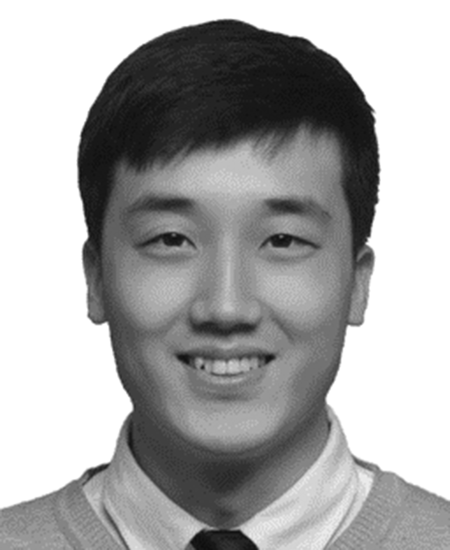 Yujiang Zhong合作论文数School of Aeronautics, Northwestern Polytechnical University, Xi’an, China3
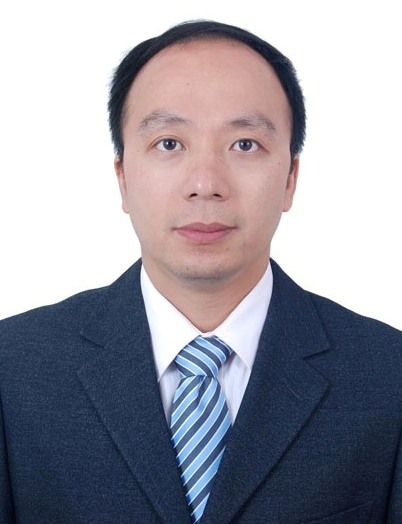 Zhigang Ling (凌志刚)合作论文数College of Electrical and Information Engineering, Hunan University3
 Zhengping Wang (王正平)合作论文数School of Aeronautics, Northwestern Polytechnical University3
 Youmin Zhang (张友民)合作论文数Concordia Institute of Aerospace Design and Innovation, Concordia University;Diagnosis, Flight Control & Simulation Lab, Concordia University;Department of Mechanical, Industrial and Aerospace Engineering, Concordia University3
 Chunhui Zhao (赵春晖)合作论文数College of Control Science and Engineering, Zhejiang University3
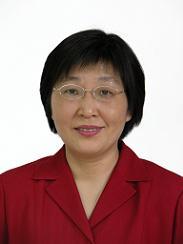 Yongmei Cheng (程咏梅)合作论文数School of Automation, Northwestern Polytechnical University3Binhua Yan合作论文数2
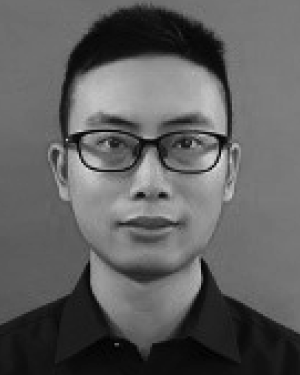 Hang Zou合作论文数2
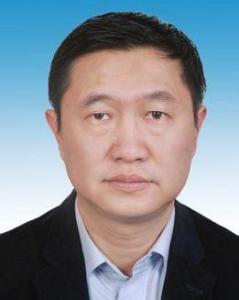 Hao Zhan (詹浩)合作论文数School of Aeronautics, Northwestern Polytechnical University2
 Qing Guo (郭庆)合作论文数School of Aeronautics, Northwestern Polytechnical University2Quanxue Gao (高全学)合作论文数School of Telecommunications Engineering, Xidian University2
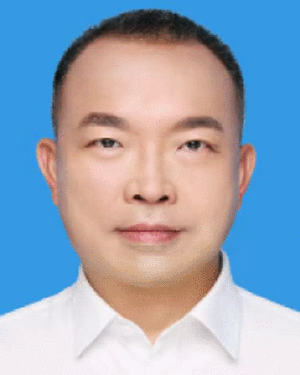 WANG Wenzheng (王文正)合作论文数1Han Wu合作论文数1Yuanyuan Liu合作论文数1
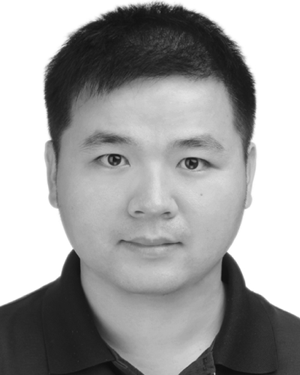 Zhixiang Liu合作论文数Concordia University1Zeyu DING (丁泽宇)合作论文数1Jun Hou (侯俊)合作论文数1
 Yong Wang (王勇)合作论文数School of Mathematics and Statistics, Northwestern Polytechnical University1
 Yizhe Zhang (张怡哲)合作论文数School of Aeronautics, Northwestern Polytechnical University1Minghang Liu (刘明航)合作论文数1
 Jun Fang (方俊)合作论文数National Key Laboratory on Communications, University of Electronic Science and Technology of China1Bingrong Zhang (张冰融)合作论文数1
 Guoliang Fan合作论文数School of Electrical and Computer Engineering, Oklahoma State University;Visual Computing and Image Processing Laboratory, Oklahoma State University1Wenping Lian合作论文数1




