A review of American Idle: Late-Career Job Loss in a Neoliberal Era, by Annette Nierobisz and Dana Sawchuk. New Brunswick: Rutgers University Press, 2025.
Mobile media, and the larger digital technological systems of which they are a part, both shape and are shaped by contemporary experiences of aging. With the aim of exploring older adults' understandings, uses of, and experiences with digital technologies in their everyday lives, we conducted four exploratory focus groups in two Canadian cities, with a total of 29 participants representing a diverse range of ages, living situations, and socio-economic statuses. Challenging stereotypes of technophobic or health-obsessed elders, our participants reported using a wide variety of devices and apps for a multiplicity of purposes. Focus groups were characterized by open-ended discussion, eliciting complexity, creativity, and agency in our participants' understandings and experiences of their digital worlds. Two main themes emerged from the analysis. First, a number of tensions - self-talk vs practice, design vs adaptation, "scripts" vs recreation - were articulated. Second, participants recounted the complex negotiations between technologies and people, bodies, environments, and resources that conjoined to shape their navigations of digital worlds. We suggest that open-ended dialogue with older adults is a promising method for understanding their ongoing, complex, and socially and materially situated engagements with technology. As a generative methodological tool, the focus group not only captures these dynamics but also produces the frictions, negotiations, and shared reflections that reveal them.
This Commentary discusses the key areas of thought brought together in this special issue on ‘Aging Together-With: The Growing Older of Humans, Non-Humans and More-Than-Humans’, edited by Michela Cozza and Anna Wanka. In particular, the articles in this issue present original and insightful discussions about the relational, material, embodied and interactive nature of ‘aging together-with’ environments, technologies, animals and pets, and more, across plural and hybrid temporalities and vital spaces of life. My writing both looks outward to where this issue critiques and advances current trends in aging studies and inward to reflect on my own contributions to these trends.
Abstract Loneliness, more than a feeling, has become a new ‘geriatric giant’ (Freedman & Nicolle 2020) and epidemic health crisis for older adults, affecting their physical, cognitive and emotional well-being. During the COVID epidemic, the intersecting effects of loneliness and isolation (often blurred in the literature) have intensified, as varying public health measures restricted visiting, gathering, routines and activities. While technical interventions, such as digital communication technologies (DCTs), tele-health meetings, online games, robotic pet companions and simulated presence therapy (SPT) are offered as beneficial aids, even where available or co-designed they tend to individualize and universalize loneliness. Professional, recreational and prescriptive interventions can also disregard the structural relations and socio-material environments that configure everyday lonely-making experiences over time. For both residential and community dwelling older adults, such experiences include lack of affordable housing, care-giver burden and insufficient community resources and planning. This presentation, drawing upon data and examples from senior health policy, loneliness surveys, national reports and qualitative research, reflects on these troubling matters in their complexity and heterogeneity. Conclusions explore the making of an ageist emotional economy that depicts and neglects older adults as inevitably lonely, while advocating for their rights to age in safe, healthy and socially connective ways.
Abstract This presentation summarizes original research data based on interview conversations with 11 international experts, consisting of designers, innovators and leaders in the gerontechnological field. Their experiences reveal important insights about the creation, production and distribution of care technologies for older adults, and how priorities are imagined for the future. Four main themes emerged from the research that point to a need for wider gerontological and sociological engagement. First, while the experts are aware of the increasing demand for technologies delivering monitoring, robotic, assistive, connective and mobility services, their socio-gerontological research about older adults on issues such as personal privacy is often limited. Second, the experts are challenged to recognize where ageist stereotypes of frailty and decline become scripted into their products. However, a clear protocol for avoiding negative imagery is not always available across age-tech enterprises, even as such imagery affects the appeal and promotion of their products. Third, the benefits of co-design and collaborate participation between designers and older users are not well understood, thus opportunities are lost to create age-friendly, affordable and livable products from the perspective of the users. Fourth, the conditions under which technologies become successful require the labor of care-givers, family members, residential staff and technical repair and maintenance technicians. Thus, understanding their roles should be an essential part of the design process. Conclusions advocate greater ties and co-learning amongst gerontologists, sociologists and age-tech experts, and attention to critical and grounded research on the material realities and challenges of technological adaptation for older adults.
When Anita Wohlmann and Aagje Swinnen invited me to write a commentary on age and ageism in the upcoming 2024 American presidential election, I was entranced by the idea. As a Canadian, I have watched with fascination the dramas of American elections from the front row of our international border, beginning with the 1960 debates between Democrat John F. Kennedy and Republican Richard M. Nixon, the first on TV. Both were experienced politicians. Kennedy was a senator and Nixon had been Vice President under Dwight Eisenhower for eight years, thus expected to be debate winner and next President. But TV was not kind to him. Kennedy appeared fit, handsome, charismatic, camera friendly, and most importantly, much younger than Nixon, who was awkward, uncomfortable, hesitant, and sweaty (also recovering from a knee injury). Both were in their forties, Nixon only five years older than Kennedy (see Kraus, 1977).
Discussions regarding personhood and dementia care are often based on practices of recognition; on notions of being—or not being— ‘one of us’. This article provides a short overview of personhood as articulated in dementia care, especially in the assemblage of practices known as ‘person-centred care’ (PCC), and in post-human approaches that developed following the critique of PCC. This article posits an alternative framework, based on a rereading of the concept of alienation, that we want to call ‘alienation-centred care’. It considers the extent to which dynamic prosthetic networks can be adapted to the lives of people with dementia, rather than only examining the individual's reactivity to dementia interventions that define traditional approaches. It further urges us to understand the multiple origins of alienating states. Conclusions explore how this framework might address some of the limitations identified in both humanist and post-human approaches to personhood and dementia.
EDITORIAL article Front. Sociol., 31 March 2023Sec. Medical Sociology Volume 8 - 2023 | https://doi.org/10.3389/fsoc.2023.1183572
The notion of 'person-centred care', popularised by Tom Kitwood in the latter part of his career, has become an influential moral and therapeutic ideal in the dementia care of older people. It has also nurtured a humanistic and de-medicalising turn to a cluster of affiliated philosophical, artistic, relational, spiritual and ethical approaches to dementia as a shared human condition rather than an isolating disease. However, critical dementia researchers argue that better treatment of people with dementia requires a broader understanding of what it means to be a person; an understanding that advances beyond static and individualising models of mind, memory and identity towards more inclusive models of difference, imagination, embodiment and community. Thus, intervention becomes a series of positive acts based on the recognition of personhood and restoration of capacity that challenge the traditional management of disability and functional loss. This chapter provides an overview of these developments through three thematic stages: 'Disease, Loss and the Medicalisation of Dementia', 'Person-Centred Care and Its Critics' and 'De-Centring Humanism'. The discussion is structured by the strengths and limitations of each while questioning how the humanist movement in general is important to reflect upon because of the moral divisions by which people with dementia are located, the affective 'fallacies of care' that undergird certain humanistic care practices, the sidelining of structural and historical constraints and person-centred dementia care costs, training and labour, and assumptions about universalised concepts of selfhood and personhood often embedded in humanistic models. The chapter draws upon approaches in medical anthropology, post-humanist and postcolonial literature, and recent research on the materialities and ecologies of dementia care, with Brazil as an example. Conclusions suggest that critical dementia studies, as a radical and adventurous sub-field, benefits from its growing ensemble of interdisciplinary conversations and the gravity and values it accords them.
The essay explores the Jewish life and career of Jacques Derrida (1930-2004), suggesting how, with age, his understanding of his destiny as leader of a transformative intellectual movement grew into a soulful journey. Derrida's celebrated volume of work, based on his masterful concept of deconstruction, is seen as integral to his personal struggle with his Jewishness. While Derrida has been the subject of numerous biographies, including many that debate the influence of his Jewish background, this essay considers more directly how his quest to discover alternative spaces of language and thought (and refuge) became increasingly linked to his interpretations of the radicality of Judaic traditions. The argument moves from a discussion of his childhood as an Algerian Sephardic Jew to his career and life in Paris, to the relationship between deconstruction and spirituality, and finally, to his reckoning in his later years with survivorship, legacy, faith, and wisdom as guides to his internal desert of wandering and revelation.
As a growing body of work has documented, digital technologies are central to the imagining of aging futures. In this study, we offer a critical, theoretical framework for exploring the dynamics of power related to the technological tracking, measuring, and managing of aging bodies at the heart of these imaginaries. Drawing on critical gerontology, feminist technoscience, sociology of the body, and socio-gerontechnology, we identify three dimensions of power relations where the designs, operations, scripts, and materialities of technological innovation implicate asymmetrical relationships of control and intervention: (1) aging bodies and the power of numbers, (2) aging spaces and the power of surveillance, and (3) age care economies and gendered power relations. While technological care for older individuals has been promoted as a cost-effective way to enhance independence, security, and health, we argue that such optimistic perspectives may obscure the realities of social inequality, agist bias, and exploitative gendered care labour.
This roundtable discussion is a creative contribution to this special issue on 'aging masculinities' based on questions posed by editor Stephen Katz to three leading senior scholars in the critical gerontological field in the United States. W. Andrew Achenbaum is a renowned historian who has devoted his career to writing about the relevance of past politics, cultures, and knowledges of aging to comprehending our current dilemmas. Thomas R. Cole is an acclaimed historical scholar and mentor to generations of Humanities researchers across the globe. His work also includes film, literature, ethics, and spirituality. Brian de Vries is a social gerontologist whose bold research on LGBTQ aging is a powerful voice in critiquing the multiple forms of discrimination, violence and hardships, and denied rights and life-chances imposed by hetero-patriarchal regimes in later life. That these men have shaped and been shaped by their work and advocacy is the key theme that inspires our conversation.
This article is a critical interdisciplinary study of biohacking as a specific case of transhumanism and its goals of enhancement and age intervention. It focuses on the organising principles underlying the biohacking movement's relationship to ageing and technoscience. The argument traces how the historical and scientific body technologies of molecularisation, functional age, optimisation, and quantification made possible the biohacking vision of the ageing body as amenable to modification, enhancement and improvement beyond its natural limits. Conclusions consider the wider implications of biohacking by pointing out four important issues that frame our cultural ambivalence about ageing: the tension between biohacking's supposedly liberating enhancement technologies and their obeisance to a tyranny of self-disciplinary practices and the authority of bio-data; the social meaning of biohacking hierarchies of human value, based on modifiable fitness and enhanceable performance; the implications of the biohacking program for gendered ageism; and the ethical limits of biohacking, not only in terms of potential harms to a person but what it can mean to exceed the natural limits of life.
Planning for aging populations has been a growing concern for policy makers across the globe. Integral to strategies for promoting healthy aging are initiatives for ‘aging in place’, linked to services and care that allow older people to remain in their homes and communities. Technological innovations—and especially the development of digital technologies—are increasingly presented as potentially important in helping to support these initiatives. In this study, we employed qualitative document analysis to examine and compare the discursive framing of technology in aging-in-place policy documents collected in three countries: The Netherlands, Spain, and Canada. We focus on the framing of technological interventions in relation to values such as quality of life, autonomy/independence, risk management, social inclusion, ‘active aging’, sustainability/efficiency of health care delivery, support for caregivers, and older peoples’ rights. The findings suggest that although all three countries reflected common understandings of the challenges of aging populations, the desirability of supporting aging in place, and the appropriateness of digital technologies in supporting the latter, different value-framings were apparent. We argue that attention to making these values explicit is important to understanding the role of social policies in imagining aging futures and the presumed role of technological innovation in their enactment.
An abstract is not available for this content so a preview has been provided. Please use the Get access link above for information on how to access this content.
 Kevin R Peters合作论文数Department of Psychology, Trent University14
 Barbara L Marshall合作论文数11
 Nicole Dalmer合作论文数Dept Hlth Aging & Soc, McMaster Univ3
 Simon Johnson Williams合作论文数Department of Sociology, University of Warwick3
 Alexander Peine合作论文数Copernicus Institute of Sustainable Development, Utrecht University3
 Annette Leibing合作论文数3Bryan Green合作论文数2
 Kavita Sivaramakrishnan合作论文数Department of Sociomedical Sciences, Mailman School of Public Health, Irving Medical Center, Columbia University in the City of New York2
 Ellison Kirsten L合作论文数Joint Graduate Program in Communication &Culture, York University;3013 TEL Centre, York University2
 Pat Thane合作论文数University of London2
 Paul Martin合作论文数Department of Sociological Studies, Faculty of Social Sciences, The University of Sheffield2
 Eugene Loos合作论文数School of Governance, Utrecht;Utrecht University;School of Governance, Utrecht University2W. Andrew Achenbaum合作论文数2
 Daniel Lopez Gomez合作论文数1Daniel Blanche合作论文数Internet Interdisciplinary Inst, Univ Oberta Catalunya1
 Vera Gallistl合作论文数Universität Wien1Thomas R Cole合作论文数1
 Paul Higgs合作论文数Division of Psychiatry, Faculty of Brain Sciences, University College London1
 Peter Whitehouse合作论文数College of Arts and Sciences, Case Western Reserve University1
 Ulla Kriebernegg合作论文数1
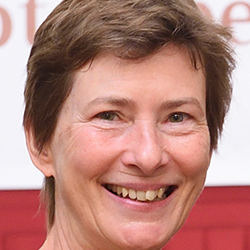 Carol Brayne合作论文数Cambridge Institute of Public Health, University of Cambridge;Australian National University;Queensland Institute of Medical Research;Department of Psychiatry, University of Cambridge1
 Michela Cozza合作论文数1Toni M. Calasanti合作论文数1
 Jessica Anne Gish合作论文数1Sally Chivers合作论文数1
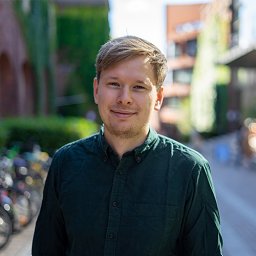 Bjorn Fischer合作论文数Dresden branch of IZFP, Fraunhofer Institute for Non-Destructive Testing1
 Andrea Rosales合作论文数Universitat Pompeu Fabra1
 Britt Östlund合作论文数Lund University1
 Franz Kolland合作论文数1
 Mireia Fernandez-Ardevol合作论文数1Roser Beneito-Montagut合作论文数Universitat Oberta de Catalunya;Rambla del Poblenou;Universitat Oberta de Catalunya|Rambla del Poblenou1
 Debbie Laliberte Rudman合作论文数School of Occupational Therapy, Western University1
 Brian Devries合作论文数1




