A bstract A search for the exclusive decays of the Higgs and Z bosons to a ϕ or ρ meson and a photon is performed with a pp collision data sample corresponding to an integrated luminosity of up to 35 . 6 fb −1 collected at $$ \sqrt{s}=13 $$ s = 13 TeV with the ATLAS detector at the CERN Large Hadron Collider. These decays have been suggested as a probe of the Higgs boson couplings to light quarks. No significant excess of events is observed above the background, as expected from the Standard Model. Upper limits at 95% confidence level were obtained on the branching fractions of the Higgs boson decays to ϕ γ and ρ γ of 4 . 8 × 10 −4 and 8 . 8 × 10 −4 , respectively. The corresponding 95% confidence level upper limits for the Z boson decays are 0 . 9 × 10 −6 and 25 × 10 −6 for ϕ γ and ρ γ, respectively.
This letter presents a search for narrow, high-mass resonances in the Zγ final state with the Z boson decaying into a pair of electrons or muons. The s=13 TeV pp collision data were recorded by the ATLAS detector at the CERN Large Hadron Collider and have an integrated luminosity of 140 fb−1. The data are found to be in agreement with the Standard Model background expectation. Upper limits are set on the resonance production cross section times the decay branching ratio into Zγ. For spin-0 resonances produced via gluon–gluon fusion, the observed limits at 95% confidence level vary between 65.5 fb and 0.6 fb, while for spin-2 resonances produced via gluon–gluon fusion (or quark–antiquark initial states) limits vary between 77.4 (76.1) fb and 0.6 (0.5) fb, for the mass range from 220 GeV to 3400 GeV.
The first measurement of longitudinal decorrelations of harmonic flow amplitudes v_{n} for n=2-4 in Xe+Xe collisions at sqrt[s_{NN}]=5.44 TeV is obtained using 3 μb^{-1} of data with the ATLAS detector at the LHC. The decorrelation signal for v_{3} and v_{4} is found to be nearly independent of collision centrality and transverse momentum (p_{T}) requirements on final-state particles, but for v_{2} a strong centrality and p_{T} dependence is seen. When compared with the results from Pb+Pb collisions at sqrt[s_{NN}]=5.02 TeV, the longitudinal decorrelation signal in midcentral Xe+Xe collisions is found to be larger for v_{2}, but smaller for v_{3}. Current hydrodynamic models reproduce the ratios of the v_{n} measured in Xe+Xe collisions to those in Pb+Pb collisions but fail to describe the magnitudes and trends of the ratios of longitudinal flow decorrelations between Xe+Xe and Pb+Pb. The results on the system-size dependence provide new insights and an important lever arm to separate effects of the longitudinal structure of the initial state from other early and late time effects in heavy-ion collisions.
The production cross-sections for W +/- and Z bosons are measured using ATLAS data corresponding to an integrated luminosity of 4.0 pb-1 collected at a centre-ofmass energy v s = 2.76 TeV. The deca ...
This paper reports searches for heavy resonances decaying into ZZ or ZW using data from proton-proton collisions at a centre-of-mass energy of √(s)=13 TeV. The data, corresponding to an integrated luminosity of 36.1 fb −1 , were recorded with the ATLAS detector in 2015 and 2016 at the Large Hadron Collider. The searches are performed in final states in which one Z boson decays into either a pair of light charged leptons (electrons and muons) or a pair of neutrinos, and the associated W boson or the other Z boson decays hadronically. No evidence of the production of heavy resonances is observed. Upper bounds on the production cross sections of heavy resonances times their decay branching ratios to ZZ or ZW are derived in the mass range 300-5000GeV within the context of Standard Model extensions with additional Higgs bosons, a heavy vector triplet or warped extra dimensions. Production through gluon-gluon fusion, Drell-Yan or vector-boson fusion are considered, depending on the assumed model.
Searches for the exclusive decays of the Higgs and Z bosons into a J/ψ, ψ(2S), or ϒ(nS) (n=1,2,3) meson and a photon are performed with a pp collision data sample corresponding to an integrated luminosity of 36.1fb−1 collected at s=13TeV with the ATLAS detector at the CERN Large Hadron Collider. No significant excess of events is observed above the expected backgrounds, and 95% confidence-level upper limits on the branching fractions of the Higgs boson decays to J/ψγ, ψ(2S)γ, and ϒ(nS)γ of 3.5×10⁻⁴, 2.0×10⁻³, and (4.9,5.9,5.7)×10−4, respectively, are obtained assuming Standard Model production. The corresponding 95% confidence-level upper limits for the branching fractions of the Z boson decays are 2.3×10⁻⁶, 4.5×10⁻⁶ and (2.8,1.7,4.8)×10−6, respectively.
Abstract Inclusive jet and dijet cross-sections are measured in proton-proton collisions at a centre-of-mass energy of 13 TeV. The measurement uses a dataset with an integrated luminosity of 3.2 fb−1 recorded in 2015 with the ATLAS detector at the Large Hadron Collider. Jets are identified using the anti-k t algorithm with a radius parameter value of R = 0.4. The inclusive jet cross-sections are measured double-differentially as a function of the jet transverse momentum, covering the range from 100 GeV to 3.5 TeV, and the absolute jet rapidity up to |y| = 3. The double-differential dijet production cross-sections are presented as a function of the dijet mass, covering the range from 300 GeV to 9 TeV, and the half absolute rapidity separation between the two leading jets within |y| < 3, y ∗, up to y ∗ = 3. Next-to-leading-order, and next-to-next-to-leading-order for the inclusive jet measurement, perturbative QCD calculations corrected for non-perturbative and electroweak effects are compared to the measured cross-sections.
Abstract Charged Higgs bosons produced either in top-quark decays or in association with a top-quark, subsequently decaying via H ± → τ ± ν τ , are searched for in 36.1 fb−1 of proton-proton collision data at $$ \sqrt{s}=13 $$ s = 13 TeV recorded with the ATLAS detector. Depending on whether the top-quark produced together with H ± decays hadronically or leptonically, the search targets τ+jets and τ+lepton final states, in both cases with a hadronically decaying τ-lepton. No evidence of a charged Higgs boson is found. For the mass range of $$ {m}_{H^{\pm }} $$ m H ± = 90–2000 GeV, upper limits at the 95% confidence level are set on the production cross-section of the charged Higgs boson times the branching fraction $$ \mathrm{\mathcal{B}}\left({H}^{\pm}\to {\tau}^{\pm }{\nu}_{\tau}\right) $$ ℬ H ± → τ ± ν τ in the range 4.2–0.0025 pb. In the mass range 90–160 GeV, assuming the Standard Model cross-section for $$ t\overline{t} $$ t t ¯ production, this corresponds to upper limits between 0.25% and 0.031% for the branching fraction $$ \mathrm{\mathcal{B}}\left(t\to b{H}^{\pm}\right)\times \mathrm{\mathcal{B}}\left({H}^{\pm}\to {\tau}^{\pm }{\nu}_{\tau}\right) $$ ℬ t → b H ± × ℬ H ± → τ ± ν τ .
A search for resonant and nonresonant pair production of Higgs bosons in the bb[over ¯]τ^{+}τ^{-} final state is presented. The search uses 36.1 fb^{-1} of pp collision data with sqrt[s]=13 TeV recorded by the ATLAS experiment at the LHC in 2015 and 2016. Decays of the τ-lepton pairs with at least one τ lepton decaying to final states with hadrons and a neutrino are considered. No significant excess above the expected background is observed in the data. The cross-section times branching ratio for nonresonant Higgs boson pair production is constrained to be less than 30.9 fb, 12.7 times the standard model expectation, at 95% confidence level. The data are also analyzed to probe resonant Higgs boson pair production, constraining a model with an extended Higgs sector based on two doublets and a Randall-Sundrum bulk graviton model. Upper limits are placed on the resonant Higgs boson pair production cross-section times branching ratio, excluding resonances X in the mass range 305 GeV
This paper presents a study of the production of WW or WZ boson pairs, with one W boson decaying to or and one W or Z boson decaying hadronically. The analysis uses of pp collision data, collected by the ATLAS detector at the Large Hadron Collider. Cross-sections for WW / WZ production are measured in high- fiducial regions defined close to the experimental event selection. The cross-section is measured for the case where the hadronically decaying boson is reconstructed as two resolved jets, and the case where it is reconstructed as a single jet. The transverse momentum distribution of the hadronically decaying boson is used to search for new physics. Observations are consistent with the Standard Model predictions, and 95% confidence intervals are calculated for parameters describing anomalous triple gauge-boson couplings.
 H. De la Torre合作论文数11T. Dado合作论文数11H. Abramowicz合作论文数11O. Hladik合作论文数11S. Bentvelsen合作论文数11K. Kawade合作论文数11D. Duvnjak合作论文数11E. Celebi合作论文数11H. Herde合作论文数11A. Basalaev合作论文数11
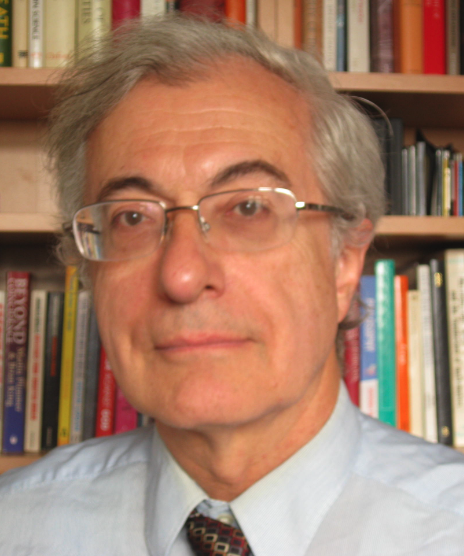 Peter J. Bussey合作论文数School of Physics & Astronomy, University of Glasgow11C. Camincher合作论文数11B. Malaescu合作论文数11
 Karol Krizka合作论文数11
 Harshna Jivan合作论文数11m biglietti合作论文数11g gaycken合作论文数11
 Ivor Fleck合作论文数Center for Particle Physics Siegen, University of Siegen;Department of Physics, University of Siegen11M. A. B. do Vale合作论文数11L. R. Flores Castillo合作论文数11
 Miloš Lokajíček Jr合作论文数Division of Elementary Particle Physics, Particle Physics Department, Institute of Physics of the Czech Academy of Sciences11C Amelung合作论文数11Tancredi Carli合作论文数CERN11J. Geisen合作论文数11M. Dumancic合作论文数11S. M. Farrington合作论文数11T. Bisanz合作论文数11T. Klapdor-Kleingrothaus合作论文数11T. Klingl合作论文数11O. Kivernyk合作论文数11
 Alexander Kupčo合作论文数Institute of Physics, Czech Academy of Sciences11
 Caterina Doglioni合作论文数Department of Physics and Astronomy, University of Manchester11
 Paul Dervan合作论文数Department of Physics, School of Physical Sciences, Faculty of Science and Engineering, University of Liverpool11
 Frédéric Derue合作论文数Laboratoire De Physique Nucléaire Et De Hautes énergies11J. Ocariz合作论文数11B. Giacobbe合作论文数11V. Araujo Ferraz合作论文数11
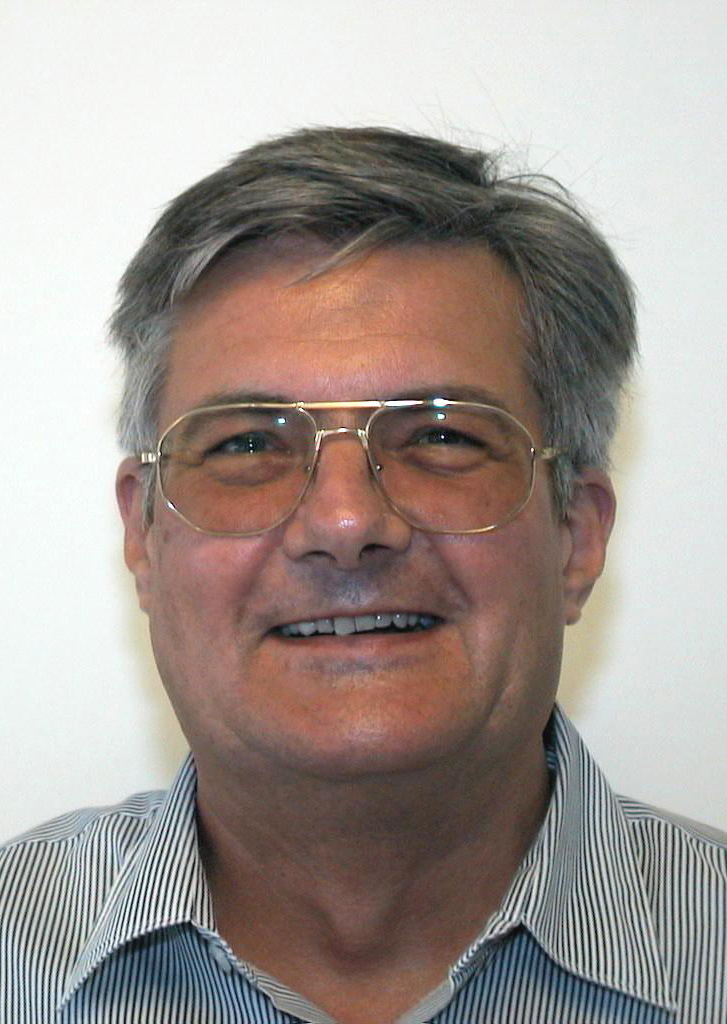 Elemer Nagy合作论文数Centre de Physique des Particules de Marseille, IN2P311F. Cerutti合作论文数11F. Fiedler合作论文数11K. Hildebrand合作论文数11D. Kirchmeier合作论文数11
 M. Gignac合作论文数Institute of Particle and Nuclear Study, High Energy Accelerator Research Organization (KEK), 1-1 Oho, Tsukuba, Ibaraki 305-0801, Japan11
 Brian A. Cole合作论文数Department of Physics, Columbia University11
 Luca Fiorini合作论文数Instituto de Física Corpuscular, University of Valencia11T. Kaji合作论文数11S. Manzoni合作论文数11T. Kawamoto合作论文数11F. Lyu合作论文数11




