We consider the applicability of phase space Wannier functions" to electronic structure calculations. These generalized Wannier functions are analogous to localized plane waves and constitute a complete, orthonormal set which is exponentially localized both in position and momentum space. Their properties are described and an illustrative application to bound states in one dimension is presented. Criteria for choosing basis set size and lattice constant are discussed based on semi-classical, phase space considerations. Convergence of the ground state energy with respect to basis size is evaluated. Comparison with plane-waves basis sets indicates that the number of phase space Wannier functions needed for convergence can be signicantly smaller in three dimensions. PACS: 71.10.+x, 71.50.+t
The study of the three-body problem with short-range attractive two-body forces has a rich history going back to the 1930s. Recent applications of effective field theory methods to atomic and nuclear physics have produced a much improved understanding of this problem, and we elucidate some of the issues using renormalization group ideas applied to precise nonperturbative calculations. These calculations provide 11–12 digits of precision for the binding energies in the infinite cutoff limit. The method starts with this limit as an approximation to an effective theory and allows cutoff dependence to be systematically computed as an expansion in powers of inverse cutoffs and logarithms of the cutoff. Renormalization of three-body bound states requires a short range three-body interaction, with a coupling that is governed by a precisely mapped limit cycle of the renormalization group. Additional three-body irrelevant interactions must be determined to control subleading dependence on the cutoff and this control is essential for an effective field theory since the continuum limit is not likely to match physical systems (e.g., few-nucleon bound and scattering states at low energy). Leading order calculations precise to 11–12 digits allow clear identification of subleading corrections, but these corrections have not been computed.
An anecdotal account of the author's role in the origins of lattice gauge theory, prepared for delivery on the thirtieth anniversary of the publication of "Confinement of Quarks" [Phys. Rev. D10 (1974) 2445].
Background: It has been hypothesized that certain Mycoplasma species may cause Gulf War veterans' illnesses (GWVIs), chronic diseases characterized by pain, fatigue, and cognitive symptoms, and that affected patients may benefit from doxycycline treatment.Objective: To determine whether a 12-month course of doxycycline improves functional status in Gulf War veterans with GWVIs.Design: A randomized, double-blind, placebo-controlled clinical trial with 12 months of treatment and 6 additional months of follow-up.Setting: 26 U.S. Department of Veterans Affairs and 2 U.S. Department of Defense medical centers.Participants: 491 deployed Gulf War veterans with GWVIs and detectable Mycoplasma DNA in the blood.Intervention: Doxycycline, 200 mg, or matching placebo daily for 12 months.Measurements: The primary outcome was the proportion of participants who improved more than 7 units on the Physical Component Summary score of the Veterans Short Form-36 General Health Survey 12 months after randomization. Secondary outcomes were measures of pain, fatigue, and cognitive function and change in positivity for Mycoplasma species at 6, 12, and 18 months after randomization.Results: No statistically significant differences were found between the doxycycline and placebo groups for the primary outcome measure (43 of 238 participants [18.1%] vs. 42 of 243 participants [17.3%]; difference, 0.8 percentage point [95% CI, -6.5 to 8.0 percentage points]; P > 0.2) or for secondary outcome measures at 1 year. In addition, possible differences in outcomes at 3 and 6 months were not apparent at 9 or 18 months. Participants in the doxycycline group had a higher incidence of nausea and photosensitivity.Limitations: Adherence to treatment after 6 months was poor.Conclusion: Long-term treatment with doxycycline did not improve outcomes of GWVIs at 1 year.
An introduction to the STAR detector and a brief overview of the physics goals of the experiment are presented.
The current status of the STAR Silicon Vertex Tracker (SVT) is presented. The performance of the Silicon Drift Detectors (SDD) is discussed. Results for a recent 15 layer SDD tracker which prototypes all components of the SVT are presented. The enhanced physics capabilities of the STAR detector due to the addition of the SVT are addressed.
Renormalization group limit cycles and more chaotic behavior may be commonplace for quantum Hamiltonians requiring renormalization, in contrast to experience based on classical models with critical behavior, where fixed points are far more common. We discuss the simplest quantum model Hamiltonian identified so far that exhibits a renormalization group with both limit cycle and chaotic behavior. The model is a discrete Hermitian matrix with two coupling constants, both governed by a nonperturbative renormalization group equation that involves changes in only one of these couplings and is soluble analytically.
E896 has measured Lambda production in 11.6A GeV/c Au-Au collisions over virtually the whole rapidity phase space. The midrapidity p(t) distributions have been measured for the first time at this energy and appear to indicate that the Lambda hyperons have different freeze-out conditions than protons. A comparison with the relativistic quantum molecular dynamics model shows that while there is good shape agreement at high rapidity the model predicts significantly different slopes of the m(t) spectra at midrapidity. The data, where overlap occurs, are consistent with previously reported measurements.
We have measured the production of light nuclei (A less than or equal to 3) in 11.6 GeV/c Au-Au collisions at the Brookhaven Alternating Gradient Synchrotron (AGS). The transverse mass spectra are analyzed using a thermal fireball model, and the yields for different particle species are discussed assuming coalescence and fragmentation as possible production mechanisms. The wide acceptance range of the He-3 measurements permits a broad study of the coalescence parameter B-3 as functions of transverse momentum and rapidity. Comparisons with data obtained previously at AGS energies suggest that the simple models are insufficient to describe fully the production mechanisms of light nuclei.
E896 has measured Lambda production in 11.6A GeV/c Au-Au collisions over virtually the whole rapidity phase space. The midrapidity p(t) distributions have been measured for the first time at this energy and appear to indicate that the Lambda hyperons have different freeze-out conditions than protons. A comparison with the relativistic quantum molecular dynamics model shows that while there is good shape agreement at high rapidity the model predicts significantly different slopes of the m(t) spectra at midrapidity. The data, where overlap occurs, are consistent with previously reported measurements.
Arnold Boris Arons, an internationally recognized pioneer and leader in physics education and a professor emeritus of physics at the University of Washington, died suddenly of a heart attack at his home in Seattle on 28 February 2001.Born on 23 November 1916 in Lincoln, Nebraska, Arnold grew up in New Jersey and received an ME degree in 1937 and an MS in chemistry in 1940, both from the Stevens Institute of Technology. He obtained his PhD in physical chemistry in 1943 from Harvard University, where he worked with E. Bright Wilson Jr on a study of shock waves produced by underwater explosions. During World War II, Arnold was a group leader in the Underwater Explosion Research Laboratory at the Woods Hole Oceanographic Institution, beginning an association with Woods Hole that lasted throughout his lifetime. He was well known for his studies of abyssal oceanic circulation and cloud physics with Henry M. Stommel and Alfred H. Woodcock and for experimental and theoretical work on phase distortion of acoustic pulses reflected from the seabed.In 1946, Arnold accepted a position as an assistant professor of physics at the Stevens Institute of Technology. He remained there until 1952, when he moved to Amherst College as a professor of physics. At Amherst, Arnold was widely known as a skilled teacher and was one of the subjects of a Time magazine cover story on education (6 May 1966). Recognizing the inadequacies of traditional physics instruction at the time, Arnold developed a calculus-based introductory course as the science component of a core curriculum required of all freshmen. Through his teaching, he brought to the course historical, philosophical, and humanistic perspectives. His first textbook, Development of Concepts of Physics (Addison-Wesley, 1965), grew out of this experience.In 1968, Arnold was invited to join the faculty at the University of Washington, where he initiated an introductory physical sciences course for preservice elementary school teachers. From 1969 to 1975, he directed NSF summer institutes for in-service elementary school teachers. During this period, the program was expanded to include teachers of high-school physics. The work with teachers led to the establishment of the Physics Education Group at the University of Washington, widely known for its role in teacher education and its leadership in the field of physics education research. After his retirement in 1982, Arnold continued to lecture, conduct workshops, and write extensively on the teaching of physics. Throughout his career, Arnold reflected on the intellectual challenges involved in learning physics, and he set exceptionally high standards for himself and his colleagues. He played a unique role in raising awareness that introductory physics courses are often ineffective in helping students develop conceptual understanding and scientific reasoning skills. Arnold maintained that it is necessary for faculty to listen carefully to students in order to be able to match instruction to the students’ evolving level of understanding. He was a strong proponent of Socratic dialogue as a means of promoting meaningful student learning. Through his many articles and books, Arnold provided the physics community—and the educational community as a whole—with a permanent legacy of extraordinary quality. Especially through his books The Various Language: An Inquiry Approach to the Physical Sciences (Oxford U. Press, 1977) and A Guide to Introductory Physics Teaching (Wiley, 1990), Arnold had a strong influence on the development of innovative curricula and on the teaching of physics by individual faculty members.In addition to his contributions to physics education, Arnold served the physics community in other important ways. From 1961 to 1968, he was the first editor of Resource Letters, a series that is periodically published in the American Journal of Physics. In 1967 and 1968, he was president of the American Association of Physics Teachers. AAPT awarded him its highest honor, the Oersted Medal, in 1973.Arnold served on a number of national committees, including the NSF commission on college physics (1962-68). From 1963 until his death, he served the Woods Hole Oceanographic Institution in both active and honorary capacities as a member of the corporation or as a trustee. He also was a member of the American Institute of Physics governing board from 1966 to 1972.Arnold read widely and his intellectual curiosity extended beyond physics. His keen mind and extraordinarily sharp memory enhanced his appreciation of the arts. He memorized reams of poetry that he could recite spontaneously. He greatly enjoyed music and spent many hours in art galleries. Arnold and his wife Jean loved to hike in the mountains. They traveled extensively in Europe, especially in England and Wales. Arnold would engage his friends with eloquent reports about his experiences. His presence, his guidance, and his thoughtful insights will be greatly missed. Arnold Boris Arons PPT|High resolution© 2001 American Institute of Physics.
WILSON REPLIES: Nothing in Steve Fuller’s book persuaded me that Kuhn’s theory was a “bad idea.” My own assessment is that details of Kuhn’s analysis need revision, as stated in the review, but that, overall, Kuhn’s ideas remain of major interest. I found Fuller’s descriptions of the pre-paradigm phases of the philosophy and sociology of science to be his major accomplishment, even if that was not Fuller’s intent.For me, the most intriguing suggestion in Fuller’s letter is his assertion that, if a paradigm emerges for the philosophy and sociology of science, one consequence would be the exclusion of scientists from these two fields. I agree that he has a serious concern; I disagree that the exclusion is likely to occur. If a paradigm emerges, I expect that initially only a small number of very talented individuals would be able to make much sense of it, just as has been the case with the major paradigms in science that Kuhn discussed in his book The Structure of Scientific Revolutions (U. of Chicago Press, 1962). But I also expect that one or more very talented scientists would be among those individuals, based on the quality of work that scientists such as John Ziman are already producing in the related field of science studies. See, for example, Ziman’s recently published book Real Science (Cambridge U. Press, 2000).© 2001 American Institute of Physics.
Thomas Kuhn: A Philosophical History for Our Times , Steve Fuller U. of Chicago Press, Chicago, 2000. $35.00 (472 pp.). ISBN 0-226-26894-2 Buy at Amazon
Thomas Kuhn will undoubtedly be remembered primarily for The Structure of Scientific Revolutions, a book that introduced one of the most influential conceptions of scientific progress to emerge during the twentieth century. The Road since Structure, assembled with Kuhn's input before his death in 1996, follows the development of his thought through the later years of his life: collected here are several essays extending and rethinking the perspectives of Structure as well as an extensive and remarkable autobiographical interview in which Kuhn discusses the course of his life and philosophy.
Elliptic flow from nuclear collisions is a hadronic observable sensitive to the early stages of system evolution. We report first results on elliptic flow of charged particles at midrapidity in Au+Au collisions at sqrt(s_NN)=130 GeV using the STAR TPC at RHIC. The elliptic flow signal, v_2, averaged over transverse momentum, reaches values of about 6% for relatively peripheral collisions and decreases for the more central collisions. This can be interpreted as the observation of a higher degree of thermalization than at lower collision energies. Pseudorapidity and transverse momentum dependence of elliptic flow are also presented.
The AGS Experiment 896 was designed to study strangeness production in Au—Au collisions at 11.6A GeV/c, in particular the formation of a six-quark di-baryon the H0. Heavy ion collisions provide favorable conditions for the H0 formation either via coalescence of two Λ particles (owing to the large Λ production cross section) or direct production from the possible formation of a quark-gluon plasma. E896 also measured strange meson and baryon distributions from mid-rapidity. Preliminary results from this experiment are presented as well as details of the expected sensitivity for the H0 search.
 E. Sugarbaker合作论文数8
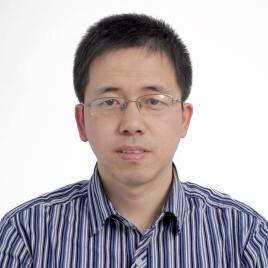 Jiansong Wang (王建松)合作论文数School of Science, Huzhou University8
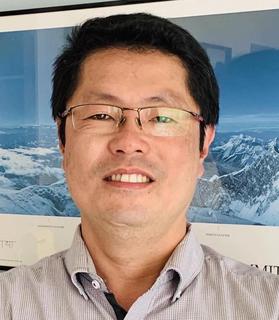 Jun Takahashi合作论文数Departamento De Raios Cosmicos E Cronologia, Universidade Estadual de Campinas;Instituto De Fisica "Gleb Wataghin", Universidade Estadual de Campinas8
 Helen Caines合作论文数Wright Laboratory, Department of Physics, Yale University;Brookhaven National Laboratory8
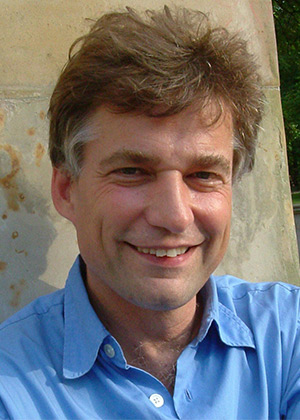 Rene Bellwied合作论文数Department of Physics, College of Natural Sciences and Mathematics, University of Houston8
 I. V. Kotov合作论文数Institute of High Energy Physics8
 Stephen Trentalange合作论文数Physics & Astronomy Department, College of Physical Sciences, University of California, Los Angeles7M. Kaplan合作论文数7
 Thomas J. Humanic合作论文数Department of Physics, College of Arts and Sciences, The Ohio State University7L. Greiner合作论文数Brookhaven Natl Lab7
 William Llope合作论文数Department of Physics and Astronomy, College of Liberal Arts and Sciences, Wayne State University7Z. Milosevich合作论文数7Jurgen Engelage合作论文数7John W. Wilkins合作论文数7S. U. Pandey合作论文数7G. LoCurto合作论文数6t ljubicic合作论文数6
 William Christie合作论文数Collider Accelerator Department, Brookhaven National Laboratory6P. Jensen合作论文数6Ingrid Flores合作论文数6Detlef Russ合作论文数6J Sheen合作论文数5J. P. Whitfield合作论文数5N. Mahzeh合作论文数5R Potenza合作论文数5J. Tang合作论文数5Bonner,BE合作论文数5Pj Lindstrom合作论文数5GW Hoffmann合作论文数5
 Ramiro Debbe合作论文数Physics Department, Brookhaven National Laboratory5H. J. Crawford合作论文数5S Albergo合作论文数5D. Lynn合作论文数5G. J. Kunde合作论文数5S. Costa合作论文数5
 Huan Huang (黄焕中)合作论文数Department of Physics & Astronomy, College of Physical Sciences, University of California, Los Angeles5
 Sadek Nehmeh合作论文数Department of Radiology, Weill Cornell Medicine, Cornell University5Malcolm J Bennett合作论文数5R. Longacre合作论文数5Mats Cronqvist合作论文数5Leon Madansky合作论文数5Stephen M Kelly合作论文数5K Kainz合作论文数5
 Stanislaw Glazek合作论文数5T. Hallman合作论文数5C. Tuve合作论文数INFN Sezione di Catania, Catania, Italy5
 Wolfgang Wenzel合作论文数Institute of Nanotechnology, Karlsruhe Institute of Technology5A. Saulys合作论文数5S. Paganis合作论文数5




