OBJECTIVE:To provides an overview of the functional and safety outcomes associated with the Optilume BPH catheter system. METHODS:This prospective, single-arm, multi-center, open-label study was conducted at five Canadian centers to evaluate the safety of the endoscopic Optilume BPH (DCB) procedure for LUTS due to benign prostate enlargement from July 2022 to August 2025. The study assessed functional outcomes at baseline, 3, 6, and 12 months. RESULTS:Thirty patients were included in this study, with a mean age of 63.1 ± 7.0 years. The mean prostate volume was 48.5 ± 16.6 mL. IPSS scores decreased from 23.5 ± 5.1 at baseline to 10.8 ± 7.5 at 12 months, while QoL scores improved from 4.7 ± 1.3 to 2 ± 1.6 over the same period. Qmax increased from 8.7 ± 3.7 mL/s to 15.9 ± 5.7 mL/s at 3 months, remaining stable at 14.7 ± 6.9 mL/s at 12 months. No significant differences were observed in sexual function scores. CONCLUSION:The Optilume BPH drug-coated balloon procedure demonstrated significant symptomatic and functional improvements over 12 months.
INTRODUCTION:Rezūm has become an increasingly popular surgical approach for treating bladder outlet obstruction. Despite the practice of routinely placing a Foley catheter, successful TWOC (Trial Without Catheter) remains variable. This study seeks to identify the TWOC failure incidence and risk factors to inform clinical decisions and enhance patient counseling. METHODS:We conducted a retrospective review of non-catheter dependent patients who underwent Rezūm therapy between April 2019 and June 2023 in two high-volume Canadian centers. All patients received a urinary catheter post-treatment. International Prostate Symptom Score (IPSS), QoL, Qmax, and PVR were evaluated. Risk factors for TWOC failure were determined through logistic regression. RESULTS:Out of 406 patients, 99 patients (24.4%) failed TWOC on the first attempt. Median time to TWOC was 7 days (range 3-30 days). Successful and failure groups had no significant difference in terms of average catheterization time, baseline prostate volume, PVR, or total number of injections per prostate volume ratio. A higher rate of UTIs was observed in the TWOC failure group (10.6% vs. 2.6%, p = 0.003). During the 12-month follow-up period, 12 patients developed episodes of urinary retention following Rezūm therapy. Baseline PVR was not a risk factor for failed TWOC in our cohort (p = 0.95). Higher IPSS was a predictor for TWOC failure (OR 1.04 95% CI: 1.01-1.08). CONCLUSIONS:About one in four patients failed the first TWOC after Rezūm therapy. High baseline IPSS was identified as the only risk factor for TWOC failure in our cohort. Despite this, overall urinary symptoms improved in all patients.
OBJECTIVES:Rezūm water vapor thermal therapy is a minimally invasive surgical option with demonstrated efficacy and safety. However, real-world evidence on 2-year outcomes in the population aged above 80 years remains limited. METHODS:A prospective registry was created as part of the International Rezūm Registry database at two high-volume centers. Data were reviewed from patients monitored between April 2019 and August 2024. Men aged ≥ 80 years who underwent Rezūm therapy were included. Baseline and follow-up assessments at 3, 6, 12, and 24 months included International Prostate Symptom Score (IPSS), IPSS Quality of Life (QoL) subscore, peak urinary flow rate (Qmax), and post-void residual volume (PVR). Safety outcomes and adverse events were also recorded. RESULTS:Fifty-eight patients (mean age 84.4 ± 4.4 years) were included, with a mean prostate volume of 80.1 ± 42.1 cc. The mean IPSS decreased from 19.8 ± 7.4 at baseline to 12.4 ± 7.9 at 24 months. The IPSS quality of life (QoL) score declined from 4.2 ± 1.8 at baseline to 2.6 ± 1.5 at the corresponding follow-up interval. Qmax improved from 8.5 ± 5.8 mL/s at baseline to 15.0 ± 4.0 mL/s at 24 months, respectively. PVR was reduced from 115.5 ± 93.7 mL at baseline to 42.8 ± 29.2 mL over the same period. However, neither Qmax nor PVR demonstrated a statistically significant change at any time point. Adverse events were infrequent, with urinary tract infections (8.6%), epididymitis (5.2%), and acute urinary retention (3.4%). Only one patient required hospitalization. CONCLUSION:Rezūm water vapor thermal therapy is a safe and effective treatment for BPH in patients over 80 years of age. It results in durable improvements in urinary symptoms and function with a low rate of complications.
OBJECTIVE:The aim of this study is to evaluate the outcomes of the Rezūm procedure in men aged 50 years or younger, focusing on changes in urinary symptoms and quality of life. METHODS:A prospective registry was created as part of the International Rezūm Registry database at two high-volume centers. The study reviewed data from patients monitored between April 2019 and August 2024. All patients aged 50 years or younger had their baseline medical and BPH history recorded, which included uroflowmetry measurements (Qmax and PVR) and validated questionnaires such as the International Prostate Symptom Score (IPSS), IPSS Quality of Life (QoL), Benign Prostatic Hyperplasia Impact Index (BPHII) and International Index of Erectile Function-15 (IIEF-15). Data were collected at baseline and at 3, 6, and 12 months following the procedure. RESULTS:Fourteen patients were included, with a mean age of 49.6 years (SD 1.05). The mean baseline prostate volume was 54.3 cc (SD: 22.0). At baseline, the mean IPSS was 24.3 ± 5.9, which significantly improved to 10.5 ± 5.8 at 6 months and 11.6 ± 5.4 at 12 months. The IPSS QoL score improved from 4.8 ± 0.9 at baseline to 2.4 ± 1.7 at 12 months. Qmax increased from 7.9 ± 4.5 mL/s to 17.8 ± 6.1 mL/s at 12 months. PVR decreased from 197.6 ± 270.2 mL to 51 ± 77 mL at 12 months. IIEF scores showed no significant differences. CONCLUSION:The Rezūm procedure demonstrates significant efficacy in improving urinary symptoms and quality of life in men under 50.
Objective:The purpose of this study is investigate the clinical outcomes of men with benign prostatic hyperplasia (BPH) and bladder stones treated concomitantly with Aquablation and bladder stone removal in an international, multi-institutional cohort. Patients and Methods:We performed a retrospective analysis of men who underwent Aquablation between 2018 and 2024. Patients were divided into two cohorts: men with bladder stones and those without. Outcomes assessed included baseline demographics and variables (medication use, prostate volume, prior BPH surgery), operative characteristics (OR time, transfusion requirement, complications), and functional outcomes were measured by the International Prostate Symptom Score (IPSS), peak urinary flow rate (Q max) and PVR at regular intervals over 24 months. Results:A total of 1885 men were analysed, including 60 men with bladder stones and 1825 without. Patients with bladder stones had higher rates of prior BPH surgery (15% vs. 5.5%, p = 0.015) and pre-operative urinary retention (28.3% vs. 14.8%, p = 0.004) as well as larger prostate volumes (98.6 ml vs. 77 ml, p < 0.0001). Total operative time was longer in the bladder stone group (76.5 mins vs. 55.0 mins, p < 0.001), but there were no significant differences in Aquablation time or bleeding complications including transfusions. There was also no difference in improvements in IPSS, Q max and PVR post-operatively. Conclusion:This study demonstrates that Aquablation is safe and effective in the management of BPH regardless of concomitant bladder stone treatment.
Rezūm water vapor thermal therapy (WVTT) is an effective minimally invasive treatment for benign prostatic hyperplasia (BPH), offering durable symptom relief while preserving sexual function. However, real-world data on predictors of surgical retreatment remain limited. This study evaluates the incidence of surgical re-intervention following Rezūm therapy in a large multi-center cohort and identifies clinical and procedural factors associated with retreatment. A retrospective analysis was conducted using a prospectively maintained registry from two high-volume international centers in Canada and Italy. Men undergoing Rezūm therapy between April 2019 and August 2025 were included. Baseline demographics, comorbidities, functional outcomes, and intraoperative characteristics were compared between patients with and without surgical retreatment. Univariable and multivariable Cox proportional hazards models were used to evaluate predictors of time to re-intervention. Kaplan–Meier estimates were generated for cumulative incidence of retreatment. Among 837 treated men, 43 (5.1
 Dean Elterman合作论文数Division of Urology, Department of Surgery, University Health Network, University of Toronto203
 Naeem Bhojani合作论文数Montreal194
 Bilal Iftikhar Chughtai合作论文数Donald and Barbara Zucker School of Medicine, Northwell Health;Plainview Hospital162
 Arieh L. Shalhav合作论文数The University of Chicago Medicine104
 David-Dan Nguyen合作论文数Faculty of Medicine and Health Sciences, McGill University68
 Vincent Misrai合作论文数66
 Pierre Karakiewicz合作论文数Department of Surgery, Universite de Montreal;Cancer Prognostics and Health Outcomes Unit, CHUM61
 Ofer Gofrit合作论文数Hadassah Medical Center61
 Pierre-Alain Hueber合作论文数60
 Gregory Zagaja合作论文数Department of Surgery, The University of Chicago Medicine53Marcelo A. Orvieto合作论文数51
 Alexis E. Te合作论文数Department of Urology, Weill Cornell Medicine, Cornell University48
 Adel Arezki合作论文数45
 Quoc-Dien Trinh合作论文数School of the Health Sciences, University of Pittsburgh;Department of Urology, UPMC45
 David Bouhadana合作论文数43El-Hakim Assaad合作论文数41Meskawi Malek合作论文数41
 Iman Sadri合作论文数Department of Surgery, McGill University Health Center38Valdivieso Roger合作论文数37Sergey Shikanov合作论文数30Tholomier Come合作论文数29Albert A. Mikhail合作论文数29
 Neil J Barber合作论文数27
 Gary D. Steinberg合作论文数Department of Urology, Medical College, Rush University;Rush University Medical Center26
 Luca Cindolo合作论文数G. Rummo Hospital26
 Mark H. Katz合作论文数Department of Urology, Boston Medical Center;Chobanian and Avedisian School of Medicine, Boston University26Maxine Sun合作论文数Montreal26Daniel Liberman合作论文数25
 Marc Zanaty合作论文数Dept Surg, Hop Rouyn Noranda24Edward M. Gong合作论文数24Kyle W Law合作论文数23
 Ahmed Sayed Zakaria合作论文数Department of Surgery, McGill University23Enrique Rijo合作论文数22
 Shahrokh F. Shariat合作论文数Department of Urology, Medical University of Vienna, Vienna General Hospital;University of Texas Southwestern Medical Center;Weill Cornell Medicine, Cornell University22
 Felix Couture合作论文数21
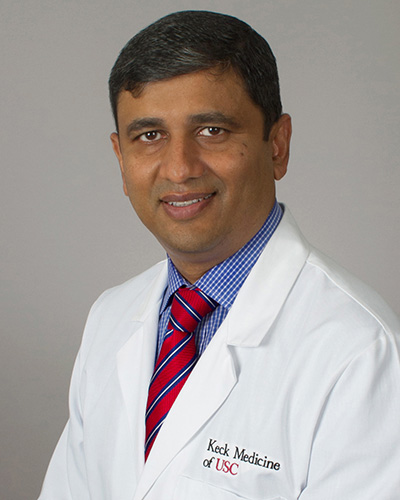 Mihir M. Desai合作论文数Keck School of Medicine, University of Southern California;Center for Advanced Robotics, University of Southern California20
 Peter J. Gilling合作论文数Department of Urology;Tauranga Hospital;Department of Urology, Tauranga Hospital20Markus Graefen合作论文数20
 Abdullah M Alenizi合作论文数19Roseanne Ferreira合作论文数19
 Claus Roehrborn合作论文数Department of Urology, University of Texas Southwestern Medical Center19
 Fred Saad合作论文数Urology Department, University Hospital of Montreal;Department of Surgery, Université de Montréal19
 Brian Helfand合作论文数Endeavor Health;University of Chicago18
 Jesse D Sammon合作论文数17
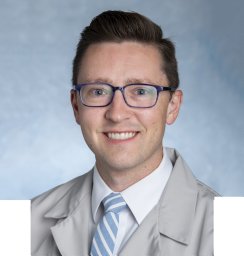 Alexander P. Glaser合作论文数Division of Urology, Ann &Robert H. Lurie Children's Hospital of Chicago, Northwestern University Feinberg School of Medicine;Feinberg School of Medicine, Northwestern University17Dov Pode合作论文数17
 Mani Menon合作论文数Vattikuti Urology Institute, Henry Ford Hospital17
 Francesco Montorsi合作论文数Department of Urology, San Raffaele Hospital;Vita-Salute San Raffaele University of Milan16Rajih Emad S合作论文数King Faisal Specialist Hospital and Research Center, Riyadh, Saudi Arabia.16




