One frequently overlooked aspect of the U.S.-style electoral college system is that it discourages election fraud. In a presidential election based on the popular vote, competing political parties are motivated to manipulate votes in areas where they hold the most significant influence, such as states where they control local executive offices, legislatures, and the judiciary. However, with the electoral college system in place, the incentives for fraud shift to swing states where the local government is politically divided, and fraud is therefore more difficult and costly. Our theoretical model elucidates why the electoral college system provides more effective protection against election fraud compared to the popular vote system. While polarization makes fraud more likely, it does not affect the superiority of the electoral college system.
In turbulent times, political labels become increasingly uninformative about politicians’ true policy preferences or their ability to withstand the influence of special interest groups. We offer a model in which politicians use campaign rhetoric to signal their political preferences in multiple dimensions. In equilibrium, the less popular types try to pool with the more popular ones, whereas the more popular types seek to separate themselves. The ability of voters to process information shapes politicians’ campaign rhetoric. If the signals on the cultural dimension are more precise, politicians signal more there, even if the economy is more important to voters. The unpopular type benefits from increased conformity, which bridges the candidates’ rhetoric and makes it more difficult for voters to make an informed decision. Institutional subscribers to the NBER working paper series, and residents of developing countries may download this paper without additional charge at www.nber.org.
Were COVID-19 and the associated restrictions used by authoritarian governments to tighten their grip on power? Using data from 83 Russian regions, we show that yes, they were – during the pandemic, it was the quality of institutions and the strength of civil society that limited the government’s information manipulation and repression, two main tools of authoritarian regimes. Arrest waves that followed the poisoning of Alexey Navalny, the opposition leader, in August 2020 and his jailing in January 2021 were more pronounced in those regions that manipulated the COVID-19 statistics more. The increase in the usage of authoritarian tools came at a price: misinformation reduced compliance with pandemic restrictions. In addition to two-way fixed effects, we use sensitivity analysis to account for possible omitted variables. Our findings are consistent with the theoretical complementarity between propaganda and repression. Regions that had more political repression also exhibited greater information manipulation, conditional on pandemic intensity and institutional characteristics.
Consider a society that faces uncertainty about a payoff-relevant state and wants to train students to make correct decisions. In educational institutions, students learn from their teachers, but they also get outside information, and later learn from peers. We show that privately Bayesian actions need not be optimal inputs into social learning: when students' actions reflect teacher-side information that is correlated across peers, observing many such actions can give this information excessive social weight. A social planner may therefore optimally reduce the precision of instruction, inducing students to rely more on outside information before their actions become signals for others, and students can end up better informed despite learning less from their teachers. The case for a precision cap is stronger when peer interaction is homophilous, because same-teacher information is more likely to survive aggregation, and weaker when outside information is itself systematically distorted. This provides an informational rationale for viewpoint neutrality as an institutional policy: it limits the social overrepresentation of correlated teacher-side information when students mostly learn from peers exposed to similar sources. Institutional subscribers to the NBER working paper series, and residents of developing countries may download this paper without additional charge at www.nber.org.
Many dictatorships end up with a series of disastrous decisions such as Hitler's attack on the Soviet Union or Saddam Hussein's aggression against Kuwait. Even if a certain policy choice is not ultimately fatal for the regime, such as Mao's Big Leap Forward or the Pol Pot's collectivization drive, they typically involve both a miscalculation by the leadership and an institutional environment in which better informed subordinates have no chance to prevent the decision from being implemented. We offer a dynamic model of nondemocratic politics in which repression and bad decision making are self-reinforcing. Repression reduces the immediate threat to the regime, yet raises future stakes for the dictator; with higher stakes, the dictator puts more emphasis on loyalty than competence, which in turn increases the probability of a wrong policy choice. Our theory offers an explanation of how rational dictators end up in an informational bubble even in highly institutionalized regimes.
We present a simple continuous-time model of clearing in financial networks. Financial firms are represented as "tanks" filled with fluid (money), flowing in and out. Once "pipes" connecting "tanks" are open, the system reaches the clearing payment vector in finite time. This approach provides a simple recursive solution to a classical static model of financial clearing in bankruptcy, and suggests a practical payment mechanism. With sufficient resources, a system of mutual obligations can be restructured into an equivalent system that has a cascade structure: there is a group of banks that paid off their debts, another group that owes money only to banks in the first group, and so on. Technically, we use the machinery of Markov chains to analyze evolution of a deterministic dynamical system.
Key to the success of international peace-building efforts is the cooperation and support of civilian populations. Studies show that economic considerations shape combatants' willingness to lay down their arms. We study a related but under-studied question: does economic hardship impact civilian support for conflict cessation? If reintegration of former combatants into productive economic sectors threatens civilians' own incomes, then support for peace-building may diminish. We investigate localized effects of the 2015 Hindu Kush earthquake using individual-level survey data on support for Taliban reintegration. The earthquake reduced support for reintegration into disproportionately impacted economic sectors. We observe no effect for less impacted sectors. Results are robust to a battery of tests, including a novel spatial randomization leveraging geocoded fault lines corresponding to the universe of counterfactual earthquakes. Our findings provide new insight into the resolution of violent conflict: economic hardship may undermine civilian support for rebel reintegration.
We analyze a model of political competition in which the elite forms endogenously to aggregate information and advise the uninformed median voter which candidate to choose. The median voter knows whether or not the endorsed candidate is biased toward the elites, but might still prefer the biased candidate if the elite’s endorsement provides sufficient information about her competence. The elite size and the degree of information aggregation by the elite depend on the extent to which the median voter follows the elite’s advice. A higher cost of redistribution minimizes the elite’s information advantage, hinders information transmission, and decreases the expected competence of the elected politician.
Classic and modern theories of rebel warfare emphasize the role of resource endowments. We demonstrate that intelligence gathering, made possible by these endowments, plays a critical role in determining specifics of how rebels launch complex attacks against better equipped government forces. We test implications of a theoretical model using highly detailed data about Afghan rebel attacks, insurgent-led spy networks, and counterinsurgent operations. Leveraging quasi-random variation in opium suitability, we find that improved rebel capacity is associated with (1) increased insurgent operations; (2) improved battlefield tactics through technological innovation, increased complexity, and attack clustering; and (3) increased effectiveness against security forces, especially harder targets. These results show that access to capital, coupled with intelligence gathering, meaningfully impacts how and where rebels fight.
We survey recent theoretical and empirical literature on political economics of non-democracies. Nondemocratic regimes face multiple challenges to their rule, both internal, such as palace coups or breakdown of their support coalition, and external, such as mass protests or revolutions. We analyze strategic decisions made by dictators from the standpoint of maximizing the chances of regime survival in the light of these challenges, and show how it explains multiple common patterns, from hiring political loyalists to positions that require competence, to restricting media freedom at the cost of sacrificing bureaucratic efficiency, to running propaganda campaigns, organizing election fraud, purging opponents and associates, and repressing citizens. (JEL D72, D73, D82, D83, L82, O17)
Repression and information manipulation are two main tools of any modern authoritarian regime. Our theoretical model demonstrates how repression and propaganda complement each other: when the regime's opponents are facing stricter punishment, the effect of persuasion is stronger, and propaganda is used by the regime more heavily. Similarly, when repression eliminates those citizens who are relatively more skeptical about the regime, the rest can be more heavily influenced. Finally, we show that when citizens self-select into receiving information from individual sources, the dictator cannot do better than resorting to public messaging.
Many, if not most, personalistic dictatorships end up with a disastrous decision such as Hitler's attack on the Soviet Union, Hirohito's government launching a war against the United States, or Putin's invasion of Ukraine in February 2022.Even if the decision is not ultimately fatal for the regime, such as Mao's Big Leap Forward or the Pol Pot's collectivization drive, they typically involve both a monumental miscalculation and an institutional environment in which betterinformed subordinates have no chance to prevent the decision from being implemented.We offer a dynamic model of non-democratic politics, in which repression and bad decision-making are self-reinforcing.Repressions reduce the threat, yet raise the stakes for the incumbent; with higher stakes, the incumbent puts more emphasis on loyalty than competence.Our theory sheds light on the mechanism of disastrous individual decisions in highly institutionalized authoritarian regimes.
The article provides a brief introduction to the research on banks and finan- cial crises, for which the 2022 Nobel prize in economic sciences was awarded. Forty years ago, the works of Diamond and Dybvig highlighted the critical role banks play in maturity transformation and explained why this role makes banking crises a natural byproduct, thus providing a theoretical basis for modern banking regulation. The concurrent work by Bernanke on the Great Depression, the worst peace-time economic crisis in mature market economies, demonstrated that banks’ closures were a critical factor in making the depression so deep and prolonged.
War is the cause of tremendous human suffering. To reduce such harm, governments have developed tools to alert civilians of imminent threats. Whether these systems are effective remains largely unknown. We study the introduction of an innovative smartphone application that notifies civilians of impending military operations developed in coordination with the Ukrainian government after the Russian invasion. We leverage quasi-experimental variation in the timing of more than 3,000 alerts to study civilian sheltering behavior, using high-frequency geolocation pings tied to 17 million mobile devices, 60% of the connected population in Ukraine. We find that, overall, civilians respond sharply to alerts, quickly seeking shelter. These rapid post-alert changes in population movement attenuate over time, however, in a manner that cannot be explained by adaptive sheltering behavior or calibration to the signal quality of alerts. Responsiveness is weakest when civilians have been living under an extended state of emergency, consistent with the presence of an alert fatigue effect. Our results suggest 35-45% of observed civilian casualties were avoided because of public responsiveness to the messaging system. Importantly, an additional 8-15% of civilian casualties observed during the later periods of the conflict could have been avoided with sustained public responsiveness to government alerts. We provide evidence that increasing civilians’ risk salience through targeted government messaging can increase responsiveness, suggesting a potential policy lever for sustaining public engagement during prolonged episodes of conflict.
The 2021 Nobel Prize in Economic Sciences was awarded to David Card, Joshua Angrist, and Guido Imbens for advancing methodology to establish casual relationships in economics. Their approach brought the notion of the natural experiment, situations in which heterogeneous reactions of different groups of people to chance shocks or policy changes allows to elicit causal effects, to the forefront of empirical analysis, and spearheaded a revolution in development of statistical methods needed to analyze the data. After the initial contributions in labor economics and economics of education, the new approach has become a new standard in economic sciences.
 Georgy Egorov合作论文数Russian, Eurasian, and East European Studies, Weinberg College of Arts and Sciences, Northwestern University34
 Daron Acemoglu合作论文数Department of Economics, Massachusetts Institute of Technology17
 Sergei Guriev合作论文数London Business School11
 Ekaterina Zhuravskaya合作论文数Economic School, New7
 Ariane Lambert-Mogiliansky合作论文数7
 Scott Gehlbach合作论文数Faculty in Comparative Politics, Department of Political Science, The University of Chicago6
 Sergei Izmalkov合作论文数Department of Economics, MIT6
 Natalia Lamberova合作论文数at Dallas, The University of Texas5
 Austin Wright合作论文数Harris School of Public Policy Studies, The University of Chicago5
 Ruben Enikolopov合作论文数Center for Economic and Financial Research (CEFIR), the New Economic School (NES),5
 Yudkevich Maria合作论文数4I. Khovanskaya.合作论文数3Michael Schwarz合作论文数3
 Kolotilin Anton合作论文数School of Economics, Business School, The University of New South Wales3
 Dmitry Dagaev合作论文数Faculty of Mechanics and Mathematics, Moscow State University3
 Maria Petrova合作论文数Harvard University, Harvard University3
 Philipp J.H. Schroder合作论文数2Ran Eilat合作论文数2
 David Van Dijcke合作论文数Dept Econ, Univ Michigan2
 A. Arda Gitmez合作论文数Dept Econ, Bilkent Univ2
 anton sobolev合作论文数Leitner Program Polit Econ, Yale Univ2Daniel Diermeier合作论文数2
 Marina Agranov合作论文数Department of Humanities and Social Sciences, California Institute of Technology2
 Koen Schoors合作论文数University of Ghent and Sa?d Business School, University of Oxford2Paul R. Gregory合作论文数2
 Alexander Plekhanov合作论文数Faculty of Economics;University of Cambridge;Faculty of Economics, University of Cambridge2E. Zhelesova合作论文数1г в егоров合作论文数1Юдкевич Мария Марковна合作论文数1Stanley Engerman合作论文数1Vsevolod Grabar合作论文数1Сверчков Руслан Андреевич合作论文数1egor abramov合作论文数1
 Jarnickae Wilson合作论文数1
 Marcus Painter合作论文数Department of Finance, Saint Louis University1
 Maria Milosh合作论文数Harris School of Public Policy, University of Chicago1
 Amanda Kennard合作论文数Stanford University1anna zasova合作论文数1
 Jesse Driscoll合作论文数School of Global Policy and Strategy, University of California, San Diego1
 Mehdi Shadmehr合作论文数Univ Miami, Dept Econ, Coral Gables, FL 33146 USA1
 Joshua Tucker合作论文数College of Arts & Science, New York University;Wilf Family Department of Politics, Center for Social Media and Politics, New York University;Jordan Family Center for the Advanced Study of Russia, New York University1
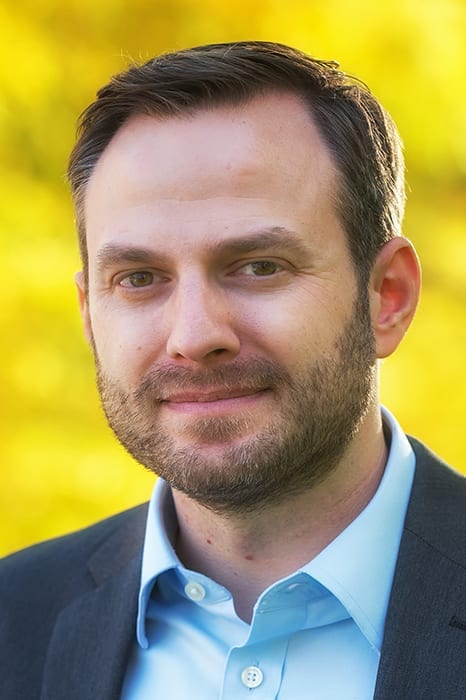 Brendan Daley合作论文数Department of Economics, Krieger School of Arts & Sciences, Johns Hopkins University1
 Milan Svolik合作论文数Department of Political Science, Yale University1
 Tim Besley合作论文数Department of Economics, London School of Economics and Political Science1
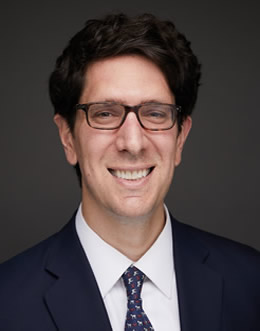 Pierre Yared合作论文数Economics Division, Columbia Business School, Columbia University1
 Alexei Zakharov合作论文数Max IV Laboratory, Lund University1
 Vasily Korovkin合作论文数New Economic School, Moscow 117418, Russia;Anderson School of Management, University of California at Los Angeles;Anderson School of Management, University of California at Los Angeles1
 James A. Robinson合作论文数Harris School of Public Policy, University of Chicago;Pearson Institute for the Study and Resolution of Global Conflicts1
 Torsten Persson合作论文数Institute for International Economic Studies, Stockholm University1




