In this chapter, the authors employ personal reflections based on their shared and individual experiences implementing the university-school partnerships for the renewal of educator preparation (US PREP) transformation model at their respective universities, Touro College, now Touro University, (Touro), Sam Houston State University (SHSU), and the University of Texas Permian Basin (UTPB). They discuss the challenges and successes experienced in working with faculty to promote change, transformation, and continuous improvement in doing this important work. The authors provide recommendations to other educational leaders based on their experiences.
The purpose of this paper is to provide an in-depth critical analysis of the use and misuse of correlation coefficients. Various analytical and interpretational misconceptions are reviewed, beginning with the egregious assumption that correlational statistics may be useful in inferring causality. Additional misconceptions, stemming from researchers' failure to recognize that correlation coefficients are specific cases of the general linear model (GLM), and, therefore, bounded by GLM assumptions, are also discussed. Other inappropriate practices are highlighted, including failure to: (1) consider the statistical assumptions underlying correlation coefficients; (2) interpret confidence intervals and effect sizes of correlation coefficients; (3) interpret p-calculated values in light of familywise Type 1 error; (4) consider the power of tests of hypotheses; (5) consider whether outliers are inherent in the data set; (6) recognize how measurement error can affect correlation coefficients; and (7) evaluate empirically the replicability of correlation coefficients. A heuristic example is used to illustrate how jackknife and bootstrap methods can identify unstable correlation coefficients derived from a given sample. (Contains 2 tables, 1 figure, and 80 references.) (Author/SLD) Reproductions supplied by EDRS are the best that can be made from the original document. Uses and Misuses 1 Running Head: USES AND MISUSES OF THE CORRELATION COEFFICIENT Uses and Misuses of the Correlation Coefficient Anthony J. Onwuegbuzie Valdosta State University
Patient safety has recently received a great deal of media coverage. Professional and regulatory agencies have indicated that patient safety education should be provided to health care workers to improve health outcomes. This study’s primary purpose was to gain a better understanding of the current status of patient safety awareness among prelicensure nursing students. Data were collected from two samples ( N = 150 and 318), and nursing curricula were examined from seven institutions. Measurement integrity studies indicated that patient safety awareness can be measured validly and reliably. Demographic variables were correlated with patient safety awareness. A content analysis found that all of the participating nursing schools included at least three of the six core competencies of the Quality and Safety Education for Nurses (QSEN) ( Cronenwett et al., 2007 ) in their curriculum; one school exhibited all six. Our findings led to conclusions and recommendations for nurse educators and for future research on patient safety education in the nursing curriculum.
The purpose of this study was to examine how perceptions of a chilly climate differ between students in traditionally female-dominated majors (nursing and education) versus traditionally male-dominated majors (information technology and engineering), and how these perceptions relate to students' intentions to persist or pursue higher education in their chosen field. Students (n = 403) attending a community college completed the 28-item Perceived Chilly Climate Scale (PCCS). The primary research question asked: To what extent can scores on the five subscales of the PCCS be explained by the predictor variable set of gender, ethnicity, age, college major, and intent to leave the field? Canonical correlation analysis indicated that women found the climate chillier than men, non-white students found the climate chillier than white students, younger students perceived the climate chillier than older students, and students in traditionally female-dominated majors perceived the climate chillier than students in traditionally male-dominated majors. Intent to leave the field was not a significant predictor of perceptions of chilly climate.
Virtually every institution of higher education in the US uses some type of student teaching evaluation (STE) instrument as a means of assessing instructors’ instructional performance in courses. Unfortunately, many administrators and faculty misinterpret STE ratings. Therefore, the present article provides a comprehensive critique of STE instruments. In particular, we build on Messick’s (Educational Measurement, MacMillan, pp. 13–103, and Messick (Am. Psychol., 50 , 741–749, 1995, 1989) conceptualization of validity to yield what we refer to as a meta-validity model that subdivides content-, criterion-, and construct-related validity into several areas of evidence. We use our meta-validity model to conduct a meta-validity analysis of STEs. Specifically, we assessed the score-validity of STEs based on findings from the extant literature. We conclude that strong evidence has been provided with respect to areas of criterion-related validity; however, for the most part, weak or inadequate evidence has been provided with regard to areas of both content-related and construct-related validity. This seriously calls into question both the score-validity and utility of STEs.
Multivariate methods are being used with increasing frequency in educational research because these methods control "expetimentwise error rate inflation, and because the methods best honor the nature of the reality to which the researcher wishes to generalize. This paper: explains the basic logic of canonical analysis; Illustrates that canonical analysis is a general parametric analytic method subsuming other methods; and provides an example of one strategy that can be used to investigate the generalizability of multivariate results. Actual data from the Holzinger and Swineford (1939) study are used to contextualize the discusrion. Five random samples of 301 cases were drawn from data modeled on the 10,000 cases of Holzinger and Sw.lneford to explain the effects of sampling error. Eight tables and one figure present data, and a 49-item list of references is included. An appendix provides the Statistical Analysis System (SAS) program used. (SLD) *********************************************************************** Repmductions supplied by EDRS are the best that can be made from the original document. ********************,*************************************************1!
One of the challenges for researchers in the social sciences is staying current in their fields of study. Several decades ago, Noland (1970) noted the difficulty of staying current, arguing that the social sciences literature was scattered throughout a variety of publication outlets. If staying current was a problem then, it is certain that today’s technological advancements (e.g., creation of Internet-based materials), in addition to a general knowledge explosion within the social sciences, make currency a challenge for even the most astute of scholars. Researchers are also faced with changes in social policy that affect their ability to work with human subjects (i.e., participants) and regular shifts in the issues that are deemed worthy of research and/or for which external research funding is available. Finally, researchers must stay current with changes in research reporting and writing conventions. These changes may be as minimal as shifts in preferred terminology used within a given field or as sweeping as requirements that older vague or misleading language (e.g., stating that the test is reliable) be replaced with more methodologically accurate language (e.g., test scores are reliable) so as to avoid miscommunication or misunderstandings about research. Collectively, these trends and changes in the field often result in the creation of standards governing the quality of research within a field of scholarship (e.g., American Educational Research Association, 2002, 2006). Changes in research reporting are frequently captured in writing style guides. While publications featuring educational research use a variety of style guides, the Publication Manual of the American Psychological Association (APA) is one of the most commonly accepted standards within the discipline. Indeed, according to Henson (2001), 66.5% of educational journals use APA style. In this editorial we offer guidelines for use of APA style in preparing manuscripts for educational journals. Following a brief history of the evolution of the current Publication Manual, we offer guidelines for employing APA style in four specific areas: (a) basic writing style and mechanics, (b) referencing of sources, (c) methodological considerations, and (d) reporting of quantitative data. It is hoped that these guidelines will aid authors who desire to submit manuscripts to Research in the Schools and other educational journals.
In this article, the authors (a) illustrate how displaying disattenuated correlation coefficients alongside their unadjusted counterparts will allow researchers to assess the impact of unreliability on bivariate relationships and (b) demonstrate how a proposed new "what if reliability" analysis can complement null hypothesis significance tests of bivariate relationships.
As Co-Editors of Research in the Schools, we are committed to publishing articles of the highest quality. In an effort to assure Total Quality Management (cf. Walton, 1986), we continually monitor articles submitted to Research in the Schools. Since assuming our duties as Co-Editors, we have noticed that many authors commit flaws, namely, errors of commission and omission--that play an important role in the demise of the manuscript, subsequently contributing to its rejection. Elsewhere, we have tried to explain why these flaws occur:
The purpose of this paper is to identify and to discuss major analytical and interpretational errors that occur regularly in quantitative and qualitative educational research. A comprehensive review of the literature discussing various problems was conducted. With respect to quantitative data analyses, common analytical and interpretational misconceptions are presented for data-analytic techniques representing each major member of the general linear model, including hierarchical linear modeling. Common errors associated with many of these approaches include (a) no evidence provided that statistical assumptions were checked; (b) no power/sample size considerations discussed; (c) inappropriate treatment of multivariate data; (d) use of stepwise procedures; (e) failure to report reliability indices for either previous or present samples; (f) no control for Type I error rate; and (g) failure to report effect sizes. With respect to qualitative research studies, the most common errors are failure to provide evidence for judging the dependability (i.e., reliability) and credibility (i.e., validity) of findings, generalizing findings beyond the sample, and failure to estimate and to interpret effect sizes.
This article provides a framework for reporting internal consistency reliability in counseling research and other related social science fields, including guidelines relative to score reliability coefficients and associated confidence intervals for both full sample and subgroups. Follow-up techniques for investigating low score reliability are outlined, including examinations of sample homogeneity and item response patterns.
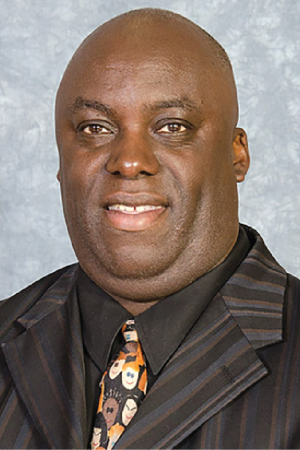 Anthony J. Onwuegbuzie合作论文数Department of Organizational Leadership, Policy, and Development, College of Education and Human Development, University of Minnesota;Faculty of Education, University of Cambridge;University of Louisville;College of Social and Behavioral Sciences, Walden University;Department of Language Education, Arts, and Culture, University of South Africa10
 Charlotte M. Ferrell合作论文数4Debra A. King合作论文数4
 E Lea Witta合作论文数3Aj Onwuegbuzie合作论文数2Kevin D. Blount合作论文数2P. Gayle Andrews合作论文数2Vincent A. Anfara合作论文数2
 Micki M. Caskey合作论文数2P. Elizabeth Pate合作论文数2
 Steven B. Mertens合作论文数Senior Research Scientist;University of Illinois;Education;University of Illinois2Nimisha H. Patel合作论文数1bruce m thompson合作论文数1Debbie D. DuFrene合作论文数1irene gallaher合作论文数1Chenot Teri M合作论文数1Sirpa Grierson合作论文数1James A. Siders合作论文数Univ. of Southern Mississppi1Nathan M. Smith合作论文数1Bruce Thompson合作论文数Texas A&M University, College Station, Texas1Betty N. Adams合作论文数1
 Kathleen MT Collins合作论文数University of Arkansas;University of South Florida;University of Arkansas, University of South Florida1
 Debbie D. Dufrene合作论文数1
 Mary L Tucker合作论文数Soybean and Alfalfa Research Laboratory, USDA/ARS;Fax: +1-301-504-5728 US US;Soybean and Alfalfa Research Laboratory, USDA/ARS1
 Suzanne Franco合作论文数Wright State University1




