Housing discrimination is often framed as a matter of individual bias, yet it is deeply embedded within seemingly neutral housing systems and institutional practices. This study examines how international graduate students experience discrimination in the U.S. housing market, drawing on survey data, focus groups, and Black feminist geographic approaches that center lived experience, relationality, and power. It introduces the concept of “unique discrimination” to capture the layered and context-specific forms of exclusion that emerge at the intersection of race, accent, immigration status, and institutional requirements such as Social Security Numbers and credit histories. The findings show that discrimination operates not only through overt racial bias, but also through everyday screening practices, bureaucratic norms, and informal landlord decisions that disproportionately disadvantage international students. By foregrounding the relational and structural production of housing exclusion, this study contributes to ongoing debates in Black geographies, intersectionality, and housing justice. It argues that addressing housing inequality requires moving beyond formal legal protection to confront the institutional mechanisms that reproduce unequal access to housing.
In recent years, scholarship on Black presences in Appalachia has gained momentum, excavating Black stories, placemaking, and placekeeping practices in the region and disrupting continued attempts at Black erasure in Appalachian geographies. This article continues this important work by placing the Appalachian South as an incubator of Black liberation struggle. Black liberation is characterized by undertaking work that guarantees the survival of Black people and communities. Using a case study approach, the article examines three sites in East Tennessee-Highlander Research and Education Center, the Children's Defense Fund-Alex Haley Farm, and BattleField Farm-to elucidate nearly a century of placemaking practices undertaken in the call for Black liberation. We argue that the complicated formation of the Appalachian South region necessitates queries into structures of power. Further, we assert that the field of Black geographies offers an opportunity to understand these structures, and the region, anew. Our work elucidates the ways the Appalachian South can be considered a site of liberatory possibilities.
The 2024 U.S. election has resulted in an outpouring of public mourning among those who believed they could ‘fix’ the country through policy or government interventions. Yet, we have been watching a systematic dismantling of rights‐based citizenship since the mid‐twentieth century. Using a Black geographies framework, in conversation with feminist geographies, Black feminisms, and environmental justice scholarship, the paper addresses the present predicament in terms of barriers to reproducing life for Black people. We also explore the liberatory possibilities in this moment as informed by Black spatial histories. We use the example of traditional midwifery practices to show we might re‐imagine Black futures and a world built on relationality over spatial fixes.
In the first Viewpoint in our Queering Feminist Geography series (QFG), we introduced our queer, trans, and feminist geography collective. We described how we have been brought together by our shared commitment to support queer/trans life within feminist geography, geography as a whole, and the wider world. In this second Viewpoint, we develop another key context for understanding why, as feminist geographers, we have come together: the rise of trans-exclusionary feminism, which we understand as one facet of white feminism. We have been alarmed - as feminist scholars and activists - by the global rise of feminist movements premised on trans exclusion and cisnormativity. As a coalition of cis, queer, and trans feminists, we feel it is our responsibility to critically reflect upon these developments and equip ourselves to work against them. In this Viewpoint, we open up a space for a much needed dialogue in feminist geography: the question of where trans people fit in our tradition and our political visions. In the following Viewpoints, we discuss strategies for queer/trans allyship (QFG III) and the scholarly and activist potentials of trans-feminist coalition within and beyond geography (QFG IV).
In this third piece in our Queering Feminist Geography Viewpoint series, we discuss allyship for queer/trans scholars within and beyond geography. We consider when and why queer/trans geographers need allies and accomplices in our personal and professional lives. We then turn to feminist principles and praxis to guide our work to become allies for queer/trans colleagues. Finally, we make recommendations and suggest strategies for allyship.
According to the Association of African American Museums (AAAM), there are more than 200 African American history and cultural museums-or other sites with substantial African American collections such as libraries and archives-across the U.S. Many of these museums had their start shortly after the height of the Civil Rights Movement, with a surge in establishments in the 1970s. Black museums serve to decenter White stories of America and refocus on Black experiences. While geographers have studied an array of memory, heritage, and tourism sites, museums remain understudied and under-theorized. Building upon the subfields of Museum geographies-particularly by considering the concept of museums as theatres of pain-and Black geographies, our research examines the ways these museums are integral to the relationships between Black placemaking and the tourism landscape, which remains steeped in anti-Black racism. Using museum exhibit documentation, semi-structured interviews of museum staff, and content analysis of online travel reviews (primarily TripAdvisor and Google Reviews), this paper analyzes two case studies: The National Afro-American Museum and Cultural Center in Wilberforce, Ohio, and The Colored Girls Museum in Philadelphia, Pennsylvania. Through our two case studies, we show how Black museums enact curatorial practices of commemorative geographies and create redemptive spaces that cultivate not only a homeplace for visitors, particularly for Black Americans and people of the African diaspora but also serve as sites of belonging and joy.
What makes feminist research in geography intersectional? Are all identities included in intersectional thinking? Is intersectionality, as theory and method, for all geographers and geographies? These questions push us to consider the tools and perspectives necessary to incorporate intersectionality into geographic methods and feminist geography research. Intersectionality-associated investigations of raced, gendered, and classed experiences and place-making have employed a wide variety of research methods. This collection of articles integrates intersectionality and feminist methods in geography. In particular, the authors push our collective thinking through geographic phenomena and intersectionality as methodology along four themes: interrogating power and power relations, foregrounding lived experiences in multiple subjugated identities, with concern and care for reflexivity, and in the rethinking of geographical methods and data. This introduction engages scholarship in Black feminist thought and feminist geography with the contributions from the focus section.
Religion and the use of the King James Version of the Bible has been central to Black geographic practices in the rural South. In this essay, we argue that while the KJV has been used to justify domination and colonization of land and people, it has an enduring presence in the rural Black South. We argue that, in complicated ways, Black Southerners have used the KJV as a tool of liberation and transformation within their communities. We begin the essay with our experiences as Afro-Carolinians with the KJV of the Bible. We then explore the KJV of the Bible as a literary tool, due to its accessibility in homes, schools, and churches, elucidating the role of women’s work in the process. Finally, we discuss the KJV and religion within the context of Black geographies framed by Katherine McKittrick’s notion of plantation futures.
What does discomfort do? What kinds of spaces, boundaries, and power relations are generated by comfort, and for whom? In this introduction to the themed section, we trace comfort/discomfort across borders and through spaces to see when and how these emotions and affective relations generate life and growth, and when they instead circumscribe possibilities. The introduction and the contributions to this issue question 'comfort feminism' to consider the role of comfort/discomfort across a range of settings: from protests and activist spaces, to royal weddings, academic institutions, academic disciplines, and the public portrayals of political figures. Across these moments and narratives, flashes of discomfort serve as starting points for analysis. What kind of feminism do we find if we begin from discomfort? What kind of fairytales do we tell ourselves in order to maintain the status quo? How is comfort produced and distributed? Is there be political potential in disrupting public comfort? Through this special issue, we encourage geographers to attend to how comfort makes and unmakes social worlds, senses of belonging, and disciplinary boundaries. We push geographers to trace discomfort as an analytic and as a method for feminist political geography.
Feminist geographies have long provided geographers with methodologies for dislodging hegemonic structures of knowledge production. Recently, feminist geographers have taken up the challenges posed by the theory of intersectionality to analyze questions of place, power, and difference. In this article, we advance this trajectory by arguing for an “intersectional sensibility” in feminist geography methodologies. To illustrate this approach, we elevate the work of investigative journalist Ida B. Wells-Barnett (1862–1931), who used qualitative and quantitative data to analyze the nature and severity of anti-Black violence in the United States. We place her work alongside that of Ellen Churchill Semple (1863–1932), a contemporary of Wells-Barnett, who promoted environmental determinism. We argue that Wells-Barnett’s research practices produced geographic knowledge that articulated a standpoint that revealed spatial relationships of power that undergirded oppression; disrupted spatial analyses arising from single-axis thinking; was concerned with ending geographies of violence and injustice; and contributed to unlearning prevailing geographical imaginaries. We offer a methodological intervention grounded in an intersectional sensibility for feminist geography as well as a demonstration of more inclusive disciplinary practices that expand thinking about methods and methodological accountability.
This chapter centres the lives and work of Southern Black women and movement work based in Southern Black feminism to elucidate the profound and rich impact of Southern Black women in reshaping the social, political, and economic landscape of the South and the United States more broadly. Only recently has geography considered the role of Black women in the production of space. Previous engagements with Black women’s lives, especially Black women in the South, have only been done in monolithic terms. Through examining the lives of Black women and the work of three Southern-based movement organizations, the chapter demonstrates how ingrained Black feminist activist legacies in Southern histories and geographies are, with attention to movement work entrenched in systems developed by Black women and prioritizing connectivity, community, care, and dignity.
The chapter introduces the intellectual lineage of intersectionality in international and transhistorical context. Intersectionality is ‘best thought of as an analytical sensibility;’ it is the product of more than a century’s thinking by women of color under the U.S. empire and particularly by African-American women about their embodied experiences (Cho, Crenshaw and McCall 2013: 795). While we hesitate to characterize the passionate discussions around intersectional geographies as debates per se, the chapter weaves its consideration of methodologies through the inclusion of feminist/racialized/queer work; the need to honor intersectionality’s intellectual and material roots; eschewing intersectionality when focusing exclusively on identities; and embracing the complexities of lives and spaces that intersectional analyses open up. A variety of methodologies including activism, quantitative techniques, and especially qualitative modes of inquiry are considered. Alongside an intellectual history of intersectionality, we set geography’s origins in colonization and feminism’s entrée into the academy. By comparison, feminist geographers entered this scene of sense-making and praxis even more recently. We center Black/intersectional feminism (positioning white feminism on the periphery), and argue that only the former can anchor a truly feminist geography.
“We Must Situate Race”: Bobby Wilson’s Black Geographies Latoya E. Eaves (bio) and Danielle Purifoy (bio) Bobby McClain Wilson was born on April 18, 1947, in Warrenton, North Carolina. His upbringing reflects the politics of Blackness and a Black sense of place in eastern North Carolina. His early life was situated on the family farm in Warren County, a place central to North Carolina’s tobacco empire, impossible without slave and tenant farmer labor. Wilson’s obituary states that he “learned from his parents the value of discipline, focus and a strong work ethic” (Warren Record 2021), which were central ontological tenets to Black survival in socio-economic life still shaped by plantation power relations. He was educated in Black schools with Black teachers until he left the South for Clark University in Massachusetts. He grew up in a Black church. He was engaged in the Black liberation struggle as a young person, often recalling the times his grandfather would pull up at his home in a pickup truck, exclaiming, “Come on. Get in. We’re going to march today!” His life-long engagement with questions of race, economy, labor, and place were shaped by these early experiences, which he traced across his scholarship, from the late 20th century until his death in 2021. Bobby Wilson laid much of the groundwork for Black Geographies of the US South on which we stand today. We enter this reflection as two Black geographers with North Carolina roots and familial ties. As we write, we think of Wilson’s urgent provocation that We must situate race, not only in a historical context, but also in a historical- geographical context. We must expose the skeletons of places and plant the flesh of black experiences on those bones as well (2002, 37). We assert that we must understand the context of Wilson’s own Black sense of place in order to situate his work on race “in a historical-geographical context.” We emphasize these key places and experiences above to begin doing so. Now, we engage briefly with important influences before ending with what Wilson’s life and work open for us. Ora Virginia Wilson Bobby Wilson’s mother, Ora Virginia Wilson, was born May 19, 1926, in the Coley Springs community in Warren County, North Carolina. Like her children, she grew up and spent her life in the Black Church, first at Coley Springs Missionary Baptist Church [End Page 182] then Greenwood Baptist Church. She was educated in Black institutions — Coley Springs Elementary School and then Warren County Training School, the only school providing secondary education to Black youth at the time and from which Mrs. Wilson graduated as valedictorian of the school’s first 12th-grade class. She married Bobbie Henderson Wilson, “a union that lasted 65 years” until Mr. Wilson’s passing (Warren Record 2017). Like many Black women (including those in our own families), Mrs. Wilson went to work in support of her family. Black women have always worked outside of the home, “transubstantiated into property” (Gumbs 2020) during chattel slavery, forced to produce and reproduce for global empires, the overwhelming majority doing so as field workers even after emancipation (Davis 1981). For a while, she worked as a domestic in Scarsdale, NY, until she returned home and worked at Harriet and Henderson Textiles1 to help her oldest child, Bobby, go to college (Warren Record 2017). Mrs. Wilson’s life exemplifies the complexities of Black women’s lives — their simultaneous roles as mothers and community leaders within Black communities and Black homes while largely being relegated to the servant class in the economy. Mrs. Wilson served as a Sunday School teacher, deaconess, member of the missionary circle, church choir, and the women’s ministry in her church, and highly respected leadership roles in southern Black communities. Yet, she had to leave her family for New York, temporarily, an economic migration reality familiar to many Black families in the South, with echoes of plantation relations that Wilson traced through his work, most notably in his 2000 book America’s Johannesburg: Industrialization and Racial Transformation in Birmingham. It is from the context of his mother that we can begin to understand...
This intervention reflects on the twin pandemics of COVID-19 and anti-Black racism in conversation with feminist pedagogies and controversy. To do so, I weave together ideas from the papers in this themed section on Controversy and Anti-Oppression Pedagogies as well as scholarship on feminist pedagogies and practices to argue for revolutionary feminist disruption. I highlight a pedagogy of discomfort and discomfort as a framework for Black feminist and anti-oppression pedagogical engagements and spaces. I argue that doing so yields liberatory possibilities for our classrooms.
Community geography is a growing subfield that provides a framework for relevant and engaged scholarship. In this paper, we define community geography as a form of research praxis, one that involves academic and public scholars with the goal of co-produced and mutually-beneficial knowledge. Community geography draws from a pragmatist model of inquiry, one that views communities as emergent through a recursive process of problem definition and social action. We situate the growth of community geography programs as rooted in two overlapping but distinct traditions: disciplinary development of participatory methodologies and institutional traditions of community engagement in American higher education. We then trace the historical development of these programs, identifying common themes and outlining several challenges that community geographers should prioritize as this subfield continues to grow.
Geography has failed to accommodate ‘indigenous ways of knowing’. To do so requires transforming and shifting power relations to account for the landscapes of white supremacy and imperialist practices that shape epistemological, pedagogical, and departmental climates. This commentary responds to Oswin’s call for mobilizing and building ‘an other geography’ by nodding toward the creation of the Black Geographies Specialty Group. In particular, it interweaves autoethnographic reflections on the body and provocations about the history of the discipline to illustrate another perspective on Oswin’s frustrations with stagnant, contained geographic practice.
 Karen Falconer Al-Hindi合作论文数4
 Danielle Purifoy合作论文数Geog, Univ N Carolina2Adam Bledsoe合作论文数Department of Geography, Environment, and Society, University of Minnesota2
 Eden Kinkaid合作论文数Dept Geog, Univ Arizona2
 Lindsay Naylor合作论文数Univ Delaware2Jonnell A. Robinson合作论文数1
 Rodrigo Narro Perez合作论文数1A. Marie Ranjbar合作论文数1Amber J. Bosse合作论文数1Willie J. Wright合作论文数Department of Geography, Rutgers University1
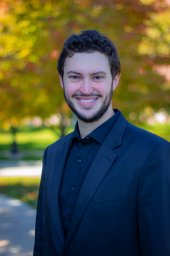 Matthew R. Cook合作论文数Cultural Geog & Hist Preservat, Eastern Michigan Univ1
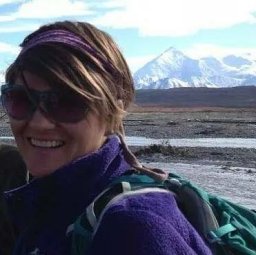 Heather Fischer合作论文数Ctr Res Lifelong STEM Learning, Oregon State Univ1
 Solange Munoz合作论文数Dept Geog, Univ Tennessee1
 Christopher Neubert合作论文数Dept Geog, Univ N Carolina1Priscilla McCutcheon合作论文数Dept Pan African Studies, Univ Louisville1
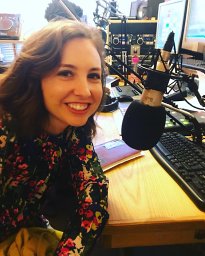 Amy E. Potter合作论文数Georgia Southern Univ1
 Amanda Rees合作论文数1
 Brian Williams合作论文数Department of Geosciences, Mississippi State University1Hamil Pearsall合作论文数1
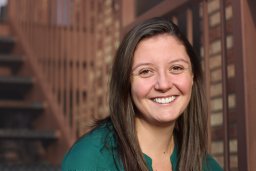 Jennifer C. Langill合作论文数805 Sherbrooke St West1
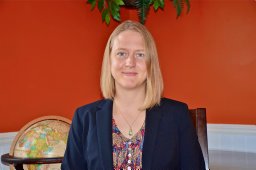 Ingrid L. Nelson合作论文数Univ Vermont1
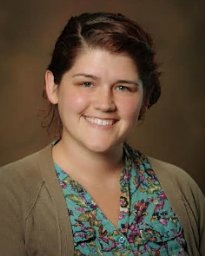 Candace Forbes Bright合作论文数Dept Sociol & Anthropol, East Tennessee State Univ1Jung Jin-Kyu合作论文数1
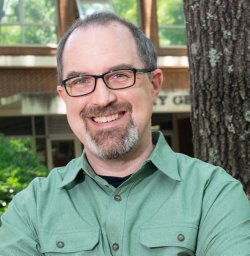 Jerry Shannon合作论文数Department of Geography, University of Georgia1
 Daniel Block合作论文数1
 Perry Labron Carter合作论文数1
 Banu Gokarıksel合作论文数Dept Geog, Univ N Carolina1
 Phil Klein合作论文数1
 Patricia Solís合作论文数Epilepsy Center, Ramos Mejía Hospital1
 Taylor Shelton合作论文数University of Kentucky1
 Derek Alderman合作论文数Department of Geography & Sustainability, College of Arts & Sciences, University of Tennessee1
 Katherine B. Hankins合作论文数1Sara H. Smith合作论文数Center for Middle East and Islamic Studies, College of Arts and Sciences, The University of North Carolina at Chapel Hill1




