It provides a succinct summary of the key findings and recommendations of the Report, highlighting the call
In the first wave of data science education programs, data engineering topics (systems, scalable algorithms, data management, integration) tended to be de-emphasized in favor of machine learning and statistical modeling. The anecdotal evidence suggests this was a mistake: data scientists report spending most of their time grappling with data far upstream of modeling activities.A second wave of data science education is emerging, one with increased emphasis on practical issues in ethics, legal compliance, scientific reproducibility, data quality, and algorithmic bias. The data engineering community has a second chance to influence these programs beyond just providing a set of tools. In this panel, we'll discuss the role of data engineering in data science education programs, and how best to capitalize on emerging opportunities in this space.
Doing data science - extracting insight by analyzing data - is not easy. Data science is used to answer interesting questions that typically involve multiple diverse data sources, many different types of analysis, and often, large and messy data volumes. To answer one of these questions, several types of expertise may be needed to understand the context and domain being served, to import and transform individual data sets, to implement effective machine learning and/or statistical methods, to design and program applications and interfaces to extract and share data and insights, and to manage the data and systems used for analysis and storage. In the IBM Research Accelerated Discovery Lab, we are studying how data scientists work, and using what we learn to help them gain insights faster. In this talk, we will look at what we have learned to date, through user studies and experience with tens of analytics projects, and the environment that we've built as a result. In particular, I will describe how we capture information to enable contextual search, provenance queries, and other functionality to afford teams faster progress in data-intensive investigations. I will also touch on our efforts to leverage data and people to explain what happens during an investigation, with an ultimate goal of moving from descriptive to prescriptive analytics in order to accelerate data science and the analytic process. I will illustrate these various efforts using an ambitious current project on applying metagenomics to food safety, and will conclude with a discussion of where more work is needed and our future directions.
Integrating data has always been a challenge. The information management community has made great progress in tackling this challenge, both on the theory and the practice. But in the last ten years, the world has changed dramatically. New platforms, devices and applications have made huge volumes of heterogeneous data available at speeds never contemplated before, while the quality of the available data has if anything degraded. Unstructured and semi-structured formats and no-sql data stores undercut the old reliable tools of schema, forcing applications to deal with data at the instance level. Deep expertise in the data and domain, in the tools and systems for integration and analysis, in mathematics, computer science, and business are needed to discover insights from data, but rarely are all of these skills found in a single individual or even team. Meanwhile, the availability of all these data has raised expectations for rapid breakthroughs in many sciences, for quick solutions to business problems, and for ever more sophisticated applications that combine and analyze information to solve our daily needs. These expectations raise the bar for integration technology, while opening the door for it to play a broader role. Integration has always been a key player in handling data variety, for example, but now more than ever must deal with scale (in the number of types as well as in the volume and speed of data). While data cleansing has been one step of an integration pipeline, this technology must be leveraged throughout data integration, so that the integration process is better able to deal with the uncertainty in data, offering means to eliminate or reduce it, or, to elucidate it by linking important contextual information, such as provenance and usage. The complexity of today's data-driven challenges in fact suggests that the integration process should be context-aware, so that data sets may be combined differently depending on the proposed usage. In the Accelerated Discovery Lab, we support data scientists working with a broad range of data as they try to find the insights to solve problems of business or societal importance. Clearly, integration is essential to insight. However, integration has to be across more than just datasets and schemas, and it has to be done more dynamically and flexibly than the standard tools allow. It is needed at multiple levels: (1) to build rich (but flexible) collections of diverse data, (2) to tightly bind individual data points into entities, allowing deeper explorations and (3) to bring together data and context to enable re-use by users with differing expertise. We think of the environment we are building as an integration hub for data, people and applications. It allows users to import, explore and create data and knowledge, inspired by the work of others, while it captures the patterns of decision-making and the provenance of decisions. I will describe the environment we are creating, the advances in the field that enable it, and the challenges that remain.
The Flexible Query Processor (FQP) constitutes a family of hardware-based data stream processors that support dynamic changes to queries and streams, as well as static changes to the processor-internal fabric in order to maximize performance for given workloads. FQP is prototyped on field-programmable gate arrays (FPGAs). To this end, FQP supports select, project and window-join queries over data streams. While processing incoming tuples, FQP can accept new queries, a key characteristic distinguishing FQP from related approaches employing FPGAs for stream processing. In this paper, we present our vision of FQP, focusing on few internal details to support the flexibility dimension, in particular, the segment-at-a-time mechanism to realize processing of tuples of variable sizes. While many of these features are readily available in software, their hardware-based realizations have been one of the main shortcomings of existing research efforts.
column Share on The IBM Research Accelerated Discovery Lab Authors: Laura Haas View Profile , Melissa Cefkin View Profile , Cheryl Kieliszewski View Profile , Wil Plouffe View Profile , Mary Roth View Profile Authors Info & Claims ACM SIGMOD RecordVolume 43Issue 2June 2014 pp 41–48https://doi.org/10.1145/2694413.2694423Published:04 December 2014Publication History 4citation254DownloadsMetricsTotal Citations4Total Downloads254Last 12 Months12Last 6 weeks1 Get Citation AlertsNew Citation Alert added!This alert has been successfully added and will be sent to:You will be notified whenever a record that you have chosen has been cited.To manage your alert preferences, click on the button below.Manage my Alerts New Citation Alert!Please log in to your account Save to BinderSave to BinderCreate a New BinderNameCancelCreateExport CitationPublisher SiteGet Access
Every few years a group of database researchers meets to discuss the state of database research, its impact on practice, and important new directions. This report summarizes the discussion and conclusions of the eighth such meeting, held October 14- 15, 2013 in Irvine, California. It observes that Big Data has now become a defining challenge of our time, and that the database research community is uniquely positioned to address it, with enormous opportunities to make transformative impact. To do so, the report recommends significantly more attention to five research areas: scalable big/fast data infrastructures; coping with diversity in the data management landscape; end-to-end processing and understanding of data; cloud services; and managing the diverse roles of people in the data life cycle.
There are many academic and commercial stream processing engines (SPEs) today, each of them with its own execution semantics. This variation may lead to seemingly inexplicable differences in query results. In this paper, we present SECRET, a model of the behavior of SPEs. SECRET is a descriptive model that allows users to analyze the behavior of systems and understand the results of window-based queries (with time- and tuple-based windows) for a broad range of heterogeneous SPEs. The model is the result of extensive analysis and experimentation with several commercial and academic engines. In the paper, we describe the types of heterogeneity found in existing engines and show with experiments on real systems that our model can explain the key differences in windowing behavior.
In this paper, we present Vagabond, a system that uses a novel holistic approach to help users to understand and debug data exchange scenarios. Developing such a scenario is a complex and labor-intensive process where errors are often only revealed in the target instance produced as the result of this process. This makes it very hard to debug such scenarios, especially for non-power users. Vagabond aides a user in debugging by automatically generating possible explanations for target instance errors identified by the user.
Yannis Ioannidis Christian S. Jensen Alexandros Labrinidis University of Athens Department of Computer Science Department of Computer Science Department of Informatics Aarhus University University of Pittsburgh Panepistimioupolis, Informatics Bldg Åbogade 34 Pittsburgh, PA 15260-9161 157 84 Ilissia, Athens DK-8200 Århus N PA 15260-9161 HELLAS DENMARK USA +30 210 727 5224 +45 99 40 89 00 +1 412 624 8843
Though partially automated, developing schema mappings remains a complex and potentially error-prone task. In this paper, we present TRAMP (TRAnsformation Mapping Provenance), an extensive suite of tools supporting the debugging and tracing of schema mappings and transformation queries. TRAMP combines and extends data provenance with two novel notions, transformation provenance and mapping provenance, to explain the relationship between transformed data and those transformations and mappings that produced that data. In addition we provide query support for transformations, data, and all forms of provenance. We formally define transformation and mapping provenance, present an efficient implementation of both forms of provenance, and evaluate the resulting system through extensive experiments.
 Renée J. Miller合作论文数David R. Cheriton School of Computer Science, University of Waterloo18
 Peter M. Schwarz合作论文数Global Institute of Energy and Environmental Systems;Economics Department;University of North Carolina Charlotte;Global Institute of Energy and Environmental Systems, University of North Carolina Charlotte14
 Michael J. Carey合作论文数Couchbase, Inc.;Department of Computer Science, Donald Bren School of Information and Computer Sciences, University of California, Irvine13
 Bruce Lindsay合作论文数Paradata13
 Phil Bernstein合作论文数Data Systems Group, Microsoft Research12Paul F. Wilms合作论文数11
 Donald Kossmann合作论文数Chargebacks91110
 Ron Fagin合作论文数IBM Almaden Research Center10
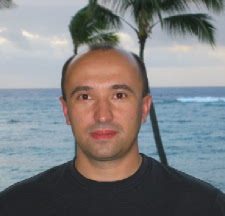 Mauricio A. Hernandez合作论文数IBM Almaden Research Center9C. Mohan合作论文数8
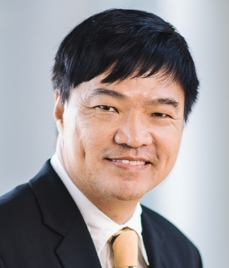 Beng Chin Ooi (黄铭钧)合作论文数School of Software Technology, Zhejiang University8
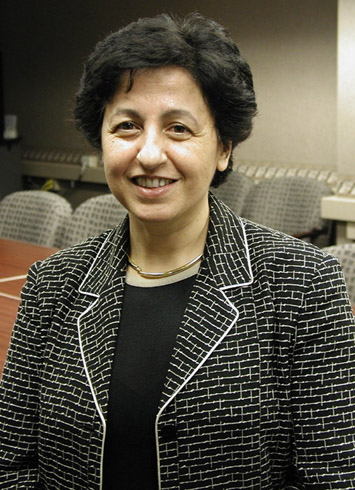 Elisa Bertino合作论文数Department of Computer Science, Purdue University;Cyber Space Security Lab, Purdue University8
 Raghu Ramakrishnan合作论文数Microsoft8
 Alon Halevy合作论文数Amazon Web Services8
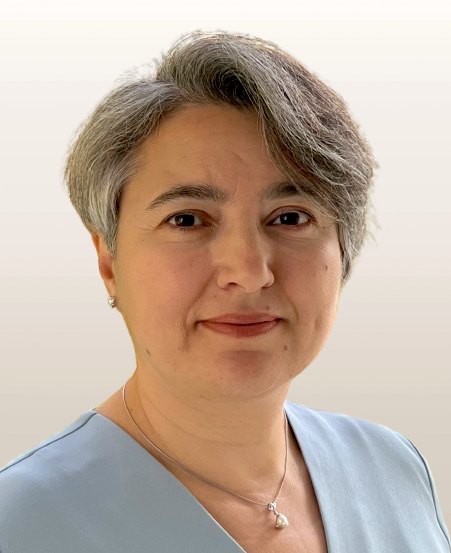 Nesime Tatbul合作论文数Computer Science and Artificial Intelligence Laboratory, Massachusetts Institute of Technology;Data Systems and AI Lab, Massachusetts Institute of Technology;Parallel Computing Lab, Intel Labs7
 Guy Lohman合作论文数7
 Jennifer Widom合作论文数School of Engineering, Stanford University7
 Roozbeh Derakhshan合作论文数ETH7
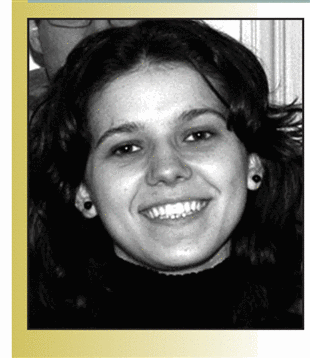 Nihal Dindar合作论文数ETH Zurich7Irina Botan合作论文数7
 Patricia G. Selinger合作论文数IBM7
 Michael Franklin合作论文数Department of Computer Science, University of Chicago7
 Mary Roth合作论文数IBM Almaden Research Center7Robert A. Yost合作论文数6
 Christian S. Jensen合作论文数Department of Computer Science, Aalborg University6Edward L. Wimmers合作论文数6
 Samuel Madden合作论文数Department of Electrical Engineering and Computer Science, Schwarzman College of Computing, Massachusetts Institute of Technology5
 Hans-Jörg Schek合作论文数Department of Computer Science, Eidgenössische Technische Hochschule Zürich5
 Alexandros Labrinidis合作论文数University of Pittsburgh Department of Computer Science Advanced Data Management Technologies Laboratory5
 Johannes Gehrke合作论文数Microsoft5
 Rakesh Agrawal合作论文数Data Insights Laboratories5
 Martin Kersten合作论文数Centrum Wiskunde & Informatica5Dean S. Daniels合作论文数5
 Lucian Popa合作论文数IBM Almaden Research Center4
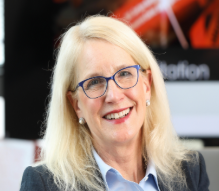 Susan B. Davidson合作论文数Department of Computer and Information Science, School of Engineering and Applied Science, University of Pennsylvania4
 David Maier合作论文数Department of Computer Science, Maseeh College of Engineering & Computer Science, Portland State University;Department of Medical Informatics & Clinical Epidemiology, School of Medicine, Oregon Health & Science University4
 Surajit Chaudhuri合作论文数Microsoft Research4
 Yannis Ioannidis合作论文数Department of Informatics, National and Kapodistrian University of Athens;Athena Research and Innovation Center4
 Hamid Pirahesh合作论文数Exploratory Database Department, Almaden Research Center, IBM4
 H. V. Jagadish合作论文数Michigan Institute for Data & AI in Society, University of Michigan4
 Dan Suciu合作论文数Paul G. Allen School of Computer Science & Engineering, University of Washington4
 Johann-Christoph Freytag合作论文数Institut für Informatik, Mathematisch-Naturwissenschaftliche Fakultät, Humboldt-Universität zu Berlin4George Lapis合作论文数4
 Gerhard Weikum合作论文数Department of Databases and Information Systems, Max-Planck Institute for Informatics4
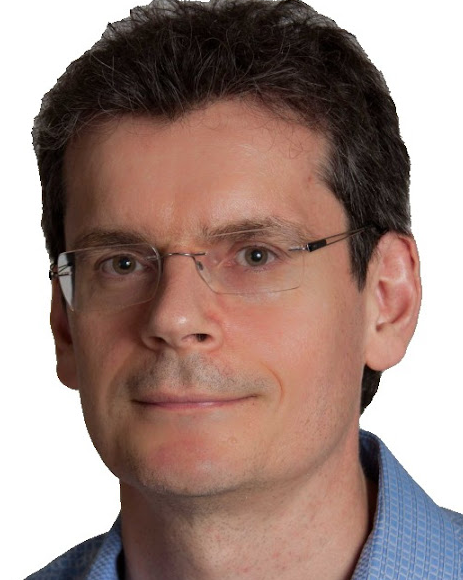 Yannis Papakonstantinou合作论文数Google Cloud4
 Anastasia Ailamaki合作论文数RAW Labs SA;School of Computer and Communication Sciences, Ecole Polytechnique Federale de Lausanne4
 Julia E Rice合作论文数IBM Research4William F. Cody合作论文数4Ling-Ling Yan合作论文数4