A promising approach to autonomous driving is machine learning. In machine learning systems, training datasets are created that capture the sensory input to a vehicle as well as the desired response. One disadvantage of using a learned navigation system is that the learning process itself may require both a huge number of training examples and a large amount of computing. To avoid the need to collect a large training set of driving examples, we describe a system that takes advantage of the immense number of training examples provided by ImageNet, but at the same time is able to adapt quickly using a small training set for the driving environment.
A promising approach to autonomous driving is machine learning. In such systems, training datasets are created that capture the sensory input to a vehicle as well as the desired response. A disadvantage of using a learned navigation system is that the learning process itself may require a huge number of training examples and a large amount of computing. To avoid the need to collect a large training set of driving examples, we describe a system that takes advantage of the huge number of training examples provided by ImageNet, but is able to adapt quickly using a small training set for the specific driving environment.
Table 2: Confusion matrix with 93.30% rec. rate and 1.39% error rate. 9 Acknowledgments The authors thanks ELSAG S.p.A., Italy, for supplying the character database and all researchers and staa of IRST that have contributed to this work. 15 Figure 5: A random subsample of size normalized characters. Second, values of free parameters are learned through a gradient-descent based algorithm. The classiier has been applied to handwritten character recognition. A database of 67; 000 real life numeric characters was used and only a size and orientation normalization was performed on each isolated character. By using small bitmap portions as input features, state of art results were obtained. Experiments have shown, rst, that the Good-Turing formula provides better estimates than simply adding a costant to all frequencies. Second, that the introduction of exponent parameters, further improves classiication. Third, that the cross-validation technique provides an eeective way for monitoring generalization. Possible enhancements of the classiier will be considered in the next future. First, the feature extraction process will be improved in order to introduce more discriminant and task-dependent features. Second, some constraint on the parameters will be analized for the aim of generalization. Third, other optimization techniques will be investigated, in order to improve convergence and generalization. Fourth, performances assessment over larger corpora will be considered, in particular preliminar work has begun with the NIST 3 1,000,000 handwritten characters corpus. As a nal remark it is worth noticing that both the hardware requirements and the computational eecency of the training algorithms make this architecture a potential competitor of ANN. 14 error rate ranging from 1.0% and 2.0% are reported in Table 1. Best achieved performances were achieved by the rst set of weights. As the 93.30% of correct classiications with 1.39% of errors, and the 92.00% of correct classiications with 1.04% of errors. The confusion table of the rst result is shown in Table 2. By comparing results in Table 1, it clearly follows that the exponent learning algorithm considerably improves the generalization capabilities of the classiier when rejection critera are introduced. As a matter of fact, by making thresholds more and more selective about 1% of diierence between recognition rates is observable. In conclusion, results are promising if compared with those achievied with ANN 11, 12] if similar input patterns (i.e. raw character bitmaps) are used. 7 Time space complexity. An account of time and space complexity of the training and …
Industrial Applications of Neural Networks, pp. 375-378 (1998) No AccessOPTICAL CHARACTER RECOGNTION FOR AUTOMATIC TELLER MACHINESL. D. JACKEL, Y. LeCUN, C. E. STENARD, B. I. STROM, D SHARMAN, and D ZUCKERTL. D. JACKELAT&T Bell Laboratories, Holmdel NJ 07733, USA, Y. LeCUNAT&T Bell Laboratories, Holmdel NJ 07733, USA, C. E. STENARDAT&T Bell Laboratories, Holmdel NJ 07733, USA, B. I. STROMAT&T Bell Laboratories, Holmdel NJ 07733, USA, D SHARMANAT&T Global Information Solutions, St. Davids, Scotland, and D ZUCKERTAT&T Global Information Solutions, St. Davids, Scotlandhttps://doi.org/10.1142/9789812816955_0044Cited by:1 (Source: Crossref) PreviousNext AboutSectionsPDF/EPUB ToolsAdd to favoritesDownload CitationsTrack CitationsRecommend to Library ShareShare onFacebookTwitterLinked InRedditEmail Abstract: Self-service banking, in the form of automatic teller machines (ATMs), has dramatically altered the way people interact with their banks. Now people can withdraw cash from their accounts far from their banks' office at any time. Now, by adding Optical Character Recognition (OCR), people will also be able to deposit checks, cash checks, and pay bills directly using an on-line system. FiguresReferencesRelatedDetailsCited By 1Cited by lists all citing articles based on Crossref citation.Artificial Intelligence Techniques in Smart Cities Surveillance Using UAVs: A SurveyNarina Thakur, Preeti Nagrath, Rachna Jain, Dharmender Saini and Nitika Sharma et al.1 June 2021 Recommended Industrial Applications of Neural Networks Metrics History PDF download
This paper compare the performance of se\-era1 classifier algorithms on a stan- dard database of handwritten digits. We consider not only raw accuracy, but also training time, recognition time, and memory requirements. When available, we report measurements of the fraction of patterns that must be rejected so that the remaining patterns have misclassification rates less than a given threshold.
Self-service automatic teller machines (ATMs) have dramatically altered the ways in which customers interact with banks. ATMs provide the convenience of completing some banking transactions remotely and at any time. AT&T Global Information Solutions (GIS) is the world's leading provider of ATMs. These machines support such familiar services as cash withdrawals and balance inquiries. Further technological development has extended the utility and convenience of ATMs produced by GIS by facilitating check cashing and depositing, as well as direct bill payment, using an on-line system. These enhanced services, discussed in this paper, are made possible primarily through sophisticated optical character recognition (OCR) technology. Developed by an AT&T team that included GIS, AT&T Bell Laboratories Quality, Engineering, Software, and Technologies (QUEST), and AT&T Bell Laboratories Research, OCR technology was crucial to the development of these advanced ATMs.
This paper compares the performance of several classifier algorithms on a standard database of handwritten digits. We consider not only raw accuracy, but also training time, recognition time, and memory requirements. When available, we report measurements of the fraction of patterns that must be rejected so that the remaining patterns have misclassification rates less than a given threshold
We compare the performance of three types of neural network-based ensemble techniques to that of a single neural network. The ensemble algorithms are two versions of boosting and committees of neural networks trained independently. For each of the four algorithms, we experimentally determine the test and training error curves in an optical character recognition (OCR) problem as both a function of training set size and computational cost using three architectures. We show that a single machine is best for small training set size while for large training set size some version of boosting is best. However, for a given computational cost, boosting is always best. Furthermore, we show a surprising result for the original boosting algorithm: namely, that as the training set size increases, the training error decreases until it asymptotes to the test error rate. This has potential implications in the search for better training algorithms.
 Re Howard合作论文数43
 Richard Howard合作论文数Department of Electrical and Computer Engineering, Rutgers University;Wireless Information Network Laboratory, Rutgers University29
 Hans Peter Graf合作论文数NEC Laboratories America26Denker, J.S.合作论文数25
 Yann LeCun合作论文数Department of Electrical and Computer Engineering, Tandon School of Engineering, New York University;AMI Labs24
 Evelyn Hu (胡玲)合作论文数John A. Paulson School of Engineering and Applied Sciences, Harvard University;Hong Kong Institute for Advanced Study, City University of Hong Kong23Donald M. Tennant合作论文数20Rw Epworth合作论文数17Wayne E. Hubbard合作论文数17
 Bernhard E. Boser合作论文数Department of Electrical Engineering & Computer Sciences, University of California, Berkeley17Donnie Henderson合作论文数14
 W. J. Skocpol合作论文数14P. M. Mankiewich合作论文数AT&T BELL LABS13
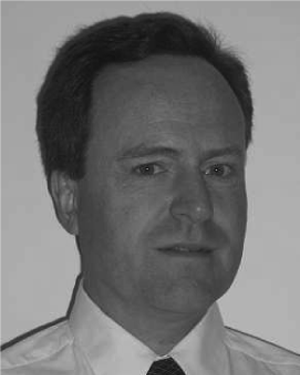 Eduard Säckinger合作论文数MACOM13P. Grabbe合作论文数11La Fetter合作论文数10
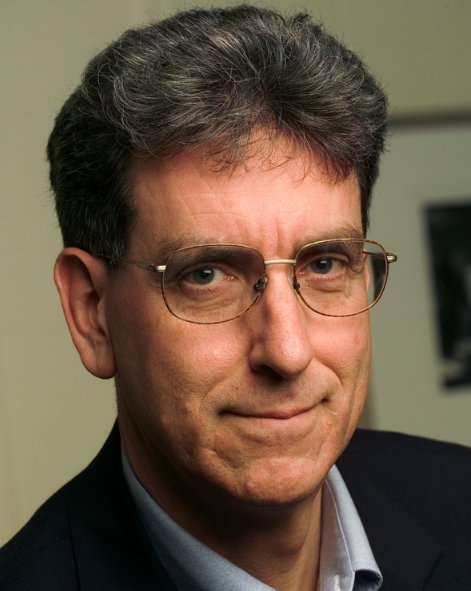 Harold G. Craighead合作论文数School of Applied and Engineering Physics, Cornell University10B Straughn合作论文数9
 Corinna Cortes合作论文数Google Research8j m warlaumont合作论文数7
 Isabelle Guyon合作论文数Universite Paris-Saclay;Google;ChaLearn7
 Robert Buhrman合作论文数School of Applied and Engineering Physics, College of Engineering, Cornell University7
 Jane Bromley合作论文数AT&T Bell Laboratories7t d clark合作论文数6j c white合作论文数5
 Sara Solla合作论文数Department of Physics and Astronomy, Weinberg College of Arts & Sciences, Northwestern University5
 Vladimir Vapnik合作论文数Data Science Institute, Columbia University5Henry S. Baird合作论文数5Ofer Matan合作论文数Blue Pumpkin Software, Inc.5
 Watt Webb合作论文数Cornell University5
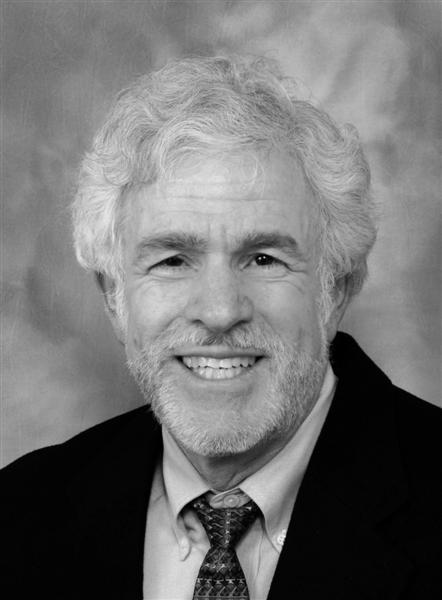 Harris Drucker合作论文数Monmouth University5
 Mogens Levinsen合作论文数4Robert G. Swartz合作论文数4John S. Denker合作论文数AT&T4D. B. Schwartz合作论文数4Y. Le Cun合作论文数3Urs A. Müller合作论文数3Stenard, C.E.合作论文数3
 Chris Burges合作论文数Microsoft Research3
 Léon Bottou合作论文数Meta3
 Patrice Simard合作论文数Irreverent Labs;Intelus3Linus Albert Fetter合作论文数3R. E. Behringer合作论文数3Andalexander M Voshchenkov合作论文数3J. E. Lukens合作论文数3AH DAYEM合作论文数3SEG SLUSKY合作论文数3j e sweeney合作论文数2C. L. Shieh合作论文数2




